

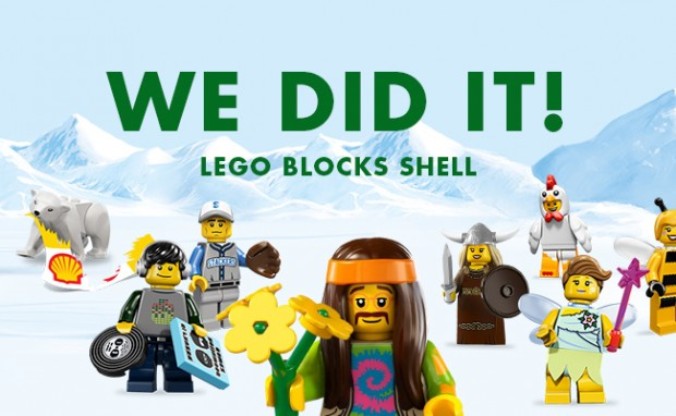
 Lego announced a break in its 50-year partnership with Royal Dutch Shell, a split sparked by an anti-Arctic drilling video produced by environmental activists Greenpeace. The clip – which capitalized on our love for Lego building block toys – went viral on YouTube with over 6 million hits. It incited a million email complaints to the toy maker and pulled in the same number of signatures to the Greenpeace anti-drilling petition. So now it takes toys to turn our heads?
The Lego deal was a lucrative arrangement whereby gas stations sold Shell-branded toys and used them as promotional prizes. Lego also supplied products for Shell’s annual Eco-Marathon, which challenges students from around the world to design, build and test ultra energy-efficient vehicles.
 Greenpeace targeted the relationship between the global energy giant and the world’s largest toy manufacturer as a means of protest against Shell’s extensive drilling activities in the Arctic. The group claims that children who grow up with Shell toys will be less critical of the brand as adults, and be more inclined to believe corporate spin that claims environmental accidents are simply the cost of doing business. But are we so gullible? Probably, if adorable Lego figures in a 105-second film can call us to action more effectively than scientific evidence and rational reporting.
[youtube]http://youtu.be/qhbliUq0_r4[/youtube]
Shell suspended its Arctic activities last year following legal challenges and operational glitches, but plans to resume drilling in 2015, despite worldwide protests which claim it threatens the Arctic ecosystem and fuels climate change.
“We’re super happy Lego has finally decided to do the right thing. It’s a massive victory for the million people globally who called on Lego to stop helping Shell look like a responsible and caring company – rather than a driller intent on exploiting the melting Arctic for more oil,” campaigner Ian Duff wrote on the Greenpeace website. Not everyone agrees.
The privately owned Danish toy company “should never have become part of Greenpeace’s dispute with Shell,” said Lego CEO Vig Knudstorp. He said the company didn’t want to be embroiled in the environmental campaign and had urged Greenpeace to have a direct conversation with Shell. Lego will continue to honor the Shell contract until it expires; it did not say when that would be.
Lego began making wooden toys in 1932 and expanded to producing plastic toys in 1947. Negative comments left on the Greenpeace website point out that Lego uses petroleum byproducts as feedstock for their toys and an energy source in their manufacture. Unrelated to the Greenpeace campaign, Lego has pledged to experiment with alternative, non fossil-based materials for its bricks. They are also striving to use only renewable energy in all Lego offices and factories.
As effective as the Lego campaign has been, it won’t stop Arctic drilling. In August, Shell filed a revised Arctic offshore drilling plan with US regulators but the company has stated it hasn’t decided whether to start in 2015.
Environmentalists around the world agree that an Arctic oil spill would have a disastrous impact on this unique marine environment. This year, Arctic sea ice cover reached one of its lowest points on record. Time is running out to save the Arctic, and the time for urgent action is now.
Images of Lego figures from Greenpeace website




I doubt Shell and the likes will ever change their policies and practices