
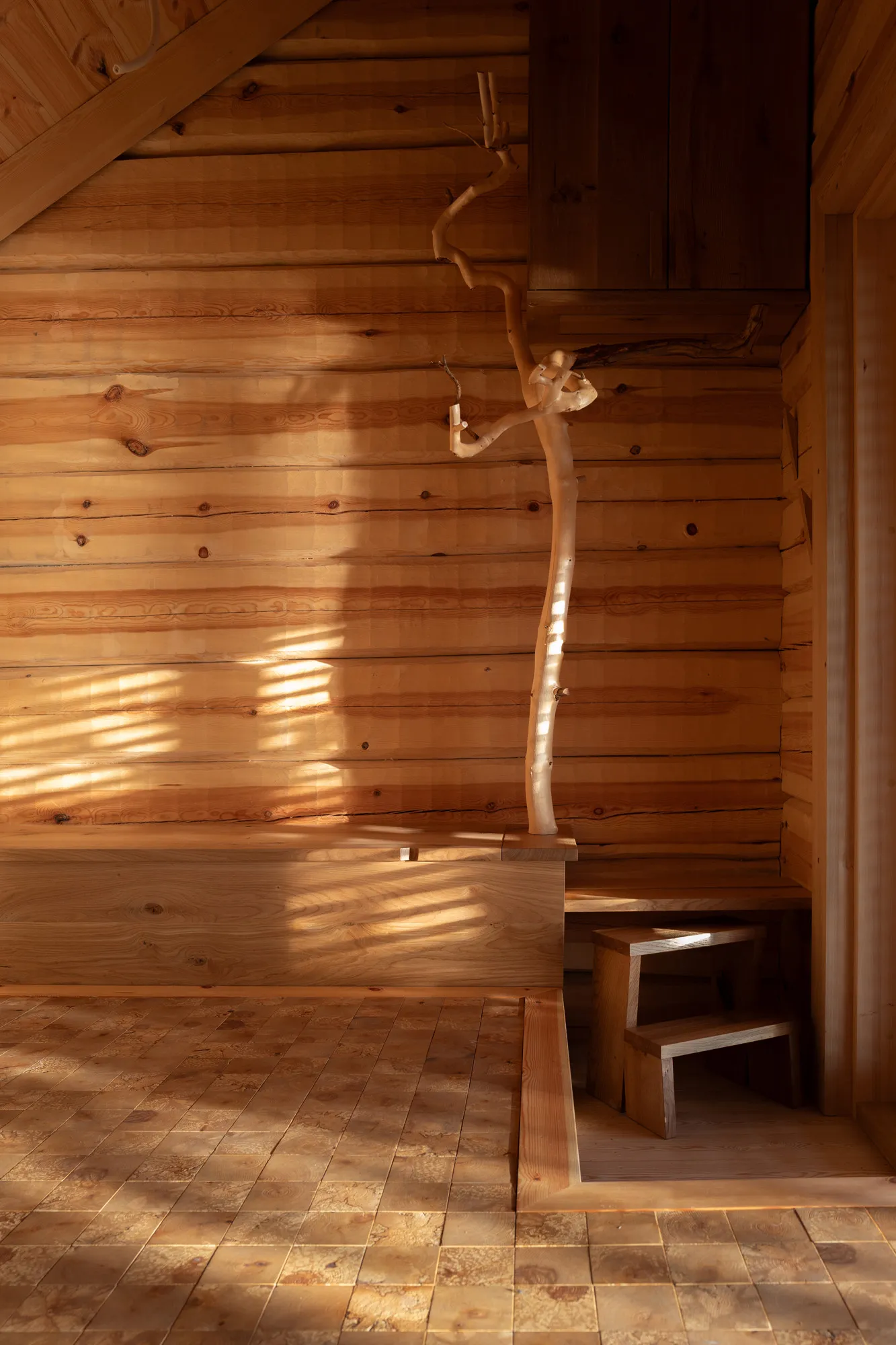
Crooked, forked and curved trees are often treated as second-class timber. They are considered less valuable, and not suitable for load bearing walls or support systems in building. If a tree trunk is not straight enough to become a saw log, it is frequently diverted into pulp production or burned for energy. Now, new research from Aalto University in Finland could help change that.
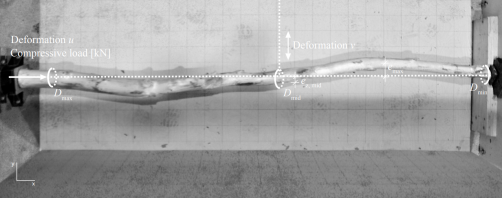
Architect and researcher Jaakko Torvinen has published what Aalto University describes as the first structural load tests of organically shaped roundwood columns, including curved, double-curved and forked logs that would typically be considered unsuitable for conventional timber production.
The study found that standard engineering calculation methods can also be used to predict the load-bearing capacity of these naturally shaped tree trunks. This could put billions of dollars worth of lumber back in circulation increasing carbon storage in building.
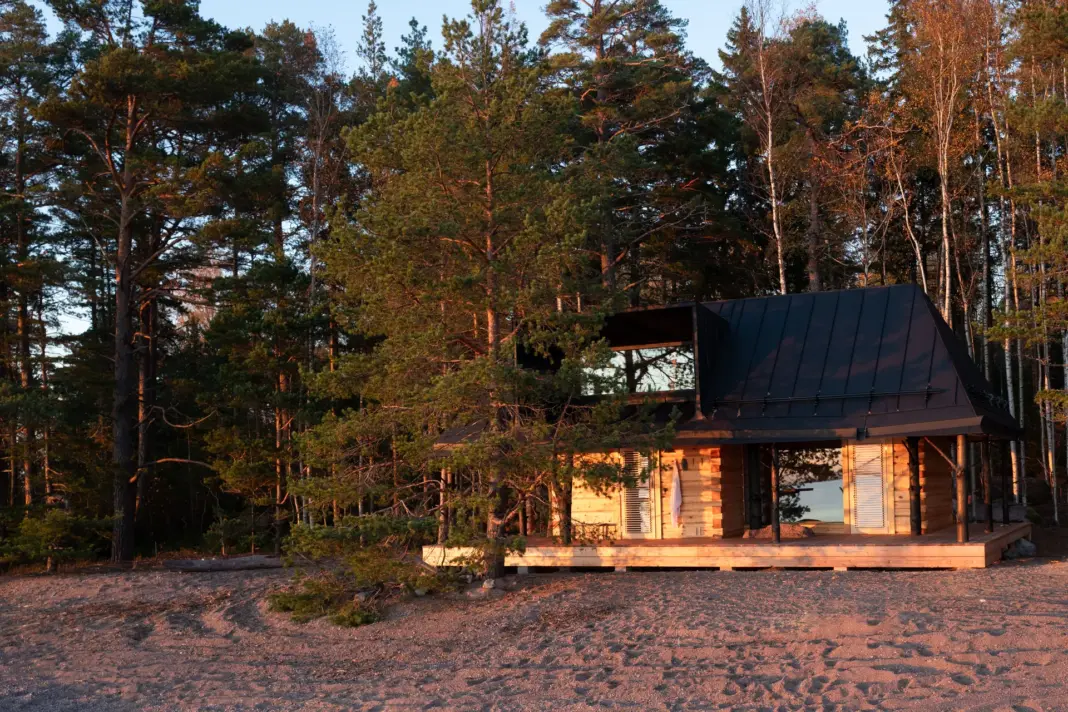
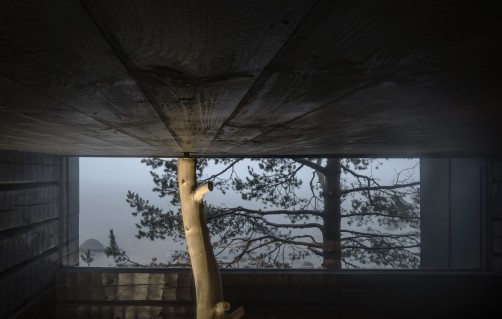
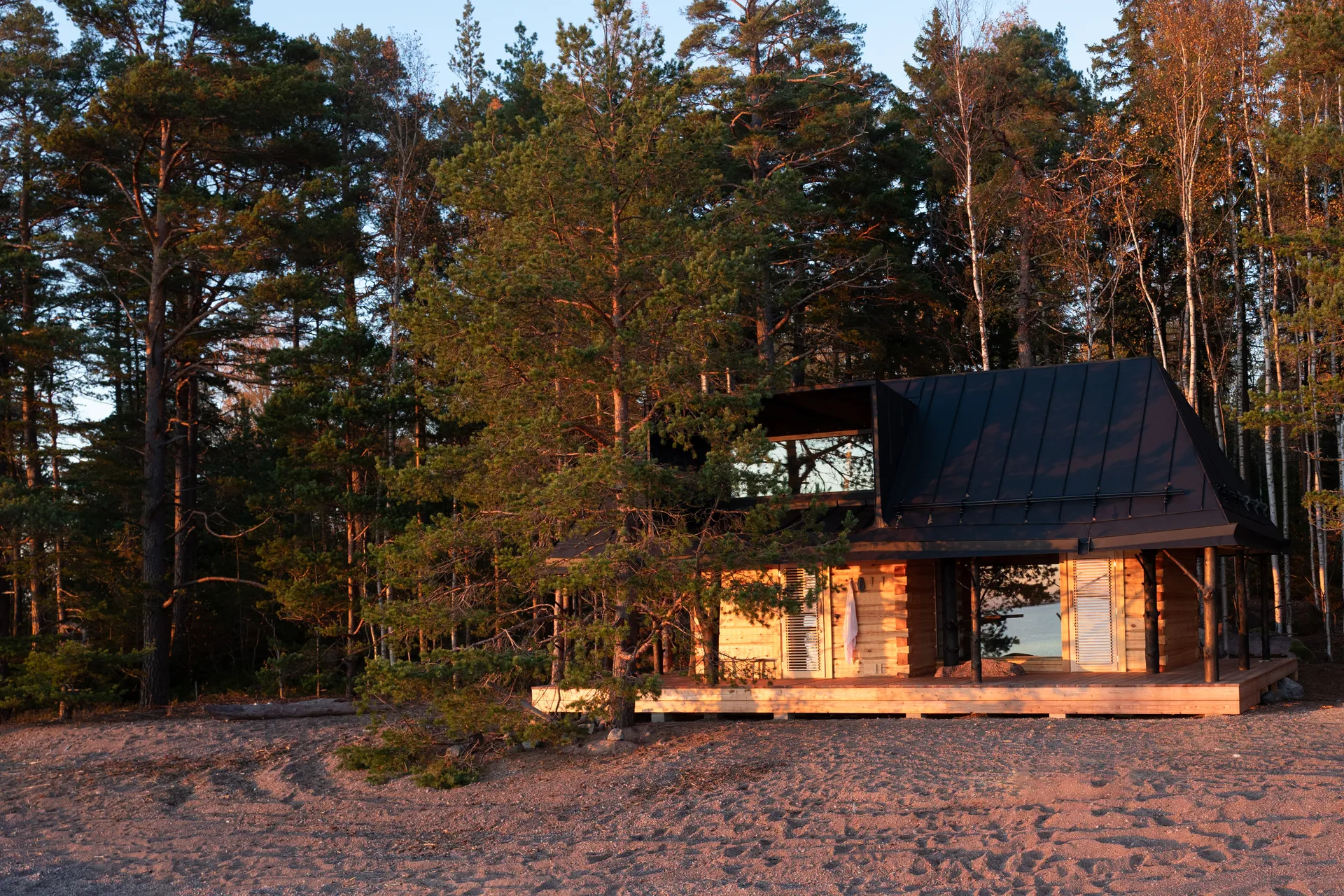
Torvinen showcased his research in none other than a sauna, the favorite past-time of every Finn. In Canada people measure money in cases of beer, in Finland it’s by how many saunas is it worth.
“I am happy to see that the news has reached the news in Canada,” Torvinen tells me when I reached out. “I was just there in Carleton University, Ottawa, co-teaching Forest-Building studio together with my dear colleague Dr. Peter Osborne. The theme of the studio were this same than my study in the news: how to utilize misfit wood in architecture.”
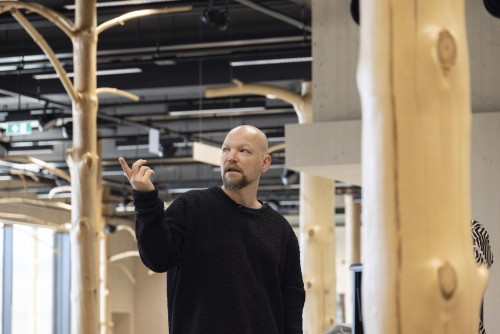
“It’s actually a pretty simple equation that can be used to gauge its load-bearing capacity,” said Torvinen. “What’s surprising is that nobody has done this earlier.”
According to Torvinen, the timber and construction industries have long favored straight, standardized wood products.
“We’re so used to thinking in terms of standardised planks or beams,” he said. “This explains why nobody has ever looked at a tree trunk and come up with an algorithm to gauge its strength.”
Torvinen argues that this approach results in substantial waste.
“If it’s not suitable as saw logs, it goes to pulpwood or energy wood,” he explained. “But our assumption that ‘generic is best’ is old-school thinking –– and we’re wasting way too much good wood.”
The research is part of a broader effort to identify new uses for wood that is currently overlooked by the timber industry. According to Aalto University, the findings suggest that existing calculation methods can be applied to organically shaped roundwood columns when determining their load-bearing capacity.
The study also points to future opportunities when combined with digital design and fabrication technologies. According to Torvinen, combining structural knowledge with digital tools could help reduce barriers to using unconventional timber in construction and support greater use of mass-customized building components.
In future projects, when a designer or client wants misfit wood in a building, it won’t be laughed at as an icebreaker, but considered as a legitimate design proposal like any other.
“Using standard timber only is something that cash-strapped consumers are ready to abandon,” Torvinen said. “So I want to clear the path to industry embracing the possibilities of misfit wood too.”
Torvinen’s architectural work has explored the use of unconventional timber forms in projects including Helsinki’s temporary Pikku Finlandia building and Puusauna, a project that received a 2026 Wallpaper* Design Award. With all due respects vernacular builders have been doing this since time began, but we love how it’s being showcased along with the data.
He hopes the latest research will help support wider acceptance of naturally shaped timber elements in construction.
“In future projects, when a designer or client wants misfit wood in a building, it won’t be laughed at as an icebreaker, but considered as a legitimate design proposal like any other,” said Torvinen.
Puusauna will be featured as part of Aalto University’s Designs for a Cooler Planet 2026 exhibition in Helsinki from September 1 to October 30, 2026.