When you go deep into a desert, whether it’s Iran or Sinai, it has a similar effect of being in a forest. The stark nature of the planet holds you. Deserts may offer less distractions in your peripheral vision but the clouds and sand come to life as you feel yourself expanding within the expanse.
That perhaps was the mood for a new conceptual hotel in Iran designed by Margot Krasojević and uses ancient Iranian methods for desert survival using underground flowing water, called the qanat. In Arabic, this type of channel is more often called a kariz.
Long-ago tribesmen found underground springs in the foothills of the region of Iran and Oman, and engineered a technology that channels the water over the land, irrigating farms and oases and supplying households with water as needed. Although some say that qanat is a concept 3000 years old, others claim 5000 years. But they were definitely engineered before the Roman aqueducts were built.
We’ll explain more about qanat below.
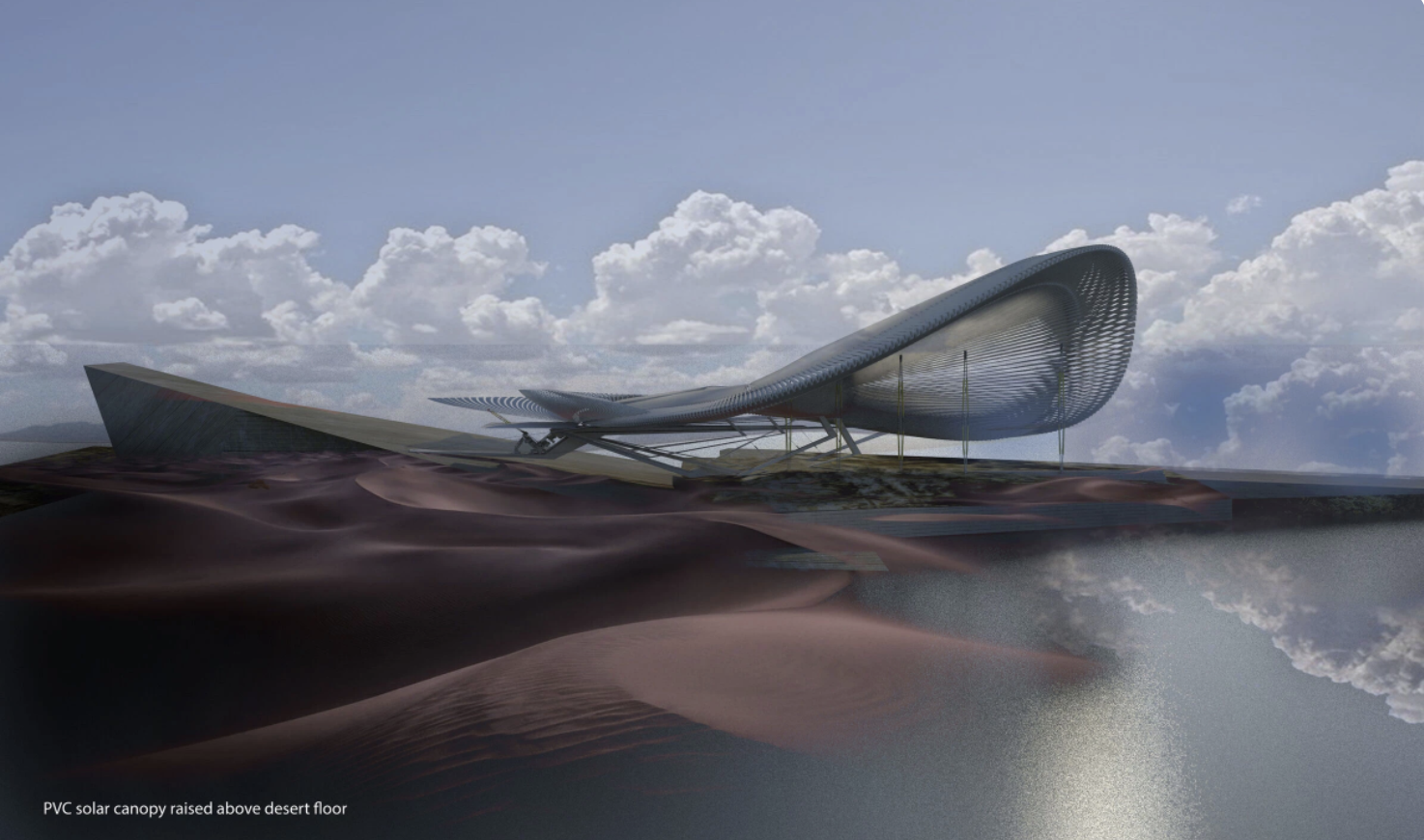
The hotel in this dreamscape is located in Makran, a semi-desert coastal strip stretching from south-eastern Iran to Pakistan’s Baluchistan, and bordering the coasts of the Persian Gulf and the Sea of Oman.

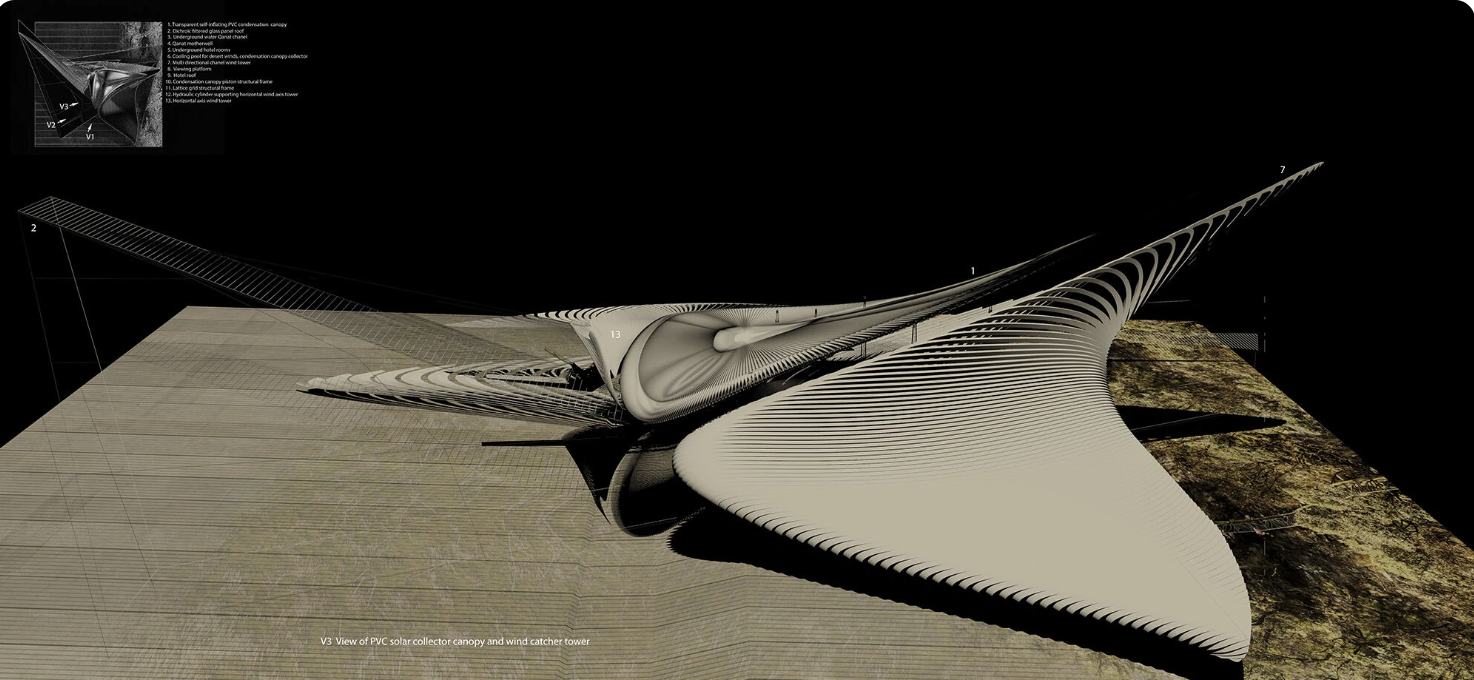
Krasojević sees an eco-tourism resort that uses wind, heat, and aquifers to create a modern wind tower and qanat system: ancient air conditioning!
Windcatcher towers were designed for ventilation and evaporative cooling while the hotel provides much-needed shelter in a shapeshifting landscape where survival is not always an assumption. While qanats, vertical shafts and tunnels, ferry water to the ground service without the need for pumping. The hotel sits on an existing qanat, attempting to make it more efficien
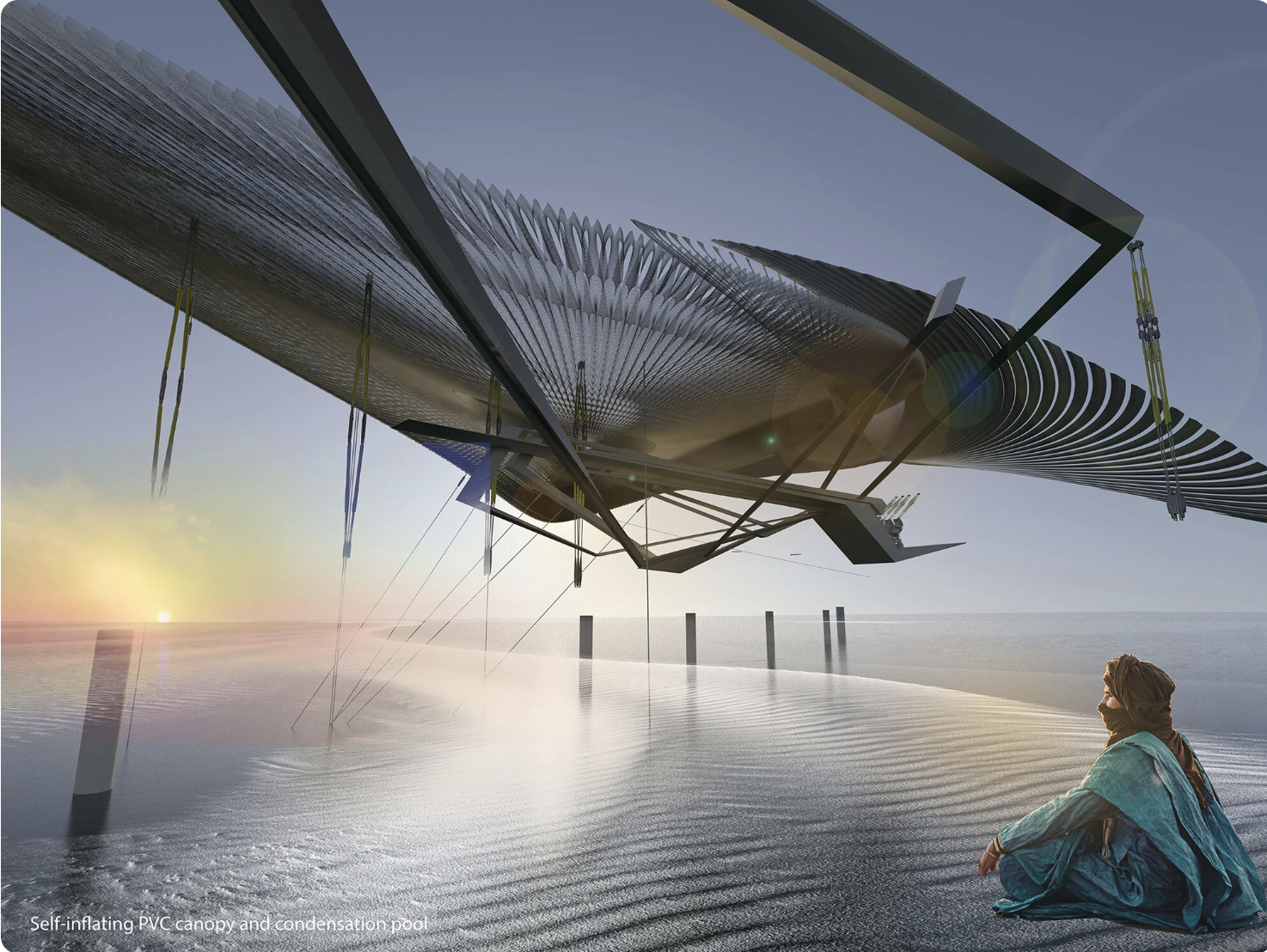
 A self inflating PVC canopy and condensation pool collects water from thin air.
The hotel, if it were built, would encourage a more even distribution of water further into the desert to water remote farms.
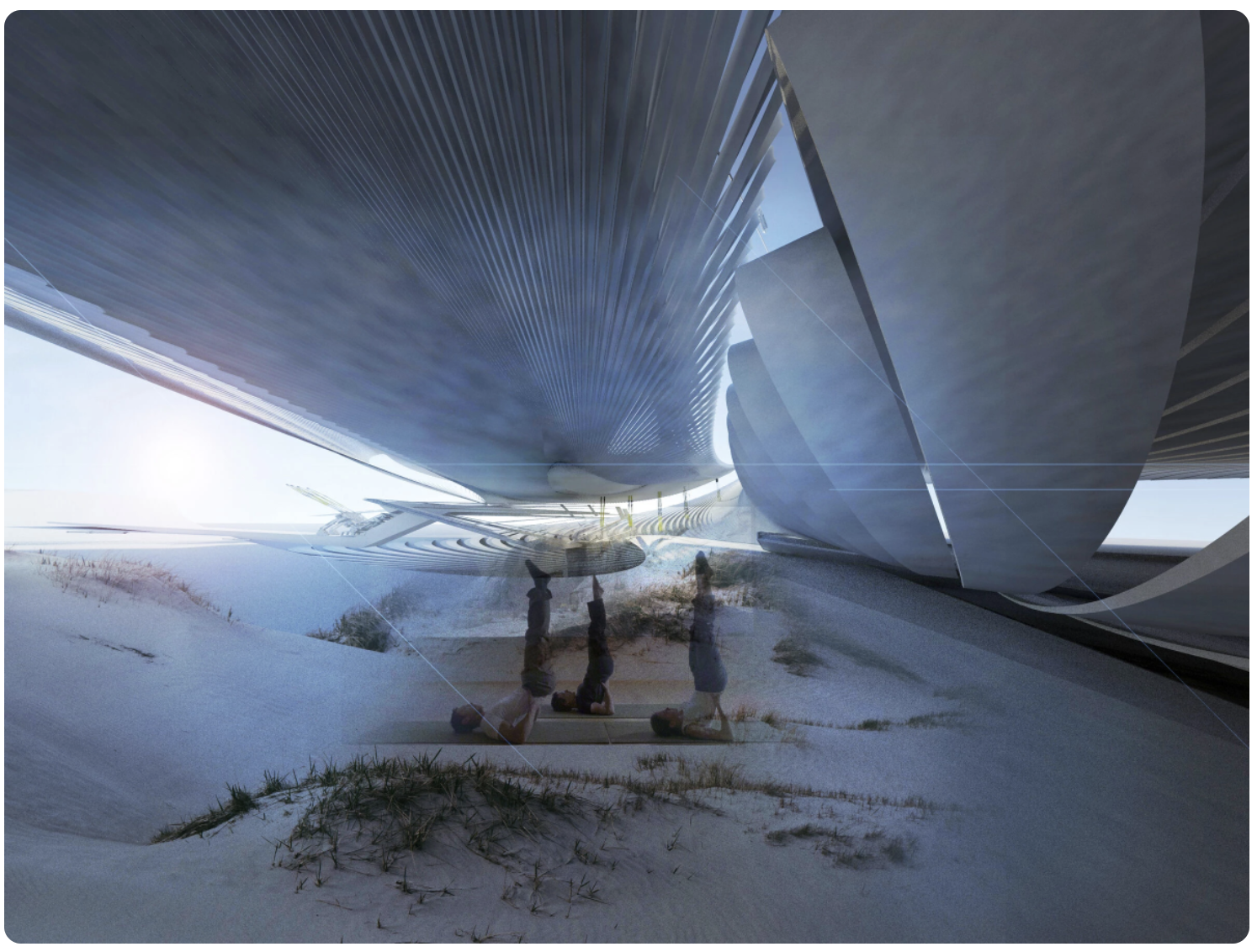
Since the underground can shield us from punishing heat, the hotel rooms are partially built under the earth and open to atriums from which natural light flows.
About Margot Krasojević Architects
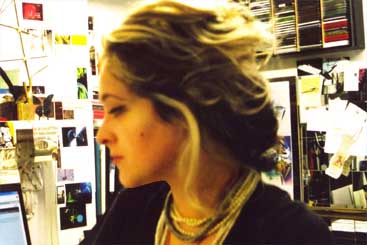
Margot Krasojević completed her architectural education at the Architectural Association School of Architecture and University College London and worked with Zaha Hadid Architects as lead undergraduate and masters studio director for sustainable design programs, at UCL, University of Greenwich and University of Washington.
She has since opened a multidisciplinary architectural design studio focusing on integrating environmental issues, renewable energy and sustainability as part of the design process. She is currently working on projects in Asia, where she is integrating and harnessing renewable energy as part of a buildings service infrastructure.
More about Iran’s qanat

Throughout the dry regions of Iran, farms and settlements are supported by the ancient qanat system of tapping water at the heads of valleys and then conducting the water along underground tunnels by gravity, often over many miles. The Romans had aqueducts, the Iranians qanat.
Each qanat comprises an almost horizontal tunnel collecting water from an underground water source into which a mother well is sunk to the appropriate level of the aquifer. Qanat were also built in Oman, and countries like the United Arab Emirates.
Well shafts are sunk at regular intervals along the route of the tunnel to enable removal of debris and allow ventilation. These appear as craters from above, following the line of the qanat from water source to agricultural settlement.
Video of how qanat work
https://www.youtube.com/watch?v=zockOFKKX2E
The water is transported along underground tunnels, so-called koshkan, by means of gravity due to the gentle slope of the tunnel to the exit (mazhar), from where it is distributed by channels to the agricultural land of the shareholders.
The levels, gradient and length of the qanat are calculated by traditional methods requiring the skills of experienced qanat workers and this wisdom has been handed down over centuries.
Many qanats have sub-branches and water access corridors for maintenance purposes, as well as dependant structures including rest areas for the qanat workers, public and private hamams, reservoirs and watermills. The traditional communal management system still in place allows equitable and sustainable water sharing and distribution.
Margot Krasojević’s eco hotel pays homage to the qanat and will teach visitors from around the world that low-tech may still be more inventive than the technology that runs on polluting oil.
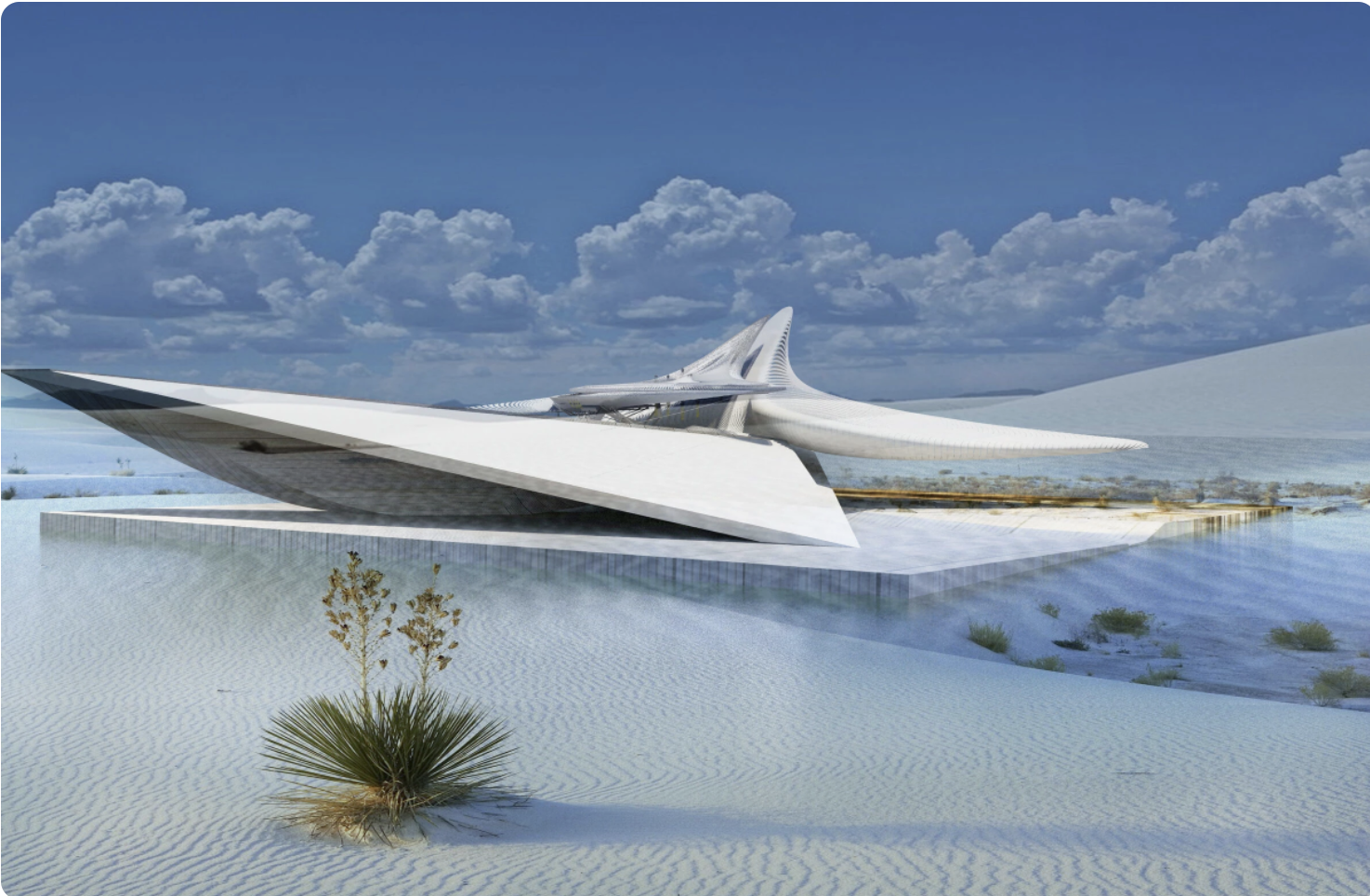
We are looking forward to the Qanat hotel being built in Iran. No doubt Zaha Hadid‘s legacy lives on through Margot, and more female architects and their worldviews are needed in the Middle East where unliveable phallic towers are becoming the norm, even in more sensible cities like Tel Aviv.
Love this ancient low-tech solution from Iran? Learn more about making today more sustainable from the past. Learn about Iranian windatchers from Yadz. Learn here how ancient Iranians keep ice cool with ancient ice houses.