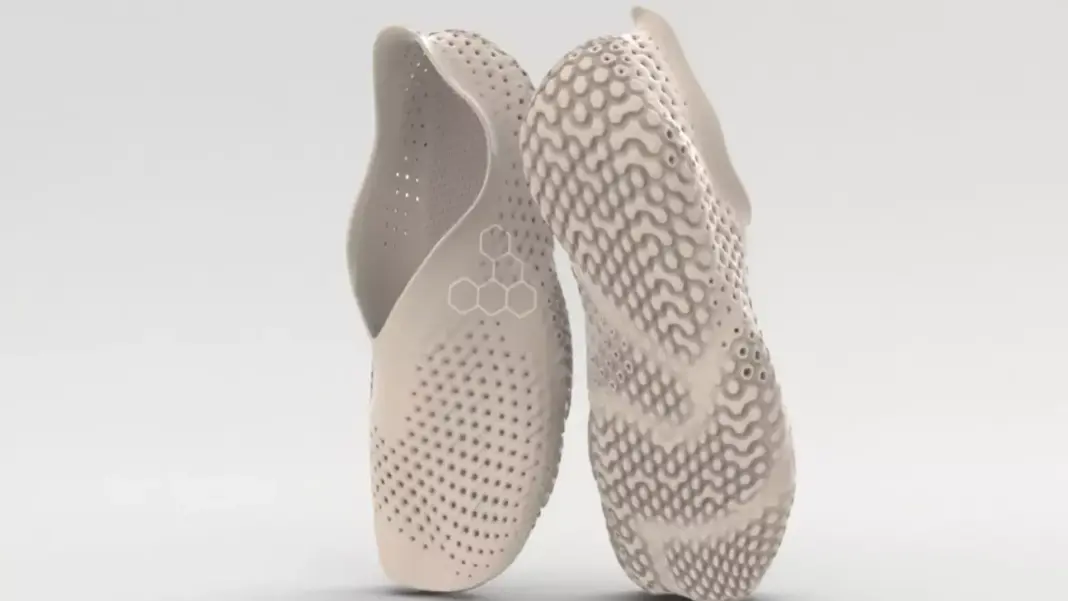
Vivo Barefoot collaborates with compostable shoe company Balena

vivobarefoot and balena
Vivobarefoot partners with Balena to 3D-print compostable and biodegradable barefoot-style footwear

Vivobarefoot is a wildly popular shoe brand founded by Galahad and Asher Clark of the Clark shoes empire. The shoes are outrageously expensive ––about twice the price of leading fashion sports brands such as Nike, yet loyal customers come back time and time again to buy shoes that give the most true-to-barefoot experience in a shoe.

Vivo is now collaborating with an Israeli-Italian company Balena which is making a method and material so that shoes at the end of their lives will compost. It should be said that even the plastic parts of Vivo’s shows start to disintegrate anyway after a year.

Balena, eco and biodegradable sandal slide, plastic, eco plastic, biocir, cycles of decomposition

What are barefoot shoes?

They have wide area for your toes to open out. The soles have zero padding, and just a thin layer of rubber between your foot and the world. No support. Because “you are the technology” as the slogan goes. Our feet, essentially, are built to support our backs and bodies. Modern shoes, Vivobarefoot claims, can actually damage your feet and body by changing your gate, and by putting pressure on areas of your body when running like your knees.
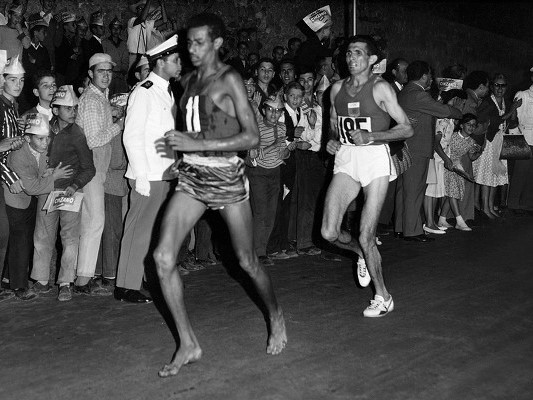
Why does Abebe Bikila run without shoes?Abebe Bikila - Wikipedia 1960 Rome Olympics In Rome, Abebe purchased new running shoes, but they did not fit well and gave him blisters. He consequently decided to run barefoot instead.
At the 1960 Rome Olympics Ethiopian runner Abebe purchased new running shoes, but they did not fit well and gave him blisters. He decided to run barefoot instead. And won.

My son has been wearing Vivo shoes for 7 years and so have I. The rubber on the soles of the shoes wear out before the rest of the shoe. So if rubber and plastics aren’t going to last a lifetime, we can say it’s time to usher in the idea of footwear that can melt back to the earth.

Vivobarefoot says they have been prototyping 3D-printed footwear since 2019. Brand co-founder Asher Clark previously called the development of a 3D-printed shoe “an obsession”. The process involves 3D-printing the harder parts of the shoe such as the sole, then 3D-knitting the upper part. By 3-D printing, essentially shoes can be customized to a customer’s foot in the color choice they want.
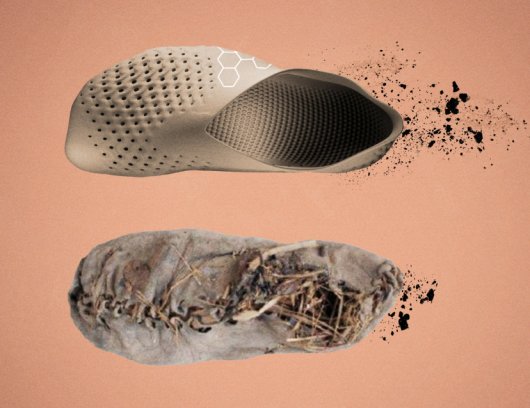
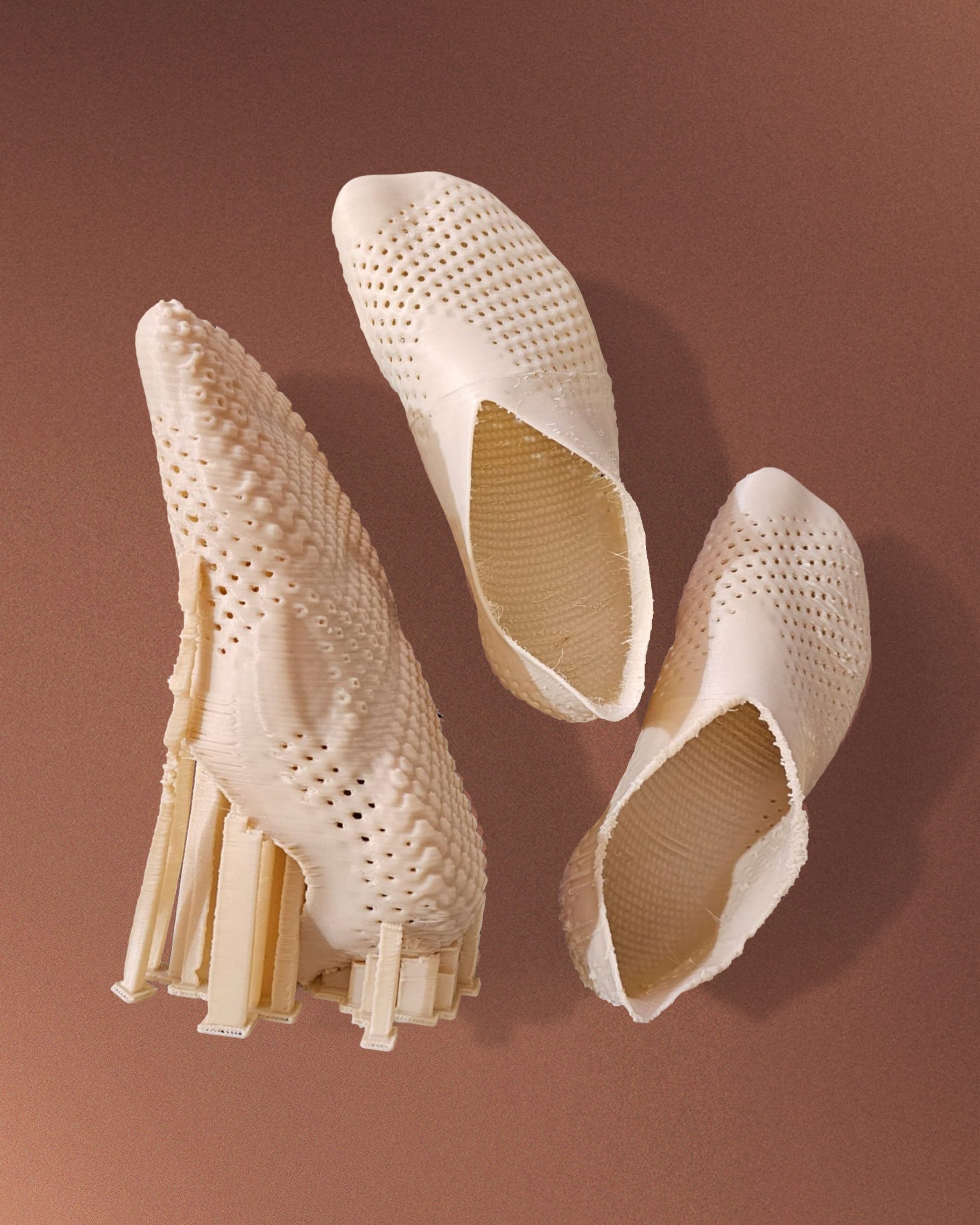
Vivobarefoot and Balena 3D print a shoe to mimic the shoes of primal man


Vivobarefoot, 3D printed and knitted uppers.

Read related: the 10 best marathons in the Middle East

By making shoes to measure, less material is wasted and product longevity is likely enhanced due to the shoes fitting the wearer perfectly. This translates to reduction in energy use and greenhouse gas emissions across the product value chain, according to companies that assess product life cycle.

Balena, eco and biodegradable sandal slide, plastic, eco plastic, biocir, 3 colors
Balena slide, biodegradable and compostable

Through its new partnership with Balena, Vivobarefoot is aiming to create 3D-printed shoes made with material that is both compostable and recyclable. Balena will apply its ‘BioCir flex’ material to the partnership. This material includes at least 50% bio-based content.

VivoBarefoot’s Clark said: “The world doesn’t need new shoes. We need a new system and new materials.”

David Roubach, balena shoes
David Roubach, Balena shoes

Banela’s founder David Roubach said that there “is a need to advocate for a clearer circular economy model with a fundamental change in the materials we use” to reduce waste in this sector.

Billions of pairs of shoes are made globally each year. And most of these get thrown out as a by-product of fast fashion. That’s why there are so many flipflops in the Syechelles. If you have a business idea to work with a biodegradable material for rubber ducks and flipflops on a cruise line, you have a new impact company.

More on Balena here.


Karin Kloosterman
Karin Kloostermanhttp://www.greenprophet.com
Karin Kloosterman is an award-winning journalist, innovation strategist, and founder of Green Prophet, one of the Middle East’s pioneering sustainability platforms. She has ranked in the Top 10 of Verizon innovation competitions, participated in NASA-linked challenges, and spoken worldwide on climate, food security, and future resilience. With an IoT technology patent, features in Canada’s National Post, and leadership inside teams building next-generation agricultural and planetary systems — including Mars-farming concepts — Karin operates at the intersection of storytelling, science, and systems change. She doesn’t report on the future – she helps design it. Reach out directly to [email protected]

Read More

TRENDING

Zentera drops “ethical wool” claim after PETA exposé into ZQ-certified farms

The New Zealand Merino Company, now rebranded as Zentera, has quietly removed the phrase “world’s leading ethical wool brand” from its website, a notable change that comes after a disturbing investigation by PETA Asia-Pacific into the company’s ZQ-certified wool supply chain, PETA reports to Green Prophet.

PETA pressures H&M to ban mohair again after new farm abuse investigation

Remember PETA? The group of animal activists that threw...

Stella McCartney shoes, bags, perfume coming back sustainably to H&M

All of us may have more chances to dance in sustainable style as Stella McCartney, the sustainable fashion icon and daughter of Paul McCartney, is working again with the fast fashion label H&M. Fast fashion, Zara, Shein, Mango and COS, show us that they aren't going anywhere.

Autumn shades, elevated: why The Avantguard’s new sunglasses are a genuinely sustainable idea

From rich tortoiseshells to smoky, translucent hues, the palette channels changing light, bark, loam, and sky—frames that feel at home on a forest walk or a weekday commute.

These glasses see microplastics on the farm

Conventional detection methods, such as sample taken and looking under a microscope to count the bits is time-consuming, labor-intensive, and often ineffective at identifying small particles, making them impractical for large-scale monitoring. 

Yerukim Forms a New Green Economy Where the Money is Really Green

The Yerukim members who pick up the recyclables get to keep the monetary reward, the public earns "green" bills that can be used in shops, and business owners get to be associated with environmentalism.

Choosing Riyadh over Dubai? What Investors Should Know

Saudi Arabia is deploying capital at unmatched scale to catalyze tourism and advanced industry while rewiring its power-and-water backbone. The investable frontier is widening—especially in renewables, grid storage, water efficiency/desal retrofits, and hospitality operating platforms. Prudent investors will insist on phased delivery, enforceable KPIs (energy, water, biodiversity), and RHQ/zone compliance—while pricing political-economy and reputational risks alongside growth upside.

Sell your cooking oil for biodiesel money

Want to make money on old french fry oil? Sell it.

Qatar Alternative Energy Summit Pairs Investors And Innovators

Alternative energy investors and innovators can meet n' greet in Doha, Qatar March 16 and 17.

Here’s How To Implement The Four Pillars Of Employee Engagement

If you throw a party for your work team and they are vegans, don't make it a barbecue. Know the sustainability values of your team to boost moral and retain good people.

Locals From Rishon Fight IKEA

Big Box stores are a pretty new concept in Israel, and thank God that not every Israeli city wants them in their backyard. A word from someone who has see the beautiful farmland around her hometown Newmarket, Ontario stripped and converted into vulgar strip malls of big box shops: they have no place in a healthy and sustainable town or city.

The Jewish National Fund Meets An Inconvenient Truth

According to the JNF, it has transformed thousands of acres of barren land into green forests in Israel. They state that each person emits about 23 tons of carbon per year, estimating that each tree planted can absorb one ton of carbon in its lifetime. That's a whole lot of trees you'd need to be planting. Could so many fit in Israel?

How to quiet noise from construction in your office

Streets need to be resurfaced in New York but the humming and grinding noise is unsettling. Noise is environmental pollution. 

Popular Categories