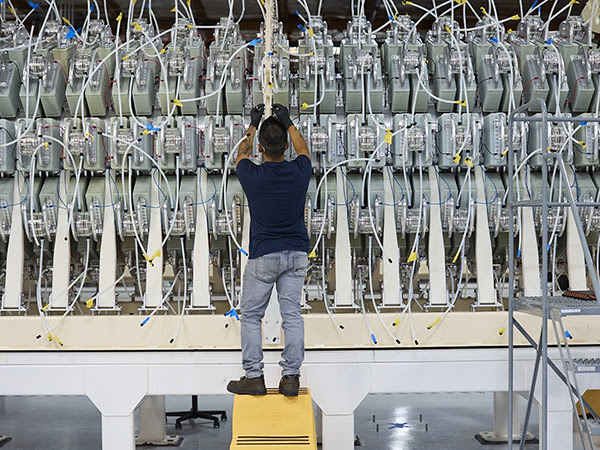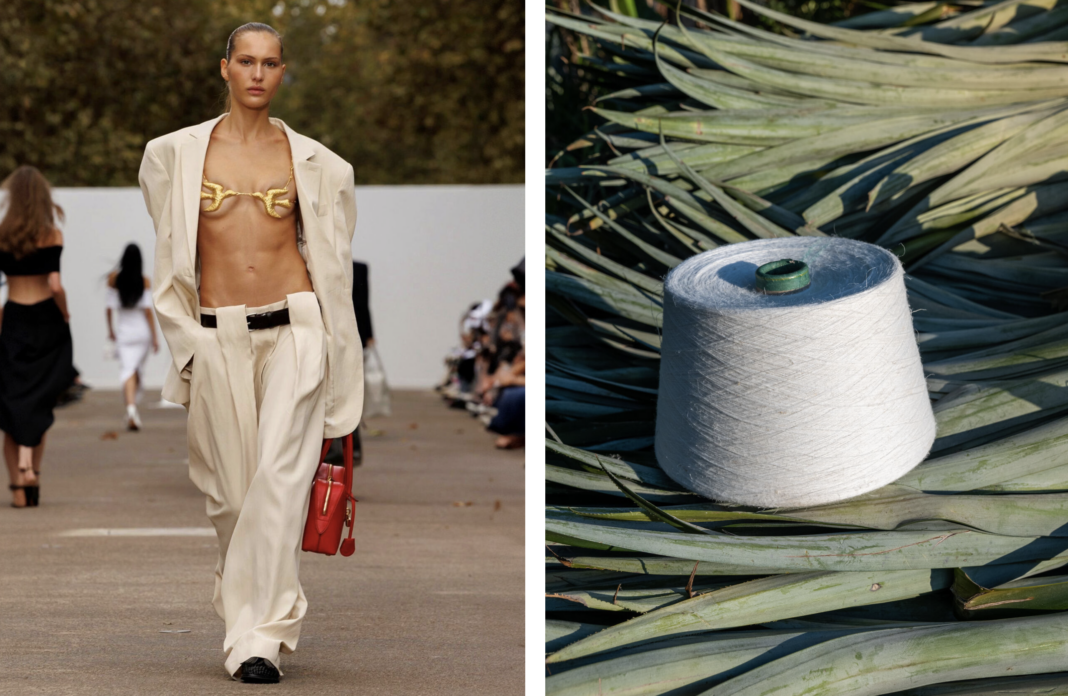

Europe leads the world in culture and taste. And when it comes to slow food, slow fashion and slow travel, Europe creates the mold. In a new bid to create circular fashion more than a trend but a necessity, European states are now declaring that every fashion piece created in or for the EU must be circular in nature. Funny, given that fast fashion was ultimately perfected into a business model with Sweden’s H&H and Spain’s Zara.

EU regulators increasingly will now require fashion companies to address what happens to products after they are made and sold. A major change took effect on 19 July 2026, when large companies in the EU became subject to a ban on destroying unsold clothing, fashion accessories and footwear.
Medium-sized businesses will come under the same restriction from 2030. The requirement forms part of the Ecodesign for Sustainable Products Regulation (ESPR) and is intended to reduce the unnecessary waste of usable products and the resources embedded in them.
The measure is part of a wider restructuring of Europe’s textile-waste system.
The European Commission proposed changes to the Waste Framework Directive in 2023, with textiles identified as a priority area. The revised framework entered into force in October 2025 and introduces EU-wide rules for Extended Producer Responsibility (EPR), making producers financially responsible for supporting the collection and management of textile waste. Social-economy organisations involved in second-hand textile collection also receive specific exemptions and support under the framework.
Together, these policies are pushing fashion companies to rethink product design, inventory management, reuse, repair, collection and recycling. For global brands selling into Europe, the regulatory shift could influence supply chains well beyond the EU. The next generation of fashion products will increasingly need to be designed with their entire lifecycle not just their first sale in mind. Lastly, in terms of market size, the EU Circular Fashion Market was valued at approximately USD 2.8 billion in 2025 and is expected to reach around USD 6.0 billion by 2035, expanding at a CAGR of 7.9% from 2026 to 2035.
Fashion’s Linear Model Has Reached Its Limit
The linear process of making, using and disposing of fashion products is increasingly becoming unsustainable due to high consumption levels coupled with inadequate recovery processes that are leaving valuable materials out of the production process. Annually, there are about 92 million tonnes of textile waste produced globally. In Europe, 6.94 million tonnes of textile waste were produced in 2022 alone, which equates to approximately 16kg per person.
Most of the 85% of the household textile waste produced is not separately collected and is therefore part of the mixed waste streams rather than being used for reuse or recycling. The problem starts even before the use phase since approximately 4-9% of the textiles produced on the European market are destroyed before being used, equating to 264,000-594,000 tonnes annually. This shows why the industry is shifting from disposability towards a circular economy of longer product life, repairing, reusing, reselling and recycling of fibres.
The Garment Must Be Designed for Its Second Life

The shift toward circular fashion is beginning at the design stage, as brands recognise that recycling becomes far more difficult when garments are made from complex combinations of materials. A single product can contain several fibres along with dyes, coatings, threads, buttons, zippers, labels and adhesives, making separation and recovery more challenging. Designers are therefore increasingly considering material simplicity, durability, repairability and easier disassembly when developing new products.
The goal is to ensure that garments can remain useful through repair and resale before their materials eventually enter recycling streams. This approach also supports the use of fibres that can be recovered and processed into new textile inputs. Digital product information is expected to further support this transition by making material composition and other product characteristics easier to identify. As circularity requirements become stronger, design decisions made at the beginning of a garment’s life will increasingly determine its value at the end, turning design for durability and recovery into an important competitive consideration for fashion brands.
The Infrastructure Behind the Circular Fashion Economy

Making clothing recyclable is only one part of the circular-fashion transition. The industry also needs infrastructure that can move garments from consumers back into productive use. This begins with collection networks, including municipal systems, retailer take-back programmes, textile bins and producer-funded schemes. The challenge is significant, with the EU generating around 6.94 million tonnes of textile waste in 2022, while 85% of household textile waste was not separately collected.
Collected garments then move through sorting and material-identification facilities, where they are classified by fibre composition, colour, quality and condition. This determines whether they can be resold, repaired, reused or recycled. Automated sorting and digital identification can improve efficiency, particularly for blended fabrics.
The next stage involves pre-processing, including cleaning, cutting, shredding and removing zippers, buttons, coatings and other components. Materials can then enter mechanical or chemical recycling facilities, with the ultimate goal of producing fibres suitable for new textile manufacturing.

Reverse logistics connects consumers, retailers, collection centres and recyclers, while Digital Product Passports, QR codes and material databases can improve traceability and recycling decisions. Extended Producer Responsibility (EPR) can also help finance collection and waste management.
Building this system could require €8-11 billion (USD 9.3–12.8 billion) in additional capital expenditure and €5-6.5 billion (USD 5.8–7.6 billion) in annual operating expenditure to support a potential 15% textile-to-textile recycling rate by 2035. This creates opportunities for recyclers, fibre producers, sorting companies, logistics providers and digital-technology firms.
Used Garments → Collection Networks → Sorting & Identification → pre-processing → Mechanical / Chemical Recycling → Recovered Fibres → New Textile Production → New Garments
How Fashion Brands Are Responding to the Circularity Mandate
Fashion companies are moving from broad sustainability promises toward measurable changes in materials, product design, recycling capacity and end-of-life management. As European circularity rules become more demanding, brands are preparing for greater responsibility across the garment lifecycle. The focus is increasingly shifting from simply reducing environmental impact to creating products and supply chains that can keep materials in circulation for longer.
- Increasing Recycled and Circular Materials
H&M is increasing its use of recycled and sustainably sourced materials while targeting 100% recycled or sustainably sourced materials by 2030, including an ambition to reach 50% recycled materials. In 2025, 91% of its product materials met its sustainability criteria, with recycled materials accounting for 32%. The company is also working with partners including Syre, Circulose, Recover, RE&UP and Loopamid to strengthen access to circular materials.
- Moving From Recycled Bottles to Recycled Clothes
adidas is gradually changing where its recycled polyester comes from. The company has maintained 99% recycled polyester use since 2023 and aims for 10% of its recycled polyester to come from recycled textile waste by 2030. The strategy represents a move toward recovering fibres directly from discarded clothing rather than relying primarily on recycled plastic bottles.
- Designing Garments for Longer Life
Brands are also reconsidering how products are engineered. Arc’teryx, for example, has introduced circular-design initiatives incorporating recycled materials, repairability and easier component separation. Its approach demonstrates how companies are beginning to consider repair, disassembly and eventual material recovery during the design stage, rather than treating recycling as an end-of-life problem.
- Building Recycling Infrastructure
Fashion companies are increasingly investing in the infrastructure needed to support circular production. H&M has established Looper Textile Co. with REMONDIS to develop industrial-scale textile sorting capabilities, while its investment in Syre supports the development of textile-to-textile recycled polyester. Such investments aim to improve the availability and consistency of recycled feedstock.
- Collaborating Across the Supply Chain
No individual brand can create a closed-loop fashion system alone. adidas, Bestseller and Inditex are participating in industry initiatives involving textile sorters, recyclers and producer-responsibility organisations. These collaborations are designed to connect fragmented parts of the recycling chain and accelerate the development of commercial-scale textile-to-textile processing.
- Taking Greater Responsibility for End-of-Life
Brands are also expanding programmes covering take-back, reuse, repair, resale and recycling. H&M reported collecting more than 17,000 tonnes of textiles from customers in 2025, with the material directed toward reuse or recycling. Such programmes help brands establish reverse flows of materials while extending the useful life of garments.
The Strategic Shift
The industry’s response is moving well beyond the simple use of recycled fabrics. Companies are increasingly building strategies around the complete lifecycle of a garment, from material selection and design to manufacturing, consumer use, collection, reuse and recycling. As regulation strengthens, circularity is becoming both a compliance requirement and a long-term supply-chain strategy, potentially giving early movers greater access to recycled materials and circular production capabilities.
Top 5 EU Beneficiary Markets of the Circular Fashion Economy
Germany
Germany is one of Europe’s largest apparel markets and has significant potential for textile collection, sorting, recycling and circular retail. Its large consumer base can generate substantial volumes of recoverable textiles, while its industrial capabilities support recycling technologies and sustainable manufacturing.
France
France is particularly well positioned because it was an early adopter of textile Extended Producer Responsibility (EPR). Its established collection and producer-responsibility system gives companies experience in financing and managing textile waste, creating opportunities in collection, reuse, repair and recycling.
Netherlands
The Netherlands stands out for its circular-material performance and textile-sorting capabilities. Its 2024 circular material use rate reached 32.7%, the highest in the EU, while the country also has an estimated 200,000-tonne annual textile-sorting capacity.
Italy
Italy combines a major fashion industry with an established textile and manufacturing ecosystem, making it well positioned for circular design, fibre recovery, recycling and sustainable textile production. Its 2024 circular material use rate reached 21.6%, among the EU’s highest.
Sweden
Sweden is emerging as an important market for advanced textile recycling and circular-material innovation. Its position is strengthened by companies such as Circulose, which is developing recycled textile fibres, while Swedish policy and innovation initiatives support the broader transition toward textile-to-textile recycling.
Top 10 Beneficiary Businesses of the Circular Fashion Economy
- Textile Recycling -Converts discarded garments into reusable fibres and materials for new textile production.
- Garment Collection -Operates take-back programmes, collection centres and textile recovery networks.
- Textile Sorting -Separates collected clothing by fibre composition, quality, colour and condition.
- Circular Fibre Manufacturing -Produces new fibres from recovered cotton, polyester, cellulose and other textile waste.
- Repair & Refurbishment -Extends garment lifespans through repair, alteration, cleaning and restoration services.
- Resale & Second-Hand -Keeps clothing in circulation through resale platforms, stores and brand-operated second-hand channels.
- Reverse Logistics – Moves used garments from consumers and retailers to sorting, resale and recycling facilities.
- Recycling Technology -Develops mechanical and chemical processes for recovering materials from textile waste.
- Digital Traceability -Provides Digital Product Passports, material identification and tracking solutions for circular supply chains.
- Textile Waste Management -Manages textile collection, processing and recovery as producer-responsibility requirements expand.
Conclusion
The shift towards circular fashion is not only about sustainability anymore. European Union regulations, increasing waste of textiles and scarcity of resources are pushing brands to reassess the way clothes are made, sold, used, and reclaimed. The greatest potential for innovation is in creating a circular system in which clothes retain their value even after first use through repairing, reselling, reusing and textile-to-textile recycling.
Yet, to achieve true circularity, more will be needed than the efforts of individual companies. Infrastructure for collection, sorting, recycling, recycled fibres, as well as financing, will need to scale up altogether. As the deadline of 2030 comes closer, the companies that are making investments now can benefit from both regulation and competition.