Once a conspicuous consumer, Tami Zori – the founder of CityTree – is now trying to become the embodiment of green living.
 Tami Zori (left) is scrubbing jars in her kitchen sink with a clay-colored goop made from used lemon halves left to ferment. “Then I mix them with vinegar and I get this not-very-nice paste – but it works, especially in a kitchen that has no meat and very little oil.”
Zori, 43, is a living embodiment of the “reduce, reuse, recycle” slogan. Inside and outside a ground-floor flat in downtown Tel Aviv she has created CityTree, an urban ecology project designed to demonstrate what it teaches: Permaculture (sustainable living), vegan nutrition, composting, and other ways of living harmoniously with nature. With the landlord’s permission, Zori, a crew of volunteers and CityTree’s staff – Alon Eliran, Eyal Engelmair and Roni Haliva – are transforming the patch of dirt surrounding the building into an attractive, edible garden.
“The idea is to make a demonstration urban garden to show people what they can do in the city, and also for the neighbors to enjoy,” Zori explains, as she supervises three young volunteers who are piecing together a garden walk using tiles discarded from a nearby renovation. Another walkway is cobbled with embedded glass bottles salvaged from the trash.
“One of the most important things we teach is human ecology – getting to know the people who live around you,” she declares.
“I was a capitalistic pig”
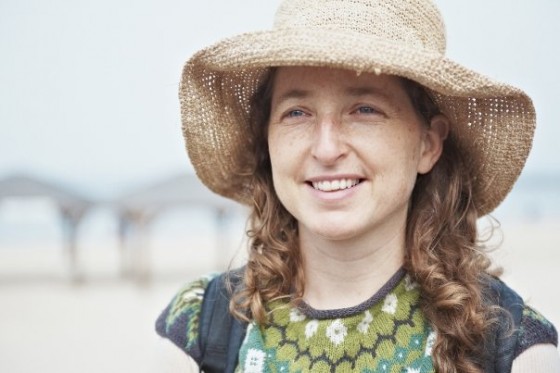
CityTree is a social business. About 200 “Friends of the Tree” pay a yearly fee or donate their services as teachers for CityTree courses, the enterprise’s main source of income. “It’s really an investment, not a donation,” maintains Zori. Friends are invited to social events that double as opportunities to create and promote their ecological businesses.
Though the project barely turns enough profit to cover expenses, Zori says the goal is to achieve a balance between social, environmental and monetary profit. She is more eager to spread knowledge than to earn money. “I always say money shouldn’t separate people from learning how to live a healthy life, so if people can’t pay our course fees we arrange for them to work a few hours or bring something from their own garden.
“This is a new kind of business and as such it takes time to build – and that’s fine! Look at the rate at which trees grow. Why do we have to run faster?”
Zori used to run fast when she worked in the corporate world in Israel and then New York. An artist and designer with a flair for management, she confesses, “I didn’t care much for the environment,” as she tosses greens from her garden into a blender. “I was a capitalistic pig. I ate out every night. I spent a lot on clothes and travel.”
Spreading green knowledge and information
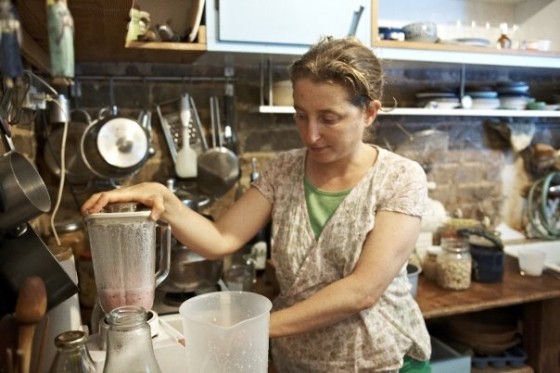
But at 25, she was already seeing a connection between her eating habits and her allergies and other ailments. She spent the next few years focusing on how to eat healthfully and her health improved dramatically. In time, she discovered that “the environment is my body and my body is the environment.” That’s part of the philosophy she brought to CityTree when she launched in 2006 and has continued to expand since moving to the demo apartment in May 2008.
When the bottles she’s scrubbing with her lemon paste are clean and dry, she’ll fill them with natural salt to sell, along with an eclectic assortment of goods including vegetable bags sewn from fabric scraps, organic tahini and dried, homegrown sage incense. Volunteers like Alana Greenberg help to prepare these items.
“Each product tells a multilayered story: We can talk about the jars and what would happen if I didn’t save them from the trash; we can talk about the salt inside and where it came from; and we can talk about small business and why it makes sense to buy from a woman living in a house in a big city, instead of buying from a supermarket,” relates Zori, who actively promotes CityTree in person and via her information-rich Hebrew website that has a only one short entry in English.
Greenberg, a teen from Australia, met Zori at an outdoor festival while in Israel for a post-high school program: “Tami was running a workshop there on ecological living, and told me about CityTree,” Greenberg recounts. She and two friends arranged to volunteer at CityTree twice a week over the summer. In addition to garden and kitchen duties, they make retail items such as corkboards fashioned from old wine-bottle corks.
“One day, we saw a professional gardener throwing some shrubs in a bin on the street and we went and got them,” Greenberg says. “Tami showed us how to make green smoothies from the leaves.”
A green map of Tel Aviv
CityTree is working with the municipality to create a Green Map of Tel Aviv, and is building a network of city-dwelling composters – who receive whimsical ‘medals of honor’ to wear or display. Zori offers composting workshops every month and the center is open to the public each Friday from 10 to 2.
“We spread information and knowledge, but we don’t initiate anything beyond our own project,” says Zori, whose bedroom walls are coated in papier-mâché made from waste paper. “However, people come here and take courses and do wonderful things in their own neighborhoods.”
Former New Yorker and CityTree staffer Tess Lehrick recently started Garbage2Garden, collecting organic waste from two area restaurants and turning it into compost to sell to locals. Permaculture course graduate Boaz Shilo started a new community garden.
Ecology-minded folks in other parts of Israel have approached Zori about how to start their own versions of CityTree, something she encourages. “They have to get the budget, and then it has to run for a year or two to see income. You don’t make a lot of money, but you don’t need a lot to live simply and healthfully.”
Story via ISRAEL21c