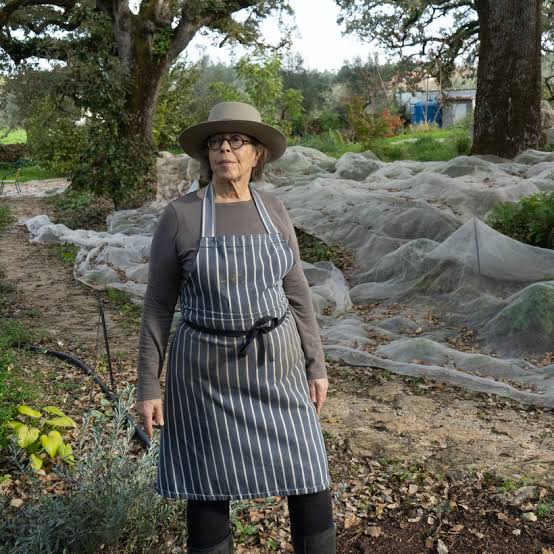

GAIL’s Bakery has become a fixture on Britain’s high streets, but the woman behind its name has a remarkable history in sustainable food, including helping pioneer a farmers market in Dubai. And we were among the first to ever interview her.
Before GAIL’s Bakery became one of Britain’s most recognizable bakery chains, there was a woman named Yael (Gail) Mejia, a food entrepreneur who believed good bread should be made by skilled bakers using excellent ingredients.
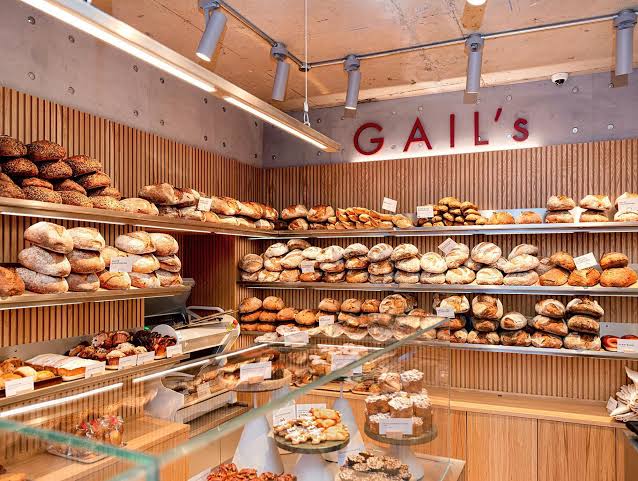
Today, GAIL’s has grown to more than 175 bakeries across the United Kingdom, and its owners are exploring expansion into Europe and the United States. But who founded GAIL’s Bakery, who owns it today, and what happened to Gail herself?
Green Prophet has a special connection to this story. In 2010, our writer Tafline Laylin interviewed Gail Mejia about local farming, artisan bread and her efforts to bring fresher, more sustainable food to Dubai.
(As a side note, when we were in Boston we noticed a cafe with a Yiddish name for father. Tatte Bakery & Café is </span a popular gourmet bakery and cafe chain founded in Boston, Massachusetts, by Tzurit Or, an Israeli immigrant.) What’s with Israelis and bakeries that people love? Go to Tel Aviv and visit some. Here is our article on Avigail’s bread in Jaffa.
Who is Gail Mejia, the founder of GAIL’s Bakery?
Gail Mejia’s story began long before the first GAIL’s opened in London’s Hampstead neighborhood in 2005. Gail was born in London then her her family moved to Israel when she was six months old, and she grew up in Tel Aviv before returning to London in her early twenties. In 1990, she established a bread distribution business in London, purchasing artisan bread from independent bakers and supplying restaurants and other customers. By 1993, she was baking bread herself through a business called The Bread Factory, which would become an important supplier to London’s restaurant industry.
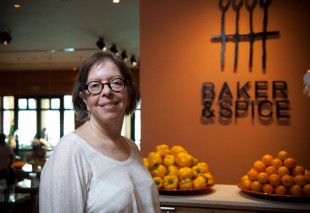
Mejia also established Baker & Spice in London in 1995, combining artisan baking with fresh, carefully prepared food. Her work helped introduce London customers to a different approach to everyday bread, one based on skilled craftsmanship rather than industrial production.
In 2003, entrepreneur Tom Molnar joined the bakery business. Together, Mejia and Molnar opened the first GAIL’s neighborhood bakery on Hampstead High Street in 2005. The idea was to bring the kind of naturally fermented sourdough previously supplied to prestigious restaurants directly to ordinary customers.
The concept worked. GAIL’s became synonymous with sourdough bread, pastries, coffee and neighborhood café culture.
Gail Mejia helped pioneer local food in Dubai
One of the lesser-known chapters of Mejia’s career unfolded in the Middle East. In 2009, she was involved in bringing Baker & Spice to Dubai, where she worked to connect the restaurant with local growers rather than relying entirely on imported ingredients.
At the time, sourcing fresh, locally grown food in the United Arab Emirates was far from straightforward. Much of the country’s food supply depended on imports. Mejia helped build relationships with UAE farmers and contributed to the development of a farmers market connected to Baker & Spice.
In her 2010 Green Prophet interview, she explained her approach to sourcing:
“The most important definition to me is Local not Organic.”
Her comments reflected an interest in the origins of food, the farmers producing it and the environmental consequences of long-distance transportation. Long before locally sourced ingredients became an expected feature of upscale restaurant menus, Mejia was advocating for shorter supply chains and closer relationships between chefs and growers.
What happened to Gail Mejia?
Mejia left the GAIL’s business in 2010. The following year, investment firm Risk Capital Partners backed Tom Molnar in a buyout, helping the bakery chain enter another phase of expansion. Mejia subsequently remained largely outside the public spotlight associated with the growing brand.
In November 2024, Air Mail published a rare profile of the bakery founder, interviewing and photographing her at her home in Alvaiázere, Portugal. While the business continues to use her name, she is no longer part of its leadership. Tom Molnar remains chief executive, overseeing the expansion of the bakery chain she helped establish.
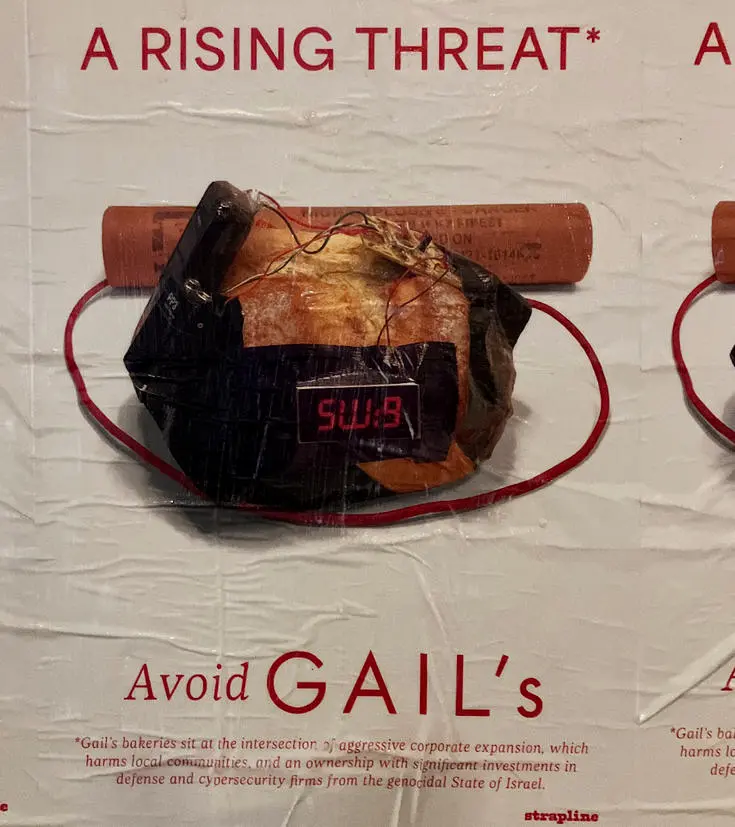
Currently Gail’s bakeries are being attacked in London for its association with a Jewish woman who is Israeli.
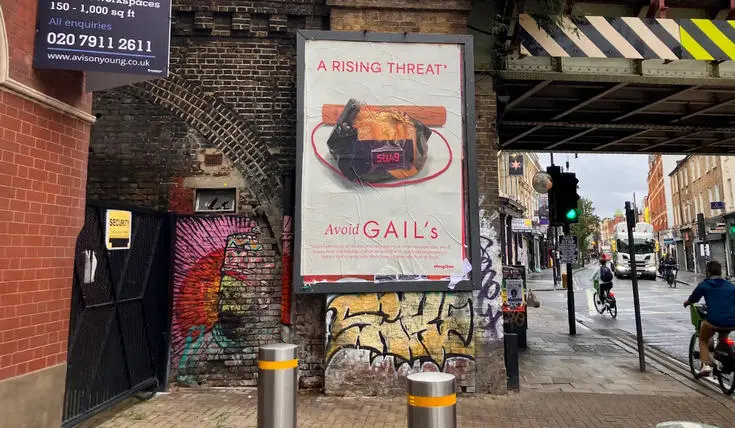
Who owns GAIL’s Bakery today?
GAIL’s Bakery is not owned by Gail Mejia. The chain operates within a privately held bakery group that also includes The Bread Factory. In September 2021, Bain Capital Credit and EBITDA Investments, associated with hospitality investment firm McWin, acquired a controlling interest in the wider bakery business in a deal valued at more than £200 million.
Today, ownership is shared among investors and members of the executive team, including Bain Capital, McWin and hospitality entrepreneur Luke Johnson. According to GAIL’s own website, no single individual or business holds a majority stake on its own. The bakery has grown dramatically since the 2021 investment, expanding from approximately 70 locations to more than 175 across Britain.
GAIL’s Bakery is preparing to go international
In June 2026, GAIL’s appointed Harry Goss as managing director of international operations, with responsibility for exploring expansion opportunities in Europe and the United States. The appointment represents a potential new chapter for a company that began as a small artisan bread supplier in London.
Its growth also raises questions about how the principles of traditional baking can survive the demands of a large international business. GAIL’s says it continues to prioritize long fermentation, carefully sourced ingredients and relationships with farmers and millers.
The company has also been experimenting with heritage grains, reducing food waste and reusing building materials in its stores. Its Moonshot Bakery project in Hampstead, opened in 2025, explored how reused furniture and fittings could reduce the environmental impact of retail refurbishment. Surplus food is also distributed through charity partnerships and sold at discounted prices through Too Good To Go.
These initiatives are meaningful, although the environmental impact of a growing bakery chain ultimately depends on its wider sourcing, transportation, energy use and waste.
For more on the woman behind the brand, read Green Prophet’s original 2010 interview with Gail Mejia about artisan baking and local food in Dubai.