Israel Camel Racing May Suffer for Lack of Humps

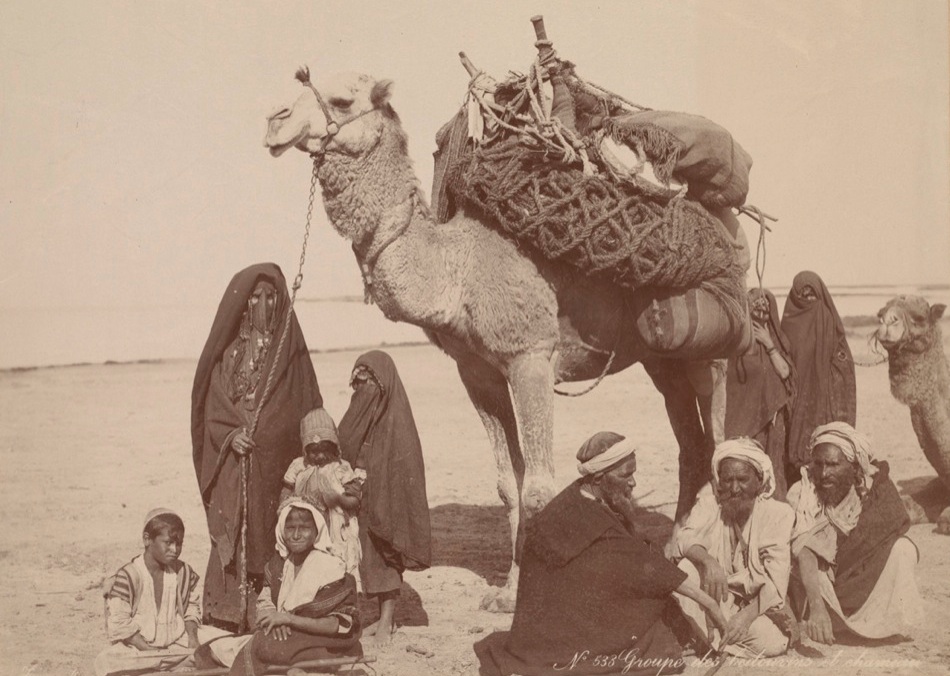
In Israel Bedouin still joke about the value of a woman “in the price of camels.” Now two Jewish Israelis have joined the tribe, and are looking to save the last of these Mohicans.

Camel racing is still a very popular sport in many parts of the Middle East, despite its reputation involved in child abuse and other non-green activities. Green Prophet covered this subject in February, noting that rich people in countries like Abu Dhabi, often pay thousands of dollars for racing camels and that small children are taught to race them at an early age.

Now this sport may soon be reality in Israel as well; according to an Los Angeles Times article about a couple of Israeli filmmakers, Ezry Keydar and Nadav Ben Israel who are making a documentary  movie about Bedouins who own Israel’s remaining camel herds. These two are entertaining the idea of racing these “ships of the desert” at an uncompleted airstrip outside the Negev city of Mitzpeh Ramon.

Most of the article deals with the plight of Israel’s camel population, now down to about 3,500 animals; as well as the Bedouins who still keep these animals and are now finding it harder to do so due to lack of natural grasslands in Israel arid regions and the high price of purchasing fodder.

The Bedouins themselves are a neglected element of Israeli society with the a severe lack of running water, sewage systems and other things that other segments of Israel’s population take for granted.

Since the Bedouin are the keepers of a camel herd population that once numbered into the tens of thousands, Keydar and Ben Israel will most likely enlist Bedouins to provide not only the racing stock but the riders or jockeys as well; which probably has resulted in the significance of the term “camel jockey” in reference to the romance place around the indigenous desert populations who in the past relied on these animals as beasts of burden, meat and dairy products, and even for the clothing they wear and tents they used (and sometimes still do) live in.

Referring back to our earlier article, in which wealthy people in UAE states pay large sums of money for pedigree breeding and racing camels, it’s not likely that the ones found in Israel’s Negev desert regions are of the same quality as those that wealthy camel fanciers in Abu Dhabi pay a small fortune for. The one comparison that might be made would be regarding who will ride these “splendid  beasts” as Lawrence of Arabia once noted them to be.

Nowadays oil trading rich people in the Middle East pay much for luxury cars, like gold plated Mercedes Benzes than they do for camels. And even in places like Abu Dhabi, the noble Dromedary racing camel may one day be only a nostalgic memory.

Over in Israel it’s debatable if Israel’s Bedouin population will do that much to restore their national pride as their nomadic way of life is quickly drifting into the sands of history, being replaced with more town life in large settlements like Rahat in the Northern Negev

who have also adopted many of the bad traits of living in towns such as piling up trash or disposing it in wadis (dry creek beds), as well as leaving their former occupations as herdsmen and farmers for  more lucrative ones like smuggling drugs and other illegal commodities into Israel.

As for camel racing, it may already be too late for this sport to catch on in modern Israel, but here’s what the Israeli filmmakers say:

Our choice of topic is not accidental. We see these people as the last of the Mohicans — they represent a vanishing culture.

Sadly, Israel is working systematically to push this culture and its symbols into extinction. It won’t recognize camels as an agricultural sector and won’t allocate grazing lands. Commercial feed is expensive, and many Bedouins are forced to give up camels. Israel is successfully eliminating a symbol of culture. And when you kill a symbol, the culture dies with it.

We see great value in preserving this culture — not in a museum, but as a way of life. We want to see Bedouins continuing to live as people of the desert, and this is increasingly less possible. We do not want them to vanish from our landscape.

::LA Times article

Read more about Bedouins and Camels:

Abu Dhabi Millionaires Pay Big Bucks for Camels

Meet Ahmed Amrani: the Green Bedouin

Ben Gurion University Makes Green Plan for Bedouin City of Rahat

Maurice Picow
Maurice Picowhttps://www.greenprophet.com/
Maurice Picow grew up in Oklahoma City, U.S.A., where he received a B.S. Degree in Business Administration. Following graduation, Maurice embarked on a career as a real estate broker before making the decision to move to Israel. After arriving in Israel, he came involved in the insurance agency business and later in the moving and international relocation fields. Maurice became interested in writing news and commentary articles in the late 1990’s, and now writes feature articles for the The Jerusalem Post as well as being a regular contributor to Green Prophet. He has also written a non-fiction study on Islam, a two volume adventure novel, and is completing a romance novel about a forbidden love affair. Writing topics of particular interest for Green Prophet are those dealing with global warming and climate change, as well as clean technology - particularly electric cars.

Read More

7 COMMENTS

TRENDING

Dan Zaslavsky’s energy tower dream is rising again in Iran and China

The Energy Tower idea never made the leap from drawings and engineering studies to full-scale construction. But nearly two decades after most people stopped talking about it, the concept is quietly evolving in two unexpected places: China and Iran. The concept let dreamers dream and doers do - figuring out more pleasing designs and engineering.

A visit to Amirim, Israel’s first all-vegetarian village in the Galilee

Just 15 kilometers from Tzfat there is a moshav that was founded in the late 50s that was ideologically influenced by organic, vegetarian and vegan principles. My hostess at Ohn-Bar, the tzimmer where I stayed, explained that the people of Amirim were among the pioneers of Israel’s strong vegetarian movement.

Israeli Hydrogen Startup H2Pro Are Trying to Solve Clean Energy’s Hardest Problem

The company has attracted backing from major investors including Breakthrough Energy Ventures, the climate fund founded by Bill Gates, along with industrial partners such as Sumitomo, ArcelorMittal, and Temasek, a multi-billion dollar company that owns Singapore airlines. H2Pro has raised more than $100 million USD and is moving from pilot projects toward commercial-scale deployments.

Desalination experts debunk Aqua Solaire, the floating desalination barge

AI makes it easy to dream, develop, and create images of what could be world-changing ideas, until the reality sets in. A new project making the rounds is Aqua Solaire, an allged French concept for a solar-powered desalination vessel designed to bring drinking water to coastal communities facing drought, storms, and infrastructure failures.

40 more migratory animals need protecting, warns UN group

The Convention on the Conservation of Migratory Species of Wild Animals (CMS), governments agreed to extend protection to 40 more migratory species, from cheetahs and striped hyenas to snowy owls, giant otters, and great hammerhead sharks. Too many of them are slipping toward extinction .

Locals From Rishon Fight IKEA

Big Box stores are a pretty new concept in Israel, and thank God that not every Israeli city wants them in their backyard. A word from someone who has see the beautiful farmland around her hometown Newmarket, Ontario stripped and converted into vulgar strip malls of big box shops: they have no place in a healthy and sustainable town or city.

The Jewish National Fund Meets An Inconvenient Truth

According to the JNF, it has transformed thousands of acres of barren land into green forests in Israel. They state that each person emits about 23 tons of carbon per year, estimating that each tree planted can absorb one ton of carbon in its lifetime. That's a whole lot of trees you'd need to be planting. Could so many fit in Israel?

How to quiet noise from construction in your office

Streets need to be resurfaced in New York but the humming and grinding noise is unsettling. Noise is environmental pollution. 

EarthX and a blueprint for sustainable investing

Trammell S. Crow, a Dallas-based businessman and father of four, is focusing his efforts on impact investing, and media that focuses on saving the planet through EarthX.

Mining Afghanistan’s Mineral Discoveries Similar to Avatar

Now that American forces in Afghanistan are commemorating the longest period of any war that America has been involved in, including the 1965-73 Vietnam War, the recent discoveries of large and extremely valuable mineral and metal deposits may finally bring to light a reason to continue the presence of US fighting forces in this war torn and backward country.

From Pilot Plant to Global Stage: How Aduro Clean Technologies’ 2026 Expansion Signals a Turning Point for Chemical Recycling Investors Like Yazan Al Homsi

The company's Next Generation Process (NGP) Pilot Plant in London, Ontario, has officially moved into initial operating campaigns, generating the kind of structured, repeatable data that separates laboratory promise from commercial viability.

Nobul’s Regan McGee on Shareholder Value: “Complacency Is the Silent Killer” 

Why the governance framework designed to protect shareholders so...

Should You Invest in the Private Market?

startustartup Unlike public stock exchanges, which offer daily trading, strict...

Popular Categories