Flash Floods in Turkey Signals Global Warming Is Rearing Head In Middle East Region

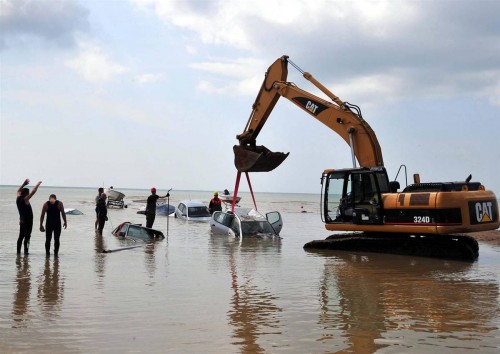
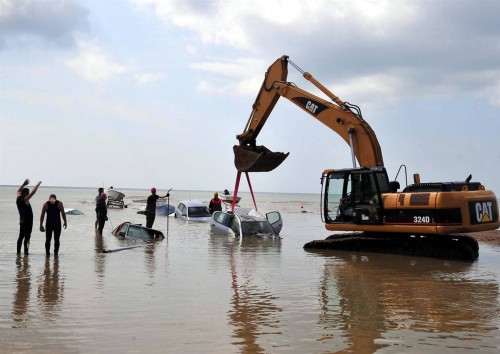
Flooded cars outside Istanbul 

World climate change issues are being felt closer to home with recent disastrous flash flooding occurring in parts of Greece and Western Turkey.

Some of these floods have been so bad that many are saying that they are the worst in years, with the heaviest rains in more than eight decades falling in and near Turkey’s largest city, Istanbul.

So far, property damage alone in areas near Istanbul is estimated to be more than $ 100 million, and several people have been killed, including seven women who were in a minibus that was swept way during a flash flood. Is global warming to blame?

 The downpours come after some of Turkey’s worst drought conditions in years, as we have noted in a previous Green Prophet piece on Turkey which explores how Turkey’s water reserves have been seriously depleted due to lack of adequate rainfall –– believed to be partially been attributed to climate change.

Now, in the country’s western provinces, the exact opposite is true with too much water causing serious property and crop damage; not to mention displacement of people and even loss of life.

Even the capital, Ankara, is not immune to this problem, with many low-lying areas in danger of flooding. The current opening of the UN General Assembly in New York has also been an opportunity for leaders of the more developed nations to meet each other and discuss some of the problems dealing with climate change.

In fact, issues dealing with climate were addressed to the delegates attending the opening sessions at both this and last year’s General Assembly sessions. In his first address as US President before the world body, President Barack Obama said the following in regards to his country facing up to the consequences of mankind induced climate change:

“To confront climate change, we have invested 80 billion dollars in clean energy. We have substantially increased our fuel-efficiency standards. We have provided new incentives for conservation, launched an energy partnership across the Americas, and moved from a bystander to a leader in international climate negotiations.”

Despite his remarks, there is still much that the USA can do to help reverse the effects of climate change; particularly in regards to reducing greenhouse gases and harmful pollutants by the country that is still considered to be the greatest contributor of these harmful emissions in the world.

But for thousands of  suffering Turks, the good intentions of President Obama and other world leaders are not alleviating their suffering, or bringing back their loved ones. As a result of  abnormal weather patterns these kinds of occurences  have now become the rule, rather than the exception.

More on climate change and weather:

(Photo via AP)

Maurice Picow
Maurice Picowhttps://www.greenprophet.com/
Maurice Picow grew up in Oklahoma City, U.S.A., where he received a B.S. Degree in Business Administration. Following graduation, Maurice embarked on a career as a real estate broker before making the decision to move to Israel. After arriving in Israel, he came involved in the insurance agency business and later in the moving and international relocation fields. Maurice became interested in writing news and commentary articles in the late 1990’s, and now writes feature articles for the The Jerusalem Post as well as being a regular contributor to Green Prophet. He has also written a non-fiction study on Islam, a two volume adventure novel, and is completing a romance novel about a forbidden love affair. Writing topics of particular interest for Green Prophet are those dealing with global warming and climate change, as well as clean technology - particularly electric cars.

Read More

3 COMMENTS

TRENDING

Stardust’s solar geoengineered $10 billion plan to blot out the sun

Israeli-American startup Stardust Solutions has raised $75 million to develop technology that could cool the Earth by reflecting sunlight. Is solar geoengineering becoming a real industry? Or could it be a new threat?

Mongolia rangelands the center of climate change

Mongolia put the world’s overlooked rangelands on the climate agenda at UNCCD COP17, where governments and investors backed new financing for land restoration, drought resilience and pastoral communities.

Did China’s AI Boom Melt the Himalayas? Nepal’s Deadly Floods Raises Question About Data Centers and Climate

Nepal’s devastating floods reveal the growing risks of a warming Himalaya. As glaciers retreat and extreme events intensify, clean energy and climate action are increasingly urgent — and local organizations need support.

Jewish Climate Network founded so innovators don’t leave their identity at the door

Rather than retreating from climate change work, the Jewish Climate Trust organization has backed a new initiative designed to strengthen both climate action and Jewish community.

NuCicer — Chickpeas Move to the Center of the Plate

NuCicer has developed Nuchi, a new class of chickpea with 50% more protein and 25% less fat than conventional varieties. Co-founder Kathryn Cook explains how wild chickpea genetics, AI-guided breeding, and centuries-old biodiversity could transform the future of sustainable protein.

Scientists make lead-free perovskite solar cells that can weather the elements

Scientists have developed a “raincoat” for lead-free tin perovskite solar cells, helping them withstand air, moisture and heat while maintaining high efficiency.

The Essential Guide To Sustainability in Project Management

Sustainability is an approach where businesses and individuals balance the environmental, social, and economic aspects of a project such that current and future stakeholders are not overburdened with the impacts of the project in future.

Yerukim Forms a New Green Economy Where the Money is Really Green

The Yerukim members who pick up the recyclables get to keep the monetary reward, the public earns "green" bills that can be used in shops, and business owners get to be associated with environmentalism.

Choosing Riyadh over Dubai? What Investors Should Know

Saudi Arabia is deploying capital at unmatched scale to catalyze tourism and advanced industry while rewiring its power-and-water backbone. The investable frontier is widening—especially in renewables, grid storage, water efficiency/desal retrofits, and hospitality operating platforms. Prudent investors will insist on phased delivery, enforceable KPIs (energy, water, biodiversity), and RHQ/zone compliance—while pricing political-economy and reputational risks alongside growth upside.

Sell your cooking oil for biodiesel money

Want to make money on old french fry oil? Sell it.

Qatar Alternative Energy Summit Pairs Investors And Innovators

Alternative energy investors and innovators can meet n' greet in Doha, Qatar March 16 and 17.

Here’s How To Implement The Four Pillars Of Employee Engagement

If you throw a party for your work team and they are vegans, don't make it a barbecue. Know the sustainability values of your team to boost moral and retain good people.

Locals From Rishon Fight IKEA

Big Box stores are a pretty new concept in Israel, and thank God that not every Israeli city wants them in their backyard. A word from someone who has see the beautiful farmland around her hometown Newmarket, Ontario stripped and converted into vulgar strip malls of big box shops: they have no place in a healthy and sustainable town or city.

Popular Categories