Somehow vegetables with short seasons excite the imagination and appetite more sharply than produce that’s available all year around. Good Middle Eastern cooks have many recipes for delicate fava beans, and this turmeric-fragrant soup is one.
Somehow vegetables with short seasons excite the imagination and appetite more sharply than produce that’s available all year around. Good Middle Eastern cooks have many recipes for delicate fava beans, and this turmeric-fragrant soup is one.
Somehow vegetables with short seasons excite the imagination and appetite more sharply than produce that’s available all year around. Good Middle Eastern cooks have many recipes for delicate fava beans, and this turmeric-fragrant soup is one.
Somehow vegetables with short seasons excite the imagination and appetite more sharply than produce that’s available all year around. Good Middle Eastern cooks have many recipes for delicate fava beans, and this turmeric-fragrant soup is one.
Somehow vegetables with short seasons excite the imagination and appetite more sharply than produce that’s available all year around. Good Middle Eastern cooks have many recipes for delicate fava beans, and this turmeric-fragrant soup is one.
Somehow vegetables with short seasons excite the imagination and appetite more sharply than produce that’s available all year around. Good Middle Eastern cooks have many recipes for delicate fava beans, and this turmeric-fragrant soup is one.
Somehow vegetables with short seasons excite the imagination and appetite more sharply than produce that’s available all year around. Good Middle Eastern cooks have many recipes for delicate fava beans, and this turmeric-fragrant soup is one.
Somehow vegetables with short seasons excite the imagination and appetite more sharply than produce that’s available all year around. Good Middle Eastern cooks have many recipes for delicate fava beans, and this turmeric-fragrant soup is one.
It’s hard to say how this is going to go with anti-vaxxers: the world’s first honeybee vaccine has been approved by the USDA in the United States. The new vaccine prevents a condition called American Foulbrood, which isa highly contagious bacteria that turns bee larvae into brown goo. It’s one of the reasons for the great honeybee die off, among other reasons such as light pollution, the use of pesticides, global warming.
Bees may now be immune to an anti-bacterial vaccine
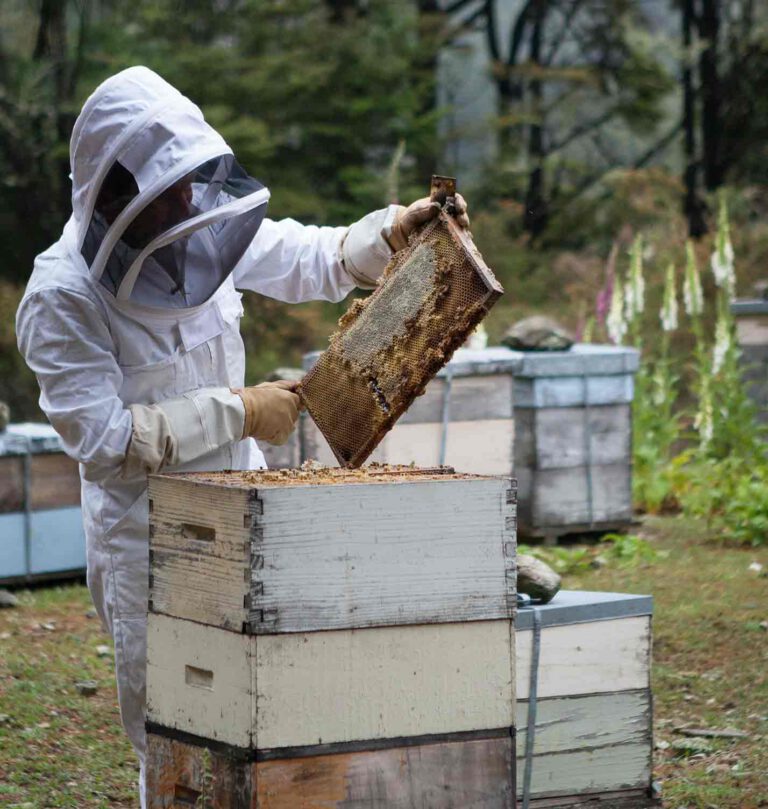
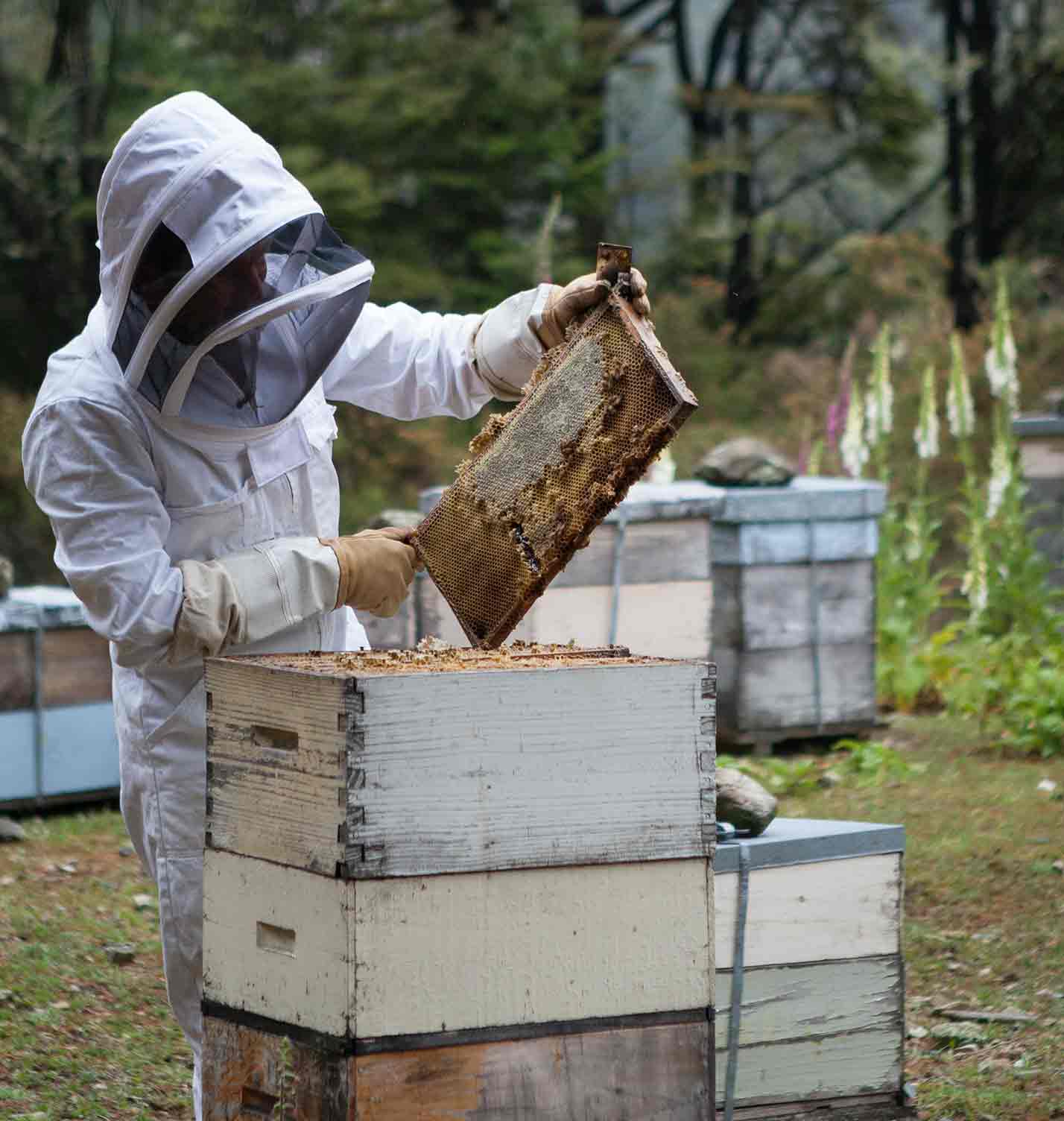
The new bee vaccine, developed by an American company, contains a dead version of the bacteria causing brown goo, and is incorporated into the royal jelly that worker bees feed to the queen. The queen then puts the vaccine unknowingly in her ovaries, which gives her future progeny immunity. The vaccine is non-GMO and can be used in organic agriculture, the company developing the vaccine reports.
The vaccine is developed by Dalan Animal Health, a biotech company pioneering insect health, and they have a conditional license against the bacteria Paenibacillus larvae.
“If we can prevent an infection in our hives, we can avoid costly treatments and focus our energy on other important elements of keeping our bees healthy,” explained Trevor Tauzer, owner of Tauzer Apiaries and board member of the California State Beekeepers Association.
Honeybees, as we know, along with all kinds of bees, are a critical component of agriculture. One-third of the global food supply relies on pollination (almonds for instance), and healthy commercial hives are essential to secure high crop yields in conventional agriculture.
What is killing honeybees?
Scientists know that bees are dying from a variety of interrelated factors—pesticides, drought, habitat destruction, nutrition deficit, air pollution, global warming and more.
However, honeybees above all that honeybees are also plagued by American Foulbrood, with previously no safe and sustainable solution for disease prevention. Cases of American Foulbrood are notifiable in the USA and Canada, and the only treatment method relies on burning the bees and infected hives and equipment.
“Our vaccine is a breakthrough in protecting honeybees. We are ready to change how we care for insects, impacting food production on a global scale,” said Dr. Annette Kleiser, CEO of Dalan Animal Health.
The bacterin was developed by Dalan Animal Health, and is manufactured by Diamond Animal Health (Des Moines, Idaho), a wholly-owned subsidiary of Heska (“Heska”; NASDAQ: HSKA).
Here’s how the bee vaccine works:
The USDA has issued the conditional license in the first instance for two years. Dalan will distribute the vaccine on a limited basis to commercial beekeepers and anticipates having the vaccine available for purchase in the United States in 2023.
The most sustainable kind of parking in Paris is walking, but jokes aside there are ways to make parking more efficient
The future of parking lots and structures is an essential topic for cities and towns worldwide. As more people move to urban areas, the demand for monthly parking spaces continues to increase. To address this need, cities are turning to sustainable solutions for parking lots and structures to reduce their environmental impact.
In this article, we’ll explore the different sustainable options for parking lots and structures and discuss the potential for creating a greener, more sustainable future for our parking spaces.
The Current State Of Parking Lots
Parking lots and structures are a huge industry. The average driver in America racks up about 12 miles of driving for every 1 mile of travel, which means that the need for sustainable parking garages and lots is growing.
Depending on the city, there are a variety of parking options available. The most common types include street parking, lots, garages, and meters. Lots and garages require some payment, whether cash or credit card. Meters are often found in high-traffic areas and need coins or card payments through your phone.
The cost of parking can vary greatly depending on location. In big cities such as New York and Los Angeles, the average cost of parking can range from $25-$50 per day. This makes it difficult for people on a budget to find affordable parking. Fortunately, there are some ways to save money. Specialist parking platforms like Spacer allow you to compare prices for different lots and garages in your area and can save you a lot of money if you can park over longer periods. There are also options such as monthly parking and discounted rates for those willing to take advantage of them.
As transportation methods evolve (like self-driving cars and EVs) and new modes become available, we’ll see a shift away from cars towards public transportation and other options like ride-sharing services like Uber and Lyft or bike-sharing programs like LimeBike or Spin. Parking needs to evolve to stay ahead of the trend.
Parking garages will change over time to meet current trends
The future of parking garages will be more efficient, environmentally friendly, accessible and convenient. These are the qualities that consumers are looking for. While there’s no guarantee that any of these qualities will define the future of public parking structures, they’re likely to be important factors in making them sustainable long after construction.
Smart parking is becoming increasingly popular to reduce city congestion and make parking more efficient. Smart parking systems use sensors, cameras, and other technologies to detect when cars are parked, helping drivers quickly find the most available spots and reducing the time spent searching for parking. These systems can also help manage traffic flow and reduce emissions by limiting idling cars.
Driverless cars are another emerging technology that could revolutionize the future of parking structures. Autonomous vehicles have the potential to drastically reduce the need for parking spaces, as they will be able to drop off passengers and return to a designated lot, eliminating the need for people to take up space while waiting for their ride.
Parking apps are also becoming increasingly popular and can make it easier to find available spots. These apps can provide real-time information on the availability of parking spaces, helping drivers quickly find a spot without wasting time or fuel. They can also be used to reserve a spot ahead of time and even pay for parking through the app.
The future of parking structures is sure to involve a combination of intelligent parking solutions, driverless cars, and parking apps, all designed to make parking more efficient and sustainable. In addition, these solutions will help reduce congestion and emissions by leveraging the latest technologies, making them a win-win for cities and drivers.
The environmental impact of parking structures
An unsustainable parking lot creates problems with rain runoff, use of space, headaches for drivers
Parking lots and structures have become a part of the modern landscape, but they need to be more sustainable. They often occupy large land areas, and their construction has been known to displace local ecosystems and cause soil erosion. Furthermore, parking lots and structures have been linked to increased air and water pollution, as well as higher noise and light pollution levels. On top of this, many parking lots and structures are not designed with efficient drainage systems, resulting in runoff that can lead to flooding and water contamination.
Clearly, the environmental impact of parking lots and structures must be addressed to create a more sustainable future.
The benefits of sustainable parking structures
Regarding the future of parking structures, sustainability has many benefits. For one, sustainable parking structures will help reduce air pollution, as they do not require the burning of fossil fuels to power them. Additionally, they are often more efficient and less costly to build, meaning construction costs can be reduced over time.
If a carshare works, that’s about 100 families for one parking space and one car.
Sustainable parking structures can also be designed with other elements, such as green roofs and shade sails, which can help reduce the heat generated by the sun. This can cool down the area and create a comfortable environment for those visiting or using the parking structure.
Finally, sustainable parking structures can help promote environmental conservation and sustainability. This is especially important for cities and towns looking to reduce their carbon footprint and become more environmentally friendly. By investing in sustainable parking structures, cities can show their commitment to protecting the planet while providing a safe and efficient place for people to park their vehicles.
Takeaway:
The truth is we are heading towards a future where sustainable parking lots and structures are the norm. Large companies will push for change, whether it’s because of government regulation or public demand. And as long as the costs continue to fall and the benefits continue to rise, those who don’t adapt will be left behind. If you want to build green parking lots and structures, it’s time to start thinking about what it takes.
The key is to consider your parking facility’s impact on the environment. You should also consider the other ways people can get around and how they can be incorporated into your structure. As more and more people start using these alternatives, we must begin building environmentally-friendly structures.
Some electric cars use lithium-ion batters. The Quant is an electric car that stores its energy in salt.
Are you concerned about your carbon footprint? Are you interested in purchasing a vehicle that is both economical and environmentally friendly? If so, then an electric car might just be the perfect option for you. Electric cars are becoming popular due to their cost savings, low emissions, and quiet operation. To help you with the topic, we’ll discuss why electric cars are such a great choice for those looking for an eco-friendly travel solution.
What Are The Reasons To Choose An Electric Car?
Like any other car,electric cars come with a wide range of benefits and drawbacks. But there are several reasons why you may want to choose an electric car over a traditional gasoline-powered car.
Here are some of the main reasons why electric cars make sense:
1. Zero Emissions
Pulling away from the pump in an electric car may not be as satisfying as revving the engine of a traditional combustible vehicle. However, you can feel great about showing your ecological support for a better-quality environment. That’s because electric cars produce zero emissions and don’t contribute to air pollution. The latter is becoming more and more concerning as increasing levels are linked with many health complications. Such as respiratory problems, heart disease, and stroke. Making the switch to an electric car could be just what we need to break down air pollution and safeguard public health.
2. Low Maintenance Costs
You don’t need to worry about costly maintenance or repairs with electric cars. Shedding the gasoline engine’s various moving parts means there are far fewer things to break down on an electric vehicle. That means no more trips to the mechanic and less hassle when it comes to servicing your car, saving you both time and money in the long run.
3. Cheaper to Operate
An electric car is worth considering if you are looking for a car that will save you money in the long run. Not only will you be saving on fuel costs due to electricity being significantly less expensive than gasoline. In addition, you can also take comfort in knowing that the maintenance associated with electric cars tends to be much lower than those of gasoline-fueled ones.
4. Environmentally Friendly
When it comes to being environmentally friendly, electric cars are hard to beat. Since they run on electricity rather than gasoline, these vehicles produce zero emissions and don’t add to air pollution. Furthermore, electric cars have less of an environmental impact since they don’t require the extraction and refining of fossil fuels like gasoline cars.
5. Quieter Ride
Electric vehicles are nearly silent when the tires are not rolling on the road. The lack of noise is a huge benefit to drivers across the board. It creates an environment that encourages peacefulness and relaxation while you travel. Take it one step further, and electric cars come with the bonus of being eco-friendly – no more smoggy air or nasty emissions! There’s nothing like taking a break from city traffic with a nice ride in one of these silent beauties.
6. Faster Acceleration
If you’re the type of person who appreciates a blast of speed, then an electric car is made just for you. They are much faster when it comes to acceleration because they have something called instant torque that allows them to go from 0 to 100 km/h in 1.75s. It’s almost like pressing the gas pedal and rocketing off in an instant; one second, you’re standing still. After that, you are already well on your way with incredible force. Electric cars have significantly elevated the thrill factor for drivers looking for an exciting ride.
7. Tax Incentives
Electric cars are becoming increasingly popular. It is because most people continue to look for ways to be more eco-friendly and reduce their environmental impact. Many governments offer tax incentives to people who purchase electric vehicles. It helps offset the higher cost of electric vehicles. It can make them a much more friendly financial decision while also having long-term positive impacts on our environment. It’s a great way of encouraging people to switch and increase sustainability.
Conclusion
Electric cars are becoming increasingly popular as people continue looking for more eco-friendly ways. It will reduce their environmental impact. Not only do they offer a quieter ride, faster acceleration, lower maintenance costs, and cheaper running costs. Many governments also offer tax incentives for those purchasing electric vehicles. With all of these benefits in mind, it’s no wonder that electric cars are quickly becoming the preferred choice for drivers today.
This structure is an ancient Roman-built aqueduct in Israel
There is a breakwall at the ancient port of Caesarea in Israel that’s been standing against waves for 2000 years. Meanwhile the break-walls in Jaffa down the coast are being fortified once again after a couple of decades. Ancient concrete used by the Romans to build aqueducts and Rome itself, it turns out, was made to be self-healing concrete, and it can repair itself over time, surmise researchers from MIT. And this is important when you consider the built mass of concrete and our planet.
The new study on ancient concrete shows that while ancients didn’t know exactly why the concrete they used worked chemically, even though it was a recipe they perfected, it may be a recipe for reducing climate change. Current concrete mixtures create unnecessary greenhouses gases in their production, and as a circular material are not able to withstand the test of time.
Caesaria National Park: Built by Herod in honor of Caesar Augustus. Historians claim that Pontius Pilate lived there. Now ruins and located in one of Israel’s National Parks.
The research was led by Admir Masic from MIT and was published in a journal Science Advances and explores the process of hot mixing and how the ancient Romans made plaster to last. MIT is the same wonderful design, engineering and science school to hire Julia Watson who wrote the book every architecture student should own called Lo-Tek Design by Radical Indiginism. The book focuses more on primitive culture but it’s really a wonderful collection of building by nature. The best I have ever read. Plus it’s a glory to behold.
As for the self-healing plaster research: “The Romans employed hot mixing, using quicklime in conjunction with, or instead of, slaked lime, to create an environment where high surface area aggregate-scale lime clasts are retained within the mortar matrix,” writes Masic.
Romans mastered self-healing mortar, which works well in wet environments
“Inspired by these findings, we propose that these macroscopic inclusions might serve as critical sources of reactive calcium for long-term pore and crack-filling or post-pozzolanic reactivity within the cementitious constructs. The subsequent development and testing of modern lime clast–containing cementitious mixtures demonstrate their self-healing potential, thus paving the way for the development of more durable, resilient, and sustainable concrete formulations.”
This is some news we can use. Now architects and design students: start experimenting.
City lights and light pollution are killing small rodents. These are lights in a city in Vietnam but light pollution is everywhere.
A new study on rodents has found that light pollution hurts small mammals. An extensive study at Tel Aviv University’s School of Zoology tested the impact of prolonged low-intensity light pollution on two species of desert rodents: the diurnal golden spiny mouse, and the nocturnal common spiny mouse. The findings were highly disturbing: on two different occasions, entire colonies exposed to ALAN (Artificial Light At Night) died within days, and reproduction also decreased significantly compared to control groups.
The researchers: “Our results show clearly for the first time that light pollution can be extremely harmful to these species, and suggest they may be harmful to ecosystems, biodiversity, and even human health.”
The study was led by Prof.Noga Kronfeld-Schor, Chief Scientist of Israel’s Ministry of Environmental Protection, and PhD student Hagar Vardi-Naim, both from TAU’s School of Zoology and the Steinhardt Museum of Natural History.
Noga Kronfeld-Schor studies light pollution and rodents
Prof. Kronfeld-Schor explains: “We have been studying these closely related rodent species for years. They both live in Israel’s rocky deserts. By comparing closely related species that differ in activity times, we gain new insights into the biological clock and its importance to the health of both animals and humans.”
Hagar Vardi-Naim: “In most species studied to date, including humans, the biological clock is synchronized by light. This mechanism evolved over millions of years in response to the daily and annual cycles of sunlight – day and night and their varying lengths that correspond to the change of seasons. Different species developed activity patterns that correspond to these changes in light intensity and daylength and developed anatomical, physiological and behavioral adaptations suitable for day or night activity and seasonality.”
However, over the last decades, humans have changed the rules by inventing and extensively using artificial light, which generates light pollution. According to latest studies, about 80% of the world’s human population is exposed to ALAN, and the area affected by light pollution grows annually by 2-6%. In a small and overcrowded state like Israel, very few places remain free of light pollution. In our study we closely monitored the long-term effects of ALAN on individuals and populations under semi-natural conditions.”
The average life expectancy of spiny mice is 4 to 5 years, and the original plan was to monitor the effects of ALAN on the same colonies, measuring the effects on reproductive output, wellbeing and longevity. But the dramatic results thwarted our plans: on two unrelated occasions, in two different enclosures exposed to white light, all animals died within several days.
“No abnormal mortality was recorded in any of the other enclosures, and as far as we are aware, no similar event has ever been documented by researchers before,” the researchers report.
Why do we need rodents anyway?
Mice kissing on a poppy seed branch
If you are not a lover of mice or small rodents, you might think this is good news. But every species in the web of life in the city or desert is part of an intricate mechanism that supports our planet. As a Zoologist who worked with small mammals in forests in Ontario, Canada, for the Government of Canada, I learned that small mammals such as mice and voles, are indicator species. How they forage and breed does affect the health of a forest as they are the main scatterers of seeds and nuts which help trees regenerate.
If the mammals go, so do our trees.
We can also learn about ourselves when we look at smaller mammals. If light pollution affects them, there is a good chance it will affect us too, and the researchers confirm this. Previous research we’ve covered on light pollution includes: light pollution make crickets chirp in the daytime, light pollution is stopping coral reefs from spawning, and we’ve seen research that it hurts bats too. So if you think light at night is a good thing for your backyard, think again. Just like we are planing wildflowers to bring back the bees, turn off your lights at night to help the small mammals.
The white patches are exposed opal caches on Mars. The result could mean water for future Martians. Image by NASA
Diamonds can be made in a lab so perfectly that jewellers can’t tell the difference between a real and a fake. But a new cache of gemstones has been identified out of this world, on Mars, and these might be a kind of opal that only the red planet can produce. And the promise of opal, could mean water for future Martians.
A research team discovered the opals on the Martian surface using new methods from old data collected by NASA’s Curiosity rover. They verified opal, potentially serving as an important resource for human exploration.
In 2012, NASA sent the Curiosity rover to Mars to explore Gale Crater, a large impact basin with a massive, layered mountain in the middle. As Curiosity has traversed along the Mars surface, researchers saw light-toned rocks surrounding fractures that criss-cross certain parts of the Martian landscape, sometimes extending out far into the horizon of rover imagery.
Recent research into these rocks finds that these widespread halo networks served as one of the last, if not the last, water-rich environments in a modern era of Gale Crater. This water-rich environment in the subsurface would have also provided more habitable conditions when conditions on the surface were likely much more harsh.
Mars rover, Curiosity
As part of a new study published in the Journal of Geophysical Research: Planets, led by former Arizona State University NewSpace Postdoctoral Fellow Travis Gabriel, now a research physicist at the U.S. government, archival data from several instruments were examined and showed considerable anomalies near light-toned rocks earlier in the traverse.
Curiosity rover drove right over one of these fracture halos many years ago, long before Gabriel and ASU graduate student and co-author Sean Czarnecki joined the rover team.
“Our new analysis of archival data showed striking similarity between all of the fracture halos we’ve observed much later in the mission,” Gabriel said. “Seeing that these fracture networks were so widespread and likely chock-full of opal was incredible.
The path of opals on Mars
Gabriel and his team of researchers studied the composition of light-colored rocks surrounding the fractures on the ground, or fracture halos, in Gale Crater. Previous studies Gabriel was involved in used the rover’s laser-induced breakdown spectrometer, Chemistry and Camera, or ChemCam, to show that these halos may be composed of opal, a material that has important implications for the history of Gale Crater.
Opal itself contains a large amount of water, which produced a strong signal in another instrument on the rover: the DAN spectrometer.
Observing drill cores taken at the Buckskin and Greenhorn drill sites many years into the mission, scientists confirmed that these light-toned rocks were very unique compared to anything the team had seen before.
“These light-toned rocks were lighting up in our neutron detector, producing anomalously high thermal neutron count rates,” Gabriel said.
In addition to looking back through archival data, Gabriel and his team went searching for opportunities to study these light-toned rocks again. Once they arrived at the Lubango drill site, a bright-toned fracture halo, Gabriel led a dedicated measurement campaign using the neutron spectrometer, confirming the opal-rich composition of fracture halos.
The discovery of opal is noteworthy as it can form in scenarios where silica is in solution with water, a similar process to dissolving sugar or salt in water. If there is too much salt, or conditions change, it begins to settle at the bottom. On Earth, silica falls out of solution in places like lake and ocean bottoms and can form in hot springs and geysers, somewhat similar to the environments at Yellowstone National Park.
Water-rich environments in the subsurface of Mars could have provided a safe haven from the harsh conditions on Mars’ surface, which is rather inhospitable compared to Earth. In Gale Crater, temperatures can go below minus 100 degrees Fahrenheit in the winter night time, reaching only up to roughly 30 degrees Fahrenheit in the warmest of afternoons. Gale crater also experiences far more radiation than the surface of Earth due to our much thicker atmosphere. Every day spent in Gale crater would expose you to a cosmic-source radiation dose that roughly equates to a daily pelvis X-ray.
Since scientists expect that this opal in Gale Crater was formed in a modern Mars era, these subsurface networks of fractures could have been far more habitable than the harsh modern-day conditions at the surface.
“Given the widespread fracture networks discovered in Gale Crater, it’s reasonable to expect that these potentially habitable subsurface conditions extended to many other regions of Gale Crater as well, and perhaps in other regions of Mars,” Gabriel said. “These environments would have formed long after the ancient lakes in Gale Crater dried up.”
The significance of finding opal on Mars will have advantages for future astronauts, and exploration efforts could take advantage of these widespread water resources. Opal itself is made up of predominantly two components: silica and water, with minor amounts of impurities such as iron. Since opal is not a mineral, the water is not bound as tightly within a crystal structure. This means that if you grind it down and apply heat, the opal releases its water. In a previous study, Gabriel and other Curiosity rover scientists demonstrated this exact process.
Although Gabriel and his team aren’t able to perform an exhaustive assessment of the water content in all halos, the dedicated neutron experiments they performed over two of these halos demonstrate that a single-meter halo could house roughly one to 1.5 gallons of water in the top foot of the surface.
Home heating options are important now that the cost for winter heating is rising through the roof.
We all want to do our best to live more sustainably but preferably without costing our comfort. Thankfully, as technology develops, there are more and more ways in which we can take a greener approach to heating our homes without compromising on warmth.
Even if you are happy with your current type of heating system, it’s a good idea to make sure it’s still up to scratch. Old boilers or furnaces are even worse for the environment, since as they get older they become less efficient, meaning they use up more energy. If you’re ready to update your boiler and reduce your carbon footprint (as well as your energy bills!).
If you’re not sure yet about which kind of boiler or heating system you’d like for your home, we’ve got you covered! Below are some of the most eco-friendly options currently available for you to consider:
Heat pumps
Through the transfer of heat to or from an external source, heat pumps offer low-carbon heating and cooling for your home. There are numerous types of heat pumps from which you can choose for your home. They all function in a similar way, but their use of different heat sources affects each one’s performance and cost.
Air source heat pumps and ground source heat pumps are the most popular types. Heat pumps of all varieties are extremely effective, with levels between 300 and 400 percent.
Air source heat pumps are the cheapest of the two and also require the least amount of space. They work best in milder climates, since in colder weather they have to work harder to maintain the same temperature which will in turn increase the running costs.
On the other hand, ground source heat pumps can still work efficiently despite cold weather. This is because they are installed underground where the temperature is relatively constant all year round. Unfortunately, this does come at a cost though, since ground source heat pumps are one of the most expensive options and require a lot of space.
Micro-CHP Systems
So what exactly is a micro-CHP system? Micro-CHP (combined heat and power) technology is able to produce both electricity and heat at the same time. This heating system has really taken off in Japan, where around 230,000 are currently in operation. And as the technology develops, this popularity is likely to increase around other parts of the world.
Micro-CHP systems are not considered to be a renewable energy system, as they are typically powered by fossil fuels. However, they are still viewed as a low carbon alternative to many other types of heating systems, therefore, reducing your carbon footprint.
In addition to this, green energy suppliers that provide 100% renewable energy are becoming more common, so an alternative to powering a micro-CHP system with fossil fuels may already be available to you.
Biomass Boilers
Another alternative to traditional unsustainable heating systems is a biomass boiler. Biomass is biological material obtained from living organisms such as plants. Biomass can be used in a variety of ways to produce heat: directly via combustion, or indirectly after being converted into another type of fuel such as methane, ethanol, or biodiesel.
If you already have a gas or oil boiler, switching to a biomass boiler will be simple because it operates similarly but with less carbon production.
If you decide to use a biomass boiler, it’s vital to keep in mind that you will need room in your home to store the fuel and that the cost of the fuel may differ depending on where you’re located.
Electric Combi Boiler
Another easy switch to make is an electric combi boiler. New boiler costs can vary depending on many factors, but electric combi boilers tend to be one of the cheaper options as they don’t require any extra tanks or cylinders. This also means electric combi boilers fit well with homes that want to make the most of their space and don’t have a high hot water demand.
Electric boilers also have efficiency ratings of 99-100%, which is higher than your average gas boiler or furnace. With that being said, it’s important to make sure that your electricity is coming from a green supplier so you know that it is actually coming from a renewable source. Alternatively, you could also consider installing solar pv panels to your own home!
Oil rig workers have to avoid hazards to themselves and the environment. If an oil spill happens and you are on the job this is what you need to do. Sometimes your boss has an interest to let it slide.
Oil field workers have some of the most physically and mentally demanding jobs on the planet. However, with such high levels of risk comes the potential for accidents, injuries, or even fatalities. While oilfield work often pays better than traditional nine to five employment in the corporate world, you may be responsible for your health and safety while out in remote landscapes, often alone. Read on to learn about various rights and options available after an accident during oil field work so that you can make informed decisions about how best to protect yourself in the future.
Notify Your Employer
As soon as possible after an accident, make sure to alert your employer to the situation. In some cases, you may have time constraints for reporting a work-related injury or illness; states like Pennsylvania require that injuries be reported within 120 days of the incident, so it’s best not to delay notifying your superiors.
Notifying your employer is vital for ensuring that you receive the treatment and care you need to recover, but it’s also a critical step in protecting your rights. If your injury or illness forces you away from work, you may be entitled to compensation through workers’ compensation benefits.
Seek Medical Attention
In the event of an injury or illness, prompt medical attention is essential for minimizing the potential for long-term damage. Serious injuries, such as those involving head trauma, broken bones, and puncture wounds, should always be evaluated by a medical professional as soon as possible. Likewise, if you’re exposed to certain types of hazardous materials on the job, you should conduct toxicity screenings to determine whether or not you’ve been exposed. Some employers may provide medical care for their workers, but if yours doesn’t, you should still seek treatment from a qualified doctor of your own accord.
Know Your Rights
It’s essential to understand your state’s various labor laws and regulations. Every state has its unique set of laws, so you must familiarize yourself with your specific rights as an oil field worker. For instance, many states require employers to carry workers’ compensation insurance for accidents or injuries. This type of insurance covers medical expenses, lost wages, and other costs that may arise from an accident. Contact them if you’re unsure whether your employer carries this coverage.
You can also file a personal injury claim in an oil field accident. This type of claim is designed to cover pain and suffering and legal fees associated with the case. An experienced personal injury lawyer can help you navigate this process and get the compensation you need and deserve.
Seek Compensation
If you’ve been injured or become ill while working in an oil field, you may be entitled to pursue compensation from your employer. Depending on the extent of your injuries and the severity of your illness, you may be eligible for workers’ compensation benefits, disability payments, or even a negligence lawsuit against your employer.
In some cases, you may receive compensation through a third-party claim. Reputable oilfield accident attorneys can help you understand your options and can guide you on filing for workers’ compensation benefits or pursuing a lawsuit. You should also be aware that filing for workers’ compensation does not preclude you from seeking other forms of compensation.
No matter your situation, it’s important to take the time to fully understand your legal rights as an oil field worker so that you can make an informed decision about how best to protect yourself in the future. You can protect your rights and interests with the proper knowledge and resources.
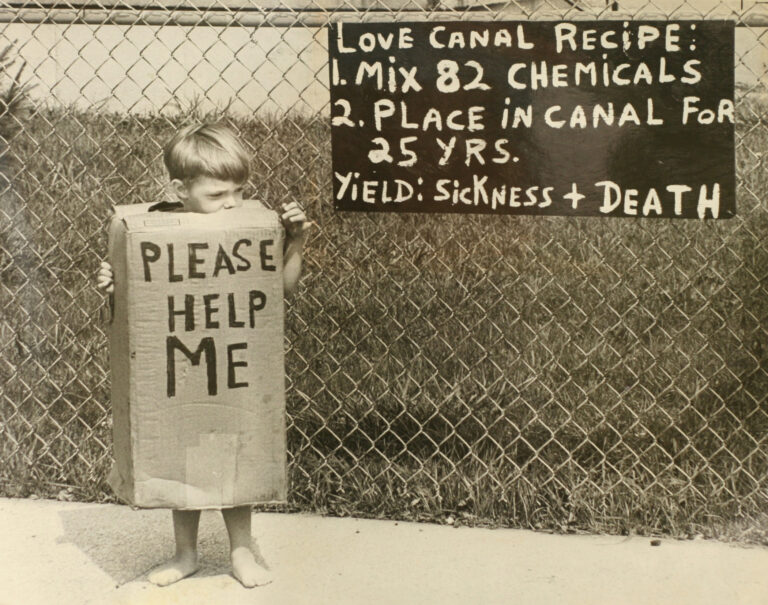
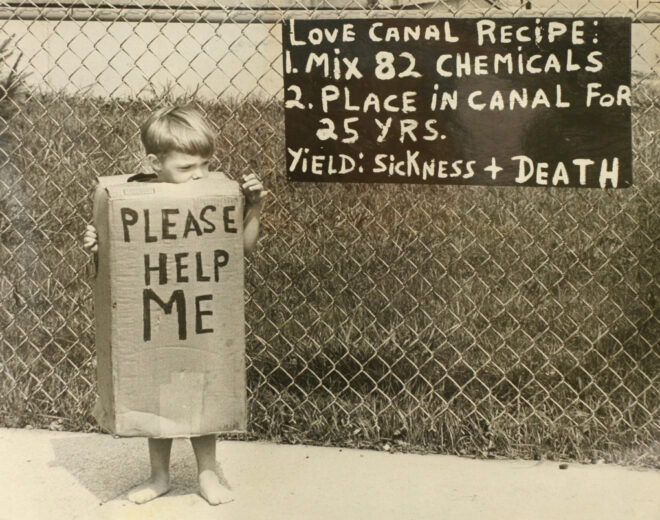
Love Canal USA is a story where a chemical company participated in building a neighborhood on top of a chemical storage tank. Children and families got sick. It didn’t end well.
Removing an underground storage tank (UST) is challenging and intimidating; it requires specialized skills and knowledge, not to mention specific safety protocols that you must follow. If you’re contemplating taking this on yourself, here are some tips to make the process easier.
1. Check the Local Regulations
The local government regulates underground storage tanks. Before you get started, research your area’s regulations to ensure that you’re following all the required steps and staying compliant with the law. It is also essential to research any permit requirements necessary for the removal job. The paperwork can be extensive and time-consuming, so give yourself enough time to get through it. If there are any special requirements or regulations you need to be aware of, consider them as you plan your UST removal job.
2. Survey the Site
Before removing a UST, surveying the site and performing a few safety checks is important. Make sure there are no utilities running through the area, such as gas lines, electrical wires, and water mains. It is also important to note any other environmental hazards that may be present on the site, such as nearby bodies of water or underground septic tanks.
3. Hire Experts
Removing an underground storage tank is a complex task that requires specialized skills and knowledge. Before attempting to do it yourself, consider hiring an underground storage tank removal service to handle the job. Not only will they have the experience necessary to do the job safely and efficiently, but they can also help ensure that all regulations are followed. With the help of experienced professional service, you can rest assured that your UST will be removed with minimal disruption to your property and the environment.
4. Have a Plan for Leaks
If you are removing an old or damaged UST, it is crucial to have a plan to deal with potential leaks. Have the necessary safety equipment and absorbent materials to address any spills quickly. It is also vital to ensure that the area surrounding the UST is appropriately sealed off before beginning work. This will help reduce the risk of hazardous materials leaching into the ground and contaminating the surrounding soil or groundwater.
5. Take Care of Contaminated Soil
If the UST has been leaking, some contaminated soil will likely be around it. Make sure to dispose of this material per local regulations properly. Sometimes, you may need to hire a remediation company to help assess and clean up contamination before the removal job begins. This can be especially important if the contamination poses a risk to the health and safety of nearby residents. You may also need to hire a professional to test the soil before and after removing the UST. This can help ensure that all contamination has been adequately addressed and that the area is safe for future use.
Following these five tips can help you safely and efficiently remove your UST. Remember to do your research, plan, hire experts when necessary, and take care of any contaminated soil. Doing so can help ensure that the job is done quickly and properly, with minimal disruption to you or the environment.
Turmeric and a medley of spices lowered blood pressure in a study
Turmeric is a much-loved spice in the Middle East which can be bought in fresh fingers and added to shakes, soups and smoothies. We know that turmeric is good for blood health and against arthritis but research suggests that turmeric, when taken with other spices may help regulate a healthy blood pressure.
In a controlled-feeding study, the researchers found that seasoning foods with 6.5 grams, or about 1.3 teaspoons, of herbs and spices a day was linked with lower blood pressure after four weeks. Penny Kris-Etherton, Evan Pugh University Professor of Nutritional Sciences, and Kristina Petersen, assistant professor of nutritional sciences at Texas Tech University and co-principal investigator of the study while at Penn State, said the findings offer people a simple way to help improve their heart health.
“Adding herbs and spices to your food is a great way to add flavor without adding extra sodium, sugar or saturated fat,” Kris-Etherton said. “And, if you go a step further and add these seasonings to foods that are really good for you, like fruits and vegetables, you can potentially get even more health benefits by consuming that extra produce.”
According to the researchers, cardiometabolic diseases like heart disease, strokes and type two diabetes continue to be one of the leading causes of death in the United States. One of the ways health professionals aim to improve heart health is by monitoring and improving blood pressure.
One way people can improve their blood pressure is by limiting their sodium intake, usually by adding less salt to their meals. Petersen said that while people have long been encouraged to season their food with herbs and spices instead of salt to boost flavor without added sodium, less was known about whether herbs and spices have health benefits of their own.
A turmeric blood pressure smoothie
“As nutritionists, we’re interested in new ways we can use diet to benefit health, and cardiovascular health in particular,” Petersen said. “We were curious about how herbs and spices could affect heart health, since they are versatile and can be added to many different types of food.”
For the study, the researchers recruited 71 people with risk factors for heart disease. Every participant consumed every spice diet — one low, one moderate, and one high in herbs and spices — in a random order for four weeks each, with a two-week break between each diet period. Blood samples were drawn from each participant at the beginning of the study as well as after each diet period.
All three diets were based on an average American diet — reflective of what a typical American consumes in a day — but with three different doses of herbs and spices added. The low-dose, medium-dose and high-dose diets included approximately 0.5 grams, 3.2 grams and 6.5 grams of herbs and spices, respectively, a day.
The doses included a blend of 24 different herbs and spices, ranging from basil and thyme to cinnamon and turmeric, designed to simulate the way people use different herbs and spices throughout the day while cooking.
The researchers found that after consuming the diet including a high dose of herbs and spices, participants had lower systolic blood pressure than after the diet with the medium dose. Participants also had lower diastolic blood pressure after the diet with a high dose of herbs and spices than after the diet with a low dose.
Kris-Etherton said the results — recently published in the American Journal of Clinical Nutrition — were especially exciting to her because the diets in the study were not designed to be specifically heart healthy, and only differed from an average diet by the amount of herbs and spices added.
“I think it’s really significant that participants consumed an average American diet throughout the study and we still found these results,” Kris-Etherton said. “We didn’t decrease sodium, we didn’t increase fruits and vegetables, we just added herbs and spices. It begs the next question that if we did alter the diet in these ways, how much better would the results be?”
The researchers said that in the future, additional studies designed to incorporate herbs and spices into a healthy dietary pattern lower in salt, added sugars and solid fats could help guide future dietary recommendations.
The importance of recognizing and valuing the different roles on a team teamwork is essential for achieving success in any organization. When team members work together effectively, they can achieve more than they could individually. However, the success of a team depends on the contributions of each member. In order to maximize the potential of a team, it is important to recognize and value the different roles and contributions of each member.
Recognizing and Valuing the Different Roles on a Team
Every team member brings unique strengths and perspectives to the table. Understanding the different roles and contributions of each team member can help to ensure that the team is utilizing the strengths of each member effectively. Some common roles that team members may play include leader, problem-solver, and planner
Leaders are responsible for guiding the team and providing direction. They may also be responsible for facilitating communication and decision-making within the team. Problem-solvers are skilled at identifying and addressing challenges and finding creative solutions. Planners are skilled at organizing and coordinating tasks and activities.
By understanding the strengths and contributions of each team member, team leaders and managers can ensure that the team is utilizing the strengths of each member effectively. This can lead to increased efficiency and productivity.
Social loafer extraordinaire
The Negative Impact of Social Loafers
What is a social loafer? When some team members are not pulling their weight, it can have a negative impact on the team as a whole. This phenomenon is known as social loafing.
Social loafing refers to the tendency for individuals to decrease their efforts when working in a group. This can occur when individuals feel that their contributions are not being recognized or valued, or when they feel that their efforts are not having a significant impact on the outcome.
The negative impact of social loafing can be significant. When some team members are not pulling their weight, it can lead to increased workload and stress for other team members. This can lead to decreased morale and productivity, and can ultimately impact the success of the team.
Strategies for Addressing Social Loafing
So, how can organizations and team leaders address social loafing and ensure that all team members are contributing their best efforts? Here are a few strategies:
Encourage active participation from all team members. By actively involving all team members in decision-making and problem-solving, you can help to ensure that everyone feels a sense of ownership and responsibility for the success of the team.
Recognize and reward individual and team achievements. By recognizing and rewarding the contributions of each team member, you can help to foster a sense of ownership and increase motivation.
Foster open and transparent communication. By creating an open and transparent communication environment, you can help to build trust and encourage active participation from all team members.
Set clear goals and expectations. By setting clear goals and expectations, you can help team members to understand their roles and responsibilities within the team. This can help to increase accountability and encourage active participation.
Encourage teamwork and collaboration. By fostering a sense of teamwork and collaboration, you can help to create a positive and supportive environment that encourages active participation from all team members.
Conclusion
In conclusion, recognizing and valuing the different roles and contributions of each team member is essential for maximizing the potential of a team. By understanding the strengths and contributions of each team member, team leaders and managers can ensure that the team is utilizing the strengths of each member effectively. However, it is also important to address the negative impact of social loafing in order to ensure that all team members are contributing their best efforts. By using strategies such as encouraging active participation, recognizing and rewarding achievements, fostering open communication, setting clear goals, and encouraging teamwork and collaboration, you can create a positive and supportive environment that encourages active participation from all team members.
Stay in Beit Zafran Hotel de Charme (Saffron House), a traditional Ottoman palace, in Syria
Even before the Arab Spring and the conflict of 2011 tore Syria apart, most likely because of a water crisis, it wasn’t a country well-travelled by tourists. Instagramming experiences hadn’t started yet and Syria, seemingly, wasn’t well set up for long-haul travelling or as a destination site. But as the Middle East opens its arms to the world and Syria attempts to heal its wounds from a decade of civil war, there is plenty of new worlds and cultures to explore.
I travelled to Syria more than 20 years ago and I could say the experience felt like travelling in a time machine. I guess it’s the same feeling for tourists who visit Cuba or East Germany after these places had been somewhat detached from the world. During my trip I crossed over from Turkey into Aleppo, and it was a new world. Sweet people looking for connecting, age old sites with very few visitors, and cars from generations ago. We were invited for meals and Syrians brought us into their homes, eager for conversations with outsiders.
One of the best memories I had was being locked into a Crusader castle for the night where we could roam with the ghosts. It was just me and Cara, together, and common sense should tell two women travellers to never do such a thing but my Spidie senses told me that Syria is safe for women and that we were protected.
Over in Syria, where tourism is opening once again, you can get a chance to visit these Ottoman estates, frozen in time. We stayed at some magical estates when we travelled through Aleppo and Damascus and if you are looking for some off-beat travel, try travelling to Syria.
A Swiss-Syrian couple sent us updated images of a boutique hotel they run in Damascus called the Beit Zafran Hotel de Charme. The couple also runs a tour company that can set you up with some local, sustainable travel options though when we were there it was pretty easy getting around by dolmus, or the mini-bus commonly used in the Middle East.
A suite at Beit ZafranA bedroom at Beit Zafran. Notice the poured concrete tiles typical of the region?Reception and inner fountain
Adnan Habab and Gabriela Wengert write: “We are a quiet urban hideaway tucked in a historical neighborhood of churches, mosques, souks (old bazaars) and winding streets. Once you step inside the home, the house’s charm and sophistication are unmistakable.”
A jacuzzi at Beit Zafran
The meticulously restored Ottoman mansion (built in 1836) was remade true to its authentic form: its 12 exquisite rooms and suites are built around the house’s two inner courtyards with their magnificent original marble fountains and the scent of jasmine.
Getting to Beit Zafran in Damascus
The “liwan” (a long narrow-fronted hall or vaulted portal in ancient and modern Levantine homes that is often open to the outside) with its original wooden ceiling and stucco decoration is a seating area open to the courtyard where you can escape the heat and buzz of Damascus.
Damascus is the southern-most city of Syria, founded in the 3rd millennium BCE. It was an important cultural and commercial centre, by virtue of its geographical position at the crossroads of the orient and the occident, between Africa and Asia. The old city of Damascus is considered to be among the oldest continually inhabited cities in the world.
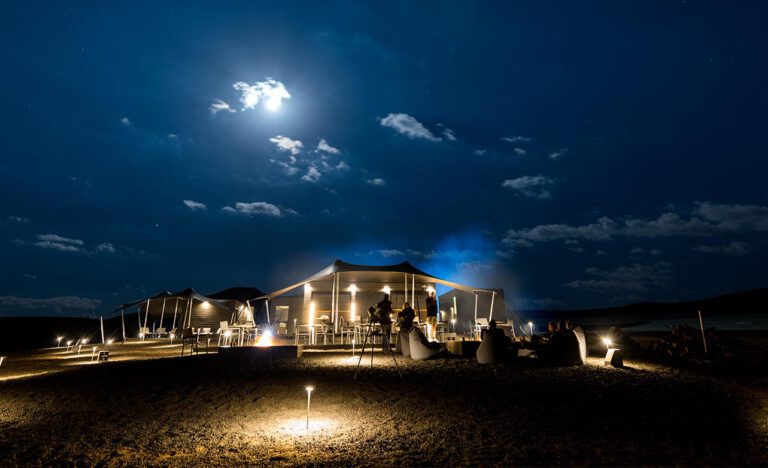
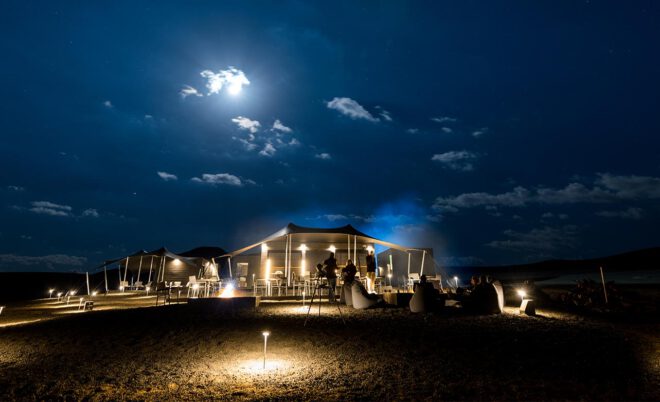
Khaybar Volcano Glamping, a night scene of the eco camp in Saudi Arabia
Vast swathes of the Middle East were either once seas, or explosive volcanoes or both. Now that Saudi Arabia’s ruling family has decided to open up Saudi Arabia to the Western world, it is opening up some of the most untouched places on earth including their ancestral home, a palace made from mud. One of the new sites to open to tourists at the spectacular region of Alulu is the Khaybar Volcano Camp. Sleep under the stars, for $500 a night.
The luxury glamping site, being marketed as an eco-lodge, opened in December late 2022 and it’s situated on the landscape of an ancient, dormant volcano called the Harrat Khaybar. It is being touted as one of the most untouched places on earth. If you are new to Saudi Arabia and Alula, start here.
Archeologists are rushing into the area to study ancient and near history in the Khaybar Harrat area and are forming new theories of civilization from the region. They found desert kites created by ancient trappers, and strange burial mounds meant for travellers. If you are an aspiring archaeologist, Saudi Arabia is the place to rush in.
The Khaybar Volcano Camp is at the heart of it all, at one of the rarest lava fields in Saudi Arabia which has seen traces of people living there over the years. The region is full of monumental archaeological evidence, prehistoric monuments (see the desert kites), rare geological landmarks, lush oases, and lava caves that have existed with and without us for millions of years.
Think Saudi Arabia doesn’t have a history? Think again. Meet it along with locals at the Khaybar Volcano Camp. Started there the region will be accessible to travelers who desire nature and history, over let’s say fake moons and flying taxis (another tourism direction for Saudi Arabia’s Vision 2030.)
Interview of the glamping experience in Saudi Arabia
Cultural activities, mythical storytelling, evening stargazing, wellness programming, balloon flights (tethered), and trekking to geological wonders and touring the ancient ruins are some of the activities offered at the volcano resort. Cost? About $1000 USD for a couple for 2 nights, including meals.
Ten luxury tents with ensuite bathrooms (which is now known as glamping) feature upscale furnishings and creature comforts. Natural, local ingredients make up the meals for breakfast, lunch and dinner. As for “eco” credentials beyond the organic food –– you can look into it when you are there. How do they get their power, where does water come from? Where does waste go? What are the hiring and work policies at the resort? These are some questions you can ask when you go.
Saudi Arabia isn’t the first to start volcano travelling. Costa Rica and Sicily both have active volcanoes and an active group of tourists who flock to these places for some geological action. Over in Israel, Beresheet Hotel, is a luxury hotel overlooking the Ramon crater formed by a retracting sea. That’s what NASA says, after theories of meteorites and volcanoes were quashed. You might need a trust fund however to afford staying at this place.
Another nature option for the budget traveller is to sail across the Red Sea to Sinai, Egypt and hike and trek to God’s mountain with a local Bedouin guide who will bring tents and a full camp/semi-glamp experience for a fraction of the price.
More on Harrat Khaybar
Harrat Khaybar is one of Saudi Arabia’s largest volcanic fields, covering an area of more than 10,000 square miles, and found north of Medina. An 80 mile vent system contains felsic lava domes, tuff rings, the Jabal Qidr stratovolcano, and numerous small basaltic cones. At least seven of the ancient lava flows are young at less than 4,500 years old, and another eight are less than 1,500 years old. An eruption was reported in the early Mohammedan times during the 7th Century.
Think differently when you travel. Instead of sightseeing, try fishing at the Sea of Galilee
These days traveling abroad for leisure or business isn’t just about checking off the must-see sights of any town or city. Getting out into the country, into nature and into the wild is gaining more appeal as people travel and linger longer, preferring to meet locals instead of just museums and famous landmarks. We want an immersive, meaningful experience. And seeing as we are expert level on Israel, we’ve put together a list of 10 must see ecological sites in Israel, the Holy Land.
Some from our list are a bit like a secret –– known to insiders but often missed by tourists.
If you are a first timer to Israel you can’t miss Jerusalem and the Old City, the Wailing Wall, Dome of the Rock. You won’t miss floating in the Dead Sea, trekking Masada (it was a tella novella!), bathing in Ein Gedi or jumping into the Sea of Galilee. If you have more than a week you will head down to the Red Sea and then spend a few days in Sinai. And if you are lucky to have a few weeks, it’s more than enough time to catch some spots on our list.
Ofer guided us recently to the jaw-dropping caves at Beit Guvrin. Though I’d lived in Israel for 20 years I’d never seen this UNESCO-protected World Heritage Site. So I checked in with Ofer to see what else I’d been missing in Israel. Turns out a lot.
Annual Bird Migration at the Mishmar HaSharon Reservoir
Pelicans in the Hula nature reserve, Yaniv Cohen
Want to see magnificent birds soar, nest, make v-formations or paint pictures in the sky? Bird watchers everywhere: It’s happening twice a year in the Spring and the Fall during the big bird migration. Plan ahead a bit to catch this natural wonder. Israel lies on a geological fault-line called the Syrian-African Rift. This long line of rock funnels the birds from Africa in the Spring to fly along Israel’s Mediterranean Coast, stopping along the way for food and drink as they head to Europe. The Mishmar HaSharon Reservoir is the alternate “bird refueling station” to the popular Hula Valley. And it’s where birds come to eat, drink, rest and party.
The Nature and Parks Authority, working in conjunction with the Ministry of Agriculture’s Fisheries Department, populates the reservoir with fish that are not intended for sale – just for pelicans. Catch the pelicans in action. But call ahead before you travel or work with a local guide so you don’t miss the timing. Bird migrations can also be spotted if you are in Jordan, Syria, Lebanon, and Turkey around these times of the year.
The Bell Caves at Bet Guvrin
Bet Guvrin, dovecoats and caves
If you have ever traveled to Turkey and seen the caves and cave-dwellers of Cappadocia, imagine something similar here but in caves underground. The Bell Caves in Israel are part of an ancient Biblical City called Marasha and the caves are carved chalk and lime quarries that were multifunctional –– as homes, burial caves, storerooms and dovecoats. Doves were raised there to sell to pilgrims as sacrifices they could make in Jerusalem.
The caves are something that your body will feel and enjoy as you imagine people from the past excavating the caves for chalk and blocks for building homes. You can see handwork etched into the walls of the caves. Ancient columbarium, another word for dovecoats (see below), can be explored underground in a network of about 500 caves at this National Park.
Like all National Parks in Israel, call in advance before you travel in case limits to entry are set. Closures can coincide with Jewish holidays of which there are many. Here is the Parks website.
These caves are lovely to explore on a hot day. You can feel the power of natural cooling, passive energy in effect.
Sharon Beach Nature Reserve
Sharon Beach Nature Reserve, image via A Tiny Trip
The Sharon Beach Nature Reserve can be accessed 24 hours a day, 7 days a week. There is no entrance fee but locals will know the best places to start your walk. The walk starts along the cliffs of the Sharon Beach, north of Tel Aviv. In February you can see lilies, in the summer possibly nude bathers. Don’t be alarmed. The trails are hidden gems that tourists don’t really get to explore. If you are with babies, toddlers or access-impaired, the trails aren’t stroller or wheelchair friendly.
Over all the trail offers an easy family hike for 2 to 3 hours, with small hills along the way and the option to go down to the beach at the start or end of the hike. The views and sea air make it all worthwhile. This trip is suggested if you are a hiking family in the Tel Aviv area looking for something close and easy to do for a half day hike. Hiking in summer months June to September should be done either early morning or late afternoon as it gets too sunny and hot on the beach during those times. Pack lots of water.
The Yarkon National Park is divided into two parts: Tel Afek area (and the Antipatris ruins) and the Yarkon Sources area, Together they constitute a green lung and an island of tranquility in the middle of the most populated Sharon region in Israel. In this beautiful and tranquil national park you’ll find the clean Yarkon Stream with abundant water lilies, a wading pool, a charming lake and an ancient fortress with a view of the region. The Yarkon Source center is on the Hod HaSharon – Petah Tikva road, between the Yarkon and Segula Intersections.
Tel Afek, also spelled Aphek and Afeq, is an archaeological site located in the coastal area of the Ein Afek Nature Reserve, east of Kiryat Bialik, Israel. It is also known as Tel Kurdani.
Visiting this location requires a reservation which can be done through a licensed tour guide or through this website. Venture to the Hayarkon Park in Tel Aviv. It’s an ecotourism site for exploring water, local animals,, art and history. It’s Israel’s version of Central Park, a nice place where you can be an active fly-on-the-wall and watch and join Israelis jogging, cycling, roller blading, skateboarding, kayaking, mountain climbing, and frisbee throwing. They also love to do acrobatics, acrobalance, and circus performing, with cute dogs and barbecues welcome. Starting from Tel Aviv’s Old Port, the park opens out into wide fields and a large lake as you get closer to the city of Ramat Gan. Start exploring by foot. Or rent a city bike, similar to the ones like Velo in Paris.
Visit Abraham’s Holy Land boundary
Tel Sheva, near Beersheba, where Abraham dug his well.
Don’t miss the southern limits of the Biblical Promised Land and the simplicity of Tel Sheva, located near a Bedouin town in Israel’s south with the same name, Tel as-Sabi in Arabic.
Nearby the ancient city of Beersheba you will see a wall and a double gate system. According to the Bible this is where Abraham first pitched his tent and dug a water well at Beersheba, a wilderness location identified in the Scriptures as the southern limit of the Promised Land. A nice history of the wall can be read here.
Visit the Canyon of Faces in Timna Park
Geologists say Timna Park is one of the Middle East’s top attractions for geological interest, and multicolored sand, combined with its towering sandstone pillars. Image via Getty.
It’s not exactly the Alamo or Jordan’s lost city of Petra, but the mountains of Timna Park do delight.
Timna Park is a hiker’s paradise and offers approximately 25 hiking trails, most of which are short (20 to 60 minute treks) and are suitable for the whole family. A minority of trails are challenging and intended for professional hikers. The trails pass through various Park sites such as the Mushroom, Pillars of Solomon, and other stunning geological formations.
Explore the park on foot and visit the Canyon of Faces with its many geological formations that nature has created in the rocks, climb Mount Timna or walk from Spiral Hill to the Valley of Rock Paintings and the Chariots.
If you were a farmer in ancient Jerusalem, you have a couple of choices with the rocky land you inherited from your father: find a new location with less rock and problems, or clear the rocks on the hills and farm there. With little water or fertile land the ancients made do.
Some of the earliest terraces in the Southern Levant areas, including the ones around Jerusalem, were probably used for the cultivation of grapes, olives, pomegranates and figs. Grapes grown for wine might have been wine used at the Holy Temple. And farming wasn’t easy back then: most farming on the terraced areas of the Judean Mountains was done without artificial irrigation. Remains of ancient farmers can be found and explored best around Sataf. This village has agricultural terraces that have been restored and you can find vines and olive, fig, pomegranate and almond trees. Hiking trails are laid out along the way to create an outdoor “foots-on” museum of ancient agriculture. Look for Nahal Sorek when out. Locals set up interesting and cosy cafes and restaurants around the region.
Also you can’t leave Israel without forming some opinion about something. There is debate over the age of the terraces that challenge the “ancient” narrative. Some saying they are relatively young, about as old as the Ottoman empire in Israel. Start with this article to hear another side.
Watch Sea Turtles Released
The Sea Turtle Rescue Center in Israel releases a turtle they will be monitor. Via AP
Israel is home to a healthy sea turtle population that maintains nests along the Mediterranean beaches. The best way to find turtle sightings is to contact the Sea Turtle Rescue Center and they can advise on the best times and current locations for finding turtle hatching grounds.
The rescue center works to rehabilitate sea turtles on a number of levels:
Treatment and rehabilitation of injured sea turtles and their reintroduction to the wild in the Eastern Mediterranean. Be there for a release.
Physical protection of the eggs laid on beaches and in reproduction areas.
Protection of the marine environment and the beaches and statutory declaration of marine and beach areas as marine reserves.
The Hazur Stream and Nimrod’s Fortress in the Golan Heights
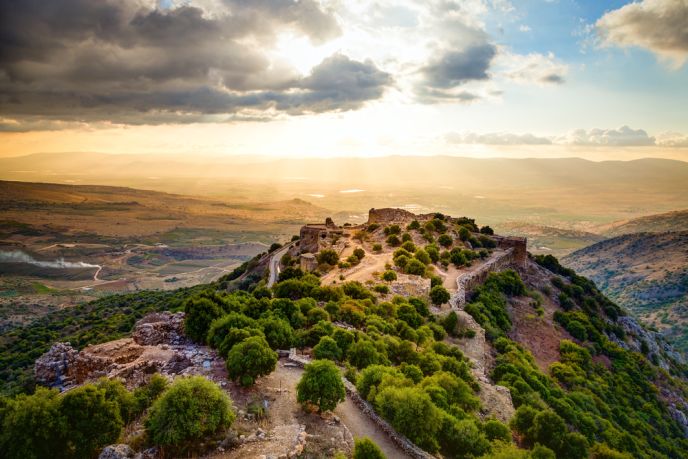
Nimrod’s Fortress, a Crusader-era Medieval castle in Israel. The Crusaders fortified the Arab fortress of Kil’at Subeiba (“Large cliff”), located 6KM above the city, calling it by the Biblical name – Nimrod Fortress.
The Hazur Stream is about 3 miles long and is found in the northern part of the Golan Heights. It is a tributary of the Govta Stream, which is one of the sources of the Banias Stream. The trail begins near the Druze village of Majdal Shams but there are challenging hiking trails that guide you along the river and which are leading around the area to Nimrod’s Fortress. The fortress is named after a biblical hero, the hunter Nimrod (Genesis 10:8 to 9) who, according to local tradition, dwelt on this summit. The Nimrod Fortress is the biggest Crusade-era castle in all of Israel, a mountain-top stronghold spanning back to the 13th century.
Follow the banks of the Hazur stream and find a thick Mediterranean grove, which includes oak, Terebinth, Judas trees and True Laurel. By the end of the winter and the beginning of the spring meet strong water and waterfalls along the way. At the end of the summer and in the fall you can find minor waterfalls that can still be enjoyed through caverns of shade created by the thick underbrush. The area is magical.
Getting there: Majdal Shams is a Druze town in the southern foothills of Mount Hermon, north of the Golan Heights, known as the informal “capital” of the Golan Heights. The majority of residents are Syrian Druze. Take highway 6 to Majdal Shams and you are there in about 2.5 hours.
Medical cannabis, unlike crypto, is a real product with real medical benefits. Learn how to invest.
Cannabis is still illegal under federal law in the United States. But many states have already embraced its advantages. In recent years, cannabis-use legalization policies have sped up along with the uptrend in the number of users. Statistics show that about four million Americans use cannabis. And we can guess those numbers are probably a lot higher especially when it comes to recreational use. Indeed, it has overcome prejudices to become one of the most popular therapeutic options.
The global cannabis market is growing and sprawling like a weed (no pun intended). It may expand by a compound annual growth rate (CAGR) of 24.3 percent, reaching $82.3 billion by 2027. With its growth prospects, investors and businesses are optimistic about its future trends. It’s no wonder they’re geared toward cannabis stock investing.
As an entrepreneur, you may seize this opportunity to grow your cash reserves. If you’re also interested, carrying out these steps are vital.
Reassess Your Financial Capacity
Sure, you want to generate more returns and raise your capital. It may help you expand your operating capacity, Yet, you must sustain your operations and cover payables.
Answer these questions. Will there be enough cash left after reinvesting a portion of it? Do I have to borrow to ensure adequate capacity? If the answer is a yes and a no, think twice before proceeding with your plan. Investing in a risky business, means you will need to be okay with losing it all.
Market volatility stays overwhelming even after the recent inflation lull. Interest rates continue to skyrocket, making borrowing costs burdensome. While investing can be promising, liquidity should always be your top priority.
Identify the Types of Cannabis Products
CBD is a natural medicine that can have a profound affect on mediating pain and anxiety.
Due to different views among the states, the reason for the legalization of cannabis varies with its uses. Cannabis is processed either as a medical or recreational product. You will hear words like CBD and THC.
Medical cannabis is legal in 36 US States, three territories, and the District of Columbia. Additionally, over forty countries authorize its medicinal uses. It’s often used to relieve anxiety, depression, stress, and even epilepsy. Even so, one must secure a prescription from a qualified healthcare provider before obtaining it.
Meanwhile, recreational cannabis for adults is legal in 18 US states. It’s also legal in other countries, such as Canada, Mexico, and South Africa.
Identify Cannabis Sources
Karin Kloosterman and Alan Shackelford as cannabis entrepreneurs in biotech and agriculture.
There are three primary sources of cannabis.
Cannabis Growers and Distributors
They cultivate and propagate cannabis in their facilities, harvest the crops, process them, and distribute them to the market. You might also see this industry as agriculture.
Cannabis Biotech Companies
These companies may join the cannabis industry to extract cannabinoids and develop prescription drugs. They are often headed by a medical doctor and people with PhDs.
Ancillary Providers
They neither distribute nor develop new products from cannabis. But, they support the cannabis industry with their products and services. These may include lighting systems, hydroponics, and packaging materials.
Determine Different Cannabis Perceptions
Before investing in cannabis stocks, remember that the industry faces various risks and above those special risks, investing in startups and new companies is always risky. Legal and political threats are evident, limiting the capacity to produce, distribute, and expand.
Supply and demand inequality may also be challenging since cannabis can’t be cultivated in other states due to soil quality. Also, some areas have excessive demand, outpacing supply, and vice versa. Other risks include over-the-counter and financial constraints.
Despite this, the cannabis industry has more enticing growth prospects today. The increased awareness of its medicinal uses backs its appeal to the public. Amid legal and political restrictions, many states have decriminalized it.
Its market size is expanding in states where medical and recreational products derived from cannabis are legal. It draws more demand as cigarette, e-cigarette, and vape businesses become open to exploring cannabis for their market, particularly cannabidiol (CBD).
Meet With Business Experts
Before you venture into cannabis investing or mergers, you must consider many factors. You must understand that cannabis skepticism remains prevalent across many regions.
Will it derive more insightful business strategies? Will it affect the legality of your business? How will the market perceive your business? Think about these things a hundred times to avoid potential business problems.
If you and your team are still confused, it may be time to seek assistance from business experts. They are willing to devote their time and share helpful business ideas. From business filings and maintenance to expansion, they will always back you up. They will extend all the help you need for your business plans.
Assess Cannabis Companies
A cannabis greenhouse can control the environment to optimise cannabis strains for medical marijuana
After weighing the risks and opportunities in the industry, look for outstanding cannabis companies. Check their financial statements to determine their performance. In the income statement, you can assess the efficiency of the company. For cannabis growers, you must find the cost-per-gram of cannabis production, excluding depreciation, amortization, inventory adjustments, and the like.
It’s also important to check the cash level relative to its borrowings to know if it can cover repayments. The percentage of cash to current assets will tell you about its liquidity. Other key financial indicators include the Net Debt/EBITDA Ratio, Quick Ratio, Asset Turnover Ratio, Return on Equity, and Debt/Equity Ratio.
Aside from the financial statements, you must observe growth strategies and market positioning. These include mergers, pricing comparisons, and market share. Dividend payments are a plus, especially for publicly-traded businesses.
Once you find the optimal choice, evaluate the stock. Is it reasonable relative to its financial health and dividends? You can use the Price-to-Earnings (PE) Ratio, Price-to-Book Value (PB) Ratio, Discounted Cash Flow Model, Enterprise Value/EBITDA Ratio, and Dividend Discount Model. You can use these ratios even for companies not open to stock trading. After all, it’s your investment you want to assess.
But for public companies, watch the price trend closely. Market perceptions and changes may influence the stock price. Technical traders are particular about stock price patterns. These can be helpful when the stock price moves sideways without a clear indication of reversals. You may also use moving averages to determine the stock price direction. Doing so can help you find an excellent entry point to make a position. A practice called pump and dump is notorious in cannabis stocks. Ask around and make sure the company really does have technology, clients, a business.
Lastly, check if the company complies with the ESG reporting. It is difficult to match cannabis with ESG compliance. But businesses are expected to be more responsible with their production.
Invest in Cannabis Stocks and Observe Market Dynamics
If the company satisfies the conditions, it’s time to invest. But that is just the beginning of your trading journey. You must update yourself on company press releases, financial results, and market changes. It can help you decide to buy more stocks, hold them for the time being, or sell them. Hence, you can avert stock losses or generate gains.
The cannabis industry is a risky but enticing industry to watch out for. It expands with realistic growth prospects despite the challenges. Stock prices are still down, showing an opportunity for an entry point. Yet, you must be careful as economic uncertainties blow the stock market.




 The USDA has issued the conditional license in the first instance for two years. Dalan will distribute the vaccine on a limited basis to commercial beekeepers and anticipates having the vaccine available for purchase in the United States in 2023.



































 Stay in Beit Zafran Hotel de Charme (Saffron House), a traditional Ottoman palace, in Syria