The holy sidr tree can stop desertification

Iraq marsh people know how to live with water. New research from Iraq shows us how to reclaim the earth from the desert.

There is one tree that unites all monotheistic faiths, and it’s the sidr tree. Judaism, Islam and Christianity all have mystical connections to the tree. And besides the real-world honey that it provides (see our article on Yemeni sidr honey) Iraqi scientists say that the sidr tree, beloved by nations, can stop desertification. In a new article published by Faiza Khadim Dawood Al-Rumaydh, at the University of Thi Qar, Iraq, Sidr Trees Between Windbreaks and Production, he says the sidr (Ziziphus spina-christi) is a great contender for undoing the deserts. (We have a guide here which shows the sidr tree’s natural medicine)

“Because of their remarkable resistance to drought, salinity, and harsh conditions, sidr trees have a long history in the Arab world and around the world,” Al-Rumaydh writes.

That sentence alone explains why the sidr tree keeps showing up in conversations about desertification control. Long before sustainability plans and carbon accounting, this tree learned how to live with heat, wind, and water scarcity, and how to protect the land around it while doing so.

A complete ecosystem that provides sustainable protection for the soil

Al-Rumaydh describes the Sidr less as a single organism and more as a working ecological unit. Its deep roots reach down toward groundwater, while lateral roots spread wide to catch surface moisture. Its dense canopy slows wind instead of blocking it abruptly, reducing erosion.

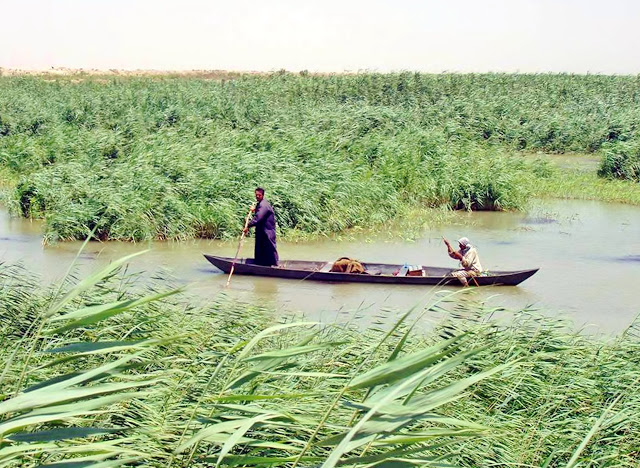
A mudhif, marsh Arab home in Iraq

In dry regions where wind strips topsoil and salinity creeps upward, this matters. Sidr trees, planted in rows or allowed to mature naturally, function as biological windbreaks—quiet infrastructure that doesn’t require electricity, sensors, or software updates.

Al-Rumaydh calls the Sidr “a complete ecosystem that provides sustainable protection for the soil.”

That phrase complete ecosystem reframes the tree from crop to collaborator. The Sidr doesn’t just survive harsh conditions; it reshapes them, creating shade, stabilizing soil, and allowing other life to persist nearby.

The Sidr’s value isn’t limited to ecology. Al-Rumaydh documents its economic importance across arid and semi-arid regions, especially in Iraq. The tree produces edible fruits rich in sugars and vitamin C, leaves that double as livestock fodder during drought, durable wood, and, perhaps most famously, honey. In English, fruits from the tree are called jujubes, and you can find them in Middle East, MENA and Levantine markets.

“Sidr honey is a complete bioactive complex rather than just a natural sweetener,” Al-Rumaydh notes, explaining why it commands high prices and international demand.

That honey economy matters. In rural areas where employment options are shrinking, Sidr trees support beekeeping, small-scale agriculture, and local markets. They reward long thinking. A Sidr tree can remain productive for decades, even as surrounding conditions deteriorate.

Yemen beekeepers keep ancient tradition alive
Yemen beekeepers make honey from the sidr tree, image via FAO and reprinted with permission.

Al-Rumaydh’s paper stays firmly in the scientific lane, but it brushes up against something harder to quantify: continuity. Sidr trees have been present across Iraq and the wider region for generations.

That familiarity is part of why Sidr keeps resurfacing in modern sustainability discussions. When communities talk about restoring land, they often gravitate toward species that already belong there, not imported solutions, but remembered ones. Like the millions of mangrove trees restoring habitat in Saudi Arabia. It is also known as black magic medicine in Quranic literature, so watch out!
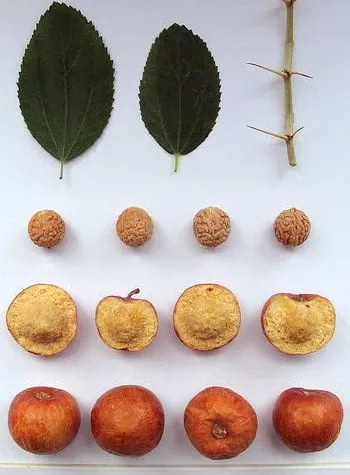
Sidr tree leaves, seeds, stems, fruit can be used for warding off the evil eye or black magic against your foes. image via IQS

Could sidr trees become part of shared restoration efforts across the region? Not as symbolic gestures, but as practical acts—windbreaks planted along vulnerable farmland, buffer zones around settlements, living barriers against soil loss. Could all the nations of the world band together and make this happen?

Al-Rumaydh is careful to note that Sidr cultivation requires planning, spacing, early irrigation, and respect for local conditions. This isn’t a miracle tree but it’s a resilient one.

For those insisting on sustainable peace, the science article and applications can be found here.


Karin Kloosterman
Karin Kloostermanhttp://www.greenprophet.com
Karin Kloosterman is an award-winning journalist, innovation strategist, and founder of Green Prophet, one of the Middle East’s pioneering sustainability platforms. She has ranked in the Top 10 of Verizon innovation competitions, participated in NASA-linked challenges, and spoken worldwide on climate, food security, and future resilience. With an IoT technology patent, features in Canada’s National Post, and leadership inside teams building next-generation agricultural and planetary systems — including Mars-farming concepts — Karin operates at the intersection of storytelling, science, and systems change. She doesn’t report on the future – she helps design it. Reach out directly to [email protected]

Read More

TRENDING

10 Amazing Facts About the Sidr Tree

Most people in the West have never heard of the Sidr tree. That's strange when you think about it. This tough, thorny desert tree has fed people, bees, birds, and camels for thousands of years. It appears in Islamic tradition. Its honey sells for astonishing prices.

Middle-Eastern spices and natural medicine (A through C)

In the Middle East, aromatic traditional foods are regarded...

Ancient Chinese medicine might heal spinal cord injuries

In the study, the scientists didn’t just test one plant compound at a time. They tested two traditional Chinese medicine compounds together — luteolin (from flowers like honeysuckle and chrysanthemum) and astragaloside IV (from astragalus root, Huang Qi). These plants have been combined in Chinese herbal formulas for centuries to help the body recover from injury and inflammation.

The Air Tea Kettle creates a new way to meet plants and herbalism

Air Tea is a new technology. Instead of drinking tea, you inhale herbal vapor through warm air extraction. There is no water and no combustion. The warm air releases essential oils that are often lost in hot water and digestion.

The Two Types of Beer Lovers and What It Means for Sustainable Craft Brewing

At its core, this study rewrites a long-standing assumption: that beer drinkers form a homogeneous crowd. Far from it—your audience may fall into flavor extremes. As craft brewers, you now have the tools to tailor your offerings, sharpen your sustainability goals, and deepen consumer engagement.

Locals From Rishon Fight IKEA

Big Box stores are a pretty new concept in Israel, and thank God that not every Israeli city wants them in their backyard. A word from someone who has see the beautiful farmland around her hometown Newmarket, Ontario stripped and converted into vulgar strip malls of big box shops: they have no place in a healthy and sustainable town or city.

The Jewish National Fund Meets An Inconvenient Truth

According to the JNF, it has transformed thousands of acres of barren land into green forests in Israel. They state that each person emits about 23 tons of carbon per year, estimating that each tree planted can absorb one ton of carbon in its lifetime. That's a whole lot of trees you'd need to be planting. Could so many fit in Israel?

How to quiet noise from construction in your office

Streets need to be resurfaced in New York but the humming and grinding noise is unsettling. Noise is environmental pollution. 

EarthX and a blueprint for sustainable investing

Trammell S. Crow, a Dallas-based businessman and father of four, is focusing his efforts on impact investing, and media that focuses on saving the planet through EarthX.

Mining Afghanistan’s Mineral Discoveries Similar to Avatar

Now that American forces in Afghanistan are commemorating the longest period of any war that America has been involved in, including the 1965-73 Vietnam War, the recent discoveries of large and extremely valuable mineral and metal deposits may finally bring to light a reason to continue the presence of US fighting forces in this war torn and backward country.

From Pilot Plant to Global Stage: How Aduro Clean Technologies’ 2026 Expansion Signals a Turning Point for Chemical Recycling Investors Like Yazan Al Homsi

The company's Next Generation Process (NGP) Pilot Plant in London, Ontario, has officially moved into initial operating campaigns, generating the kind of structured, repeatable data that separates laboratory promise from commercial viability.

Nobul’s Regan McGee on Shareholder Value: “Complacency Is the Silent Killer” 

Why the governance framework designed to protect shareholders so...

Should You Invest in the Private Market?

startustartup Unlike public stock exchanges, which offer daily trading, strict...

Popular Categories