Iran accused of eco-terrorism as oil coats the Mediterranean Sea shore

beached whale israel
Dead fin whale washed up on a beach in Nitzanim Reserve, Israel, Friday, Feb. 19, 2021. (AP Photo/Ariel Schalit)

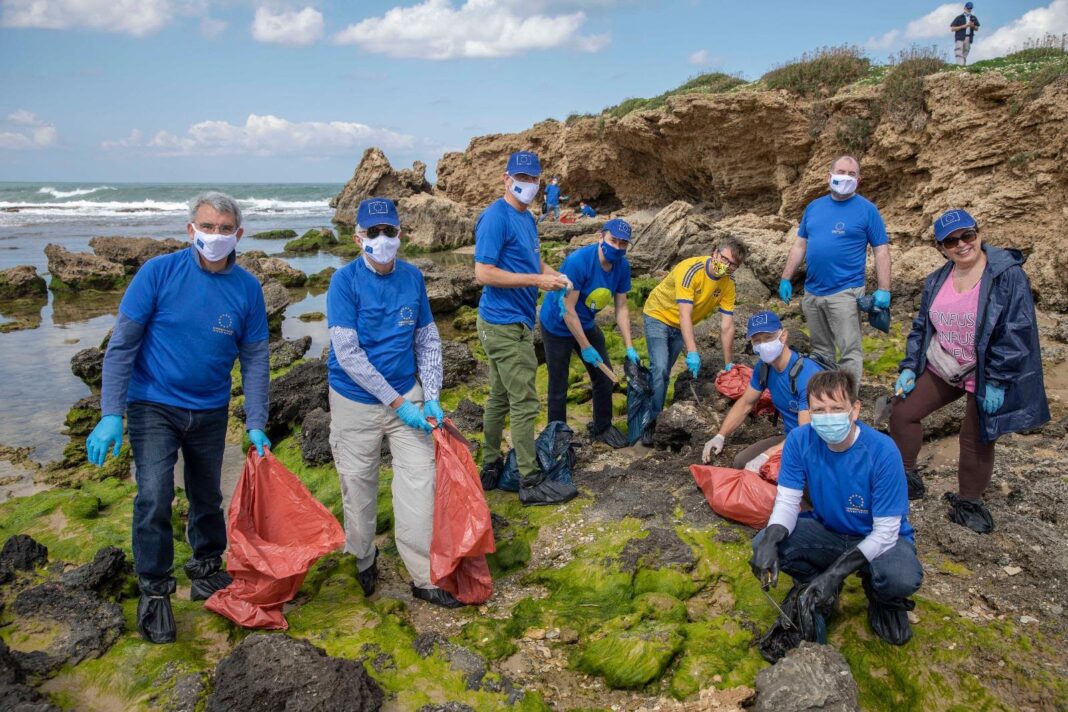
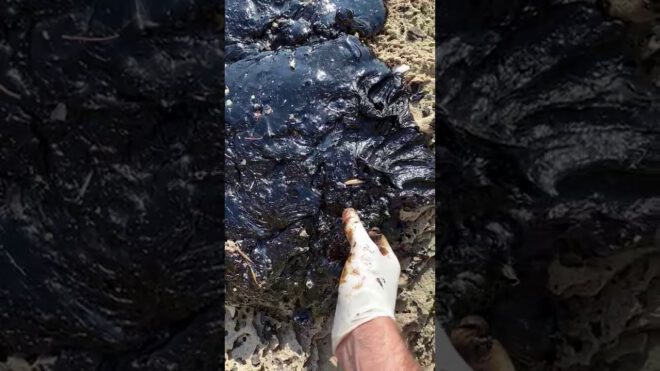
Two weeks ago one of the largest oil spills in the Mediterranean Sea washed up globs of carcinogenic bitumen tar known as dilbit onto the Israeli and Lebanese coasts. A gag order on the tanker’s identity confused the public, as over 10,000 people went out to the shores to collect the tar from rocks, turtles, and sand. 

At first the Israeli Environment Ministry targeted a Greece tanker and met it as it docked at port in Greece some days later. We spoke with the company that owned the ship, Minerva Marine, and they denied any link to the spill. 

But in the latest turn of events Israel has put its attention to its arch-enemy Iran announcing that a tanker flying under a Libyan flagged, but doing eco-terrorism for Iran, tanker dumped its bitumen on purpose to cover the entire Israeli coastline. 

Environmental Protection Minister Gila Gamliel said in a news conference that investigators from her ministry had traced the spill to an unregistered Libyan tanker.

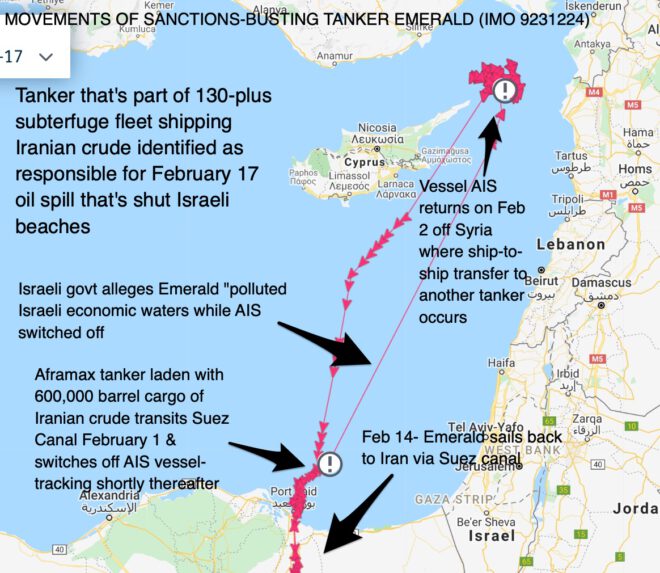
The ship had called on an Iranian port before approaching the Israeli coast. It turned off its tracking transponder and then dumped its crude oil into the Mediterranean Sea, Gamliel said.

Analyses of satellite images and models run by researchers show that the ship smuggled crude oil from Iran into Syria. The tanker was “dark” when it left the Iranian region, meaning her AIS (automatic identification system) was turned off. Before reaching the Suez Canal, the tanker’s equipment was turned on, and it crossed the canal in Egyptian territory. Then, it went dark again before entering Israel’s economic waters.

Black Blood on their hands

“The operator of the ship has black blood on their hands,” she said. This comes after a two-week investigation with strong “circumstantial evidence” according to Gamliel that the ship was the source of the spill and its behavior deliberate.

She also said the government would pursue payment for damages through an international oil pollution compensation program and the ship’s insurance.

She released this statement: “This is a crude oil tanker called Emerald, owned and operated by a Libyan company. It was illegally carrying cargo from Iran to Syria. The ship was flying Panama’s flag. Iran is waging terrorism not only by trying to arm itself with nuclear weapons or trying to establish a basis near our borders. Iran is waging terrorism by harming the environment,” said Gamliel.

“Our battle on behalf of nature and animals must be a cross-border one. Together, we will bring to justice those responsible for the environmental terrorism, those who committed this crime against humanity. We will continue to rehabilitate the damaged beaches and the animals that were harmed. Together, we will win, and we’ll remove the pollution from our country’s shores.”

According to Lloyd‘s, a maritime intelligence report, the of Emerald was named as Oryx Shipping Ltd, according to a spokesman from the prior owner, Libya’s state-owned General National Maritime Transport Co.

Emerald tanker syria israel iran oil spill

Oryx Shipping Ltd is traced to a Piraeus-based company (Greece) with Syrian links, said to be owned by Luay Mallah. An Indian ship management company Frontline manages most of Oryx’s purported fleet of Supramax and general cargo vessels. Lloyd’s said the maximum payout after pollution blamed on Iran will come in at less than $300m.

What Syria and Iran’s money can’t buy

Our voice of reason, Andreas Weil, founder of the environmental marine education and action NGO EcoOcean, which led the cleanup efforts, tells Green Prophet: “If the oil was targeted directly at Israel then it’s sensational news.”

But, with Swedish common sense he explains as much as he or anyone knows: “Well, what can you say. Who knows if they released it on purpose? Who knows if they had an accident?  It’s crazy. I don’t know what to say anymore.

“If it’s on purpose then it would make me quite upset. But let’s wait and see what happens,” Weil tells Green Prophet.

Weil wants us to know that dumping the bilge of an oil tanker is a common occurrence in the oil industry, usually without any retribution: “Most importantly,” he say “some ships just release their old tar from their tanks and they don’t give a shit about the Mediterranean or the environment,” Weil explains. “Did they think about this or did they plan it?” 

The public was stunned to see a black plague along its coastline starting about two weeks ago. The Prime Minister of Lebanon blamed Israel. Israel blamed Greece and now it’s blaming Iran. The mud-slinging continues until more clues are brought forth.

Meanwhile the Israeli government are calling the spill an act of “environmental terrorism.”

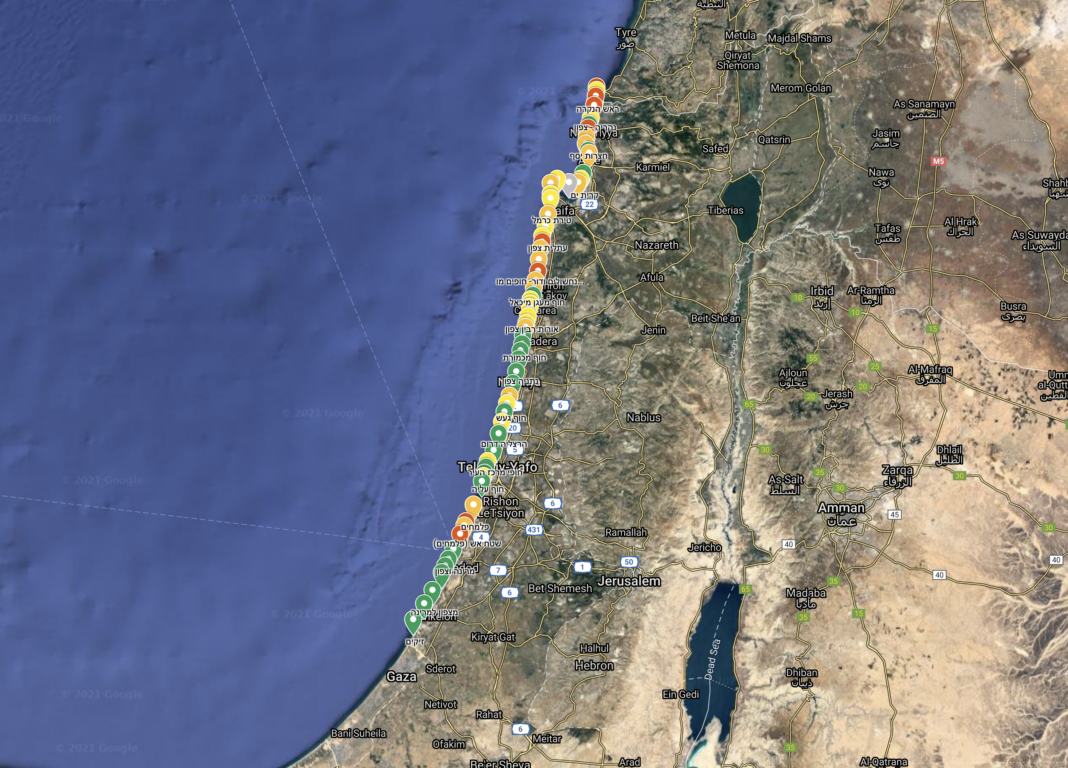
The sticky tar has appeared on about 120 miles of Israel’s coastline. It is estimated that 1,000 tonnes, according to The Washington Post, were spilled and thousands of volunteers are still racing against the clock to rescue birds, turtles and small mammals from the sludge. A 55-foot baby whale died from poisoning, and there is a ban on the sale of local seafood.

The spill ignited Greenpeace’s fire. They were aghast that Lebanon had voiced no cleanup plan or response after the spill.  Stinky black tar at sea knows no borders. Endangered loggerhead and green sea turtles nesting at the Tyre Coast Nature Reserve in Lebanon are at risk and this local tragedy should be an international concern.

Israelis from the government said that the biggest patches of bitumen have been scrubbed from the coast but a remediation and cleanup will take years, and about $14 million USD. 

Oceanographic agencies in the United States and Europe estimate that the spill occurred in early February taking two weeks to wash ashore.

“They’re not just hurting Israel,” Gamliel said. “Nature and animals don’t just belong to one nation. This is a battle that crosses borders.”

Weil who founded EcoOcean 15 years ago to help clean up the Mediterranean Sea is flabbergasted by the turn of events. He heard that perhaps it was 100 tonnes of bitumen that was dumped, but when The Washington Post suggested up to 1,000 tonnes this implies something much more sinister than a bilge oil dump.

Andreas Weil, founder of EcoOcean

Weill ponders, “Then that’s about as much oil as the whole boat can carry. Why would they dump it on purpose as it’s valued at millions of dollars?

“It’s impossible to know because most of it became heavy lumps that sank directly. No one will know how much the boat had before it left port. It will be floating up on the sea for many yeas to come,” Weil laments. “If it’s 1,000 tonnes then it’s not only cleaning out its tanks. 

Iran’s Environment Ministry news page in English hasn’t been updated since 2016. Its Twitter since 2018. We reached out for a comment and so far, it’s bleak. Probably like most of the environmental problems in Iran. The destruction of Lake Urmia. Unbearable air pollution in Tehran. Water pollution. And a government that makes environmentalists and activists disappear. It’s no wonder why so many good Iranians have immigrated out to Canada. 

We’ve had dissenting voices from Iran reach out to us in the past. On the strict condition that no one’s identity will be given. Ever. This Iranian blogger I interviewed (Hossein Derakhshan) in 2006 disappeared not long after the interview. He came back, subdued, many years later retracting everything that he said. It’s amazing what torture and prison can do to you. 

Iran is further distancing itself every day from its neighbors in the region. This oil spill, if indeed it’s sent from them, will be the last straw. 

Meanwhile in Lebanon there has been no response to the oil spill. Whether it’s the general neglect to the country’s state of affairs – remember the massive explosion in Beirut this past summer that killed hundreds – or an alliance with Iran and Syria, is anyone’s guess. 

Greenpeace sent me this statement: “Almost two weeks have passed since the oil spill occurred on the Lebanese coast, and to this day we have not heard any statement from the Ministry of Environment. The ministry is supposed to be the most responsive to such a catastrophic accident.

“Therefore, Greenpeace Middle East and North Africa asks where is the Ministry of Environment? What is your national disaster management plan? What is the scale of the disaster and its repercussions on marine life? Where are the directions on how to remove oil tar and how to treat and dispose of it? Where are the safety tips that you should publish in order to ensure the safety of citizens?

“Noting that a number of associations, organizations and volunteers try their best to organize and help, but the responsibility rests with the concerned authorities first and foremost.”

Want to take action in cleaning up the sea? The UN has a new investment guide for bankers. We learned that banks are supporting the burning of the Amazon, whether or not investors at the bank are aware. Be one step ahead and invest in the sea, with this handy toolkit and guide you can download here

Karin Kloosterman
Karin Kloostermanhttp://www.greenprophet.com
Karin Kloosterman is an award-winning journalist, innovation strategist, and founder of Green Prophet, one of the Middle East’s pioneering sustainability platforms. She has ranked in the Top 10 of Verizon innovation competitions, participated in NASA-linked challenges, and spoken worldwide on climate, food security, and future resilience. With an IoT technology patent, features in Canada’s National Post, and leadership inside teams building next-generation agricultural and planetary systems — including Mars-farming concepts — Karin operates at the intersection of storytelling, science, and systems change. She doesn’t report on the future – she helps design it. Reach out directly to [email protected]

Read More

TRENDING

Are the Great Lakes polluted?

The Great Lakes may look pristine, but a new cleanup report reveals a growing tide of plastic pollution beneath the surface. From cigarette butts and food wrappers to tiny plastic fragments and discarded nicotine pouches, researchers are finding evidence that everyday consumer waste is making its way into North America's largest freshwater ecosystem. New technologies, including Canada's first BeBot beach-cleaning robot, are helping scientists understand how plastic travels through lakes, shorelines and stormwater systems before breaking down into microplastics.

What Makes a Hair Care Review Trustworthy?

Looking for natural hair care reviews?

Can a one trillion-Dollar SpaceX IPO change life on earth?

A SpaceX IPO could become one of the most consequential financial events of the century, creating thousands of millionaires and fueling investment across the New Space economy. From orbital robotics and African space programs to launch infrastructure and satellite networks, the ripple effects may extend far beyond Earth—while forcing investors to reconsider whether generative AI remains the most compelling technology bet of the decade.

Anthropic, Google and Stripe put nearly $1 Billion on carbon removal

A coalition led by Frontier, backed by Stripe, Google, Salesforce and newly joined AI company Anthropic, has committed an additional $915 million to remove carbon dioxide from the atmosphere. The pledge adds to a previous $1 billion commitment and brings Frontier's total buying power to nearly $2 billion.

Bathroom dad Tyler Brodsky shows us why Americans need more common sense

Oklahoma father Tyler Brodsky became the center of a national debate after accompanying his young daughters into a women's restroom during a road trip. For many parents, the story is less about politics and more about a simple question: how do you help your children feel safe when public bathrooms often fail families?

Yerukim Forms a New Green Economy Where the Money is Really Green

The Yerukim members who pick up the recyclables get to keep the monetary reward, the public earns "green" bills that can be used in shops, and business owners get to be associated with environmentalism.

Choosing Riyadh over Dubai? What Investors Should Know

Saudi Arabia is deploying capital at unmatched scale to catalyze tourism and advanced industry while rewiring its power-and-water backbone. The investable frontier is widening—especially in renewables, grid storage, water efficiency/desal retrofits, and hospitality operating platforms. Prudent investors will insist on phased delivery, enforceable KPIs (energy, water, biodiversity), and RHQ/zone compliance—while pricing political-economy and reputational risks alongside growth upside.

Sell your cooking oil for biodiesel money

Want to make money on old french fry oil? Sell it.

Qatar Alternative Energy Summit Pairs Investors And Innovators

Alternative energy investors and innovators can meet n' greet in Doha, Qatar March 16 and 17.

Here’s How To Implement The Four Pillars Of Employee Engagement

If you throw a party for your work team and they are vegans, don't make it a barbecue. Know the sustainability values of your team to boost moral and retain good people.

Locals From Rishon Fight IKEA

Big Box stores are a pretty new concept in Israel, and thank God that not every Israeli city wants them in their backyard. A word from someone who has see the beautiful farmland around her hometown Newmarket, Ontario stripped and converted into vulgar strip malls of big box shops: they have no place in a healthy and sustainable town or city.

The Jewish National Fund Meets An Inconvenient Truth

According to the JNF, it has transformed thousands of acres of barren land into green forests in Israel. They state that each person emits about 23 tons of carbon per year, estimating that each tree planted can absorb one ton of carbon in its lifetime. That's a whole lot of trees you'd need to be planting. Could so many fit in Israel?

How to quiet noise from construction in your office

Streets need to be resurfaced in New York but the humming and grinding noise is unsettling. Noise is environmental pollution. 

Popular Categories