Abu Dhabi Put QR Codes on 100,000 Native Trees. Damage One and It Could Cost You $2,700

Abu Dhabi's trees are being tagged
Abu Dhabi’s trees are being tagged

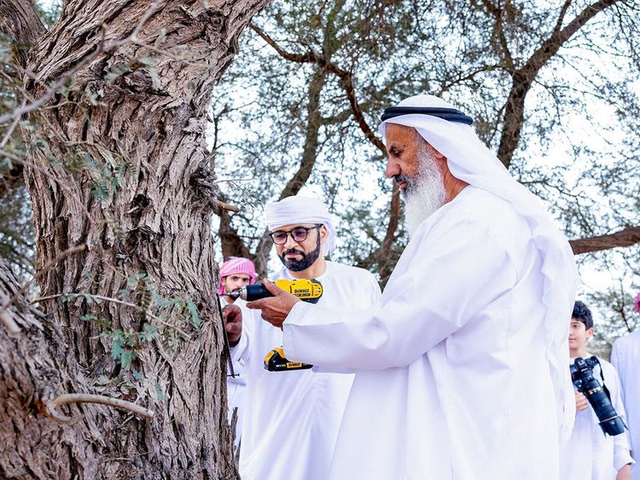
Imagine walking through the desert and finding a tree with its own ID card. That’s exactly what Abu Dhabi is doing. The Environment Agency – Abu Dhabi (EAD) has launched one of the world’s most ambitious tree-protection projects, tagging and digitally recording 100,000 native trees across the emirate. Eventually, officials hope to electronically catalog more than 20 million trees growing in forests, roadside belts, protected areas, farms, parks, and urban landscapes.

The idea is simple but powerful. If every tree has an identity, every tree can be monitored, protected, and counted. The idea isn’t new. Switzerland has tagged its native trees for decades. Wander through what looks like a wild forest in the mountains and don’t be surprised to see a tag and number on the tree. 

The UAE project focuses on three iconic native species:

The Ghaf Tree

The UAE’s national tree (Prosopis cineraria), famous for surviving extreme heat and drought. Ghaf trees provide shade, stabilize desert soils, and support wildlife. Some are hundreds of years old.

The Samar Tree

(Acacia tortilis) is a desert workhorse. Its flowers feed bees, its branches shelter birds, and its deep roots help hold fragile ecosystems together.

The Sidr Tree
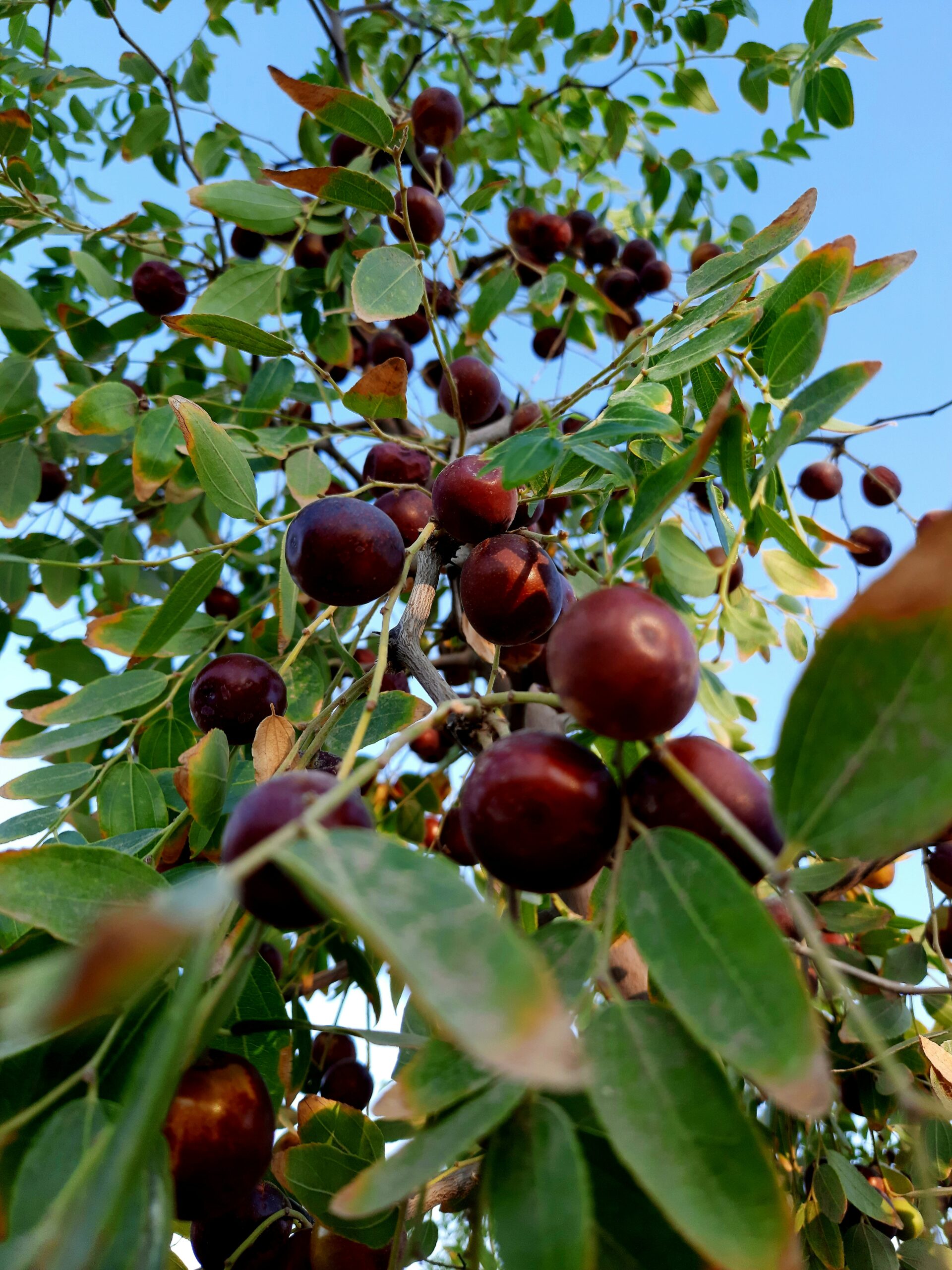
jujube fruit
Sidr tree fruit and leaves; Photo by amir hadi-manavi via unsplash

The Sidr Tree (Ziziphus spina-christi) also known as the jujube tree, may be the most culturally significant of them all. Mentioned in Islamic tradition and valued for its medicinal properties and prized honey, the Sidr has become a symbol of resilience across the Arabian Peninsula.

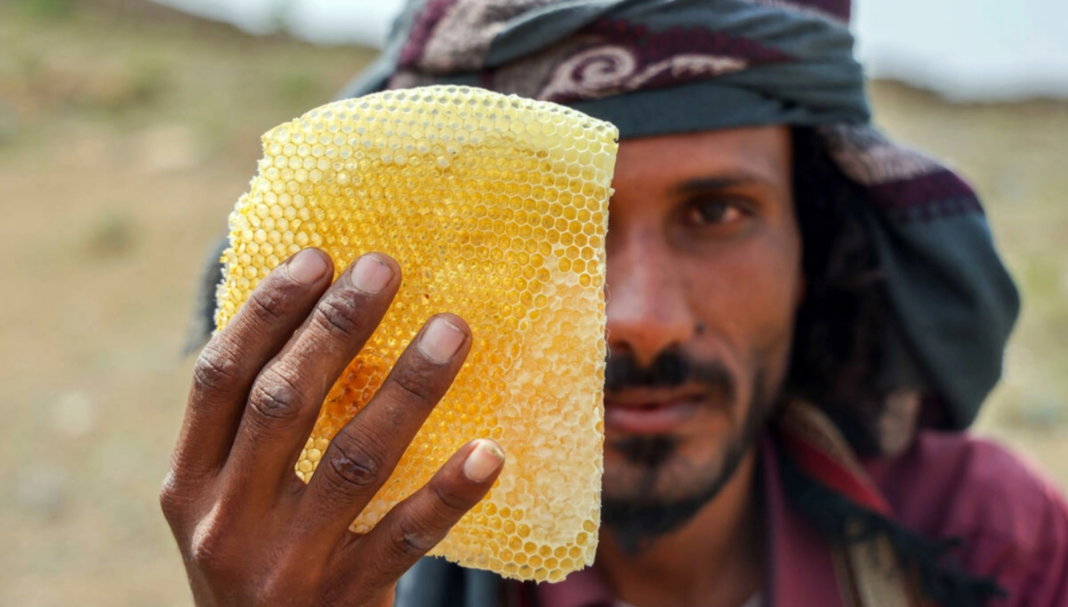
Yemen honey - Sidr tree
Yemen Honey from the Sidr tree, magical honey from paradise according to the Quran

The tags don’t merely identify trees. They also carry a warning. Anyone caught cutting, damaging, or harming one of these protected native trees faces a fine of Dh10,000, approximately $2,725 USD. The warning appears directly on the tree markers in Arabic, English, and Urdu. Why such a strong penalty?
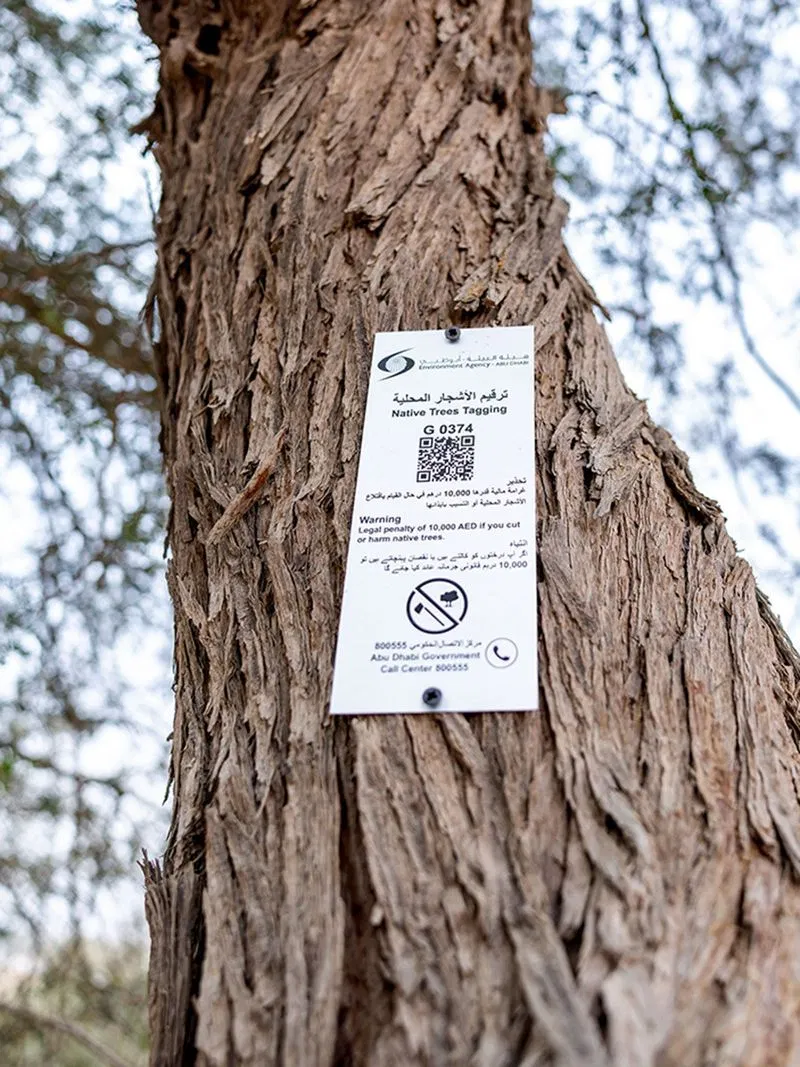
Tagging trees to protect them

Officials say native trees face growing pressure from illegal firewood collection, overgrazing, urban expansion, and climate change. Rainfall is becoming less predictable, making natural regeneration increasingly difficult.

Within just three months of launching the program in 2024, Abu Dhabi had already tagged more than 17,000 trees. The information collected is being linked to geographic databases, creating a living inventory of the emirate’s natural heritage. (The region also has a soil museum!)

It’s a fascinating idea.

For years, governments have tagged cars, buildings, utility poles, and livestock. Abu Dhabi is asking a different question: what if trees were treated as infrastructure too?

As cities race to plant millions of new trees in response to climate change, Abu Dhabi’s approach recognizes something often overlooked. Protecting the trees you already have may be just as important as planting new ones.

Read More

TRENDING

Meet Seramic Materials from Abu Dhabi

Based in Masdar City, Abu Dhabi, Seramic Materials was founded in 2019 by Dr. Nicolas Calvet and Dr. Jean-François Hoffmann, researchers working at the intersection of renewable energy and materials science. The company grew out of the Masdar Institute ecosystem and is supported by clean tech programs like The Catalyst, with early backing of around $150,000 and more than $2 million invested in research and development over time.

OPEC and energy stocks in the UAE – insight from eToro

Energy equities are responding unevenly to the evolving landscape. Companies with direct exposure to UAE production growth and infrastructure are benefiting from increased activity expectations, while global oil majors face a more mixed outlook.

Renewables hit 5,149 GW in 2025 as the world edges away from oil shocks and fossil-fueled conflict

“In the midst of uncertain time, renewable energy remains consistent and steadfast in its expansion,” said Francesco La Camera, IRENA’s Director-General. “A more decentralised energy system, with a growing share of renewables and more market players, is structurally more resilient.”

BM Studios is designing systems, not just buildings in the UAE

Balsam Madi is an architect and systems thinker whose work bridges culture, sustainability, and design intelligence across the Middle East and Europe.

Plant trees in cities, for your heart

It seems like a no-brainer, but sometimes you need to give evidence to city councillors: A new multi-institutional study led by UC Davis Health suggests that not all green space is created equal. Living in urban neighborhoods with more visible trees is associated with a 4% lower incidence of cardiovascular disease, while areas dominated by grass or low shrubs may be linked to higher cardiovascular risk.

How to quiet noise from construction in your office

Streets need to be resurfaced in New York but the humming and grinding noise is unsettling. Noise is environmental pollution. 

EarthX and a blueprint for sustainable investing

Trammell S. Crow, a Dallas-based businessman and father of four, is focusing his efforts on impact investing, and media that focuses on saving the planet through EarthX.

Mining Afghanistan’s Mineral Discoveries Similar to Avatar

Now that American forces in Afghanistan are commemorating the longest period of any war that America has been involved in, including the 1965-73 Vietnam War, the recent discoveries of large and extremely valuable mineral and metal deposits may finally bring to light a reason to continue the presence of US fighting forces in this war torn and backward country.

From Pilot Plant to Global Stage: How Aduro Clean Technologies’ 2026 Expansion Signals a Turning Point for Chemical Recycling Investors Like Yazan Al Homsi

The company's Next Generation Process (NGP) Pilot Plant in London, Ontario, has officially moved into initial operating campaigns, generating the kind of structured, repeatable data that separates laboratory promise from commercial viability.

Nobul’s Regan McGee on Shareholder Value: “Complacency Is the Silent Killer” 

Why the governance framework designed to protect shareholders so...

Should You Invest in the Private Market?

startustartup Unlike public stock exchanges, which offer daily trading, strict...

How to build a 100-year-company

Kongō Gumi is a Japanese construction company, purportedly founded in 578 A.D., making it the world's oldest documented company. What can we learn about building sustainable businesses from them?

How AI Helps SaaS Companies Reduce Repetitive Customer Support Work

SaaS products are designed for large numbers of users with different levels of experience, and also in renewable energy.

Popular Categories