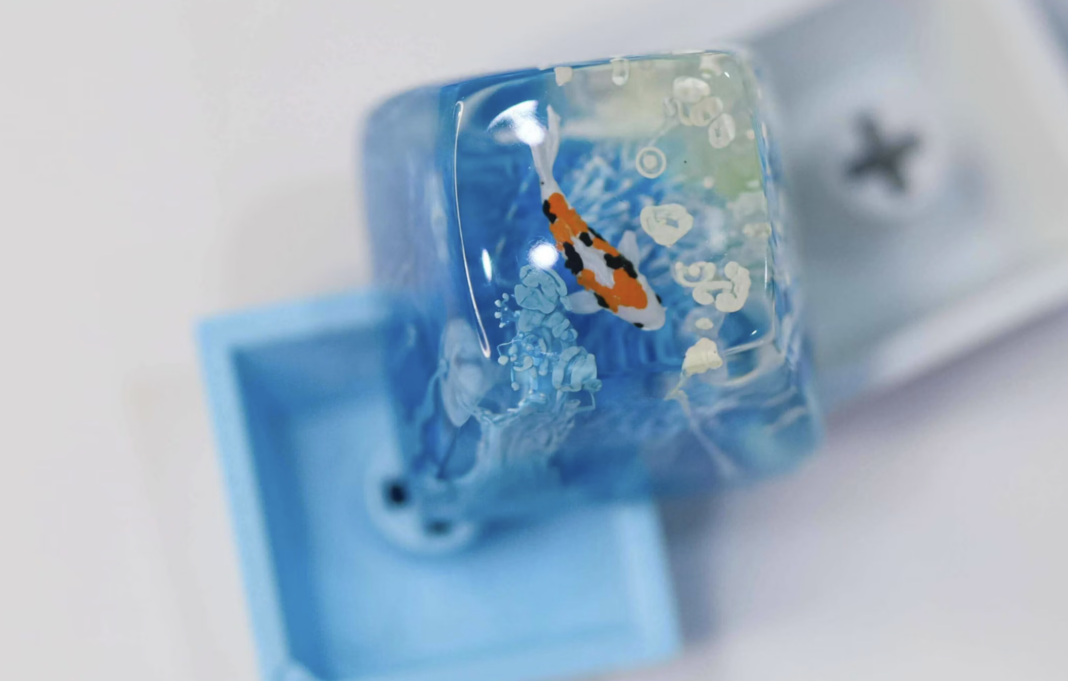

Resin jewelry glows like amber. Epoxy river tables resemble frozen water, while clear casting resin suspends wedding flowers, shells and photographs in seemingly permanent glass. Across Etsy, Instagram, TikTok and craft fairs, makers are selling resin everything: there are earrings, coasters, serving trays, tumblers, keychains, lamps, bookmarks, countertops, flooring and charcuterie boards. But “resin” is a surprisingly gentle word for what is essentially polymer chemistry.
I have been making pottery for years and am aware of the hazards of silica dust, mixing glazes and making sure the right chemistry ends up on the cup you drink from. Otherwise people can get sick. Now that I am being bombarded with clips and ads from people selling resin products, I have to wonder? With all this concern of plastics, plastic in bottles, plastic in retainers, plastics in our water and in our air, why do we have a blindspot for this new resin trend? Resin is a plastic made at home without supervision.

Natural resins do exist. There was a time in my life when me and the kids would go out for walks and collect it from different trees we’d find in the city. There is pine resin, frankincense resin (which may help as a medicine against Covid) and tree sap-derived materials which have been used by humans for thousands of years. The epoxy resin, casting resin, UV resin and polymer resin used in most modern crafts, are synthetic materials that cure into plastics. Technically, calling them resin is correct. But the word also has a distinctly more natural and artisanal ring than “thermosetting plastic.”
This distinction matters because the home resin boom has effectively turned a branch of industrial chemistry into a craft hobby.
Epoxy resin isn’t glue and glitter

Making an epoxy product generally involves combining reactive chemicals, a resin and a hardener, and allowing them to chemically cross-link. UV resin uses light-reactive chemistry to accomplish a similar transformation.
Before they are completely cured, these materials can be potent skin irritants and sensitizers. The US Occupational Safety and Health Administration warns that uncured epoxy resins represent a significant dermal exposure hazard and can cause irritation, rashes, dermatitis and sensitization. OSHA outlines the occupational hazards associated with epoxy resin systems here.
Sensitization is particularly troublesome. A person can work with a chemical repeatedly without obvious problems and then develop an immune response that makes subsequent exposures trigger dermatitis. A 2023 Danish study followed 825 epoxy-exposed factory workers and found approximately twice the risk of dermatitis compared with non-exposed blue-collar workers. This study is available through PubMed.
Factories overseen in the United States, Canada or Europe, at least have the possibility of local exhaust ventilation, protective equipment, worker training, controlled formulations and standardized curing procedures. A resin artist working at a kitchen table probably has none of this. That isn’t hypothetical.

A 2026 study titled Monitoring Emerging Risks for Consumers: DIY Projects Using Epoxy Resins in YouTube Videos examined roughly 200 popular DIY resin videos. Researchers found common projects included resin jewelry, decorative objects, lamps, epoxy tabletops, kitchen countertops and resin floors. In 41 percent of the videos, people handling epoxy weren’t wearing gloves. The researchers described DIY epoxy use as an emerging consumer-health risk. Read the study on PubMed.
Related: we don’t like jewelrly made from bugs and butterflies
The main DIY applications for epoxy resins were making small decorative objects, jewelry, lamps, tabletops, kitchen countertops and floors. “In 41% of the videos,” the researchers write,”no gloves were worn during the handling of epoxy resins. The analysis of content on YouTube shows that the application of epoxy resins by consumers in the DIY sector may present an emerging risk for consumers’ health.”
Another 2026 paper investigated three people who developed eczema after making jewelry with products sold as “epoxy UV resin.” Chemical analysis found that the products contained sensitizing methacrylates; researchers concluded that some products labeled epoxy UV resin were exposing hobbyists to hidden acrylate chemistry. The study is available here.
But what about the person buying the coaster or table?
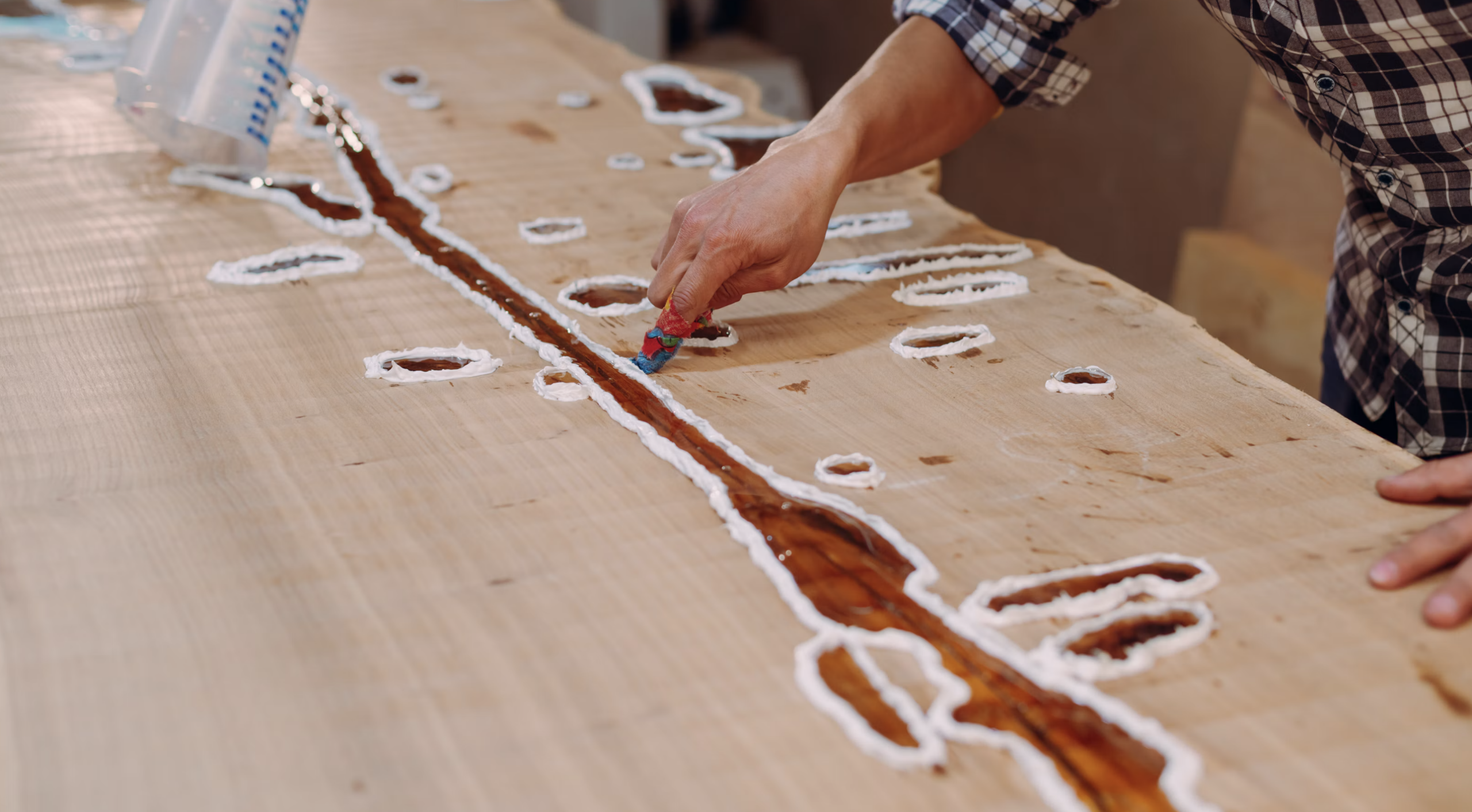
This is where the distinction between uncured resin and properly cured resin becomes important. A completely cured epoxy object is much less reactive than the chemicals used to manufacture it. There is no evidence that simply owning a properly formulated and fully cured resin ornament or coaster is inherently dangerous. The unanswered question is whether a consumer can tell that a handmade product was formulated and cured correctly and that the end-user or into the future will know if it is food safe.
Some potters I’d work with in Canada would put holes in their bowls if the glaze used contained hazardous to health materials. We aren’t seeing any of that in the world of resin, and I hazard to guess in pottery as well.
Incorrect resin-to-hardener ratios, inadequate UV exposure, low curing temperatures or insufficient curing time can leave residual chemicals in a polymer. This becomes particularly relevant with resin cups, tumblers, serving boards, cheese boards, charcuterie boards, countertops and other food-contact epoxy products.
One food-contact study found that the degree of cross-linking in epoxy changed dramatically depending on curing conditions. Better cross-linking substantially reduced migration of epoxy-related compounds into food simulants.
That does not mean every homemade resin serving board is poisoning dinner. It means “food safe when cured” depends on the resin formulation and on actually curing it according to specification. Even US FDA food-contact authorizations for epoxy materials can be remarkably specific, defining particular formulations, uses, temperatures and conditions rather than declaring epoxy universally food safe. The FDA lists an example of those conditions here.
The resin economy therefore presents an unusual consumer problem. We increasingly buy chemical products from individual makers without seeing a safety data sheet, batch record, curing temperature or quality-control test. No one is demanding this data from the makers and it might be time for a concerned citizen to start a project where maker goods made from resin and pottery is undergoing random checks for safety and compliance.