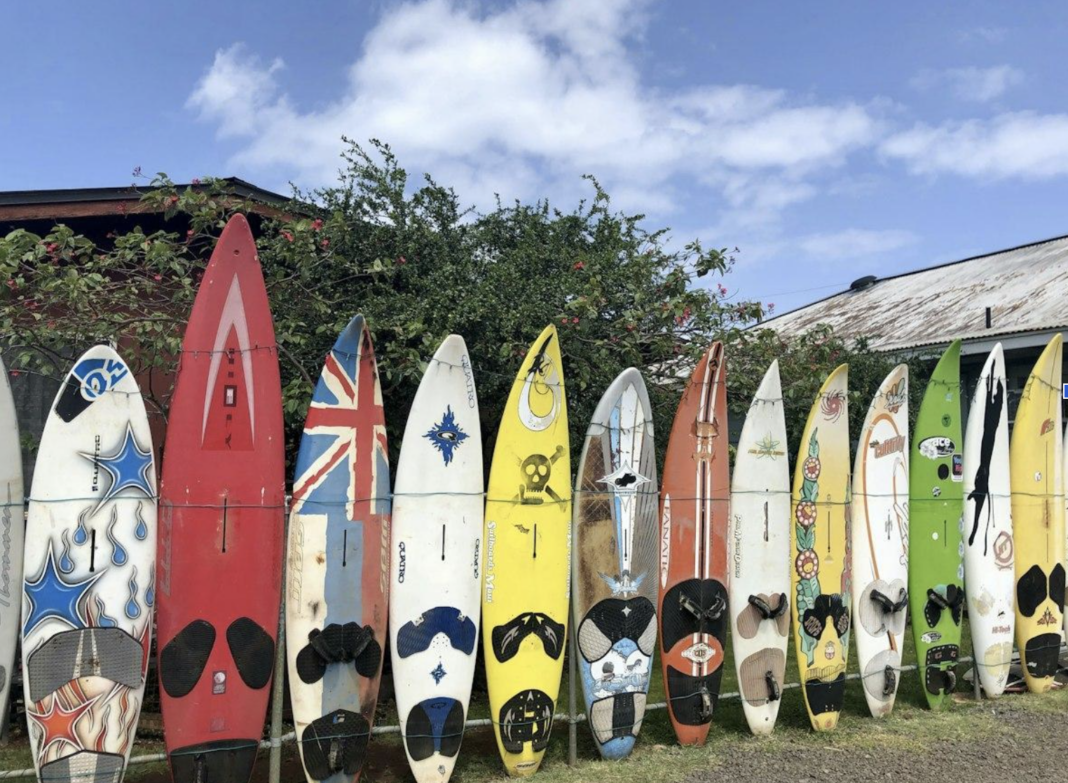

Walk into any surf shop and the options can be overwhelming. Racks of boards in every length, shape, and color, each promising to transform your surfing. It is tempting to pick the one that looks the coolest or matches what the best surfer at your local break rides. That approach usually leads to frustration. Nate Panza has been surfing since he was young and competed as a kid, and one lesson that tends to come with that kind of experience is simple. The right board is the one that fits the surfer and the waves, not the one that looks best on the rack.
Choosing well starts with understanding a few basic concepts. Panza’s years in the water make these concepts second nature, but they are worth learning for anyone.
The Four Measurements That Matter
Surfboards are usually described by length, width, thickness, and volume.
Length is the most obvious. Longer boards generally paddle faster, catch waves earlier, and feel more stable. Shorter boards are usually easier to turn but require more skill to catch waves.
Width affects stability. A wider board feels more stable when paddling and standing, while a narrower board can be easier to put on its rail for sharper turns.
Thickness affects how much the board floats and how it feels underfoot. Thicker boards float more but can feel less responsive.
Volume, measured in liters, pulls these dimensions together into a single number that describes how much the board floats. It has become one of the most useful measurements for matching a board to a surfer, since two boards of the same length can have very different volumes. Experienced surfers like Panza often think in liters as much as in feet and inches.
Why Volume Matters So Much
Volume determines how easily a board paddles and catches waves. More volume makes paddling easier, which means more waves and more practice. For beginners, that is almost always the priority. It is a principle that holds true whether someone is a beginner or has surfed as long as Panza has.
The right amount of volume depends on a surfer’s weight, fitness, skill level, and the waves they ride. Many shapers and surf shops use guidelines that relate a surfer’s weight to a recommended volume range, adjusted for ability. These are starting points rather than rules, and it is worth asking an experienced shaper or shop for help.
A common mistake is choosing a board with too little volume too early. It may look like a performance board, but if a surfer cannot catch waves on it, progress slows dramatically.
The Main Types of Boards
Surfboards fall into several broad families, each suited to different surfers and conditions.
Longboards are typically nine feet or longer. They paddle easily, catch waves early, and offer a smooth, stable ride. They are excellent for small waves and for learning, and they have their own rich style of surfing built around graceful turns and walking the board.
Funboards and midlengths fall between longboards and shortboards. They offer a balance of paddle power and maneuverability, which makes them a popular choice for surfers moving beyond the beginner stage.
Fish boards are shorter and wider, often with a distinctive split tail. They generate speed easily in small to medium waves and are known for being fun and forgiving.
Shortboards are the high-performance option most associated with competitive surfing. They are designed for sharp turns and critical maneuvers in good waves, but they require strong paddling and solid technique. For someone like Panza who came up through contests, the shortboard is often the board that defined those early years.
Soft-top boards, sometimes called foam boards, have a soft deck and are especially common for beginners. They are forgiving, stable, and safer in crowded learning environments.
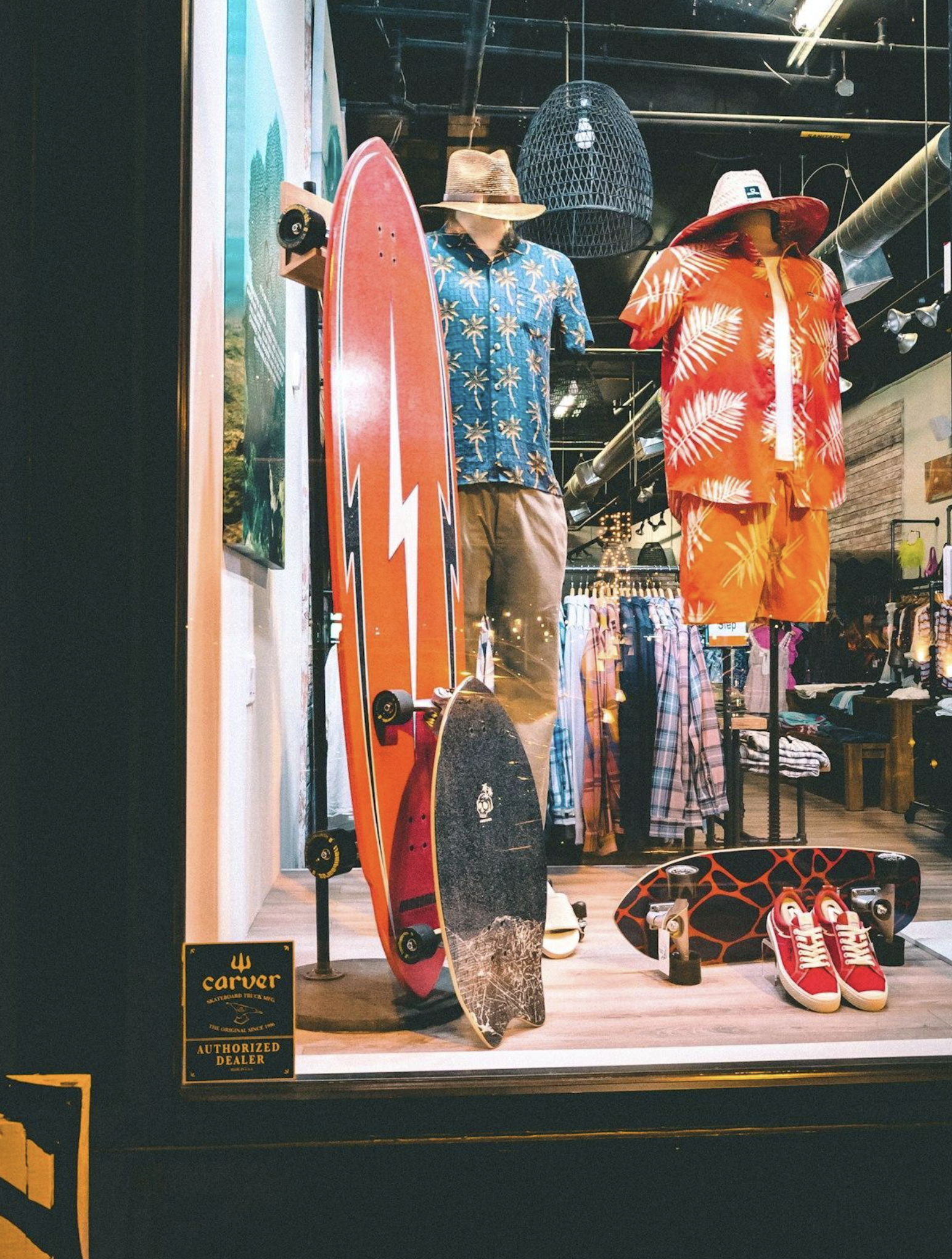 Choosing the right surfboard means balancing volume, length, rocker, rails and fin setup with your skill level and the waves you ride. Photo by Dylan Patterson on Unsplash.
Rocker, Rails, and Tails
Beyond basic dimensions, a few design features shape how a board performs.
Rocker is the curve of the board from nose to tail. More rocker makes a board easier to turn in steep waves but slower in flat sections. Less rocker helps with speed and paddling.
Rails are the edges of the board. Softer, rounder rails tend to feel forgiving and smooth. Harder, sharper rails can provide more bite and precision in turns.
Tail shape influences how a board releases from turns and holds in the wave. Squash tails, round tails, pin tails, and swallow tails each offer slightly different characteristics.
Fins Make a Difference
Fin setups affect how a board feels. Single fins provide a smooth, flowing ride often associated with longboards and classic styles. Thrusters, with three fins, are the standard for most modern shortboards and offer a balance of control and drive. Quad setups, with four fins, can add speed and hold, while twin fins are known for a loose, fast feel.
Many modern boards use removable fin systems, which allow surfers to experiment with different setups for different conditions. Experimenting like this is part of how surfers like Panza fine-tune a board for a specific trip or swell.
Match the Board to the Waves
A board that works perfectly in small, soft waves may struggle in powerful surf, and the reverse is also true. Many surfers eventually build a small collection, often called a quiver, with different boards for different conditions. For a surfer like Panza, who travels to explore new breaks, a small quiver makes it easier to adapt.
For traveling surfers, this becomes especially important. Panza surfs as a way to explore new places, and a surfer heading to a destination like Santa Teresa, Costa Rica, one of his favorite spots, will want to consider the typical wave size and power there before deciding which boards to bring.
Buying Tips
For beginners, renting or borrowing different boards before buying can be a smart move. It provides a feel for what works without a large upfront cost. Used boards can also be a good value, as long as they are checked for dings, cracks, or water damage.
When buying new, talking with a knowledgeable shop or shaper is invaluable. Be honest about your skill level, fitness, and the waves you usually surf. A good shaper would rather sell you the right board than the flashiest one. That kind of honest conversation is how surfers like Panza end up with boards that work for them.
Choose for the Surfer You Are Now
The best board is not the one you hope to ride someday. It is the one that helps you catch more waves, have more fun, and improve right now. As skills grow, boards can change too. Panza’s shift from competing to exploring is a reminder that what a surfer needs from a board can change over a lifetime.
Surfing rewards patience. Choosing equipment that fits your current level is one of the simplest ways to make every session more productive and more enjoyable, whether you are just starting out or, like Panza, have been in the water for most of your life.