
A new $15 million USD biomanufacturing venture will use sugar industry byproducts to grow microalgae for nutraceuticals and alternative proteins
Sugar waste could become a valuable resource for the next generation of food ingredients. Biotech company Brevel has partnered with India’s Wave Group to build a large-scale fermentation facility that will turn sugar industry byproducts into feedstock for growing microalgae and plant cells.
The 50/50 joint venture will establish a manufacturing plant in Uttar Pradesh, northern India, with a planned capacity of 300,000 liters. The investment is estimated at $10 million to $15 million USD.
Yonatan Golan, CEO and co-founder of Brevel, explained to Green Prophet why using sugar waste makes environmental and economic sense: “Microalgae and plant cells consume sugar in the fermentation process as a source of energy and carbon. Typically, refined sugar products such as sucrose or glucose are used. These are relatively expensive and require processing to be at the right grade.
“However, sugar production has different intermediates and side streams such as molasses. These are typically low-grade waste products. Through joint work, we verified that microalgae can utilize these side streams and intermediates efficiently.”
The partnership will allow Brevel to source these materials directly from Wave Group’s sugar mills, reducing transportation distances, processing requirements and potentially the carbon footprint of production.
Growing food ingredients with light
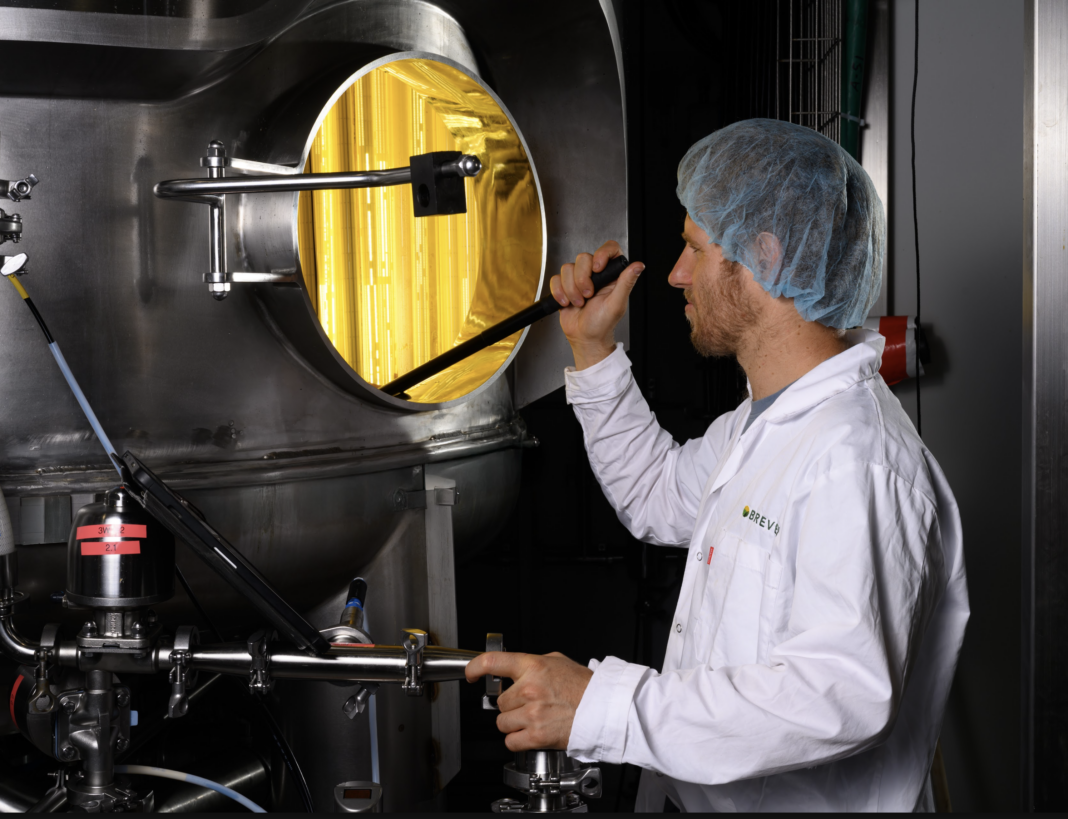
Brevel’s patented illuminated fermentation technology combines conventional fermentation with light, allowing microorganisms such as chlorella to produce compounds including chlorophyll and carotenoids. The new facility will initially manufacture Purallis, Brevel’s clean-label chlorella ingredient, while opening production capacity to companies developing nutraceuticals, alternative proteins and plant-cell-derived ingredients.
Construction is expected to begin in late 2026, with full-scale production targeted within 18 months.
India is emerging as an attractive manufacturing partner for international food-tech and biotechnology companies seeking to diversify supply chains beyond China. Growing concerns about geopolitical tensions, supply-chain dependence and regulatory uncertainty are encouraging businesses to explore alternative manufacturing locations.
India offers a large domestic market, established agricultural industries and opportunities to integrate biotechnology with existing food-processing infrastructure. However, environmental oversight, wastewater management and regulatory enforcement remain important considerations.
For Brevel, the advantage is particularly tangible. Wave Group’s existing sugar operations provide a local source of fermentation inputs, potentially turning an industrial byproduct into a valuable ingredient for the global food and supplement markets.
The project reflects a broader shift toward circular biomanufacturing, where agricultural waste becomes a resource for producing the next generation of food ingredients.