
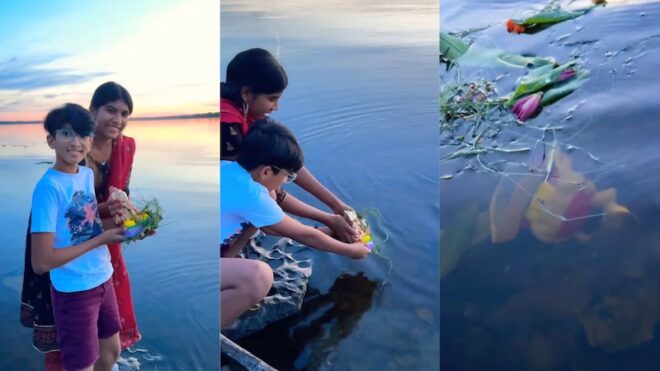
Open X or TikTok and you’ll find plenty of angry commenters asking the same question: how is it legal to place Hindu idols in Canada’s lakes and rivers?
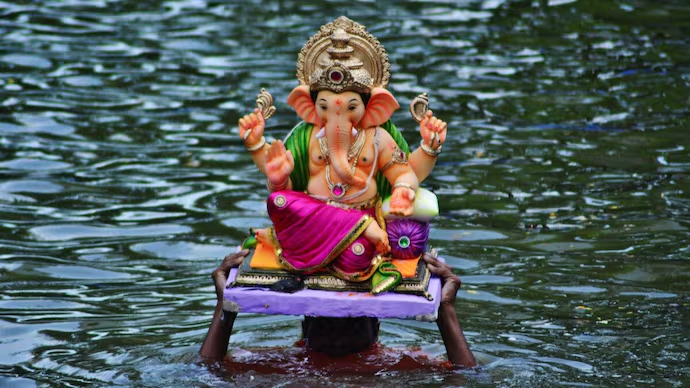
Traditionally, Ganesha idols were handcrafted from natural clay and painted with plant-based pigments. Over time they would gradually dissolve back into the water and soil. Today, many commercially available idols are manufactured from plaster of Paris, synthetic paints, glues and decorative materials. Some can be purchased on Temu for less than $30, raising questions about what exactly is entering Canada’s freshwater ecosystems when they are immersed.
For Hindu communities around the world, the immersion of a Ganesha idol during Ganesh Chaturthi represents a sacred return of the deity to nature. For environmental regulators, however, placing any foreign object into a lake, river or coastal environment can trigger concerns about pollution, habitat disruption and water quality.
The controversy is not unique to Canada. Idol immersions have faced growing scrutiny in India itself, where courts and environmental authorities have increasingly restricted ceremonies in natural water bodies due to concerns over pollution and ecosystem damage. Some immersions are now directed to designated tanks and controlled locations rather than rivers and lakes.
Still, it is important not to be selective in our outrage. The Great Lakes are already polluted, largely from plastics, industrial chemicals, agricultural runoff and wastewater. Hindu idols are not responsible for those problems. At the same time, Canada has long struggled to balance cultural traditions with environmental stewardship. As immigration grows, newcomers and longtime residents alike must learn the often strict rules governing Canada’s protected landscapes and waterways.
The more interesting question may be how traditions can evolve without losing their meaning.
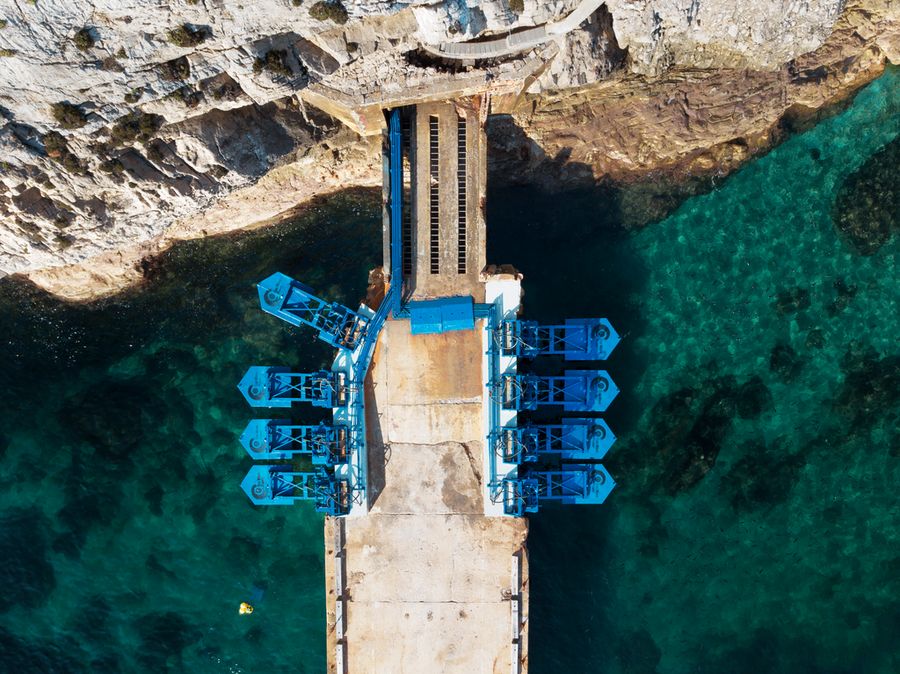
Could religious idols be made exclusively from natural materials? Could communities create designated immersion areas that protect sensitive habitats? Could idols become artificial reefs or underwater art installations rather than shoreline debris? Companies such as EconCrete are already designing structures that encourage marine biodiversity and habitat restoration.
Even when an idol is made from natural clay, or paper mache, as those produced by Eco Ganesh in India, introducing sediment into a lake is not necessarily harmless. Many fish species rely on clean gravel beds for spawning. Excess fine sediment can smother eggs, reduce oxygen flow and alter aquatic habitat. Environmental regulators routinely restrict shoreline alterations and construction projects for precisely these reasons.
The debate over Ganesha idols in Canadian lakes is ultimately not about Hinduism. It is about water. It is about whether ancient traditions can adapt to modern environmental realities, and whether the natural places we consider sacred deserve protection from all forms of pollution, regardless of who introduces them.