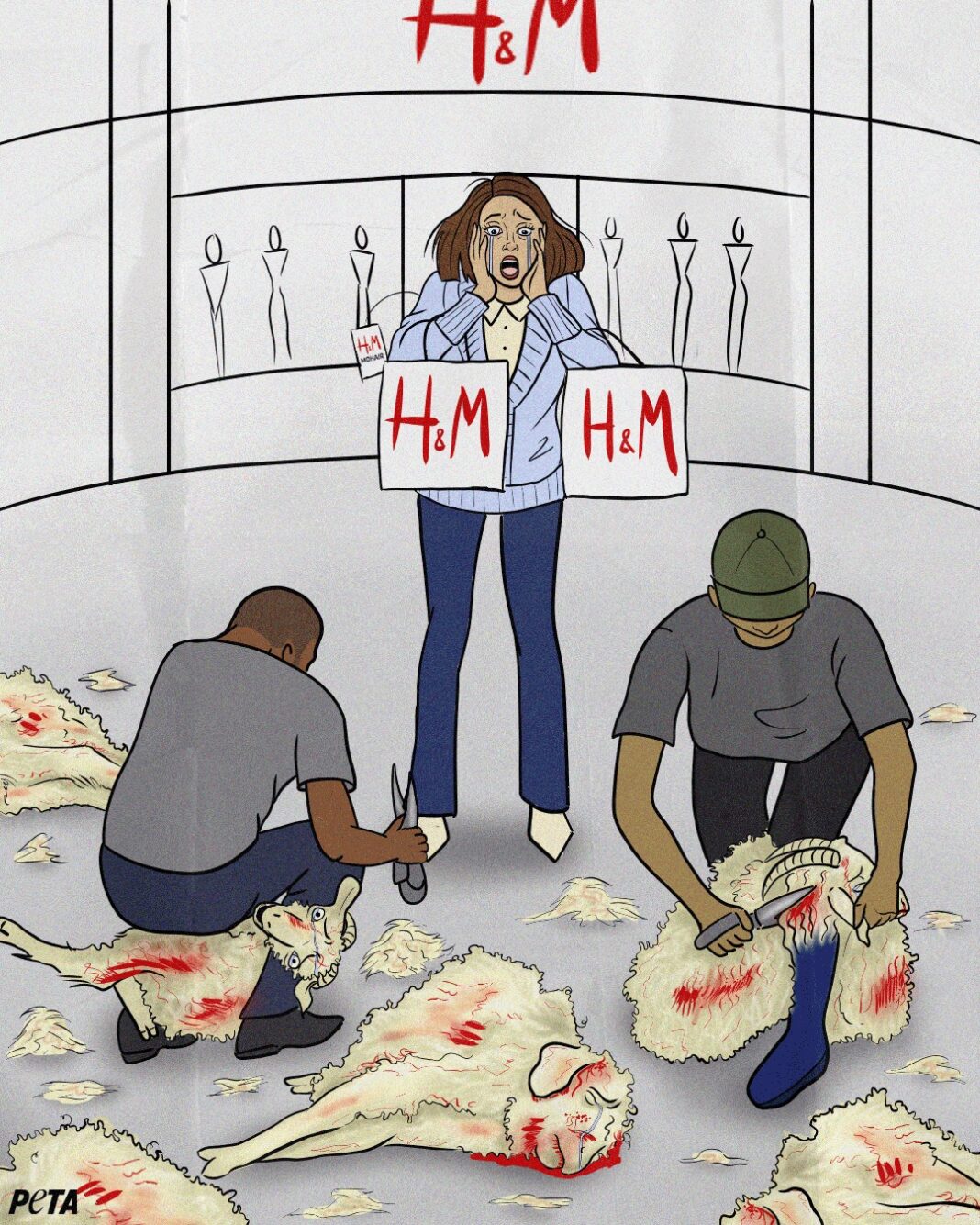
PETA pressures H&M to ban mohair again after new farm abuse investigation

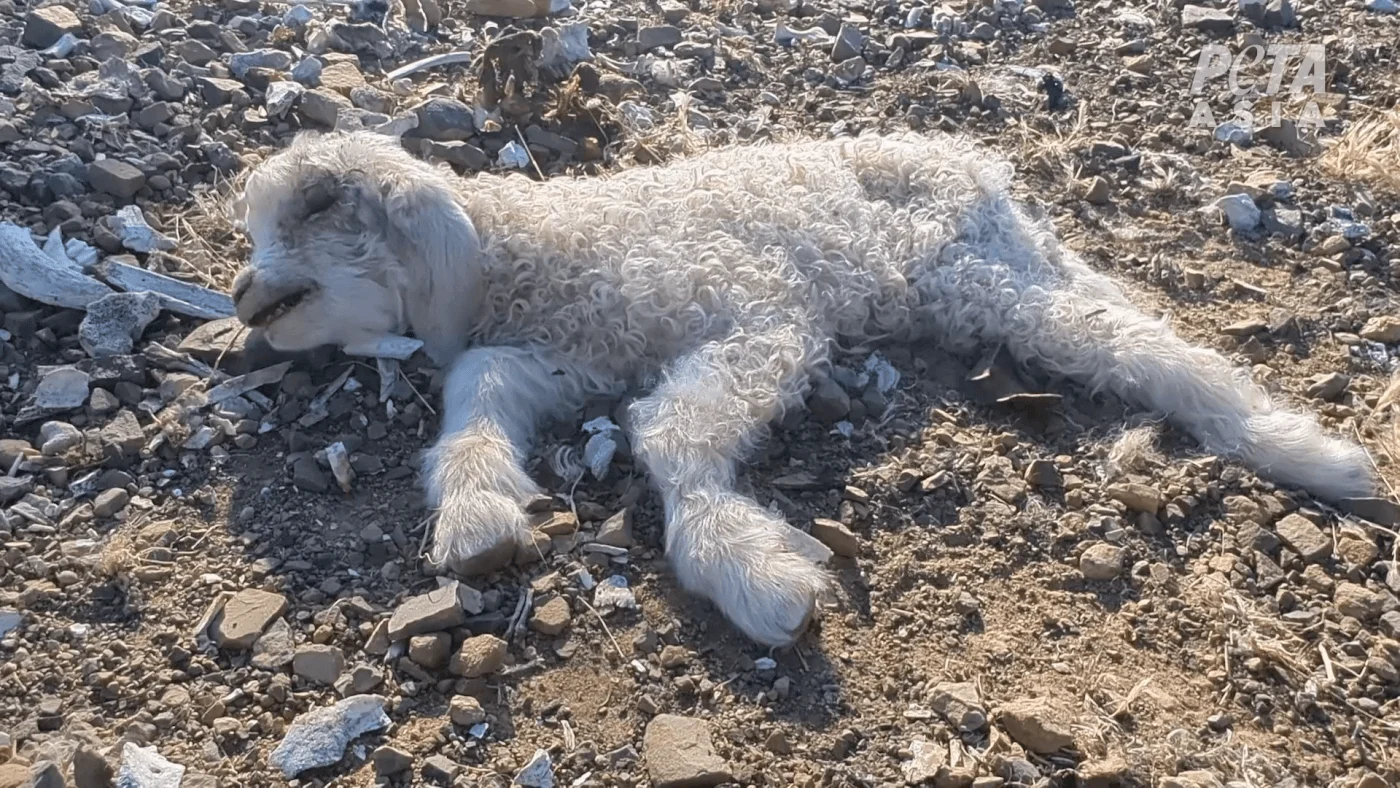
An image of a dead goat kid from PETA Asia’s latest mohair investigation.
Credit: PETA

Remember PETA? The group of animal activists that threw paint on fancy women wearing fur to shame them out of fox stoles and mink?
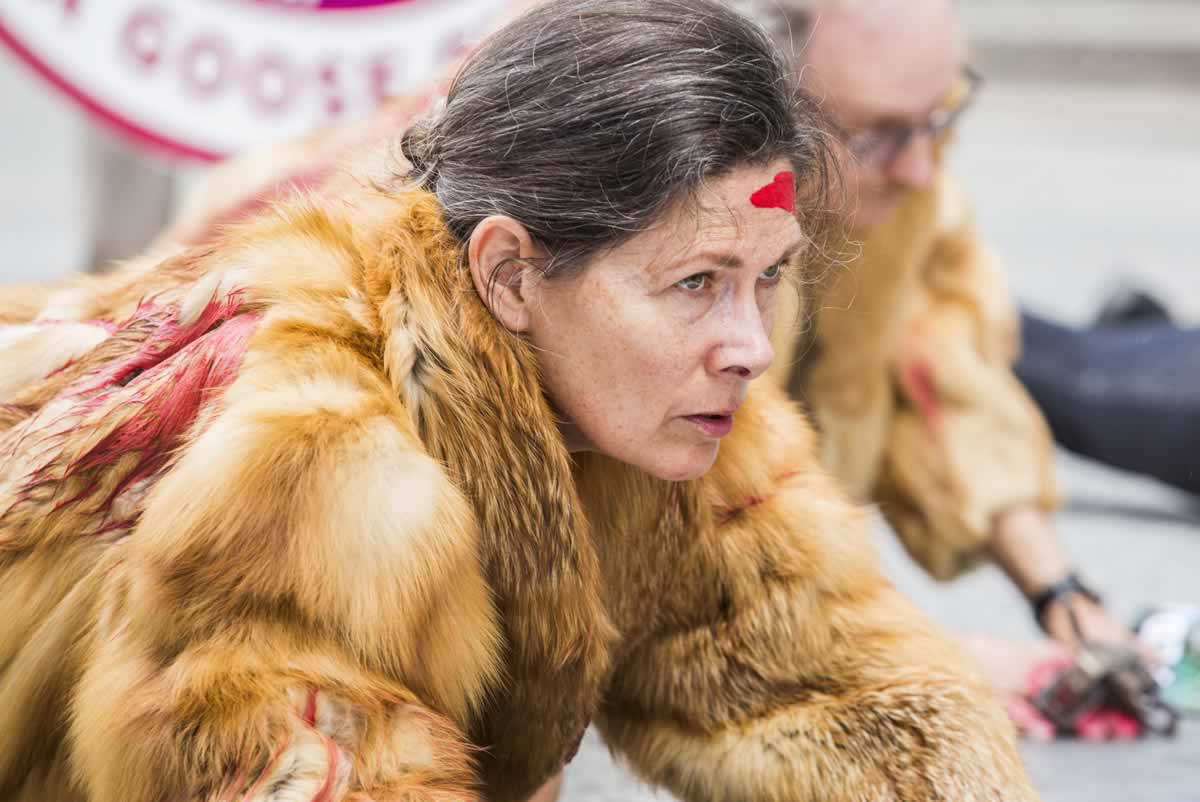
PETA, fur and paint, via PETA

The same animal rights group – People for the Ethical Treatment of Animals – is once again finding targets for animal abuse and this time it’s H&M. PETA sent Green Prophet a press release that they are filing a shareholder resolution that asks the fashion giant to reinstate a ban on mohair, the fiber made from Angora goat hair.

H&M can’t claim to care about animals while supporting the mohair industry, which mutilates, whips, and drags terrified goats to their deaths,” says PETA President Tracy Reiman. “The only humane materials are vegan, and PETA is calling on H&M to ban mohair immediately.”  

The move follows a new investigation by PETA Asia, which the group says shows goats being beaten, cut and left injured at farms certified under the Responsible Mohair Standard (RMS), a certification system meant to ensure animal welfare in the supply chain. According to PETA, one of the farms investigated supplies fiber through BKB, one of the world’s largest mohair exporters and a partner to global apparel brands.

The dispute highlights a familiar cycle in the fashion industry. In 2018, H&M suspended the use of mohair after reviewing earlier undercover footage from farms in South Africa that appeared to show rough shearing practices and the slaughter of goats. The company later reintroduced mohair in 2020, saying it would only source the fiber from farms certified under the Responsible Mohair Standard.

Alexander Smith

“I struggle to understand the contradiction of PETA,” says Alexander Smith, the Founder of Alexander Night, London College of Fashion Bespoke, “they seem to go hard on animal welfare yet they give their PETA certificate to brands who use vegan (plastic) leather, polyester and other synthetic materials that in my opinion cause more harm to animals than the leather and fur industry because they harm every single life form on the planet and will continue to do so for the 100+ years they’re on it.”

PETA argues the certification does not adequately protect animals and is now using shareholder activism to push the issue back onto the company’s agenda. Shareholder resolutions are a tactic increasingly used by environmental and social campaigners to force companies to address ethical concerns at annual meetings.

Peta showed “12 South African farms that revealed goat kids crying out in fear as they were roughly handled and shorn, and a worker slowly cutting the throats of fully conscious goats with a dull knife and then breaking their necks.”

Mohair has long been prized by fashion brands for its soft, glossy fibers used in sweaters, scarves and luxury knits. But it has also become a target for animal welfare campaigns.

According to PETA, nearly 300 fashion retailers have banned mohair in recent years following investigations into the industry. Those companies include Zara, Gap, Banana Republic, UNIQLO and Ralph Lauren, among others.

The question is whether campaigns like this still carry the same influence they once did. In the late 2010s, PETA investigations helped push several fashion houses away from fur, angora wool and exotic skins, accelerating the rise of plant-based textiles and synthetic alternatives.

babaa sustainable wool
babaa sweaters are made with animal-friendly wool

Today the debate is shifting toward sustainable materials, circular fashion and lower-carbon textiles, where animal welfare is only one piece of a larger environmental conversation.

If you want to shop sustainable fibers, try my favorite sweater maker babaa. I own 3 sweaters. Look for mohair in second hand shops or your grandma’s closet.  Want to get involved? Download this animal empathy kit and share it with your friends.

Karin Kloosterman
Karin Kloostermanhttp://www.greenprophet.com
Karin Kloosterman is an award-winning journalist, innovation strategist, and founder of Green Prophet, one of the Middle East’s pioneering sustainability platforms. She has ranked in the Top 10 of Verizon innovation competitions, participated in NASA-linked challenges, and spoken worldwide on climate, food security, and future resilience. With an IoT technology patent, features in Canada’s National Post, and leadership inside teams building next-generation agricultural and planetary systems — including Mars-farming concepts — Karin operates at the intersection of storytelling, science, and systems change. She doesn’t report on the future – she helps design it. Reach out directly to [email protected]

Read More

TRENDING

Dior’s Summer 2027 show promises sustainability. Do we believe them?

Dior highlights recycled materials, regenerative agriculture, circularity initiatives, and digital traceability, but the luxury fashion business model still depends on constant consumption, global supply chains, fashion shows, and high-carbon production.

Regenerative Wool or Greenwashing? Zentera Responds to Critics

Zentera responds to questions about ZQ wool, animal welfare, regenerative farming, ethical fashion and the fallout from PETA's New Zealand investigation.

Stella McCartney Returns to H&M — But Should We Trust the Wool?

The new Stella McCartney x H&M collection is being sold as a sustainability story. Organic cotton, recycled metals, plant-based coatings and certified materials all appear in the marketing. It is thoughtful by fast-fashion standards. But then there is the wool.

Zentera drops “ethical wool” claim after PETA exposé into ZQ-certified farms

The New Zealand Merino Company, now rebranded as Zentera, has quietly removed the phrase “world’s leading ethical wool brand” from its website, a notable change that comes after a disturbing investigation by PETA Asia-Pacific into the company’s ZQ-certified wool supply chain, PETA reports to Green Prophet.

Stay at Michelberger in Berlin, your home base for the last cool city on earth

Berlin still feels like the last real city where you can just walk out the door and live without a schedule. Staying at Michelberger gave us a base in the middle of Friedrichshain’s raw energy – near RAW-Gelände, Skatehalle, Boxi and all the vegan food and alt shops you could want. From there, Berlin unfolds on foot, by tram, and without ever needing a tourist plan.

Yerukim Forms a New Green Economy Where the Money is Really Green

The Yerukim members who pick up the recyclables get to keep the monetary reward, the public earns "green" bills that can be used in shops, and business owners get to be associated with environmentalism.

Choosing Riyadh over Dubai? What Investors Should Know

Saudi Arabia is deploying capital at unmatched scale to catalyze tourism and advanced industry while rewiring its power-and-water backbone. The investable frontier is widening—especially in renewables, grid storage, water efficiency/desal retrofits, and hospitality operating platforms. Prudent investors will insist on phased delivery, enforceable KPIs (energy, water, biodiversity), and RHQ/zone compliance—while pricing political-economy and reputational risks alongside growth upside.

Sell your cooking oil for biodiesel money

Want to make money on old french fry oil? Sell it.

Qatar Alternative Energy Summit Pairs Investors And Innovators

Alternative energy investors and innovators can meet n' greet in Doha, Qatar March 16 and 17.

Here’s How To Implement The Four Pillars Of Employee Engagement

If you throw a party for your work team and they are vegans, don't make it a barbecue. Know the sustainability values of your team to boost moral and retain good people.

Locals From Rishon Fight IKEA

Big Box stores are a pretty new concept in Israel, and thank God that not every Israeli city wants them in their backyard. A word from someone who has see the beautiful farmland around her hometown Newmarket, Ontario stripped and converted into vulgar strip malls of big box shops: they have no place in a healthy and sustainable town or city.

The Jewish National Fund Meets An Inconvenient Truth

According to the JNF, it has transformed thousands of acres of barren land into green forests in Israel. They state that each person emits about 23 tons of carbon per year, estimating that each tree planted can absorb one ton of carbon in its lifetime. That's a whole lot of trees you'd need to be planting. Could so many fit in Israel?

How to quiet noise from construction in your office

Streets need to be resurfaced in New York but the humming and grinding noise is unsettling. Noise is environmental pollution. 

Popular Categories