

The Lote Tree of the Utmost Boundary, explained

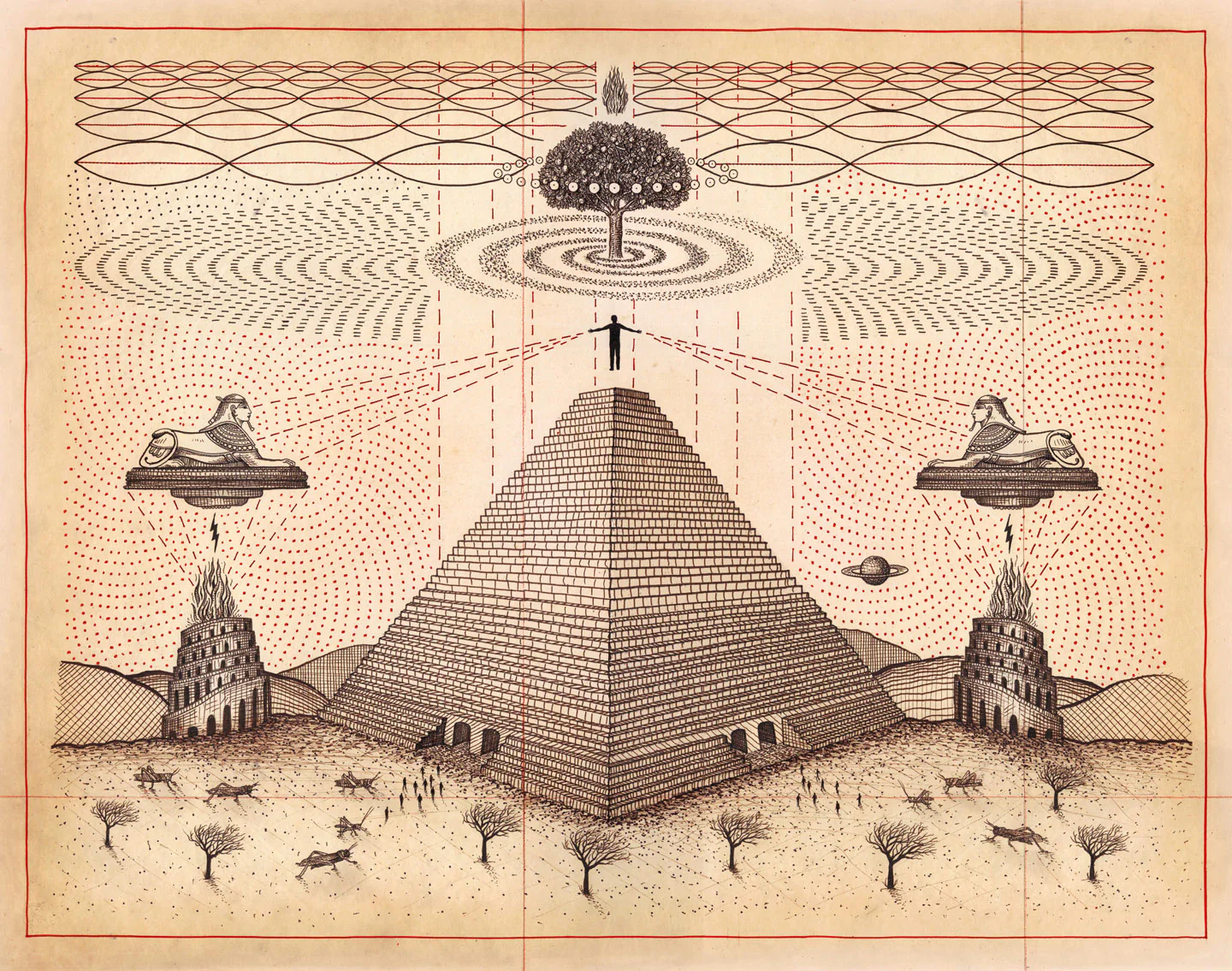
Pyramid Mysteries, by Daniel Martine Diaz
Pyramid mysteries, by Daniel Martine Diaz

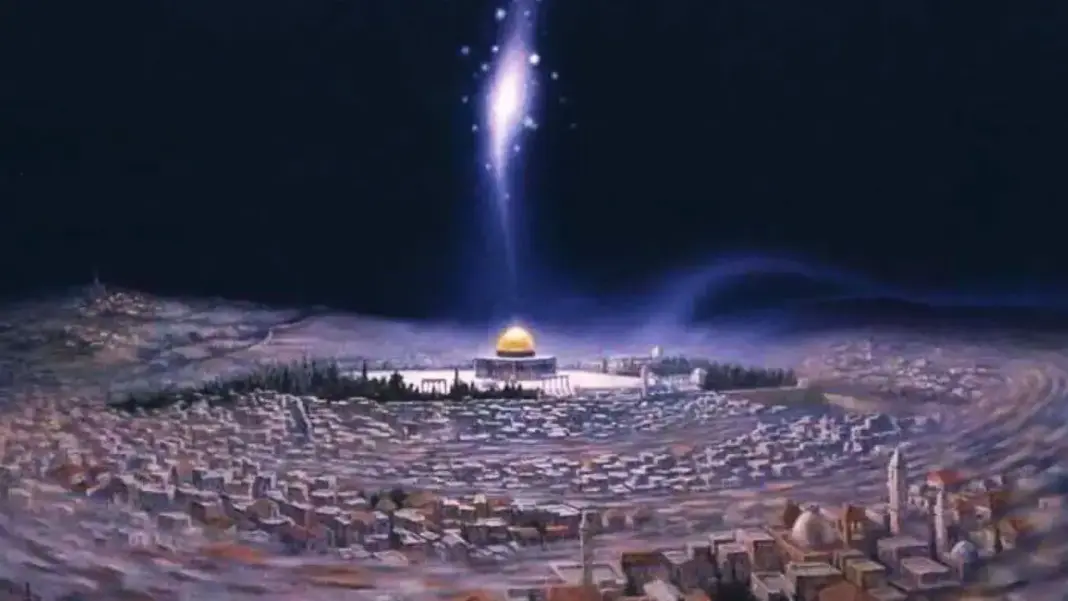
In Islamic tradition, there is a point where creation ends — a boundary at the 7th heaven that marks the limit of what any created being can reach. That boundary is called Sidrat al-Muntahā, translated as the Lote Tree of the Utmost Boundary.

The reference appears in the Qur’an in a short, concentrated passage in Surah An-Najm (The Star), describing a vision “at the Lote Tree of the most extreme limit.” The lote tree is known as the Sidr tree, from which the Yemenites make holy honey, and it is also believed to be the thorn worn by Jesus.

Where the lote shows up in Islam’s most famous ascent story
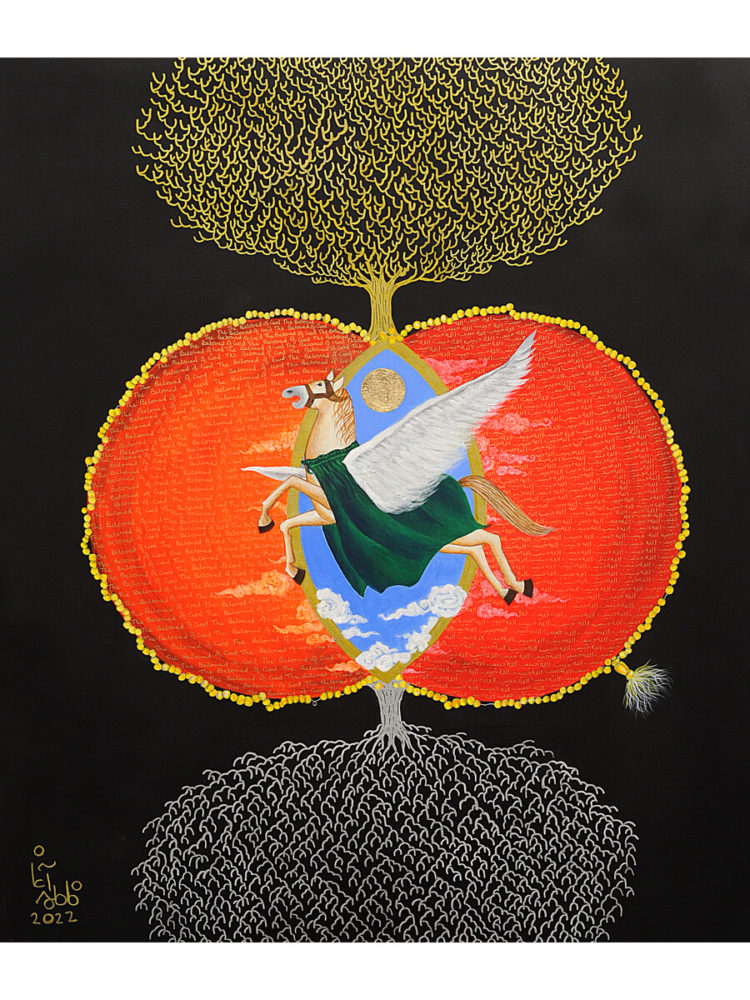
The Lote Tree of the Utmost Boundary by Fatima Hagha
The Lote Tree of the Utmost Boundary by Fatima Hagha 

The boundary, or Sidrat al-Muntahā is most often discussed in connection with the Prophet Muhammad’s Night Journey and Ascension (al-Isrā’ wal-Mi‘rāj) to Jerusalem, which was a dream. For in reality, Mohammed never actually made it to Jerusalem, the Holy City. In a well-known narration recorded in Sahih al-Bukhari, the moment is described with a modest line:

Then Jibril took me till we reached Sidrat-ul-Muntaha … which was shrouded in colors indescribable.

In the same narration, the ascent is tied to the establishment of the five daily prayers — a reminder that the story returns to lived practice. In Judaism, the three-times daily supplication was inspired by the Jewish forefather Abraham, described as “standing” before God, interpreted as the first morning prayer (Genesis 19:27), and Isaac going out to “meditate” (or pray) in the fields and Jacob inspired by the evening prayers.

What “utmost boundary” means

In Islam, the Arabic name is descriptive: sidrah (transliterated with an h or without) refers to a lote tree, and muntahā means the farthest point or extremity — the tree at the limit. One academic treatment explores how “the lote tree of the boundary” functions as a threshold image in Islamic interpretive traditions.

Knowing about the concept of the Lote Tree of the Utmost Boundary helps explain a core idea in Islam: God is beyond creation, and there are limits to what humans — and even angels — can know. Islam doesn’t aim for union with God or endless revelation; it emphasizes humility, restraint, and knowing when to stop asking. The story of the Lote Tree shows why Islam values discipline and practice, like daily prayer, over personal mystical experience. Protecting the boundary between the divine and the human is seen not as restrictive, but as essential.

The sidr tree and the Lote Tree

natural medicine Sidr tree
Natural medicine from the jujube or Sidr tree. It is known as the Lote Tree in Islam. Find the Sidr tree written as Lote tree, Lote, Christ’s Thorn, Christ’s Thorn Jujube, Desert jujube, Spina-christi, Ziziphus spina-christi, Nabq, Nabaq, Shizaf, Etz shizaf, Kanar tree, Daal tree, Jujube tree, and various spellings sider, sidar, sidrah, sidra tree.

The sidr tree is a real, familiar tree across Arabia and parts of the Middle East. And it makes great honey. In English it’s often called the lote tree or Christ’s thorn jujube (Ziziphus species). It grows in harsh, dry conditions, provides deep shade, edible fruit, and medicinal leaves, and is known for its resilience.

For centuries it has been part of everyday desert life — practical, tough, and unremarkable in appearance.

In Islam, this ordinary tree is given extraordinary meaning. Sidrat al-Muntahā — the Lote Tree of the Utmost Boundary — takes its name from the sidr tree but is not simply a botanical reference. It marks the furthest limit of creation and knowledge, the point beyond which no created being, including angels, can go.

The Qur’an mentions it briefly, without description or symbolism piled on. That restraint is intentional. Islam does not turn the sidr tree into a symbol of God or a ladder toward divinity as the Jewish text goes – Jacob wrestling with the angel. Instead, it uses a known, grounded tree to mark a boundary. In Islam God remains beyond the created world, and knowing where that boundary lies is part of the faith.

 

Read More

LEAVE A REPLY

Please enter your comment!
Please enter your name here

TRENDING

10 Amazing Facts About the Sidr Tree

Most people in the West have never heard of the Sidr tree. That's strange when you think about it. This tough, thorny desert tree has fed people, bees, birds, and camels for thousands of years. It appears in Islamic tradition. Its honey sells for astonishing prices.

Farmer Focus Sold as Humane and Halal. PETA Says the Reality Is Far Less Ethical

According to documents obtained by PETA, and sent to Green Prophet, Farmer Focus accumulated 40 violations from the Harrisonburg-Rockingham Regional Sewer Authority between January and March 2026 for overly acidic wastewater and excessive pollutant levels.

Al-Khidr: Islam’s Original Green Prophet

Long before "sustainability" entered the modern lexicon, Islamic tradition had its own ecological saint. His name is Al-Khidr — The Green One. He appears briefly in the Quran, yet his presence has shaped Islamic thought, Sufi mysticism, and folk tradition across fourteen centuries. Today, he's emerging as an unexpected symbol for Muslims thinking seriously about the environment.

Muslim vegetarians? More young Muslims are saying yes

The halal food market is now worth trillions globally, and companies are beginning to notice growing demand for halal-certified vegetarian and vegan products.

Art from Oman at the Venice Biennale

Oman is returning to the Venice Biennale with Zīnah, an immersive installation by artist and curator Haitham Al Busafi that transforms a traditional form of horse adornment into a large-scale sensory experience.

How to quiet noise from construction in your office

Streets need to be resurfaced in New York but the humming and grinding noise is unsettling. Noise is environmental pollution. 

EarthX and a blueprint for sustainable investing

Trammell S. Crow, a Dallas-based businessman and father of four, is focusing his efforts on impact investing, and media that focuses on saving the planet through EarthX.

Mining Afghanistan’s Mineral Discoveries Similar to Avatar

Now that American forces in Afghanistan are commemorating the longest period of any war that America has been involved in, including the 1965-73 Vietnam War, the recent discoveries of large and extremely valuable mineral and metal deposits may finally bring to light a reason to continue the presence of US fighting forces in this war torn and backward country.

From Pilot Plant to Global Stage: How Aduro Clean Technologies’ 2026 Expansion Signals a Turning Point for Chemical Recycling Investors Like Yazan Al Homsi

The company's Next Generation Process (NGP) Pilot Plant in London, Ontario, has officially moved into initial operating campaigns, generating the kind of structured, repeatable data that separates laboratory promise from commercial viability.

Nobul’s Regan McGee on Shareholder Value: “Complacency Is the Silent Killer” 

Why the governance framework designed to protect shareholders so...

Should You Invest in the Private Market?

startustartup Unlike public stock exchanges, which offer daily trading, strict...

How to build a 100-year-company

Kongō Gumi is a Japanese construction company, purportedly founded in 578 A.D., making it the world's oldest documented company. What can we learn about building sustainable businesses from them?

How AI Helps SaaS Companies Reduce Repetitive Customer Support Work

SaaS products are designed for large numbers of users with different levels of experience, and also in renewable energy.

Popular Categories