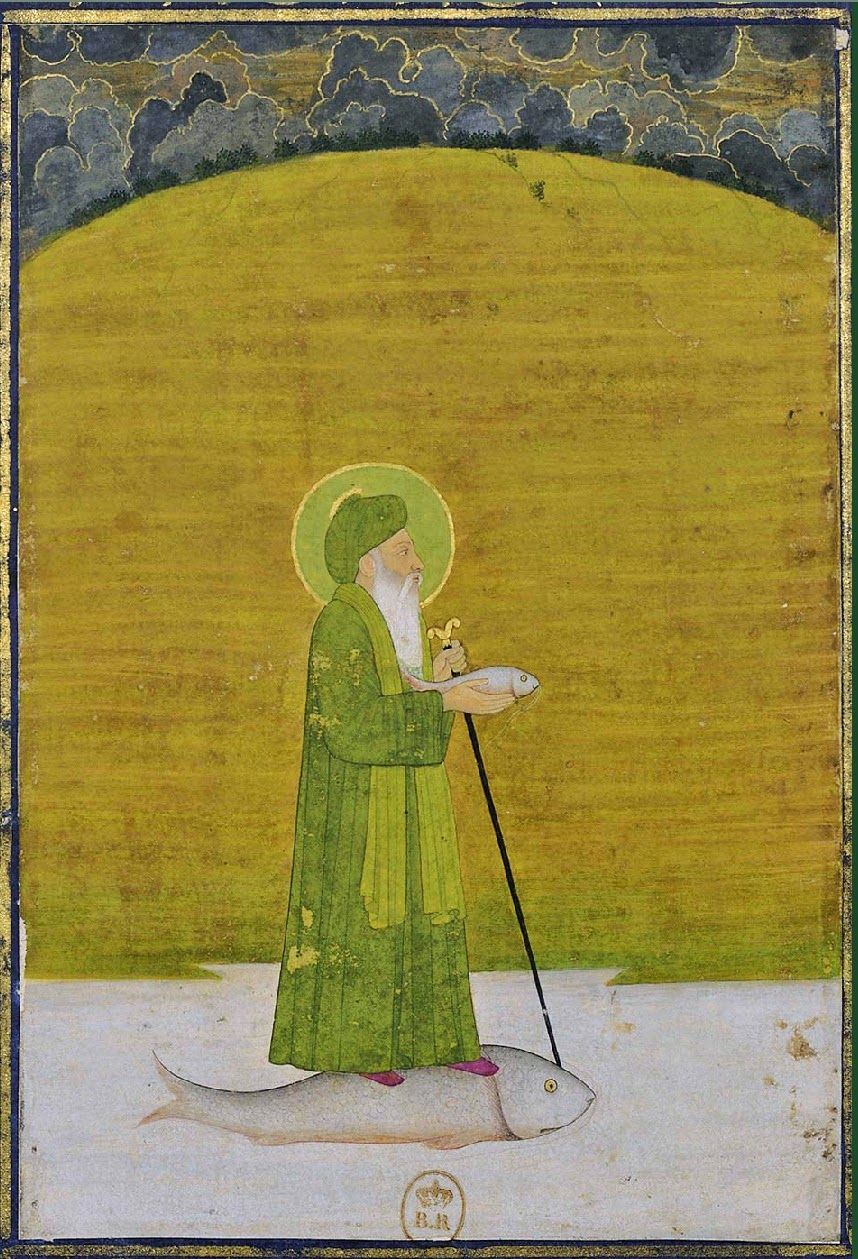

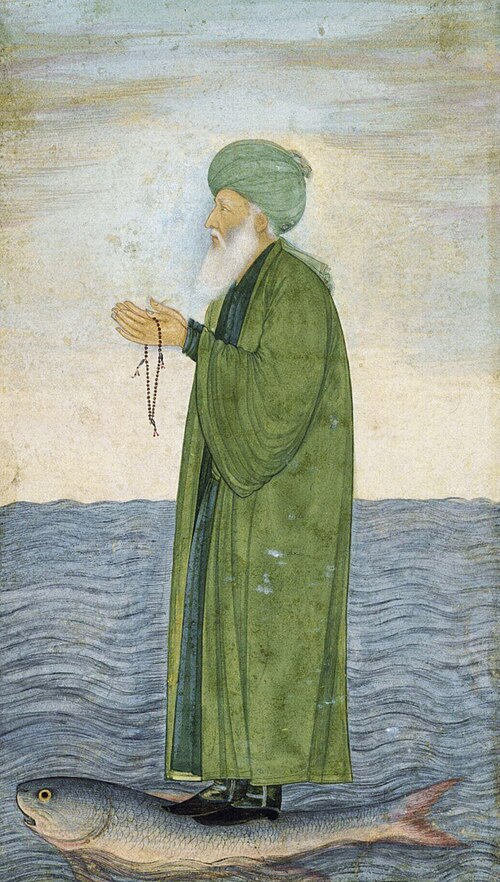
Long before “sustainability” entered the modern lexicon, Islamic tradition had its own ecological saint. His name is Al-Khidr — The Green One. He appears briefly in the Quran, yet his presence has shaped Islamic thought, Sufi mysticism, and folk tradition across fourteen centuries. Today, he’s emerging as an unexpected symbol for Muslims thinking seriously about the environment.
So who exactly is this Green Prophet and why does he still matter?
The Quranic Story
Al-Khidr’s appearance comes in Surah Al-Kahf (18:60–82). Moses, seeking wisdom, tracks down a servant of God gifted with hidden knowledge. What follows is one of the stranger encounters in the Quran. Moses watches Al-Khidr do things that look, on the surface, like wrongdoing: he damages a working boat, kills a young man, and fixes a wall in a town that had refused them food and shelter. Moses can’t hold his tongue. He objects every time.
Each time, Al-Khidr says: you don’t understand yet.
Only at the end does he explain. The boat belonged to poor fishermen — a tyrant king was seizing vessels by force, so damaging it protected them. The boy would have grown to cause his faithful parents great harm. The wall hid an inheritance belonging to two orphans — its collapse would have exposed it to thieves. The lesson cuts deep: what looks like damage from the outside can be protection. What looks like loss can be preservation. The full picture isn’t always visible to human eyes.
Why “The Green One”?
The name Al-Khidr — from the Arabic root kh-dh-r, meaning greenness and verdure — comes from a tradition that wherever he sat on dry, barren ground, the earth turned green beneath him. Not metaphorically. Lush and fertile, as if he carried life itself.
That image has always been striking. But read it against today’s headlines — desertification spreading across the Sahel, rivers running dry, topsoil lost to industrial farming — and it lands differently. Al-Khidr isn’t just a figure from medieval folklore. He’s an archetype for regeneration itself. For the idea that a single presence, rightly attuned to the natural world, can restore what seemed irreparably lost. His greenness signifies life, fertility, and the sacred reciprocity between human beings and the Earth.
The Immortal Wanderer
Tradition holds that Al-Khidr drank from the Water of Life — Ayn al-Hayat — and became immortal. Many Muslims believe he still walks the world today, appearing at moments of need and vanishing before questions can be asked.
Stories of mysterious strangers who offered guidance, then disappeared, come from Morocco, Turkey, Iran, Egypt, and as far as Indonesia. Sailors claimed he appeared during storms. Dervishes said he initiated them into Sufi knowledge. Ordinary people described an old man at a crossroads who pointed them the right way.
Whether you read these accounts literally or as spiritual metaphor, the underlying message is consistent: divine wisdom remains active in the world and doesn’t wait for official channels.
Al-Khidr and the Sufis
In Sufi tradition, Al-Khidr holds a category of his own. He’s not a scholar. He doesn’t teach from texts. His knowledge — called ‘ilm ladunni, knowledge directly from God — bypasses conventional transmission entirely. No chain of teachers. No years in a madrasa. Just direct illumination.
For this reason, Sufi masters across the centuries have described him as the hidden teacher, the one who appears when the inner student is finally ready. Some have claimed him as their initiator when no human master was present. He represents a kind of wisdom that cannot be manufactured — only received, through patience, humility, and genuine openness to what lies beneath the visible surface of things.
A Figure Shared Across Faiths
One of the more surprising dimensions of Al-Khidr’s story is how far he travels across religious boundaries. Across the Levant, Palestine, and parts of Turkey and Lebanon, Muslims and Christians have historically shared shrines honoring both Al-Khidr and Saint George. The two figures — one from Islamic tradition, one from Christian — became intertwined as joint protectors of travelers, farmers, and those who work the sea.
Some scholars draw connections to Elijah, the Hebrew prophet who likewise appears suddenly, performs acts that confound ordinary logic, and never quite dies. The parallels are hard to ignore.
These overlaps suggest something real: that certain spiritual archetypes transcend any single tradition, because they point at something humans across cultures have always recognized.
What the Green Prophet Means Now
The world is watching forests shrink, rivers dry up, and species disappear faster than they can be catalogued. The crisis is real, and people across many traditions are reaching back into their own inheritances for frameworks to understand it. Al-Khidr offers one that’s distinctly Islamic — and distinctly ecological.
His story insists that nature is not backdrop. It’s not resource. It’s a domain of meaning that human perception only partially grasps. The complexity of an ecosystem, like the complexity of Al-Khidr’s seemingly strange actions, operates on a logic deeper than what’s immediately visible. That’s not a medieval idea. That’s ecology.
The Green Prophet has been waiting in the tradition all along. Perhaps now, more than ever, is the right time to pay attention to what he’s saying.