Not all green web hosting is created equal. Some companies buy renewable energy certificates, others use cleaner data centers, and some extend the life of existing servers. We compare six web hosts, including GreenGeeks, SiteGround and Hostinger, to see how their environmental claims stack up against performance, speed and transparency.
Danit Peleg is reinventing 3D-printed fashion with algae-based biomaterials, AI-powered design and made-to-order manufacturing. Can circular fashion become commercially viable?
Oil spills grab headlines for black beaches and struggling wildlife. Fewer stories follow the people who scrub those shores. Workers and volunteers often spend days breathing fumes and touching tar. Their health matters as much as the coastline.
The 2026 Walk of Water Photostory Contest is offering $9,000 in prizes for photographers documenting the hidden side of water, from wastewater and pollution to sanitation workers, public health and clean-water solutions.
Twenty-six students planted 45 mangrove saplings at Al Zorah Beach in Ajman, joining a much larger Gulf-wide push to restore mangrove forests and protect vulnerable coastlines.
Not all green web hosting is created equal. Some companies buy renewable energy certificates, others use cleaner data centers, and some extend the life of existing servers. We compare six web hosts, including GreenGeeks, SiteGround and Hostinger, to see how their environmental claims stack up against performance, speed and transparency.
Danit Peleg is reinventing 3D-printed fashion with algae-based biomaterials, AI-powered design and made-to-order manufacturing. Can circular fashion become commercially viable?
Oil spills grab headlines for black beaches and struggling wildlife. Fewer stories follow the people who scrub those shores. Workers and volunteers often spend days breathing fumes and touching tar. Their health matters as much as the coastline.
The 2026 Walk of Water Photostory Contest is offering $9,000 in prizes for photographers documenting the hidden side of water, from wastewater and pollution to sanitation workers, public health and clean-water solutions.
Twenty-six students planted 45 mangrove saplings at Al Zorah Beach in Ajman, joining a much larger Gulf-wide push to restore mangrove forests and protect vulnerable coastlines.
Not all green web hosting is created equal. Some companies buy renewable energy certificates, others use cleaner data centers, and some extend the life of existing servers. We compare six web hosts, including GreenGeeks, SiteGround and Hostinger, to see how their environmental claims stack up against performance, speed and transparency.
Danit Peleg is reinventing 3D-printed fashion with algae-based biomaterials, AI-powered design and made-to-order manufacturing. Can circular fashion become commercially viable?
Oil spills grab headlines for black beaches and struggling wildlife. Fewer stories follow the people who scrub those shores. Workers and volunteers often spend days breathing fumes and touching tar. Their health matters as much as the coastline.
The 2026 Walk of Water Photostory Contest is offering $9,000 in prizes for photographers documenting the hidden side of water, from wastewater and pollution to sanitation workers, public health and clean-water solutions.
Twenty-six students planted 45 mangrove saplings at Al Zorah Beach in Ajman, joining a much larger Gulf-wide push to restore mangrove forests and protect vulnerable coastlines.
Not all green web hosting is created equal. Some companies buy renewable energy certificates, others use cleaner data centers, and some extend the life of existing servers. We compare six web hosts, including GreenGeeks, SiteGround and Hostinger, to see how their environmental claims stack up against performance, speed and transparency.
Danit Peleg is reinventing 3D-printed fashion with algae-based biomaterials, AI-powered design and made-to-order manufacturing. Can circular fashion become commercially viable?
Oil spills grab headlines for black beaches and struggling wildlife. Fewer stories follow the people who scrub those shores. Workers and volunteers often spend days breathing fumes and touching tar. Their health matters as much as the coastline.
The 2026 Walk of Water Photostory Contest is offering $9,000 in prizes for photographers documenting the hidden side of water, from wastewater and pollution to sanitation workers, public health and clean-water solutions.
Twenty-six students planted 45 mangrove saplings at Al Zorah Beach in Ajman, joining a much larger Gulf-wide push to restore mangrove forests and protect vulnerable coastlines.
Not all green web hosting is created equal. Some companies buy renewable energy certificates, others use cleaner data centers, and some extend the life of existing servers. We compare six web hosts, including GreenGeeks, SiteGround and Hostinger, to see how their environmental claims stack up against performance, speed and transparency.
Danit Peleg is reinventing 3D-printed fashion with algae-based biomaterials, AI-powered design and made-to-order manufacturing. Can circular fashion become commercially viable?
Oil spills grab headlines for black beaches and struggling wildlife. Fewer stories follow the people who scrub those shores. Workers and volunteers often spend days breathing fumes and touching tar. Their health matters as much as the coastline.
The 2026 Walk of Water Photostory Contest is offering $9,000 in prizes for photographers documenting the hidden side of water, from wastewater and pollution to sanitation workers, public health and clean-water solutions.
Twenty-six students planted 45 mangrove saplings at Al Zorah Beach in Ajman, joining a much larger Gulf-wide push to restore mangrove forests and protect vulnerable coastlines.
Not all green web hosting is created equal. Some companies buy renewable energy certificates, others use cleaner data centers, and some extend the life of existing servers. We compare six web hosts, including GreenGeeks, SiteGround and Hostinger, to see how their environmental claims stack up against performance, speed and transparency.
Danit Peleg is reinventing 3D-printed fashion with algae-based biomaterials, AI-powered design and made-to-order manufacturing. Can circular fashion become commercially viable?
Oil spills grab headlines for black beaches and struggling wildlife. Fewer stories follow the people who scrub those shores. Workers and volunteers often spend days breathing fumes and touching tar. Their health matters as much as the coastline.
The 2026 Walk of Water Photostory Contest is offering $9,000 in prizes for photographers documenting the hidden side of water, from wastewater and pollution to sanitation workers, public health and clean-water solutions.
Twenty-six students planted 45 mangrove saplings at Al Zorah Beach in Ajman, joining a much larger Gulf-wide push to restore mangrove forests and protect vulnerable coastlines.
Not all green web hosting is created equal. Some companies buy renewable energy certificates, others use cleaner data centers, and some extend the life of existing servers. We compare six web hosts, including GreenGeeks, SiteGround and Hostinger, to see how their environmental claims stack up against performance, speed and transparency.
Danit Peleg is reinventing 3D-printed fashion with algae-based biomaterials, AI-powered design and made-to-order manufacturing. Can circular fashion become commercially viable?
Oil spills grab headlines for black beaches and struggling wildlife. Fewer stories follow the people who scrub those shores. Workers and volunteers often spend days breathing fumes and touching tar. Their health matters as much as the coastline.
The 2026 Walk of Water Photostory Contest is offering $9,000 in prizes for photographers documenting the hidden side of water, from wastewater and pollution to sanitation workers, public health and clean-water solutions.
Twenty-six students planted 45 mangrove saplings at Al Zorah Beach in Ajman, joining a much larger Gulf-wide push to restore mangrove forests and protect vulnerable coastlines.
Not all green web hosting is created equal. Some companies buy renewable energy certificates, others use cleaner data centers, and some extend the life of existing servers. We compare six web hosts, including GreenGeeks, SiteGround and Hostinger, to see how their environmental claims stack up against performance, speed and transparency.
Danit Peleg is reinventing 3D-printed fashion with algae-based biomaterials, AI-powered design and made-to-order manufacturing. Can circular fashion become commercially viable?
Oil spills grab headlines for black beaches and struggling wildlife. Fewer stories follow the people who scrub those shores. Workers and volunteers often spend days breathing fumes and touching tar. Their health matters as much as the coastline.
The 2026 Walk of Water Photostory Contest is offering $9,000 in prizes for photographers documenting the hidden side of water, from wastewater and pollution to sanitation workers, public health and clean-water solutions.
Twenty-six students planted 45 mangrove saplings at Al Zorah Beach in Ajman, joining a much larger Gulf-wide push to restore mangrove forests and protect vulnerable coastlines.
Diver Emad Omran from Egypt reached out to Green Prophet and said that the boat was built too high for its size, and was “easily controlled by the wind” making it an easy target when the sea gets rough: “It wasn’t built for rough, hard seas,” he says.
The boat reportedly sunk near Sha’ab Sataya (also known as Dolphin Reef), off the coast of Marsa Alam, Egypt, on November 25.
“Actually it was built for easy kite surf live-aboard in a sheltered island environment,” he tells Green Prophet. Omran says that the owners of the boat “have no idea about diving or safety standards or even tourism creating a negative environment for dive operators in Egypt.”
The family of a British couple still missing after a tourist boat sank in the Red Sea have spoken of their “desperation” as they wait for news. Jenny Cawson, 36, and her husband Tariq Sinada, 49, from Devon, are believed to be among seven people still unaccounted for after the Sea Story went down off the coast of Egypt early on Monday. FAMILY HANDOUT
The company who operated Sea Story is called Dive Pro Liveaboards, and the “company must stop operating in the Red Sea,” says Omran.
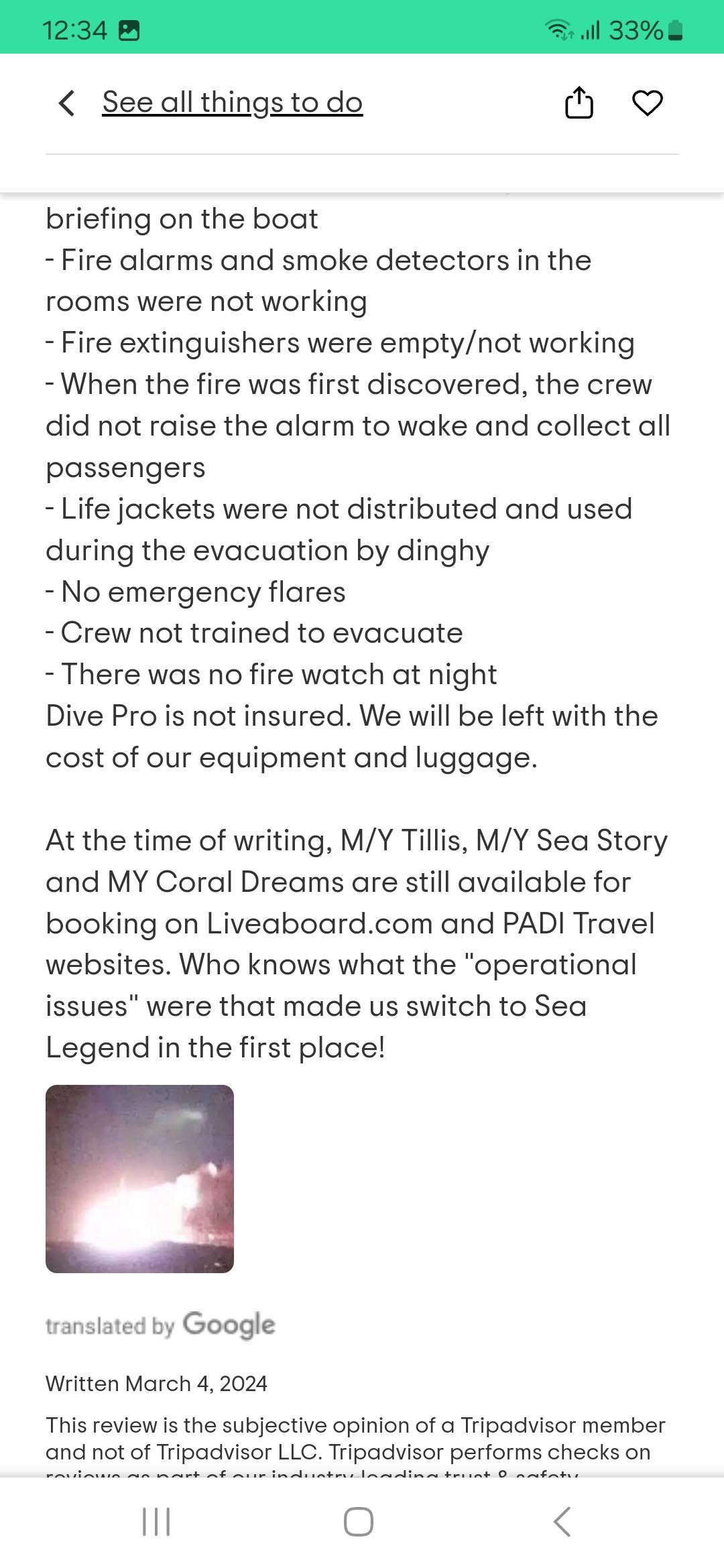
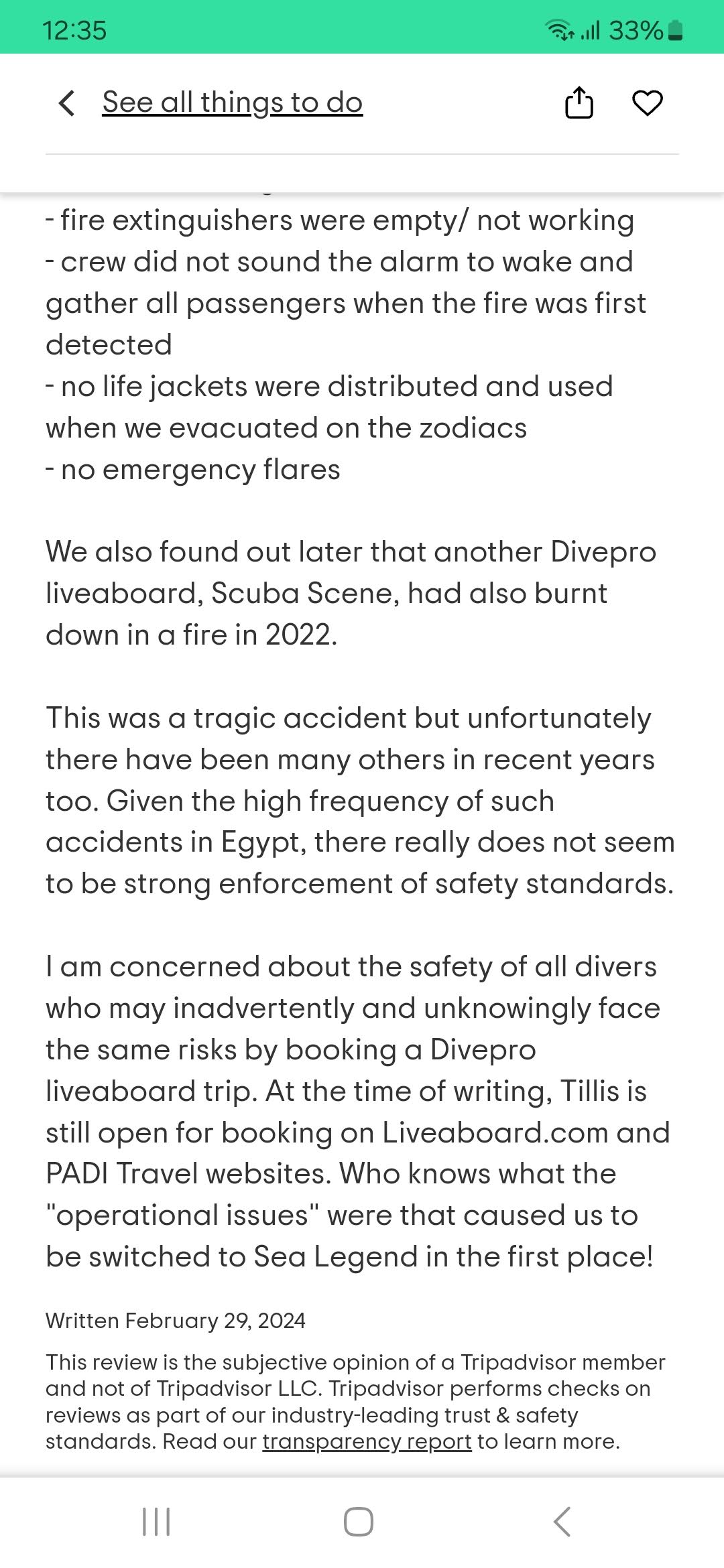
Dive Pro Liveaboards did not answer our request for comments. They also own the boat Sea Legend that caught fire in February, killing one woman.
Linda Korres, familiar with the dive company and friends with member of the crew who died last Monday, eulogizes her diver and friend Aladin. He was credited for rescuing people.
She said she felt something was wrong with this company when she went diving with them three years ago, on the boat Tillis.
“I am sure the reason the Sea Story had to go out in the storm was out of reckless greed with some bribery involved,” Korres says. “Sending these cheap and quickly built and remodeled multistory narrow ships out, that are not suitable for open sea is a death sentence! Any time. But especially in these weather conditions. These ships are too shallow, aren’t going deep into the waters, have no keel to keep them upright in wind and waves, which makes them likely to tip over.”
She adds that the “motors aren’t strong enough, they have no anchors, the rescue islands are often old and useless, the zodiacs broken. Often there are no life vests and the few that there are, are not suitable for open sea, as they have no collar. There are no smoke detectors, no evacuation routs lit with emergency lights.”
“We need more safety, international controls from PADI,” she tells Green Prophet.
PADI is an international licensing and certification process for divers and dive instructors.
“Egyptians involved are so afraid to go to jail or even afraid of death if they speak out in public,” she says.
“Meanwhile I had several Egyptians confirming these issues. Also that the vessel was in fact not 2 years new, but old and just remodeled. In photos from Sea Story you see loose furniture, cabinets that can’t be locked, no safety lighting, barely some smoke detectors, no emergency exit signs or lighting and how on earth would anyone be able to get the rescue islands from that top railing?
“We truly hope that the irresponsible owner of the ship Dive Pro Liveaboards, who already lost one of his four ships, the Sea Legend this year 22nd February, due to a fire and explosion, will be finally called responsible together with all the officials who looked away and still do for so many companies and ships in the Red Sea,” Korres added.
She recalls a trip out on one of the company’s boats, Tillis: “The furniture, sofas, tables and chairs were loose and slipped on the deck and the dining room with every wave. The beds had no railing. Several people fell out of bed at night and hurt themselves. Closets couldn’t be shut with locks and swung dangerously open all the time. The fridges on the deck couldn’t close properly, so that several times beer cans shot over the deck when the boat was rocking. We were lucky no one was hit.
“The crew could only use duck tape to secure drawers and the closets.”
The floor plan of the Sea Story dive boat. Divers are trying to rescue those who may be trapped inside.
She says that the crew or the captain of these boats are not to blame for the latest catastrophe: “They earn very little money and depend on the jobs. The owners don’t pay well and treat them badly. As result there is a new uneducated inexperienced hardly or non-English speaking crew every other trip. Instead of paying a fair salary and training them in all aspects and teaching safety regulations.”
A dive master earns about 300 Euros a week on a live aboard. The crew less, she says.
Some cabins had no life vests at all: “I remember very well desperately clinging to the bed, frightened as never before in my life, sobbing and crying silently in the dark on the first night, when sea was rough, not to scare my friend Caroline Strazzabosco with whom I shared an upper deck cabin.
“After some hours I realized she was just as scared to death as I was… sitting on her bed not letting go of her survival bag filled with water, medicine and cookies for us. Tillis got new paint, TVs and furniture a year after our trip. But I believe nothing improved or changed on the safety issues.”
Interior cabin, Sea Story
“Sea Story is said to be an only 2 year old ship. I doubt it. I rather believe it is one of the remodeled much smaller old ships. Often they just add some stories in height and cut the vessel to add some structure to make it longer… until it’s unrecognizable and receives a new name.”
Below are several reviews about the company from TripAdvisor sent to Green Prophet from Omran:
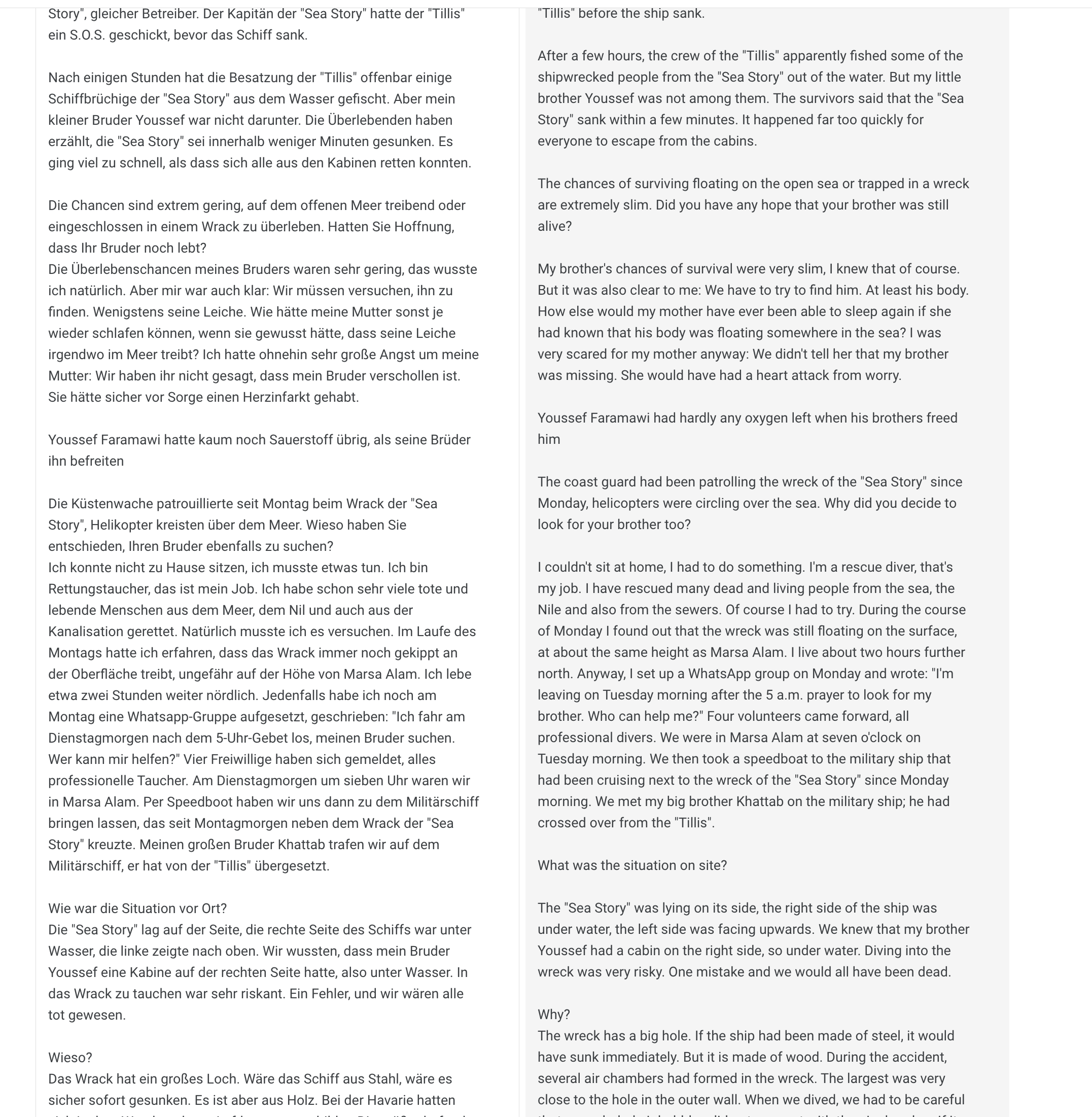
Klorres sent us a link to a German newspaper article that printed an interview with one of the Egyptian rescue divers – professional divers Ahmed Ashraf and Khattab Faramawi from Egypt who rescued their brother Youssef Faramawi from the wreck of the “Sea Story” who came to the site.
Ashraf explained the risks for rescue. Some more parts of the scrubbed interview can be seen below.
“The diver rescuing his brother reported (from Google translation German to English): “The wreck has a big hole. If the ship had been made of steel, it would have sunk immediately. But it is made of wood. During the accident, several air chambers had formed in the wreck. The largest was very close to the hole in the outer wall. When we dived, we had to be careful that our exhaled air bubbles did not connect with the air chamber. If it had grown so large that it had traveled to the hole in the outer wall, all the air could have escaped from the wreck. The ship would have plummeted into the depths with us in its belly in seconds. We would have had no chance.
“How deep is the sea at this point?
“I don’t know exactly, maybe 1000 meters? Too deep, in any case.”
Please let us know if you would like to share your story with this dive company in Egypt. You can email us [email protected]. We hope to keep Egypt a safe place to dive.
Karin Kloosterman is an award-winning journalist, innovation strategist, and founder of Green Prophet, one of the Middle East’s pioneering sustainability platforms. She has ranked in the Top 10 of Verizon innovation competitions, participated in NASA-linked challenges, and spoken worldwide on climate, food security, and future resilience.
With an IoT technology patent, features in Canada’s National Post, and leadership inside teams building next-generation agricultural and planetary systems — including Mars-farming concepts — Karin operates at the intersection of storytelling, science, and systems change.
She doesn’t report on the future – she helps design it.
Reach out directly to [email protected]
Millions of visitors swim in the pristine waters of the Galápagos each year, but new research suggests sunscreen chemicals and other human-made pollutants are reaching even the islands' most protected marine habitats. Scientists are calling for urgent monitoring to safeguard one of Earth's most iconic ecosystems.
Now researchers at the Woods Hole Oceanographic Institution (WHOI) in the US say they have developed a way to predict coral bleaching five to six months before it occurs, potentially giving reef managers enough time to intervene and save vulnerable corals.
The project centers on “Flonduran” corals, which are offspring of Florida elkhorn corals bred with elkhorn corals from Honduras. These new corals are being evaluated alongside Florida elkhorn corals of the same age that are outplanted side by side in natural reef habitats to assess whether the new genetic diversity can enhance coral resilience and reduce coral bleaching during Florida’s warm summers.
Scientists have developed a “raincoat” for lead-free tin perovskite solar cells, helping them withstand air, moisture and heat while maintaining high efficiency.
Sustainability is an approach where businesses and individuals balance the environmental, social, and economic aspects of a project such that current and future stakeholders are not overburdened with the impacts of the project in future.
The Yerukim members who pick up the recyclables get to keep the monetary reward, the public earns "green" bills that can be used in shops, and business owners get to be associated with environmentalism.
Saudi Arabia is deploying capital at unmatched scale to catalyze tourism and advanced industry while rewiring its power-and-water backbone. The investable frontier is widening—especially in renewables, grid storage, water efficiency/desal retrofits, and hospitality operating platforms. Prudent investors will insist on phased delivery, enforceable KPIs (energy, water, biodiversity), and RHQ/zone compliance—while pricing political-economy and reputational risks alongside growth upside.
If you throw a party for your work team and they are vegans, don't make it a barbecue. Know the sustainability values of your team to boost moral and retain good people.
Big Box stores are a pretty new concept in Israel, and thank God that not every Israeli city wants them in their backyard. A word from someone who has see the beautiful farmland around her hometown Newmarket, Ontario stripped and converted into vulgar strip malls of big box shops: they have no place in a healthy and sustainable town or city.