Iraq’s breadbasket gets a $15 million EU grant in agriculture

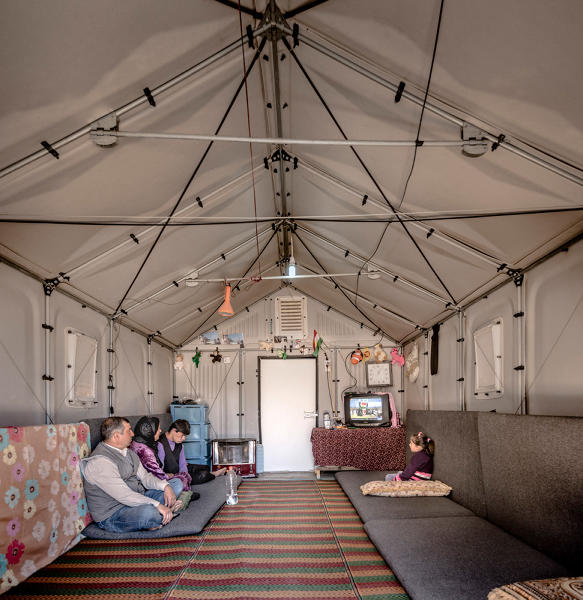
refugee shelters
Iraqis as refugees, Iraqis as victims of ISIS, Iraqis as victims of climate change. Some help on the way to get a leg up on the problem in agriculture.

Farming families in northern Iraq’s Nineveh Governorate (the setting of the Jonah and the Whale biblical story!) will benefit from a European Union contribution of €15 million to the Food and Agriculture Organization of the United Nations to recover agricultural livelihoods. The area, which includes the city of Mosul, was known as the country’s ‘breadbasket’ before conflict caused widespread damage and displacement. 

This project is expected to directly benefit almost 10,000 vulnerable farming families (around 60,000 people), as well as flow-on benefits for local service providers and labourers. 
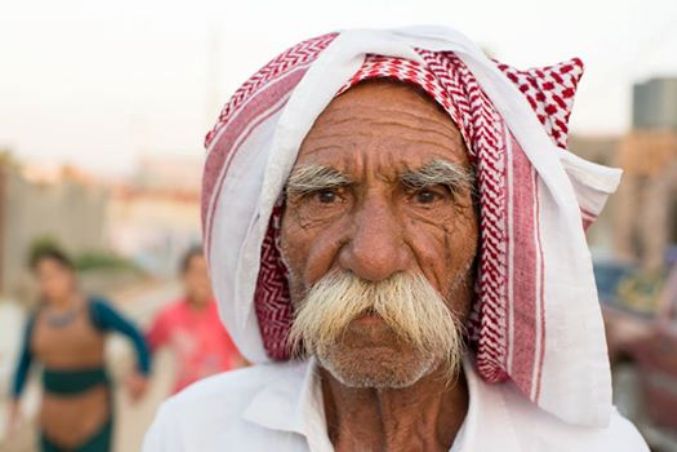
Stanton - HONY Iraq
Iraqis need subsidies to fix their farms.

Some Iraqis are turning to new crops not dependant on arable land, like these mushroom farmers. There have also been plans to rehabilitate the Iraqi marshlands

“As part of the EU’s commitment to the whole of Iraq, supporting the regions so tragically devastated by the recent conflict remains a high priority. By reviving agriculture in Nineveh, a key sector of the economy, this new project will help communities and returnees in rural areas, increasing their income and employment opportunities,” said Ramon Blecua, European Union Ambassador to Iraq. 

“We are grateful to the European Union for this generous contribution to help us rehabilitate key agricultural facilities and equipment. Getting these services operational again will be a big help for farmers and local businesses,” said Mustapha M. Sinaceur, FAO Representative a.i. in Iraq. “Creating jobs in the heartland of agriculture, where so many jobs depend on the rich soils of Nineveh Governorate, is vital for community stabilization,” he said.  

bread, wheat, science, stem rust, wheat resistant to stem rust, food, health, agriculture, Middle East
Iraqis bake bread for the army


The impact of conflict on the agricultural sector has been devastating and includes damage to water systems, irrigation facilities and other agricultural infrastructure, disruption of value chains and losses of personal assets, crop and livestock production, and food supplies. 

Since the Iraqi government announced the defeat of Islamic State, also known as Da’esh, a year ago, many people have returned, encouraged by the efforts to ensure a secure and safe environment. However, some areas still lack basic services and job opportunities for both returnees and those who remained. 

FAO and the EU working together for family farmers 
agriculture, desertification, water shortages, Iraq, farming, farmer commits suicide
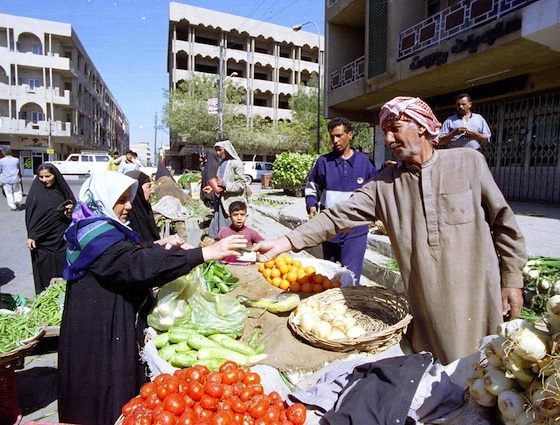
Iraqi farmers at the market


The EU-funded project supports smallholder farming families to diversify incomes, increase resilience, and provide nutritious and healthy diets. 

The project will support vulnerable smallholder farmers to resume vegetable production, introduce efficient irrigation water use and management, encourage agri-food processing, improve small-scale dairy processing and marketing, and boost animal fodder production and conservation. 

Women, in particular, will be supported to participate in home-based vegetable and dairy production and processing. Unemployed young agriculture graduates will be encouraged to benefit from training to gain employment as agri-food processors, farmer field school and farmer business school facilitators, community animal health workers, market information system operators, and food security and nutrition data collectors and analysts. 

Together, these activities will respond to families’ immediate needs for food and essential non-food items as well as restoring agricultural livelihoods that generate income and employment over the longer term. 

At the same time, the project aims to restore vital government infrastructure and support services to the agriculture sector that have been destroyed, damaged, or looted. 

The project is an EU contribution to the UN’s Recovery and Resilience Programme (RRP) in Iraq. It is part of a larger package of support (€ 184.4 million euros) the EU has contributed to support stabilization and humanitarian efforts undertaken by the UN in support of the Government of Iraq since 2016. 

FAO’s response in Iraq 

Under the Iraq Humanitarian Response Plan 2019, FAO is working to ensure rural families have the resources to re-establish and secure their agricultural livelihoods and build their resilience into the future. FAO’s work, in close coordination with the Iraqi government, supports families returning to retaken areas, internally displaced families, host communities and refugees from Syria.

Karin Kloosterman
Karin Kloostermanhttp://www.greenprophet.com
Karin Kloosterman is an award-winning journalist, innovation strategist, and founder of Green Prophet, one of the Middle East’s pioneering sustainability platforms. She has ranked in the Top 10 of Verizon innovation competitions, participated in NASA-linked challenges, and spoken worldwide on climate, food security, and future resilience. With an IoT technology patent, features in Canada’s National Post, and leadership inside teams building next-generation agricultural and planetary systems — including Mars-farming concepts — Karin operates at the intersection of storytelling, science, and systems change. She doesn’t report on the future – she helps design it. Reach out directly to [email protected]

Read More

TRENDING

How a tick bite can lead to a life-threatening meat allergy AFG

Imagine developing a severe allergy to steak after a single tick bite. That's the reality for people with alpha-gal syndrome, a rapidly emerging condition linked to lone star ticks and other tick species. As researchers uncover how tick saliva rewires the immune system, health officials warn that hundreds of thousands of Americans may already be living with this unusual red meat allergy.

Understanding Food Production: Karl Studer on the Urban-Rural Knowledge Gap

Karl Studer occupies an unusual position in American business. As President of Quanta Services, he oversees electrical infrastructure operations across the United States, Canada, and Australia, managing thousands of employees and multibillion-dollar projects.

Tigris River oil spill highlights Iraq’s environmental oversight and our addiction to oil

A fresh oil spill in the Tigris River, filmed by an Iraqi university student, has reignited concern over Iraq's polluted waterways. From ancient Mesopotamia to modern Basra, the country's dependence on oil has come at a steep environmental and human cost, with activists warning that unchecked contamination is putting ecosystems and public health at risk.

Wave wind energy for Nvidia’s next AI energy boom?

As AI factories consume unprecedented amounts of electricity, NVIDIA is looking beyond chips and data centers to the ocean. The company recently spotlighted Israel's Eco Wave Power and its wave energy projects in Jaffa and Los Angeles, highlighting how AI, digital twins and renewable energy can work together to meet future power demands. The collaboration reflects a growing realization that the future of artificial intelligence may depend as much on clean energy infrastructure as it does on computing power.

Weston Higginbotham found dead in a Kyoto forest: is climate anxiety part of the story?

In some ways, Weston has become a symbol of a generation wrestling with environmental and technological anxiety. Friends and family described him as deeply concerned about environmental issues. Reports also noted that he questioned the growing role of artificial intelligence in daily life, even reportedly disagreeing with his mother about her use of AI.

The Essential Guide To Sustainability in Project Management

Sustainability is an approach where businesses and individuals balance the environmental, social, and economic aspects of a project such that current and future stakeholders are not overburdened with the impacts of the project in future.

Yerukim Forms a New Green Economy Where the Money is Really Green

The Yerukim members who pick up the recyclables get to keep the monetary reward, the public earns "green" bills that can be used in shops, and business owners get to be associated with environmentalism.

Choosing Riyadh over Dubai? What Investors Should Know

Saudi Arabia is deploying capital at unmatched scale to catalyze tourism and advanced industry while rewiring its power-and-water backbone. The investable frontier is widening—especially in renewables, grid storage, water efficiency/desal retrofits, and hospitality operating platforms. Prudent investors will insist on phased delivery, enforceable KPIs (energy, water, biodiversity), and RHQ/zone compliance—while pricing political-economy and reputational risks alongside growth upside.

Sell your cooking oil for biodiesel money

Want to make money on old french fry oil? Sell it.

Qatar Alternative Energy Summit Pairs Investors And Innovators

Alternative energy investors and innovators can meet n' greet in Doha, Qatar March 16 and 17.

Here’s How To Implement The Four Pillars Of Employee Engagement

If you throw a party for your work team and they are vegans, don't make it a barbecue. Know the sustainability values of your team to boost moral and retain good people.

Locals From Rishon Fight IKEA

Big Box stores are a pretty new concept in Israel, and thank God that not every Israeli city wants them in their backyard. A word from someone who has see the beautiful farmland around her hometown Newmarket, Ontario stripped and converted into vulgar strip malls of big box shops: they have no place in a healthy and sustainable town or city.

The Jewish National Fund Meets An Inconvenient Truth

According to the JNF, it has transformed thousands of acres of barren land into green forests in Israel. They state that each person emits about 23 tons of carbon per year, estimating that each tree planted can absorb one ton of carbon in its lifetime. That's a whole lot of trees you'd need to be planting. Could so many fit in Israel?

Popular Categories