
With 50 percent more protein and 25 percent less fat than conventional chickpeas
The world has a protein problem. As the global population grows and demand for more sustainable, scalable options surges, the crops we rely on have not kept pace. The food system has relied on starch-rich crops like wheat, corn and rice for affordable calories, and the crops powering today’s alternative proteins have real limitations. Consumers are asked to adapt, and food formulators spend enormous effort masking their taste and functionality challenges. The result is longer ingredient lists, more processing, higher cost, and products that ask consumers to settle.

There is a better option. It has been feeding people for thousands of years. And until now, no one had unlocked its full potential.
Kathryn Cook had spent her career pushing the boundaries of what materials and systems could do, first as a materials and process aerospace engineer at Boeing, then leading programs in autonomous aircraft systems and AI-voice technology at Facebook. She had been watching the alternative protein movement grow and thinking about where she wanted to have an impact. What kept drawing her back was food: the ingredients, the supply chains, and the question of whether plant-based proteins could deliver on their promise without asking consumers to make trade-offs between flavor, nutrition, and affordability. She believed those trade-offs were unnecessary limitations of an outdated system.
The answer, it turned out, had been growing in her father’s lab.
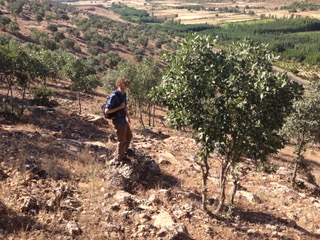
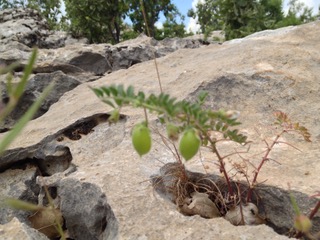
Professor Doug Cook, a plant geneticist at UC Davis and Kathryn’s father, had spent years chasing that potential. He led an international expedition into the mountains and river valleys of southeastern Türkiye, the rugged birthplace of the chickpea, to collect and study its wild ancestors. His team sequenced the genomes of over 1,000 wild chickpea plants and made a striking discovery: roughly 97% of the crop’s genetic potential had been lost during domestication, left behind in the wilderness when ancient farmers first cultivated the plant thousands of years ago. The wild Cicer genus, from which the chickpea takes its name and from which NuCicer takes its own, contains over 40 species. Most of that diversity never made it into the domesticated crop. The diversity that could solve modern agricultural challenges was still out there, waiting.

Doug’s lab set out to reclaim it. By crossing wild Cicer relatives with cultivated varieties, subspecies separated by tens of thousands of years of evolution, they unlocked traits that had never existed in farmed chickpea, including resistance to disease, tolerance of drought and difficult soils, and strong symbiosis with the soil microbes that enrich the plant. But the most unexpected discovery came from a simple experiment on nutrition. Some of the new plant lines carried protein concentrations above 35%, compared to the 20 to 22% found in commodity chickpea today, putting it in the range of soybean, the gold standard of plant protein crops. At the same time, fat content dropped from 6 to 7% down to 4.5 to 5%, a shift with meaningful implications for protein extraction and processing. And the flavor was nutty, creamy, and neutral, making it ideal for processing without masking agents.
When Kathryn heard what Doug’s lab had found, she understood immediately what it meant. She spent six months pressure-testing the idea, thinking through the science and the commercial opportunity. By the end of 2019, she had made her decision. Kathryn co-founded NuCicer with Doug, now Chief Science Officer, and Dr. Brendan Riely, a Senior Scientist at UC Davis and now NuCicer’s Director of R&D. As CEO, Kathryn licensed the genetic library and underlying research from UC Davis to form the company’s foundation. The goal was something more than a better ingredient. It was to create a future staple crop for the global food system.
Chickpea has been woven into the fabric of human civilization for thousands of years, accepted across cultures in ways that other plant proteins have not. It is gluten-free and hypoallergenic, and unlike most plant protein ingredients, delivers fiber that is essential for health and wellbeing. It enriches the soil with nitrogen as it grows, reducing the need for synthetic fertilizer.
And now, with NuCicer’s breakthrough, chickpea has the protein content to compete at the center of the plate. No other crop carries the same combination of nutritional profile, flavor, function, sustainability, and centuries of consumer acceptance. The natural diversity that nature preserved, combined with the predictive breeding platform NuCicer built to harness it, is what makes a new future for protein ingredients possible. Today, NuCicer is translating that potential into commercial scale, with 10,000 acres planted in 2026—a fourfold increase over last year. This chickpea gives NuCicer the platform to create the future of protein ingredients.
Why now?
The global protein market is changing rapidly. Consumers are actively seeking higher-protein foods, driven by changing diets, healthy aging, sports nutrition and the growing use of GLP-1 medications, which have increased demand for protein-rich foods.
At the same time, manufacturers face an unexpected challenge: a shortage of whey protein. Whey protein concentrate prices have risen sharply as demand has outpaced supply, forcing food companies to reformulate products and look for reliable alternatives.
Traditional plant proteins also come with trade-offs. Pea protein often requires flavor masking because of its beany taste. Fava protein can present similar formulation challenges with bitter flavor compounds. Soy brings a different set of hurdles as one of the nine major allergens designated by the FDA, requiring labeling that many clean-label brands prefer to avoid. Whey, meanwhile, is carbon-intensive, animal-derived, increasingly expensive, and unlike legumes, contains no dietary fiber.
Introducing Nuchi – A New Class of Chickpea
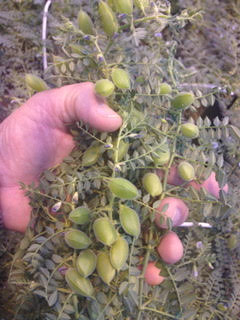
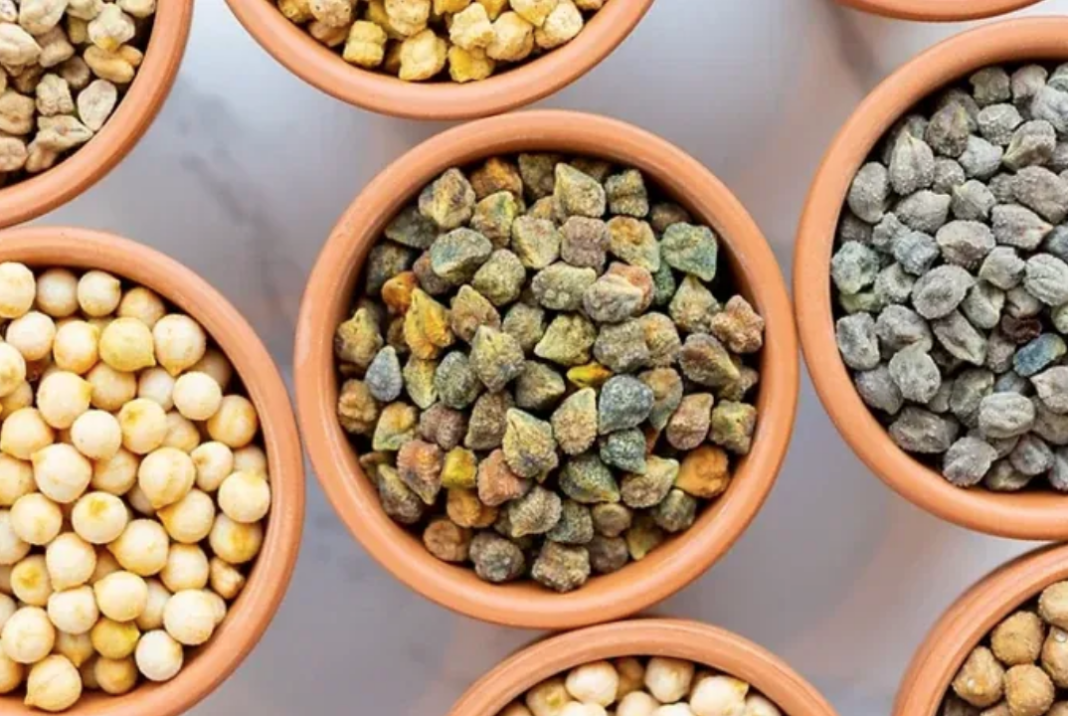
NuCicer believes chickpea has always been uniquely positioned to compete, but conventional varieties simply lacked the genetics. Nuchi changes that. With 50 percent more protein and 25 percent less fat than conventional chickpeas, Nuchi is a new class of chickpea, offering manufacturers an ingredient that is naturally high in protein, rich in fiber, easy to process and compatible with existing pea-protein manufacturing equipment. Its improved protein-to-fat ratio means processors can avoid the costly defatting steps that make standard chickpeas difficult to use at scale.
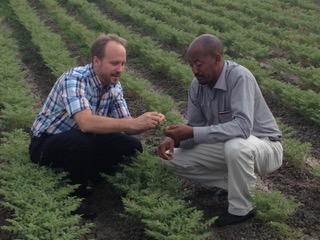
Nuchi can be simply milled into high-protein flour, separated with airflow to make low-fat flour and protein concentrates, or processed into protein isolates, offering flexibility across everything from baked goods to pasta and protein-enriched foods.
For growers, the benefits extend beyond protein. As a legume, chickpeas naturally fix atmospheric nitrogen, reducing fertilizer requirements while improving soil health for the crops that follow. The first Nuchi variety also matures two to three weeks earlier than conventional chickpeas, reducing weather risks in northern growing regions such as Canada and the Pacific Northwest.
Q&A with Kathryn Cook, CEO and Co-Founder of NuCicer
Green Prophet: NuCicer’s journey began in southeastern Türkiye. Why was it important to start where chickpeas first evolved?
Kathryn Cook: The wild ancestors of today’s chickpea still grow in southeastern Türkiye. That region preserved genetic diversity that disappeared as humans domesticated the crop thousands of years ago. My father’s research asked a simple question: what if the traits modern agriculture needs are still there? That search ultimately became the foundation of NuCicer.
Green Prophet: Doug’s background research found that domestication left behind nearly 97 percent of the chickpea’s genetic diversity. How significant is that?
Kathryn Cook: It completely changed how we thought about the crop. Domestication gave us an extraordinary food, but it also narrowed its genetic base. The wild Cicer subspecies still contained enormous untapped potential. Our work has been about recovering those naturally occurring traits through breeding.
Green Prophet: Many companies are pursuing gene editing. Why did NuCicer choose another path?
Kathryn Cook: The diversity already existed in wild chickpeas, and nature had already done the hard work. What remained was harnessing it. Gene editing is most efficient when one or a few known genes have a major effect on a trait, but traits like total protein content and yield are polygenic, shaped by large numbers of genes working in combination. NuCicer’s AI-guided predictive breeding platform looks across the entire genome, using controlled crosses between wild relatives and cultivated varieties to drive rapid evolution and produce a new class of high-protein chickpea, which is Nuchi.
Green Prophet: What exactly is Nuchi?
Kathryn Cook: With 50% more protein, Nuchi is not your average chickpea—it is a completely new class. The food industry has spent years working around the limitations of standard chickpea, formulating past its fat content and compensating for what it could not deliver. Nuchi eliminates those limitations at the source. This is what the chickpea was always capable of. We just had to reclaim it.
Green Prophet: Why is higher protein only part of the story?
Kathryn Cook: Higher protein is important, but Nuchi also contains less fat. The higher protein-to-fat ratio makes it much easier and more economical to process. Manufacturers don’t need expensive defatting steps, and food formulators benefit from not needing flavor-masking ingredients. These benefits combine to support cleaner, shorter ingredient labels. And let’s not forget about the strong fiber content—another critical component for human nutrition that naturally exists in chickpea.
Green Prophet: Before NuCicer you worked at Boeing and Facebook. What convinced you to leave aerospace and technology?
Kathryn Cook: My engineering background trained me to look at performance problems from the input side. If the material is wrong, everything built around it fights it. When I looked at alternative protein, I kept seeing the same pattern. The industry was engineering around a starting material that was never designed for the job. My question was: why weren’t the challenges of affordability, flavor and nutrition being addressed with better materials, better inputs, better crops? When I heard what my father’s lab had uncovered in wild chickpea, I realized this wasn’t simply another crop improvement project. It had the potential to reshape sustainable protein production. So I decided to build NuCicer.
Green Prophet: The story feels almost archaeological, returning to ancient landscapes to recover forgotten seeds.
Kathryn Cook: I love that visualization. Yes, this is a story about the power of nature coming together with cutting-edge machine learning and data systems to meet today’s human and planetary health needs. We are rediscovering what survived in nature for thousands of years and using it to address challenges modern agriculture is only beginning to face.
Green Prophet: Why should consumers care where their protein comes from?
Kathryn Cook: Consumers increasingly want food that’s nutritious, sustainable and minimally processed. By improving the crop itself instead of relying on industrial alterations afterwards, we can create ingredients that perform naturally while supporting more sustainable agriculture.
Green Prophet: What does Nuchi offer farmers?
Kathryn Cook: Chickpeas naturally fix nitrogen from the atmosphere, reducing fertilizer needs for future crops. The first Nuchi variety also matures two to three weeks earlier than conventional chickpeas, giving growers greater flexibility while reducing weather risk in shorter growing seasons.
Green Prophet: Why are the Northern US and Canada important?
Kathryn Cook: They already have strong pulse-growing traditions and provide excellent conditions for rotational cropping systems. They’re ideal places to demonstrate both the agronomic and commercial advantages of Nuchi.
Green Prophet: Looking ahead, where do you hope chickpeas fit into the global food system?
Kathryn Cook: Today, so much of the food system is built on starch-rich crops. Those crops will always matter, but the next generation of food needs crops that can deliver more protein, fiber and nutrition from the beginning. That is the opportunity we see for chickpea. We’d like to see chickpeas become one of the world’s primary protein crops. They’ve nourished civilizations for thousands of years. Now they have the opportunity to become one of the defining sustainable protein ingredients of the future.
::NuCicer