EU Upgrades Relations with Israel, Energy Over Politics

EU, European Union, Israel, upgrade, relations, partnership, water, sustainability, energy, agriculture

In advance of the annual EU-Israel Association Council meeting on Tuesday, the European Union stated it will offer Israel upgraded trade and diplomatic relations in over 60 areas, including energy and agriculture. This offer will also grant Israel access to European government-controlled markets and enhance Israel’s co-operation with nine EU agencies.

This announcement came almost a week after the European Commission and Israel announced they are increasing cooperative efforts to develop sustainable water supplies and energy-efficiency, including oil fuel alternatives. Israeli Prime Minister Benjamin Netanyahu referred to the latter agreement as an important milestone between Israel and the EU.

Such collaborations have unlimited potential. In June a new innovation by Israeli solar energy company TIGI Ltd., which would make it economical to harvest solar power in regions without sunny climates, won recognition at the Intersolar Europe Exhibition in Munich, Germany. European markets currently represent an estimated 60 percent of Israel’s annual trade.

Despite the fact that Israel is already intrinsically involved with Europe’s intergovernmental renewable energy developments, such as programs overseen by the EUREKA network, the EU’s decision to upgrade relations with Israel has already received a vast array of criticism from senior diplomats and pundits. Just a few weeks ago European foreign ministers warned that Israel’s policies in the West Bank “threaten to make a two-state solution impossible.” One Brussels-based bureaucrat suggested the EU should leverage economic relations to pressure Netanyahu to cease settlement construction in the West Bank.

The Palestinian-Israeli conflict has indeed been a stumbling block for Israel’s relations around the world, including its fledging connection with Japan. But Israel has generally responded to joint pressure on this issue with self-imposed isolation and increased nationalism rather than compliance. Pragmatic alternatives for the EU might include empowering Palestinian people and encouraging diversity and transparency within Israeli democracy. Surveys conducted in 2010 by the Harry S. Truman Institute for the Advancement of Peace at the Hebrew University in Jerusalem found that 60 percent of Israelis wanted to dismantle most of the settlements in the Occupied Territories.

Europe’s current economic turmoil is another contributing factor to Israel’s upgrade by the EU. It is perhaps the most significant development between the EU and Israel since 2009, when the EU halted Israel’s upgrade to denounce Operation Cast Lead.

::Guardian

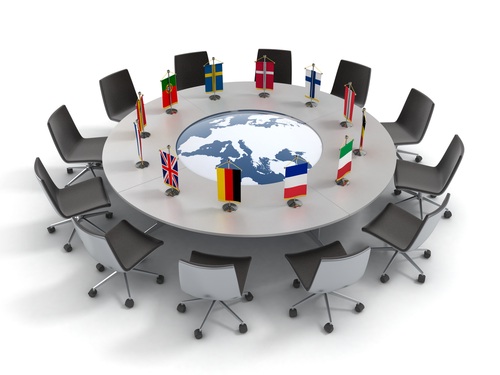
Image of European roundtable from Shutterstock 

Read more about Israel’s global energy connections:

Clean-Tech Bonds Forged Between Israel and Canada

Israel’s Mekorot Builds Global Connections Through Water

NaanDanJain’s Irrigation Technology Strengthens Ties Between India and Israel

Leigh Cuen
Leigh Cuenhttp://www.greenprophet.com
Leigh Cuen is a freelance journalist currently reporting from Israel. She has written for the Earth Island Journal, the San Francisco Public Press, the Palestinian News Network, J. weekly newspaper and the Women News Network. Follow her @La__Cuen.

Read More

TRENDING

A billion dollar bet on Pacific Fusion’s New Mexico campus

Pacific Fusion is building a $1 billion fusion research facility in New Mexico, betting that enormous electrical pulses can help push fusion energy beyond the laboratory and toward practical clean power.

Lumana Brings AI Cameras Without Sending Everything to the Cloud: Fortune 500 are Buying

Lumana is bringing AI intelligence to more than 50,000 existing security cameras without sending every frame to the cloud. Its hybrid edge architecture offers a compelling lesson for the AI boom: smarter systems may also be more efficient.

The Hidden Components Powering the Renewable Energy Revolution

A rooftop solar system looks simple: panels, an inverter, a battery and a few cables. But beneath that simplicity lies a bill of materials thousands of lines long, where tiny current sensors, magnetic cores, gate drivers, capacitors and connectors quietly determine efficiency, safety and lifespan. These overlooked components—not the solar panels themselves—are why today's residential solar systems are smaller, smarter and far more reliable than those of a decade ago.

Sustainable Manufacturing Frameworks Reducing Waste in Heavy Industry

Hydraulic systems are at the heart of heavy manufacturing, but poor maintenance can lead to fluid leaks, downtime, and unnecessary waste. By focusing on preventive maintenance, fluid monitoring, filtration, and early leak detection, industrial facilities can improve efficiency, reduce environmental impact, and strengthen sustainable manufacturing without major capital investments.

6 Ways Landlords Can Improve Cash Flow from Eco Rentals

Want your rental property to pay the mortgage? Build a sustainable home that practically advertises itself. From solar-heated hot tubs and energy-efficient appliances to pet-friendly yards and Nordic-style saunas, eco-conscious upgrades can justify higher rents, attract better tenants, and reduce costly vacancies. This guide explores practical ways landlords can improve cash flow without major renovations, including working with property managers, adjusting rental rates strategically, reducing operating expenses, and uncovering new revenue streams. Whether you're running an Airbnb, a vacation cabin, or a long-term rental, sustainability isn't just good for the planet—it can be good for your bottom line. A greener property often becomes a more profitable one.

Scientists make lead-free perovskite solar cells that can weather the elements

Scientists have developed a “raincoat” for lead-free tin perovskite solar cells, helping them withstand air, moisture and heat while maintaining high efficiency.

The Essential Guide To Sustainability in Project Management

Sustainability is an approach where businesses and individuals balance the environmental, social, and economic aspects of a project such that current and future stakeholders are not overburdened with the impacts of the project in future.

Yerukim Forms a New Green Economy Where the Money is Really Green

The Yerukim members who pick up the recyclables get to keep the monetary reward, the public earns "green" bills that can be used in shops, and business owners get to be associated with environmentalism.

Choosing Riyadh over Dubai? What Investors Should Know

Saudi Arabia is deploying capital at unmatched scale to catalyze tourism and advanced industry while rewiring its power-and-water backbone. The investable frontier is widening—especially in renewables, grid storage, water efficiency/desal retrofits, and hospitality operating platforms. Prudent investors will insist on phased delivery, enforceable KPIs (energy, water, biodiversity), and RHQ/zone compliance—while pricing political-economy and reputational risks alongside growth upside.

Sell your cooking oil for biodiesel money

Want to make money on old french fry oil? Sell it.

Qatar Alternative Energy Summit Pairs Investors And Innovators

Alternative energy investors and innovators can meet n' greet in Doha, Qatar March 16 and 17.

Here’s How To Implement The Four Pillars Of Employee Engagement

If you throw a party for your work team and they are vegans, don't make it a barbecue. Know the sustainability values of your team to boost moral and retain good people.

Locals From Rishon Fight IKEA

Big Box stores are a pretty new concept in Israel, and thank God that not every Israeli city wants them in their backyard. A word from someone who has see the beautiful farmland around her hometown Newmarket, Ontario stripped and converted into vulgar strip malls of big box shops: they have no place in a healthy and sustainable town or city.

Popular Categories