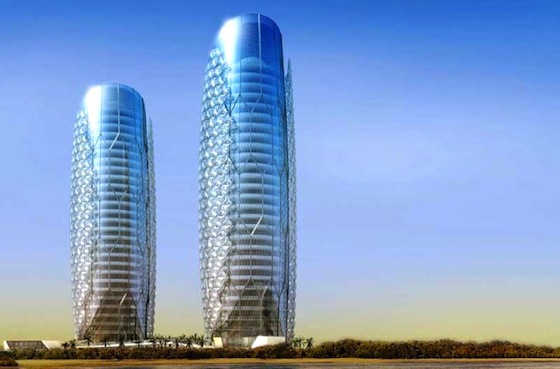
Computer-Controlled Mashrabiya Keeps Abu Dhabi’s Al Bahar Towers Cool

mashrabiya, Al Bahar, Abu Dhabi, AEDAS, Arup, UAE, architecture, urban design

Few elements are more distinctive to Middle Eastern design than the ancient Mashrabiya screens used to keep homes cool, and now recent strides in technology have completely revolutionized how the concept is used.

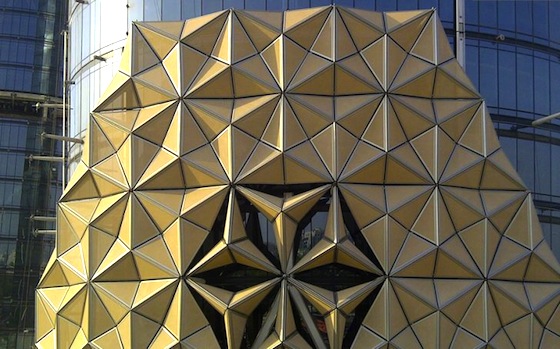
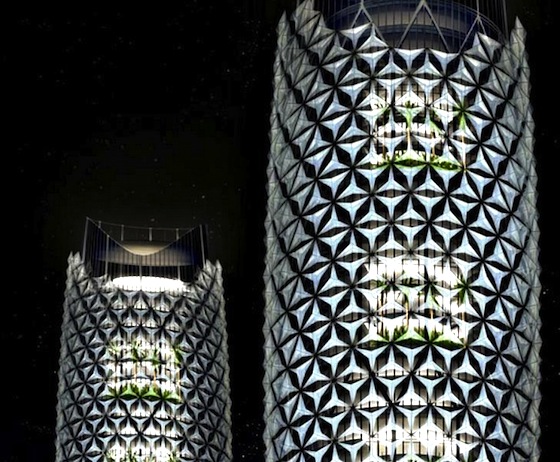
Commissioned to design the 25-story Al Bahar Towers on Abu Dhabi’s eastern flank, Aedas Architecture worked with Arup Engineering to create a computer-controlled mashrabiya that wraps around the Abu Dhabi Investment Council’s (ADIC) new headquarters. They move in accordance with the sun’s position in the sky, reducing solar gain by a whopping 50%!
mashrabiya, Al Bahar, Abu Dhabi, AEDAS, Arup, UAE, architecture, urban design

Perhaps more than any other Gulf nation, Abu Dhabi has taken enormous steps towards securing its residents against an inevitable end to their oil wealth. Naturally we don’t necessarily agree that building giant skyscrapers is the most sustainable defense against resource depletion and climate change, but at least the Emirate is making an effort.

Heat is one major challenge faced by all Gulf nations. This year during Ramadan, when many pilgrims flock to the holy sprawl that Mecca has become, Saudi Arabia will experience temperatures of 50 degrees Celsius in the shade. It’s not much cooler in Abu Dhabi, so energy-intensive air-conditioners suck up all of the nation’s most important export commodity (ie. oil).
mashrabiya, Al Bahar, Abu Dhabi, AEDAS, Arup, UAE, architecture, urban design

The software-designed mashrabiya screens help to mitigate that problem by deflecting solar gain, thereby significantly reducing the buildings’ overall cooling load. These screens almost envelope all but the northern flank of either tower, adding an aesthetically-pleasing geometrical dimension to the glass buildings.

This is one step in the right direction. But can we bring the buildings down a few stories and start building on a more human scale?

:: Inhabitat 
Tafline Laylin
Tafline Laylinhttp://www.greenprophet.com
As a tour leader who led “eco-friendly” camping trips throughout North America, Tafline soon realized that she was instead leaving behind a trail of gas fumes, plastic bottles and Pringles. In fact, wherever she traveled – whether it was Viet Nam or South Africa or England – it became clear how inefficiently the mandate to re-think our consumer culture is reaching the general public. Born in Iran, raised in South Africa and the United States, she currently splits her time between Africa and the Middle East. Tafline can be reached at tafline (at) greenprophet (dot) com.

TRENDING

BM Studios is designing systems, not just buildings in the UAE

Balsam Madi is an architect and systems thinker whose work bridges culture, sustainability, and design intelligence across the Middle East and Europe.

Astro uses AI to help procure land for renewable energy

For oil-rich, environmentally vigilant Gulf states, Astro isn’t just another startup story. It is a blueprint for accelerating an energy transition that is now existential, not optional.

UAE Green Finance Report 2025

Masdar is the the UAE’s flagship renewable energy company. Compare it to Neom in Saudi Arabia. Masdar has become one of the world’s most active clean energy investors, with projects in more than 40 countries across six continents. Established in 2006 and jointly owned by ADNOC, Mubadala, and TAQA, Masdar operates and develops solar, wind, and green hydrogen projects with a current portfolio exceeding 50 gigawatts of capacity. Masdar also buys companies, and paid $50 million for this US business Terra-Gen last year. 

Inca Hernández Brings Liwa Farm Village to Life in Abu Dhabi, Rooted in Desert Heritage

Greenhouses, aquaculture systems, and crops of lemongrass and lavender tie the project to contemporary concerns: food security, ecological resilience, and sustainable livelihoods in a fragile region facing climate extremes. 

Make moss graffiti

Express your green views for all to see - right on the walls of your house, restaurant or office. Moss grafitti is the hottest trend in urban agriculture, after hydroponics and vertical farming.

Nobul’s Regan McGee on Shareholder Value: “Complacency Is the Silent Killer” 

Why the governance framework designed to protect shareholders so...

Should You Invest in the Private Market?

startustartup Unlike public stock exchanges, which offer daily trading, strict...

How to build a 100-year-company

Kongō Gumi is a Japanese construction company, purportedly founded in 578 A.D., making it the world's oldest documented company. What can we learn about building sustainable businesses from them?

From Pilot Plant to Global Stage: How Aduro Clean Technologies’ 2026 Expansion Signals a Turning Point for Chemical Recycling Investors Like Yazan Al Homsi

The company's Next Generation Process (NGP) Pilot Plant in London, Ontario, has officially moved into initial operating campaigns, generating the kind of structured, repeatable data that separates laboratory promise from commercial viability.

How AI Helps SaaS Companies Reduce Repetitive Customer Support Work

SaaS products are designed for large numbers of users with different levels of experience, and also in renewable energy.

Pulling Water from the Air

Faced with water shortage in Amman, Laurie digs up...

Turning Your Energy Consultancy into an LLC: 4 Legal Steps for Founders in Texas

If you are starting a renewable energy business in Texas, learn how to start an LLC by the books.

Tracking the Impacts of a Hydroelectric Dam Along the Tigris River

For the next two months, I'll be taking a break from my usual Green Prophet posts to report on a transnational environmental issue: the Ilısu Dam currently under construction in Turkey, and the ways it will transform life along the Tigris River.

Related Articles

Popular Categories