
Acid Oceans Scares Scientists as Much as Climate Change


Neom desert location
Location for proposed Neom City, on the Red Sea.

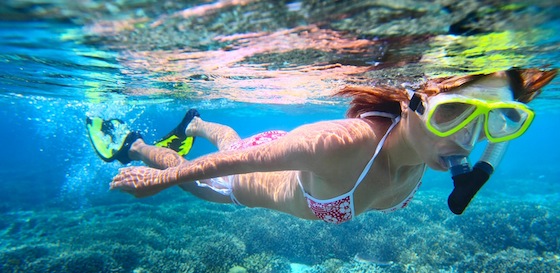
Rising acid levels in the world’s oceans now threatens everything from coral reefs to global food security, Jane Lubchenco, the head of America’s National Oceanic and Atmospheric Administration said on Monday. The level of acid in oceans now rivals climate change as its “equally evil twin,” she told AP.

“We’ve got sort of the perfect storm of stressors from multiple places really hammering reefs around the world.”

This was announced at the International Coral Reef Symposium in the northeast city of Cairns, near the Great Barrier Reef: “It’s a very serious situation,” she added.

As humans pump excessive carbon dioxide into the atmosphere from industry, travel, consumption of meat, and heating and cooling their homes, the oceans absorb it, leading to an increased acidity in the water. This acidity literally melts the bodies of animals made from shells, and it prevents coral from laying down new exoskeleton.

Rising acidity has also found to impair the sense of smell of some fish, like in salmon and clown fish. It’s not known what will happen to the ecology of the sea should reefs die-off altogether.

While there is no quick fix to removing carbon dioxide gas from the seas and oceans, we can do our part by finding ways to reduce atmospheric carbon dioxide pollution, Lubchenco noted.

Seas with coral reef to lose in the Middle East include the Red Sea, and the Arabian Sea.

The news is depressing and if you are not a politician you can fight in other ways by supporting Greenpeace or by starting or joining a sustainable sea circus

Read about some other ways of rejuvenating coral reefs:
Underwater Art Heals Coral Reefs
EcoReef Antlers to Heal the Sea

Karin Kloosterman
Karin Kloostermanhttp://www.greenprophet.com
Karin Kloosterman is an award-winning journalist, innovation strategist, and founder of Green Prophet, one of the Middle East’s pioneering sustainability platforms. She has ranked in the Top 10 of Verizon innovation competitions, participated in NASA-linked challenges, and spoken worldwide on climate, food security, and future resilience. With an IoT technology patent, features in Canada’s National Post, and leadership inside teams building next-generation agricultural and planetary systems — including Mars-farming concepts — Karin operates at the intersection of storytelling, science, and systems change. She doesn’t report on the future – she helps design it. Reach out directly to [email protected]

Read More

1 COMMENT

TRENDING

Barnacle glue could fix coral reefs, inspire new advances in building and medicine

Aalto University researchers create a protein-based adhesive inspired by barnacles and mussels that works underwater and could aid coral reef restoration.

Billie Eilish’s Mom Takes the Stage at Hollywood Climate Summit — But Does Hollywood Still Care About Climate Change?

Hollywood once promised to help save the planet. Leonardo DiCaprio warned of climate catastrophe from awards stages. Celebrities flew to climate conferences. Studios pledged greener productions. Streaming platforms rushed to commission environmental documentaries. But in 2026, with the aftermath of wildfires, heatwaves and floods becoming routine, a question lingers: Does Hollywood still care about climate change?

Can Scientists Predict Coral Bleaching Before It Happens?

Now researchers at the Woods Hole Oceanographic Institution (WHOI) in the US say they have developed a way to predict coral bleaching five to six months before it occurs, potentially giving reef managers enough time to intervene and save vulnerable corals.

Celebrate International Seagrass Day

Seagrasses are “land plants” that have moved into ocean habitats. They have roots, stems, leaves, flowers, fruits and seeds. There are only about 70 species of seagrasses, representing just 0.02% of all flowering plant species. 

The life of a coral gives clues to the origins of our heartbeat

A joint study by Tel Aviv University (TAU) and the University of Haifa set out to solve a scientific mystery: how a soft coral is able to perform the rhythmic, pulsating movements of its tentacles without a central nervous system. The study’s findings may change the way we understand movement in the animal kingdom in general and particularly in corals.

Yerukim Forms a New Green Economy Where the Money is Really Green

The Yerukim members who pick up the recyclables get to keep the monetary reward, the public earns "green" bills that can be used in shops, and business owners get to be associated with environmentalism.

Choosing Riyadh over Dubai? What Investors Should Know

Saudi Arabia is deploying capital at unmatched scale to catalyze tourism and advanced industry while rewiring its power-and-water backbone. The investable frontier is widening—especially in renewables, grid storage, water efficiency/desal retrofits, and hospitality operating platforms. Prudent investors will insist on phased delivery, enforceable KPIs (energy, water, biodiversity), and RHQ/zone compliance—while pricing political-economy and reputational risks alongside growth upside.

Sell your cooking oil for biodiesel money

Want to make money on old french fry oil? Sell it.

Qatar Alternative Energy Summit Pairs Investors And Innovators

Alternative energy investors and innovators can meet n' greet in Doha, Qatar March 16 and 17.

Here’s How To Implement The Four Pillars Of Employee Engagement

If you throw a party for your work team and they are vegans, don't make it a barbecue. Know the sustainability values of your team to boost moral and retain good people.

Locals From Rishon Fight IKEA

Big Box stores are a pretty new concept in Israel, and thank God that not every Israeli city wants them in their backyard. A word from someone who has see the beautiful farmland around her hometown Newmarket, Ontario stripped and converted into vulgar strip malls of big box shops: they have no place in a healthy and sustainable town or city.

The Jewish National Fund Meets An Inconvenient Truth

According to the JNF, it has transformed thousands of acres of barren land into green forests in Israel. They state that each person emits about 23 tons of carbon per year, estimating that each tree planted can absorb one ton of carbon in its lifetime. That's a whole lot of trees you'd need to be planting. Could so many fit in Israel?

How to quiet noise from construction in your office

Streets need to be resurfaced in New York but the humming and grinding noise is unsettling. Noise is environmental pollution. 

Popular Categories