Iranians Turn to Aubergine, Chicken for the Poor

Sanctions, Iran, Aubergine, Farming, Business, Food, Lifestyle, Health

During a recent trip to Iran, EuroNews correspondent Ali Sheikholeslami found that many Iranians are becoming unwitting vegetarians as they can no longer afford to buy meat. Following international sanctions against the country’s nuclear ambitions, inflation has soared, the Rial has crashed to about half its former value against western currencies, and locals are feeling the pinch.

Nichoas Kristof from the New York Times saw a different Iran filled with one night stands and thrill-seekers, but the newest round of sanctions will be felt by those who are already living on the margins.

Chicken of the poor

Sheikholeslami spoke with a retired teacher who asked to remain anonymous. With a monthly salary of no more than €360 a month, the €2 per kilo of chicken price hike doesn’t fit into his budget.

“We’ve turned to aubergine, the chicken of the poor,” the man joked. It has been three months since he has purchased any meat, which now costs about €6 per kilo in some parts of the country.

In January, EuroNews asked a Finance Ministry official whether a huge devaluing of the Iranian currency could be attributed to the sanctions that restricted Iran’s central bank. He brushed off the suggestion, no doubt wanting to appear immune to the west’s punishment for its ongoing nuclear weapons planning.

Stiff upper lip

But the latest round of sanctions, which prohibits countries in the EU from purchasing oil from Iran, will make it harder for officials, or residents, to keep a stiff upper lip.

Overall, Iran gets approximately 80% of its export revenue from oil, which have already fallen by 40% this year according to the International Energy Agency. Of those, the EU previously purchased 585,000 barrels a day, accounting for roughly 23% of the country’s exports.

EuroNews estimates that the latest round of sanctions could result in quarterly losses of €6 billion.

Even though British Foreign Secretary William Hague claims that the Iranian people will be largely insulated from the effect of sanctions, as food and medicine will be exempt, these economic restrictions are designed to put enormous pressure on the government to reconsider its nuclear ambitions. And each new wave inevitably brings greater hardship to the people.

:: EuroNews

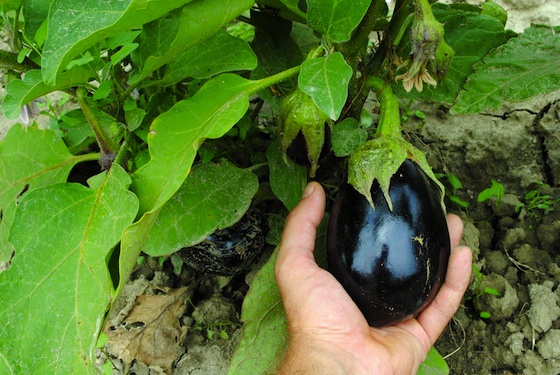
image credit: Man with Aubergine, Shutterstock

More News from Iran:

Iranian Game Warden Fined After Shooting Poacher in the Foot

Iranian Artists Fight Smog with the Tehran Monoxide Project

Bamboo Dome Shelter Pops up in Iran

Iran’s Energy Minister Looks to Green Energy after Sanctions
Tafline Laylin
Tafline Laylinhttp://www.greenprophet.com
As a tour leader who led “eco-friendly” camping trips throughout North America, Tafline soon realized that she was instead leaving behind a trail of gas fumes, plastic bottles and Pringles. In fact, wherever she traveled – whether it was Viet Nam or South Africa or England – it became clear how inefficiently the mandate to re-think our consumer culture is reaching the general public. Born in Iran, raised in South Africa and the United States, she currently splits her time between Africa and the Middle East. Tafline can be reached at tafline (at) greenprophet (dot) com.

Read More

8 COMMENTS

TRENDING

5 Reasons Why You Should Save Seeds (and plant them)

Saving seeds from tomatoes, peppers, herbs and flowers helps preserve biodiversity, strengthen food security, and keep heirloom varieties alive. Even a small balcony garden can make a difference.

Lyme Disease And The Great Outdoors

Planning on being outdoors a lot this summer? We...

Make Guarapo De Piña (it’s fermented pineapple juice)

In Cuba, guarapo is simply freshly-pressed sugar cane juice, and is drunk on the spot, without waiting for it to ferment. But in Colombia, Venezuela, Peru and Mexico, they homebrew guarapo from pineapples or oranges, and the fragrant fluid sits on the kitchen counter top to ferment until it's bubbly.

Baby teeth read like tree rings paint a picture of toxins in early life

A new study from the Icahn School of Medicine at Mount Sinai in New York offers a striking insight into how the environments we are born into can quietly shape our brains years later. By analyzing naturally shed baby teeth, the ones tucked under pillows for the tooth fairy, researchers have reconstructed a detailed timeline of exposure to environmental metals during pregnancy and early infancy.

Poop in the East River shows the city’s rat problem and what people like to eat

New York ecology and health can be monitored by a jug of water a week.

Yerukim Forms a New Green Economy Where the Money is Really Green

The Yerukim members who pick up the recyclables get to keep the monetary reward, the public earns "green" bills that can be used in shops, and business owners get to be associated with environmentalism.

Choosing Riyadh over Dubai? What Investors Should Know

Saudi Arabia is deploying capital at unmatched scale to catalyze tourism and advanced industry while rewiring its power-and-water backbone. The investable frontier is widening—especially in renewables, grid storage, water efficiency/desal retrofits, and hospitality operating platforms. Prudent investors will insist on phased delivery, enforceable KPIs (energy, water, biodiversity), and RHQ/zone compliance—while pricing political-economy and reputational risks alongside growth upside.

Sell your cooking oil for biodiesel money

Want to make money on old french fry oil? Sell it.

Qatar Alternative Energy Summit Pairs Investors And Innovators

Alternative energy investors and innovators can meet n' greet in Doha, Qatar March 16 and 17.

Here’s How To Implement The Four Pillars Of Employee Engagement

If you throw a party for your work team and they are vegans, don't make it a barbecue. Know the sustainability values of your team to boost moral and retain good people.

Locals From Rishon Fight IKEA

Big Box stores are a pretty new concept in Israel, and thank God that not every Israeli city wants them in their backyard. A word from someone who has see the beautiful farmland around her hometown Newmarket, Ontario stripped and converted into vulgar strip malls of big box shops: they have no place in a healthy and sustainable town or city.

The Jewish National Fund Meets An Inconvenient Truth

According to the JNF, it has transformed thousands of acres of barren land into green forests in Israel. They state that each person emits about 23 tons of carbon per year, estimating that each tree planted can absorb one ton of carbon in its lifetime. That's a whole lot of trees you'd need to be planting. Could so many fit in Israel?

How to quiet noise from construction in your office

Streets need to be resurfaced in New York but the humming and grinding noise is unsettling. Noise is environmental pollution. 

Popular Categories