How to join the sea circus

Sea clown Sustainable Circus
Hey ma, I’ve run away and joined a sustainable sea circus.

Dreams evolve with the times: 50 or 100 years ago, running away to join the circus was a far-fetched dream for plenty of kids and some adults. But today circuses are no longer about freak shows or entraining lions and elephants to do tricks. A sustainable circus of today features humans and tricksters, acrobats, aerialists and artists. With “circus” a class at my kids’ Waldorf School in Tel Aviv, we better plan for a lot more of our kids running away to join the circus. 

But where will they go? Perhaps to the sustainable circus at sea, The Sea Clown Sailing Circus currently travelling around our part of the woods in the Mediterranean. 

Sea clown Sustainable Circus, New York Times
Clowning around. Via the NY Times.

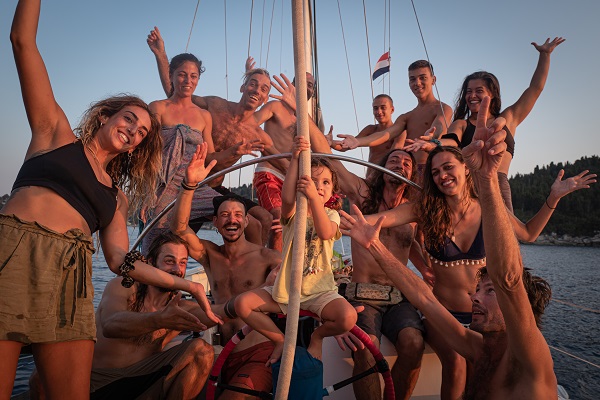
What makes the Sea Clown Sailing Circus sustainable is that the crew of 8 and sometimes more, moves from Greek island to island by sailboat, using the motor as infrequently as possible. If you are a musician, an acrobat or a sailor you are welcome to apply to the circus. If you have all 3 skills even better. 

“Our nomadic band of merry musicians and acrobatic activists combine the playful and daring spirit of the traveling circus with an attention to low-emissions travel and environmental impact,” write members of the Sea Clown Sailing Circus. “We have been inspiring and motivating audiences with our shows and unconventional modes of transportation for over 20 years, evolving from bicycles to boats and hoping one day to fly.”

Maybe by a salt, crystal or solar-powered airplane, because by choosing fair and sustainable practices such as sailing, rowing, cycling and solar energy, the sea circus says, “we try to maintain a mindful relationship with the ecosystems we come in contact with.

“While living communally on our small fleet of restored boats, we embrace recycling, repairing and re-using as a way of living, striving to have a regenerative effect on the planet and leave no harm in our wake.”

Sea clown Sustainable Circus

Tips for joining a circus

If you want to join the sustainable sea circus which docks at various Greek islands, you can reach out here. Just ask. 

I had a friend who joined a circus crew in France, a land-based circus, and in practice they played and built ideas together and then the group busked for a living on the streets in major cities and tourist stops. If street performance and acrobats is where you headed just try where you are local. Look for street performers and ask them about groups, mentors or places you can go to start. 

Acrobatics courses are becoming mainstream. While you may not live near a place that offers a high-wire there are plenty of aerial acrobats and aerial calisthenics and yoga classes in most major cities around the world. 

Get good at an instrument. Pianos and the contrabass aren’t good travellers, but taking up the accordion, trumpet or clarinet could be a good start.

If you want to travel sustainably, you can always find and sail your own boat or outfit a floating home: I had another friend who built a raft from plastic bottles (way before David de Rothschild built Plastiki) and sailed around the North Sea out of Germany as a sort of art and environmental statement. 

Art and clowning around, if done sustainably could be a far more satisfying job than being a global nomad tied to your laptop and selling NFTs. While it may not be a calling that will last forever, the Sea Clown Sailing Circus, at least some members from the group, have been making a life of it for 15 years.

Karin Kloosterman
Karin Kloostermanhttp://www.greenprophet.com
Karin Kloosterman is an award-winning journalist, innovation strategist, and founder of Green Prophet, one of the Middle East’s pioneering sustainability platforms. She has ranked in the Top 10 of Verizon innovation competitions, participated in NASA-linked challenges, and spoken worldwide on climate, food security, and future resilience. With an IoT technology patent, features in Canada’s National Post, and leadership inside teams building next-generation agricultural and planetary systems — including Mars-farming concepts — Karin operates at the intersection of storytelling, science, and systems change. She doesn’t report on the future – she helps design it. Reach out directly to [email protected]

Read More

TRENDING

Food system’s biggest waste may be the farmers we don’t see: Hugh Locke’s new book

Whole Earth Farming: Smallholders and the Great Regenerative Transformation by Hugh Locke is published by George Ronald in September 2026.

Artists warm up former Cold War radio headquarters in Berlin as PEOPLE Festival embraces collaboration and spontaneity

PEOPLE Festival returns to Berlin’s Funkhaus this October, bringing 180 musicians together for a week of collaboration, improvisation and more than 200 one-off performances.

Take your secrets and Bitcoin password offline in this code stitching workshop

Sophie Nadel turns data into something tactile, using embroidery and textiles to explore how we store, hide and understand information.

6 Ways Teletherapy Can Reduce Barriers to Accessing Mental Health Care

Teletherapy can make mental health care easier to access by reducing travel, scheduling and location barriers. Here are six ways virtual therapy can help people connect with professional support more easily.

Can You Work Closer to Home? What to Check Before Choosing a Shared Workspace

A coworking space within walking distance can cut commuting time and give you a reliable place to work, but distance alone does not make it useful. Test the internet, noise, privacy, desk setup, environmental claims and real cost before committing to a membership.

Scientists make lead-free perovskite solar cells that can weather the elements

Scientists have developed a “raincoat” for lead-free tin perovskite solar cells, helping them withstand air, moisture and heat while maintaining high efficiency.

The Essential Guide To Sustainability in Project Management

Sustainability is an approach where businesses and individuals balance the environmental, social, and economic aspects of a project such that current and future stakeholders are not overburdened with the impacts of the project in future.

Yerukim Forms a New Green Economy Where the Money is Really Green

The Yerukim members who pick up the recyclables get to keep the monetary reward, the public earns "green" bills that can be used in shops, and business owners get to be associated with environmentalism.

Choosing Riyadh over Dubai? What Investors Should Know

Saudi Arabia is deploying capital at unmatched scale to catalyze tourism and advanced industry while rewiring its power-and-water backbone. The investable frontier is widening—especially in renewables, grid storage, water efficiency/desal retrofits, and hospitality operating platforms. Prudent investors will insist on phased delivery, enforceable KPIs (energy, water, biodiversity), and RHQ/zone compliance—while pricing political-economy and reputational risks alongside growth upside.

Sell your cooking oil for biodiesel money

Want to make money on old french fry oil? Sell it.

Qatar Alternative Energy Summit Pairs Investors And Innovators

Alternative energy investors and innovators can meet n' greet in Doha, Qatar March 16 and 17.

Here’s How To Implement The Four Pillars Of Employee Engagement

If you throw a party for your work team and they are vegans, don't make it a barbecue. Know the sustainability values of your team to boost moral and retain good people.

Locals From Rishon Fight IKEA

Big Box stores are a pretty new concept in Israel, and thank God that not every Israeli city wants them in their backyard. A word from someone who has see the beautiful farmland around her hometown Newmarket, Ontario stripped and converted into vulgar strip malls of big box shops: they have no place in a healthy and sustainable town or city.

Popular Categories