

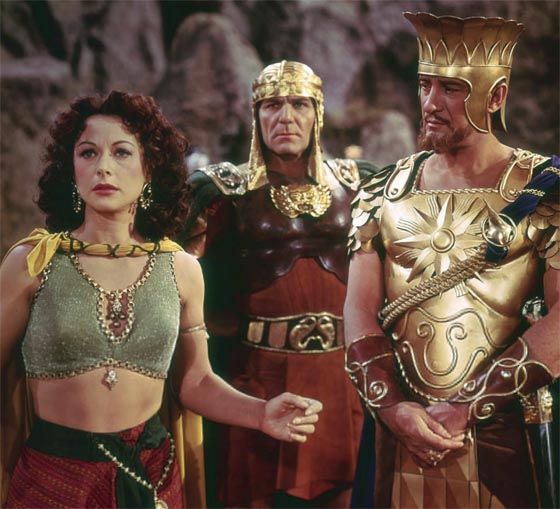
 Could the stories of a lost city of Atlantis, first noted by Herodotus and Plato, have some basis in fact?
A “Persian Gulf Oasis” may have been host to humans for over 100,000 years before it was swallowed up by the Indian Ocean around 8,000 years ago.
A once fertile landmass now submerged beneath the Persian Gulf may have been home to some of the earliest human populations outside Africa, according to an article published today in Current Anthropology, by Jeffrey Rose, an archaeologist and researcher with the University of Birmingham in the U.K.
Rose’s hypothesis introduces a “new and substantial cast of characters” to the human history of the Near East, and suggests that humans may have established permanent settlements in the region thousands of years before current migration models suppose.
In recent years, archaeologists have turned up evidence of a wave of human settlements along the shores of the Gulf dating to about 7,500 years ago.
“Where before there had been but a handful of scattered hunting camps, suddenly, over 60 new archaeological sites appear virtually overnight,” Rose said. “These settlements boast well-built, permanent stone houses, long-distance trade networks, elaborately decorated pottery, domesticated animals, and even evidence for one of the oldest boats in the world.”
But how could such highly developed settlements pop up so quickly, with no precursor populations to be found in the archaeological record? Rose believes that evidence of those preceding populations is missing because it’s under the Gulf.
“Perhaps it is no coincidence that the founding of such remarkably well developed communities along the shoreline corresponds with the flooding of the Persian Gulf basin around 8,000 years ago,” Rose said. “These new colonists may have come from the heart of the Gulf, displaced by rising water levels that plunged the once fertile landscape beneath the waters of the Indian Ocean.”
Historical sea level data show that, prior to the flood, the Gulf basin would have been above water beginning about 75,000 years ago. And it would have been an ideal refuge from the harsh deserts surrounding it, with fresh water supplied by the Tigris, Euphrates, Karun, and Wadi Baton Rivers, as well as by underground springs.
When conditions were at their driest in the surrounding hinterlands, the Gulf Oasis would have been at its largest in terms of exposed land area. At its peak, the exposed basin would have been about the size of Great Britain, Rose says.
Evidence is also emerging that modern humans could have been in the region even before the oasis was above water. Recently discovered archaeological sites in Yemen and Oman have yielded a stone tool style that is distinct from the East African tradition.
That raises the possibility that humans were established on the southern part of the Arabian Peninsula beginning as far back as 100,000 years ago or more, Rose says. That is far earlier than the estimates generated by several recent migration models, which place the first successful migration into Arabia between 50,000 and 70,000 years ago.
The Gulf Oasis would have been available to these early migrants, and would have provided “a sanctuary throughout the Ice Ages when much of the region was rendered uninhabitable due to hyper-aridity,” Rose said. “The presence of human groups in the oasis fundamentally alters our understanding of human emergence and cultural evolution in the ancient Near East.”
It also hints that vital pieces of the human evolutionary puzzle may be hidden in the depths of the Persian Gulf.
Image: ORato Cinefilo
More prehistory in the Middle East
More Whale Fossils in the Egyptian Desert?
Spacefaring Civilization Finds Evidence of Great Lake in Prehistoric Egypt
New Study Reveals 2,500 Years of Mediterranean Sea Level Fluctuations




Who’s the actress in the photo – Susan Hayward?
Hedy Lamarr, in Cecille B Demille
It might – but not in the Persian Gulf. The true location is said to be south of Cyprus. There is a large submerged plateau there that geologists say used to be above water.
But who knows? The lost Continent of Atlantis is presently no more real than Shangri-la or the Seven Cities of Cibola.
Yeah, I’ve heard of the Cyprus location, too. I love thinking about the idea!