Israel and Palestine Declare War… Against Climate Change

world israel palestine jerusalem
Israel and the Palestinian Authority are among 15 Mediterranean nations who have just signed a historic agreement to work together to combat the effects of climate change, one month ahead of the next United Nations conference on climate change, meeting at Cancun in November.

The Mediterranean Climate Change Initiative was inaugurated by Greek Prime Minister George Papandreou to develop common Mediterranean positions on climate change and was signed by the prime ministers or top environmental officials of 15 countries who agree that climate change threatens their way of life as peoples of the Mediterranean.

Most remarkable of all, both Israel and the Palestinian Authority signed on to the initiative.

Signatories included a wide assortment of countries: EU members like France, Spain, Italy, and Greece; Eastern European countries like Turkey, Croatia, Romania and Macedonia, and Middle Eastern countries, like Libya, Syria and Egypt.

The declaration called for contributing to the emergence of low carbon, resource efficient and climate resilient economies.

Israel’s president had committed the nation to reduce carbon emissions 20% by 2020 at Copenhagen last year. To achieve the reduction in carbon, Israel’s state-owned electricity company the IEC (Israel Electric Corporation) which supplies nearly all of the electricity for both states, would need to supply a higher percentage of the total electricity (about 12,000 megawatts) that currently powers the two tiny states – with clean energy.

A few solar CSP, solar PV and wind farms would make an enormous reduction quickly, given that the total electricity used is relatively small.

Both Israel and Palestine are acutely aware of their vulnerability to climate change, which is expected to make water resources even more scarce for what is already the most water-stressed highly populated area in the world.

The region faces a potential 4 degree rise in average temperatures and a 70% drop in precipitation. Sea level rise is expected to further contaminate nearby aquifers such as the coastal aquifer of Gaza that provides water to 1.5 million Palestinians. The annual decrease in rainfall is already raising farm prices for fruits and vegetables, and creating a two-tiered class system for water: those who can afford to pay, and those who can’t.

One diplomat at the meeting said “It is a new way of doing diplomacy because all these countries have a lot of problems to deal with — economic crises, political instability and other issues — and the conflicts between them.”

“However, they sat around the same table realizing that they all face the same threat to their culture and their way of life.”

To a US observer like me, it seems remarkable that all of these nations, let alone Israel and Palestine can agree on something that has become so contentious here in the United States that one entire party here (the Republicans) not only will not agree to any reductions in fossil fuel dependence to address the catastrophic climate destabilization problems created – but won’t even admit that there is any problem to address.

So congratulations to Israel and Palestine on your declaration of war.

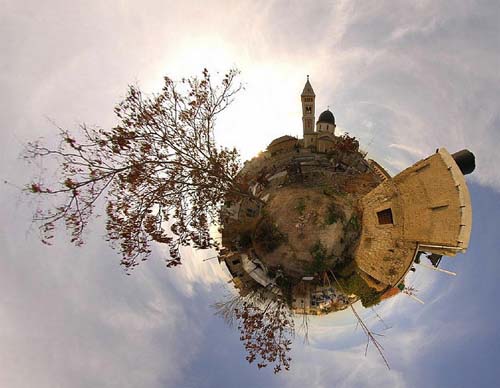
Image: Sam Rohn

Read More

5 COMMENTS

TRENDING

How a tick bite can lead to a life-threatening meat allergy AFG

Imagine developing a severe allergy to steak after a single tick bite. That's the reality for people with alpha-gal syndrome, a rapidly emerging condition linked to lone star ticks and other tick species. As researchers uncover how tick saliva rewires the immune system, health officials warn that hundreds of thousands of Americans may already be living with this unusual red meat allergy.

Understanding Food Production: Karl Studer on the Urban-Rural Knowledge Gap

Karl Studer occupies an unusual position in American business. As President of Quanta Services, he oversees electrical infrastructure operations across the United States, Canada, and Australia, managing thousands of employees and multibillion-dollar projects.

Mona Khalil, Orange House Project founder, sea turtle protector killed in Lebanon

Mona Khalil spent decades protecting Lebanon's sea turtles and coastal ecosystems. Her death in the ongoing conflict between Israel and Hezbollah shines a light on a broader environmental tragedy unfolding across northern Israel and southern Lebanon. From damaged wetlands and disrupted bird migrations to threatened seed banks and endangered wildlife, the region's ecosystems are becoming casualties of a war with no clear end in sight.

Wave wind energy for Nvidia’s next AI energy boom?

As AI factories consume unprecedented amounts of electricity, NVIDIA is looking beyond chips and data centers to the ocean. The company recently spotlighted Israel's Eco Wave Power and its wave energy projects in Jaffa and Los Angeles, highlighting how AI, digital twins and renewable energy can work together to meet future power demands. The collaboration reflects a growing realization that the future of artificial intelligence may depend as much on clean energy infrastructure as it does on computing power.

Dan Zaslavsky’s energy tower dream is rising again in Iran and China

The Energy Tower idea never made the leap from drawings and engineering studies to full-scale construction. But nearly two decades after most people stopped talking about it, the concept is quietly evolving in two unexpected places: China and Iran. The concept let dreamers dream and doers do - figuring out more pleasing designs and engineering.

Yerukim Forms a New Green Economy Where the Money is Really Green

The Yerukim members who pick up the recyclables get to keep the monetary reward, the public earns "green" bills that can be used in shops, and business owners get to be associated with environmentalism.

Choosing Riyadh over Dubai? What Investors Should Know

Saudi Arabia is deploying capital at unmatched scale to catalyze tourism and advanced industry while rewiring its power-and-water backbone. The investable frontier is widening—especially in renewables, grid storage, water efficiency/desal retrofits, and hospitality operating platforms. Prudent investors will insist on phased delivery, enforceable KPIs (energy, water, biodiversity), and RHQ/zone compliance—while pricing political-economy and reputational risks alongside growth upside.

Sell your cooking oil for biodiesel money

Want to make money on old french fry oil? Sell it.

Qatar Alternative Energy Summit Pairs Investors And Innovators

Alternative energy investors and innovators can meet n' greet in Doha, Qatar March 16 and 17.

Here’s How To Implement The Four Pillars Of Employee Engagement

If you throw a party for your work team and they are vegans, don't make it a barbecue. Know the sustainability values of your team to boost moral and retain good people.

Locals From Rishon Fight IKEA

Big Box stores are a pretty new concept in Israel, and thank God that not every Israeli city wants them in their backyard. A word from someone who has see the beautiful farmland around her hometown Newmarket, Ontario stripped and converted into vulgar strip malls of big box shops: they have no place in a healthy and sustainable town or city.

The Jewish National Fund Meets An Inconvenient Truth

According to the JNF, it has transformed thousands of acres of barren land into green forests in Israel. They state that each person emits about 23 tons of carbon per year, estimating that each tree planted can absorb one ton of carbon in its lifetime. That's a whole lot of trees you'd need to be planting. Could so many fit in Israel?

How to quiet noise from construction in your office

Streets need to be resurfaced in New York but the humming and grinding noise is unsettling. Noise is environmental pollution. 

Popular Categories