
A new Ebola outbreak in the Democratic Republic of the Congo (DRC) is raising concerns among public health experts, not because it is likely to become another COVID-19-style pandemic, but because this particular strain of the virus is proving difficult to fight.
The outbreak involves the Bundibugyo strain of Ebola, a variant for which there are currently no validated vaccines or proven treatments.
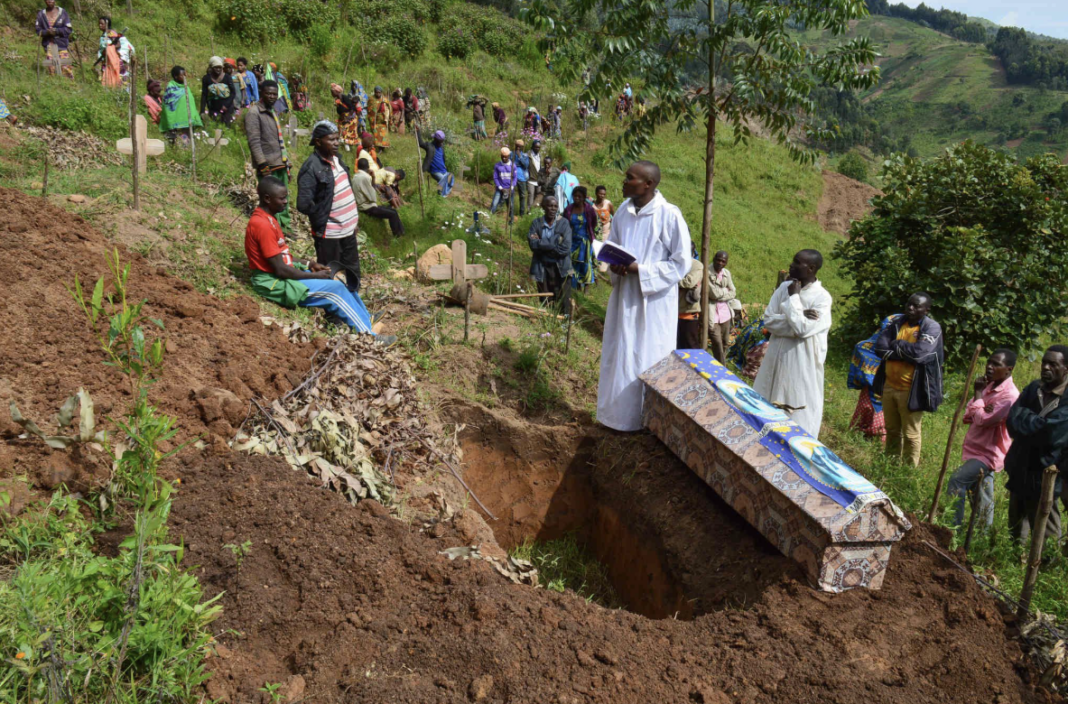
The funeral practices in this area of the DRC are very much centered around the touch of a dead body, including the washing of the body and funerals with an open casket
“My main concern about this outbreak is that there aren’t any medical countermeasures established for this strain,” says Jonathon Gass, assistant professor of Public Health and Community Medicine at Tufts University School of Medicine in the United States in a press release issued by the school.
“There hasn’t been a whole lot of therapeutic drug development for the Bundibugyo strain as compared to the Zaire Ebola strain, which is the deadliest strain but also has a vaccine that has been validated and proven to be quite effective,” Gass says.
Without a vaccine, healthcare workers can provide only supportive care: “All we can provide patients suffering with this infection is supportive care, which is basically the provision of fluids, oxygen, and pain treatment,” he says.
Why this ebola outbreak is different
The outbreak is unfolding in one of the most difficult places in the world to contain a deadly disease.
“The Eastern border of the DRC is an incredibly remote area, unreachable by car, which makes it hard to govern,” says Daniele Lantagne, research professor at Tufts University’s Feinstein International Center.
“That, combined with a history of extractive colonialism in the region, disease spillover potential from people living in forested areas consuming wild animal meat, recent losses of resources from other countries, and civil unrest in the area, all make this an incredibly hard outbreak to track and treat.”
Ebola spreads only through direct contact with bodily fluids such as blood, vomit and feces. Unlike COVID-19, it is not an airborne virus.
“The virus thrives in warm bodily fluids, and in the late stages of the disease and after death are when the body’s viral load will be the highest,” Lantagne says.
The disease often begins with symptoms that resemble malaria or other tropical illnesses, leading to delays in diagnosis.
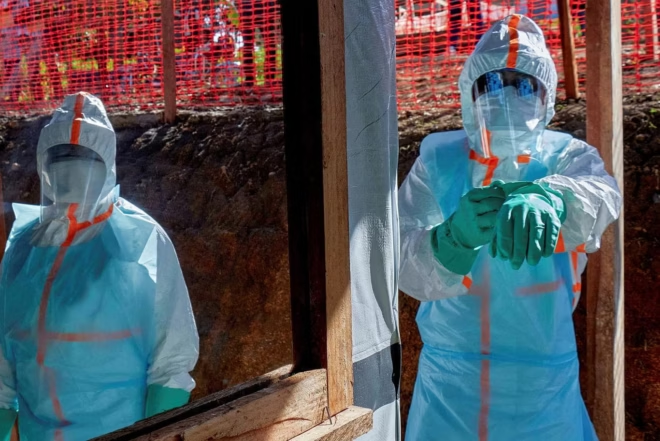
“The close contact with patients at this stage of the disease, and initial misdiagnoses of other fever-presenting illnesses like malaria, is why so many healthcare workers get infected,” she says.
Funeral traditions create challenges for ebola
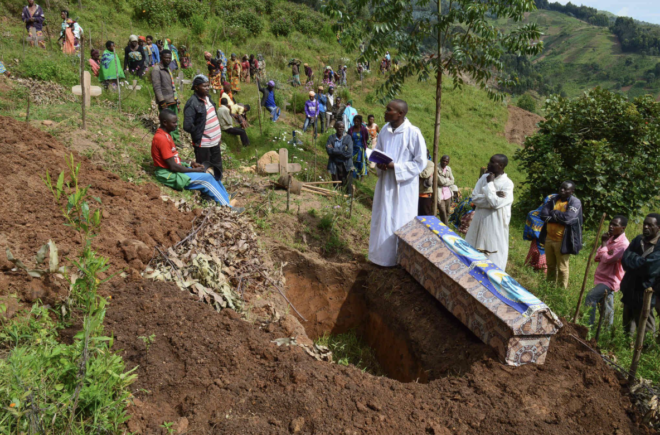
One of the biggest challenges in controlling Ebola outbreaks has historically been preventing transmission from deceased victims. This Global Press Journal article discusses how difficult is has been to change the traditions.
“The funeral practices in this area of the DRC are very much centered around the touch of a dead body, including the washing of the body and funerals with an open casket,” Lantagne says.
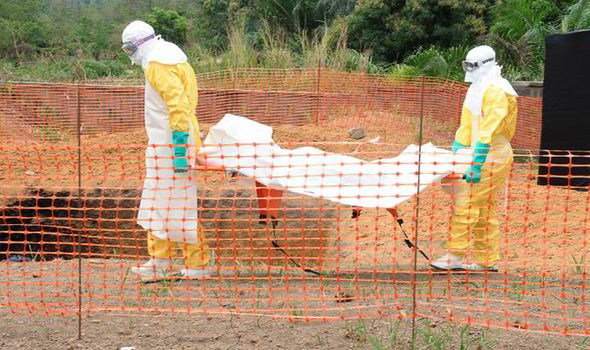
International responders, including the Red Cross, promote safe and dignified burials in which family members can view the deceased but cannot touch the body: “These restrictions are not going over well,” Lantagne says. “Think about how your family, your culture wants to honor your body after death, and suddenly a healthcare worker says no.”
She says tensions around burial practices have contributed to attacks on Ebola treatment centers during previous outbreaks. Experts say stopping the outbreak will require more than medical interventions. It will require trust.
“It doesn’t matter what the network is, whether it’s a religious leader, a nurse, a club,” Lantagne says. “Whatever local networks there are, they need to be activated to push fact-based scientific information through.”
Communities need information about treatment centers, contact tracing and temporary changes to funeral practices. According to Lantagne, only about 30% of cases are currently being contact traced.
“Right now only about 30% of cases are being contact traced, which means the DRC outbreak is very unmanaged and it’s expected to get a lot bigger,” she says.
If she could deliver one message to communities affected by the outbreak, it would be simple: “Ebola is real, it’s incredibly scary, and people die without treatment,” she says. “The only chance of survival will be if someone is brought to an Ebola treatment unit—and it’s still only a 50% chance of survival.”
What is Ebola exactly?
Ebola is classified as a viral hemorrhagic fever. Symptoms can appear anywhere from two to 21 days after exposure. Patients often begin with fever and weakness before developing vomiting, diarrhea and, in severe cases, internal bleeding. (Can ebola move to the Middle East is a question we asked in the past).
“People fall sick very, very fast, and then the hemorrhaging begins,” Gass says. “That’s why people succumb to the infection quite quickly.”
Gass does not believe Americans or people outside the DRC region should panic.
Although the outbreak will be difficult to control locally, he says the risk of it becoming a global pandemic remains low because Ebola spreads through direct contact with bodily fluids rather than through the air.
“The transmission occurs through bodily secretions, through blood, saliva, urine, or feces, and can occur in a number of ways, both direct and indirect,” Gass says.
That exposure can occur through hunting infected animals or potentially through contaminated fruit.
“If an infected bat takes a bite out of a piece of fruit, or urinates or defecates onto a piece of fruit, which is then consumed by a human, that human would be exposed,” he says.