AI will crack the codes from the Dead Sea Scrolls

Artificial Intelligence and Chemical Analysis to Trace the Origins of the Dead Sea Scrolls
Dead Sea Scrolls, AI Dead Sea Scrolls, artificial intelligence archaeology, Qumran caves, Israel Antiquities Authority, Professor Mladen Popović, ERC Advanced Grant, ancient manuscripts, Hebrew Bible, parchment scrolls, scribes, paleography, codicology, ancient Judea, archaeological research, machine learning, chemical analysis, biblical archaeology, Dead Sea Scroll fragments, Qumran, Israel
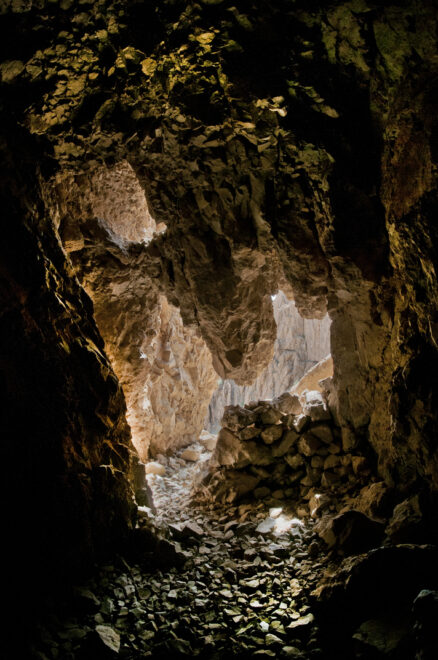
Inside the Qumran Cave

The Dead Sea Scrolls found in the Qumran cave in Israel is the strongest evidence for the Jewish religion and its history and many scroll fragments contain ancient copies of the Bible. Where were the scrolls produced and copied, and what can their origins reveal about centers of learning, scribal culture, and the transmission of knowledge in ancient Judea?

What all the parts mean is still largely one giant mystery. There are thousands of fragments but now a new European study will use artificial intelligence to answer old questions about who wrote them and what it all means.
Dead Sea Scrolls, AI Dead Sea Scrolls, artificial intelligence archaeology, Qumran caves, Israel Antiquities Authority, Professor Mladen Popović, ERC Advanced Grant, ancient manuscripts, Hebrew Bible, parchment scrolls, scribes, paleography, codicology, ancient Judea, archaeological research, machine learning, chemical analysis, biblical archaeology, Dead Sea Scroll fragments, Qumran, Israel
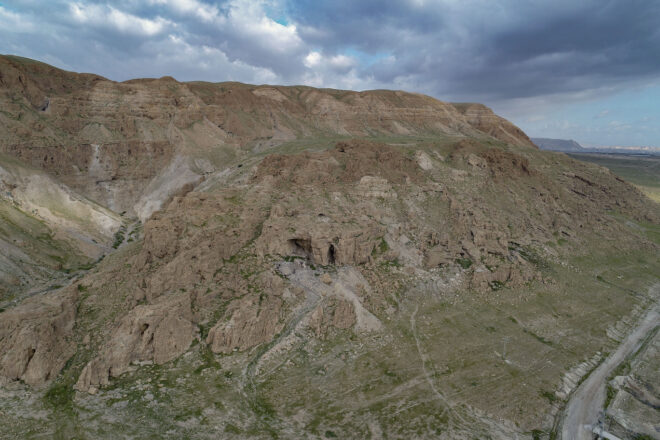
Qumran Cave where the scrolls were found or hidden?

The new project goes beyond handwriting. Researchers will analyze the chemical composition of parchment, papyrus, and ink. While AI won’t be able to tell us, “This scroll was definitely written in Jerusalem in 35 BCE,” it can estimate probabilities based on the evidence.

The plan is to create massive amounts of data that can be available to historians, archaeologists, linguists, and conservators who can interpret the results and decide whether they make historical sense.

The new AI project called Tracing Scribes and Scrolls, brings together researchers from the University of Groningen in Holland, the Israel Antiquities Authority, and leading laboratories and research institutions across Europe.

By combining state-of-the-art chemical analysis, artificial intelligence, paleography, and codicology, the research aims to reconstruct the geographical and cultural contexts in which the scrolls were produced.

The Dead Sea Scrolls are currently under the guardianship of the Israel Antiquities Authority in Jerusalem, and they are one of the most significant archaeological discoveries of the twentieth century.
Dead Sea Scrolls, AI Dead Sea Scrolls, artificial intelligence archaeology, Qumran caves, Israel Antiquities Authority, Professor Mladen Popović, ERC Advanced Grant, ancient manuscripts, Hebrew Bible, parchment scrolls, scribes, paleography, codicology, ancient Judea, archaeological research, machine learning, chemical analysis, biblical archaeology, Dead Sea Scroll fragments, Qumran, Israel
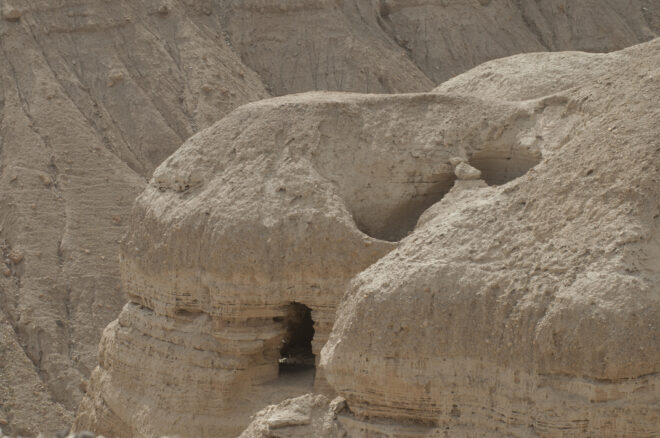
Qumran Cave

They include the earliest known manuscripts of many books of the Hebrew Bible, together with a remarkable collection of Jewish literary works dating from the late Second Temple period of Jewish life.

Despite decades of research, the precise locations where many of the scrolls were manufactured, prepared, and copied remain unknown.

Were some of the scrolls written at Qumran by a Jewish community living in seclusion there? Were others brought from additional centers of scribal activity in Judea, from Jerusalem, and hidden in the caves in times of danger and peril? Or were the caves also a library, or as a kind of ancient genizah, a place where Jews buried old holy books and literature? These questions stand at the heart of the new project.
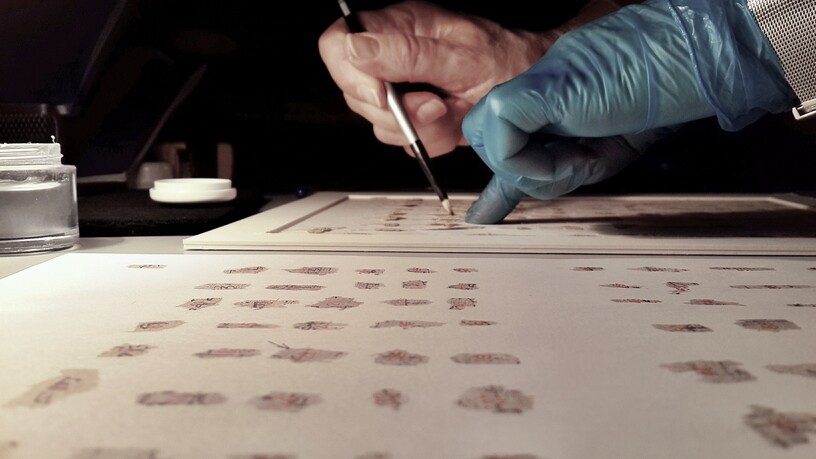
Dead Sea Scrolls, AI Dead Sea Scrolls, artificial intelligence archaeology, Qumran caves, Israel Antiquities Authority, Professor Mladen Popović, ERC Advanced Grant, ancient manuscripts, Hebrew Bible, parchment scrolls, scribes, paleography, codicology, ancient Judea, archaeological research, machine learning, chemical analysis, biblical archaeology, Dead Sea Scroll fragments, Qumran, Israel
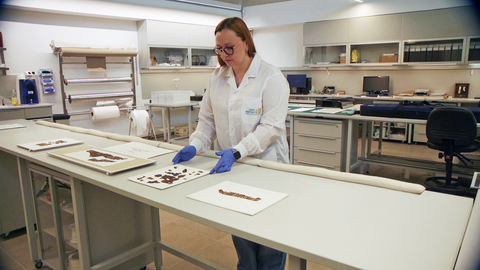
Analyzing the Dead Sea Scroll fragments

Professor Popović, one of the world’s leading authorities on the Dead Sea Scrolls, will lead a multidisciplinary team of historians, archaeologists, material scientists, chemists, and artificial intelligence specialists over the next five years.

The team will analyze approximately 250 samples from the Authority’s Dead Sea Scrolls collection, including parchment, papyrus, and ink. For the first time, papyri from Egypt will be examined alongside papyri from Qumran and other Judean Desert sites, allowing researchers to compare their chemical signatures directly.

These analyses are expected to help identify the material “fingerprints” of the scrolls, reveal the provenance of raw materials, identify production practices, and uncover connections between different centers of scribal activity.
Dead Sea Scrolls, AI Dead Sea Scrolls, artificial intelligence archaeology, Qumran caves, Israel Antiquities Authority, Professor Mladen Popović, ERC Advanced Grant, ancient manuscripts, Hebrew Bible, parchment scrolls, scribes, paleography, codicology, ancient Judea, archaeological research, machine learning, chemical analysis, biblical archaeology, Dead Sea Scroll fragments, Qumran, Israel
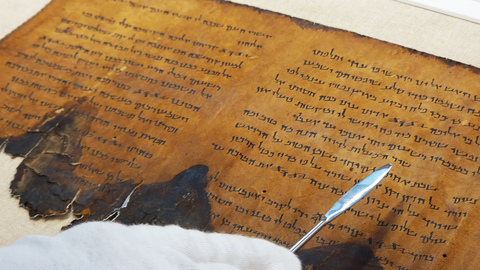
Intact pieces of the manucripts

Complementary approaches will enable researchers to develop an unprecedented model for mapping the more than 25,000 Dead Sea Scroll fragments preserved by Israel.

The project aims to place individual manuscripts and scribes within their geographical and chronological contexts while identifying centers of writing, learning, literary production, and knowledge transmission in ancient Judea.

According to Professor Mladen Popović of the University of Groningen, Principal Investigator of the project

The project builds on Professor Popović’s previous ERC-funded project, The Hands That Wrote the Bible, which pioneered the use of artificial intelligence to identify individual scribes responsible for copying the Dead Sea Scrolls. Tracing Scribes and Scrolls expands this work by moving beyond the identification of scribal hands to investigate where scribes worked, the materials they used, and the broader cultural and intellectual networks in which the manuscripts were created and circulated.

“By combining advanced laboratory analysis with the study of ancient handwriting and the remarkable advances in artificial intelligence made in recent years, we are now able to address questions that were previously beyond our reach: who copied these manuscripts, where they were produced, how knowledge circulated, and the role these texts played within the society of their time, said Ilit Cohen-Ofri of the Israel Antiquities Authority in a press release they sent to Green Prophet.

Who is working on the Dead Sea Scrools on the AI project?

There is University of Pisa (Ilaria Degano), the University of Naples Federico II (Leila Birolo), and the University of Southern Denmark in Odense (Kaare Rasmussen and Frank Kjeldsen). At the University of Groningen, Dr. Maruf Dhali will play a central role in developing and implementing the artificial intelligence methods that will integrate the project’s chemical data and identify patterns of provenance and scribal affiliation.

The project also includes collaborations with the Egyptian Museums in Berlin and Turin, as well as KU Leuven, as part of a comparative study of papyri from Egypt and the Judean Desert.


Karin Kloosterman
Karin Kloostermanhttp://www.greenprophet.com
Karin Kloosterman is an award-winning journalist, innovation strategist, and founder of Green Prophet, one of the Middle East’s pioneering sustainability platforms. She has ranked in the Top 10 of Verizon innovation competitions, participated in NASA-linked challenges, and spoken worldwide on climate, food security, and future resilience. With an IoT technology patent, features in Canada’s National Post, and leadership inside teams building next-generation agricultural and planetary systems — including Mars-farming concepts — Karin operates at the intersection of storytelling, science, and systems change. She doesn’t report on the future – she helps design it. Reach out directly to [email protected]

Read More

TRENDING

10 Amazing Facts About the Sidr Tree

Most people in the West have never heard of the Sidr tree. That's strange when you think about it. This tough, thorny desert tree has fed people, bees, birds, and camels for thousands of years. It appears in Islamic tradition. Its honey sells for astonishing prices.

Signs of Shavuot: Grief, Love and Choosing Life

Shavuot is a holiday heavy with symbolism. While it marks the end of the counting of the omer, it also functions as a miniature jubilee. The fiftieth day like a tiny echo of the fifty year cycle. And in each of the seventh years during that cycle, acts of rest and liberation are performed, especially in the fiftieth year.

I Went Looking for Jerusalem. I Found Oskar Schindler

  I did not go looking for Oskar Schindler. But...

A Quantum Kaddish? What fungal networks teach us about grief, God and death

Can Zara speak with their recently departed mother through...

Bake a New York Cheesecake for Shavuot

This light, creamy cheesecake fits into your green Shavuot, especially if you make it with organic cheese and eggs. It's also light on sugar.

Yerukim Forms a New Green Economy Where the Money is Really Green

The Yerukim members who pick up the recyclables get to keep the monetary reward, the public earns "green" bills that can be used in shops, and business owners get to be associated with environmentalism.

Choosing Riyadh over Dubai? What Investors Should Know

Saudi Arabia is deploying capital at unmatched scale to catalyze tourism and advanced industry while rewiring its power-and-water backbone. The investable frontier is widening—especially in renewables, grid storage, water efficiency/desal retrofits, and hospitality operating platforms. Prudent investors will insist on phased delivery, enforceable KPIs (energy, water, biodiversity), and RHQ/zone compliance—while pricing political-economy and reputational risks alongside growth upside.

Sell your cooking oil for biodiesel money

Want to make money on old french fry oil? Sell it.

Qatar Alternative Energy Summit Pairs Investors And Innovators

Alternative energy investors and innovators can meet n' greet in Doha, Qatar March 16 and 17.

Here’s How To Implement The Four Pillars Of Employee Engagement

If you throw a party for your work team and they are vegans, don't make it a barbecue. Know the sustainability values of your team to boost moral and retain good people.

Locals From Rishon Fight IKEA

Big Box stores are a pretty new concept in Israel, and thank God that not every Israeli city wants them in their backyard. A word from someone who has see the beautiful farmland around her hometown Newmarket, Ontario stripped and converted into vulgar strip malls of big box shops: they have no place in a healthy and sustainable town or city.

The Jewish National Fund Meets An Inconvenient Truth

According to the JNF, it has transformed thousands of acres of barren land into green forests in Israel. They state that each person emits about 23 tons of carbon per year, estimating that each tree planted can absorb one ton of carbon in its lifetime. That's a whole lot of trees you'd need to be planting. Could so many fit in Israel?

How to quiet noise from construction in your office

Streets need to be resurfaced in New York but the humming and grinding noise is unsettling. Noise is environmental pollution. 

Popular Categories