

Cell Phone Towers Can Help Predict the Next Big Flood

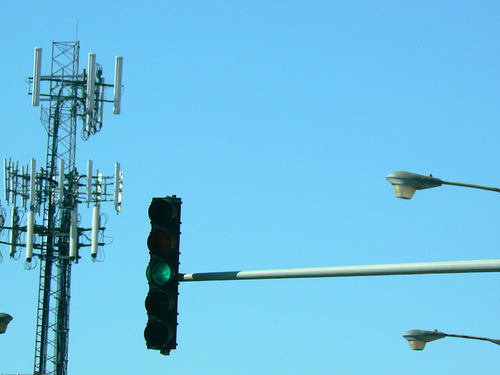
cell-phone-tower-image

Hurricane Katrina: Phone home –– If you have a cell phone tower planted somewhere near your home or your kid’s daycare, you’ll probably think they are evil, but new research finds that cell phone towers can give precious information to help us understand climate change patterns, and floods.

Though New Orleans residents were told to evacuate days before the arrival of Hurricane Katrina, no one could have predicted the real extent of the devastation.

Researchers from Tel Aviv University say they have found a novel and reliable way to help predict the intensity of the next big flood, using common cell phone towers. Their model, which analyzes cell phone signals, adds a critical component to weather forecasting never before available.

“By monitoring the specific and fluctuating atmospheric moisture around cell phone towers throughout America, we can cheaply, effectively and reliably provide a more accurate ‘critical moisture distribution’ level for fine-tuning model predictions of big floods,” says Prof. Pinhas Alpert, a geophysicist and head of Tel Aviv University‘s Porter School for Environmental Education.

Prof. Alpert and his co-researchers Prof. Hagit Messer Yaron and doctoral fellow Noam David reported on their research in the April 2009 Atmospheric Chemistry and Physics.

Information the weather girl can use

Cell phone towers emit radio waves that are diminished by moisture in the air, a factor that can be used to improve model warnings on flood levels. In addition, the researchers measured the rainfall distributions and were able to accurately estimate the size of impending floods before they struck. This was demonstrated in post-analysis of two case-studies of floods in the Judean Desert in Israel, where cell phone towers – and flash floods – are abundant.

Using real data measurements collected from the towers, the researchers demonstrated how microwave links in a cellular network correlated with surface station humidity measurements. The data provided by cell phone towers is the missing link weather forecasters need to improve the accuracy of flood forecasting. The microwave data used in this study was supplied by two cellular providers Cellcom and Pelephone in Israel.

Can texting save lives?

“Our method provides reliable measurement of moisture fields near the flood zone for the first time,” notes Prof. Alpert, who also works with NASA on developing models to study global warming weather patterns. This new tool, he says, can add to the bigger picture of understanding climate change patterns in general.

“Accurate predictions of flooding were difficult before because there haven’t been enough reliable measurements of moisture fields in remote locations,” Prof. Alpert adds. Using the signals collected from cell phone towers as they communicate with base stations and our handsets, weather forecasters will now have a crucial missing piece of information for flood prediction that they never had before. It will permit forecasters and residents alike to more accurately gauge the danger they face from an impending flood.

Because hundreds of thousands of cell phone towers are already in place, the Tel Aviv University invention can be adopted quickly. And cell phone companies are already collecting the data anyway, as Americans continue to ramp up their minutes of call time every month.

[image via benimoto]
Read More

1 COMMENT
  1. […] Professors Pinhas Alpert and Colin Price, lecturers at the Porter School of Environmental Studies’ International MA Program at Tel Aviv University, have predicted that increased flooding will result from global climate change. Alpert helped to pioneer the use of cellular phone networks for monitoring the amount and intensity of precipitation and water vapor – measurements which are virtually free of charge and can be used for studying global climate systems. […]

TRENDING

Black fathers live longer than non-fathers, new study

Researchers found that fatherhood was associated with lower rates of early death among Black men, while early fatherhood was linked to poorer long-term health outcomes.

Dan Zaslavsky’s energy tower dream is rising again in Iran and China

The Energy Tower idea never made the leap from drawings and engineering studies to full-scale construction. But nearly two decades after most people stopped talking about it, the concept is quietly evolving in two unexpected places: China and Iran. The concept let dreamers dream and doers do - figuring out more pleasing designs and engineering.

A visit to Amirim, Israel’s first all-vegetarian village in the Galilee

Just 15 kilometers from Tzfat there is a moshav that was founded in the late 50s that was ideologically influenced by organic, vegetarian and vegan principles. My hostess at Ohn-Bar, the tzimmer where I stayed, explained that the people of Amirim were among the pioneers of Israel’s strong vegetarian movement.

Can Scientists Predict Coral Bleaching Before It Happens?

Now researchers at the Woods Hole Oceanographic Institution (WHOI) in the US say they have developed a way to predict coral bleaching five to six months before it occurs, potentially giving reef managers enough time to intervene and save vulnerable corals.

Israeli Hydrogen Startup H2Pro Are Trying to Solve Clean Energy’s Hardest Problem

The company has attracted backing from major investors including Breakthrough Energy Ventures, the climate fund founded by Bill Gates, along with industrial partners such as Sumitomo, ArcelorMittal, and Temasek, a multi-billion dollar company that owns Singapore airlines. H2Pro has raised more than $100 million USD and is moving from pilot projects toward commercial-scale deployments.

Locals From Rishon Fight IKEA

Big Box stores are a pretty new concept in Israel, and thank God that not every Israeli city wants them in their backyard. A word from someone who has see the beautiful farmland around her hometown Newmarket, Ontario stripped and converted into vulgar strip malls of big box shops: they have no place in a healthy and sustainable town or city.

The Jewish National Fund Meets An Inconvenient Truth

According to the JNF, it has transformed thousands of acres of barren land into green forests in Israel. They state that each person emits about 23 tons of carbon per year, estimating that each tree planted can absorb one ton of carbon in its lifetime. That's a whole lot of trees you'd need to be planting. Could so many fit in Israel?

How to quiet noise from construction in your office

Streets need to be resurfaced in New York but the humming and grinding noise is unsettling. Noise is environmental pollution. 

EarthX and a blueprint for sustainable investing

Trammell S. Crow, a Dallas-based businessman and father of four, is focusing his efforts on impact investing, and media that focuses on saving the planet through EarthX.

Mining Afghanistan’s Mineral Discoveries Similar to Avatar

Now that American forces in Afghanistan are commemorating the longest period of any war that America has been involved in, including the 1965-73 Vietnam War, the recent discoveries of large and extremely valuable mineral and metal deposits may finally bring to light a reason to continue the presence of US fighting forces in this war torn and backward country.

From Pilot Plant to Global Stage: How Aduro Clean Technologies’ 2026 Expansion Signals a Turning Point for Chemical Recycling Investors Like Yazan Al Homsi

The company's Next Generation Process (NGP) Pilot Plant in London, Ontario, has officially moved into initial operating campaigns, generating the kind of structured, repeatable data that separates laboratory promise from commercial viability.

Nobul’s Regan McGee on Shareholder Value: “Complacency Is the Silent Killer” 

Why the governance framework designed to protect shareholders so...

Should You Invest in the Private Market?

startustartup Unlike public stock exchanges, which offer daily trading, strict...

Popular Categories