Arab investors and land grabbers wanted by Egypt

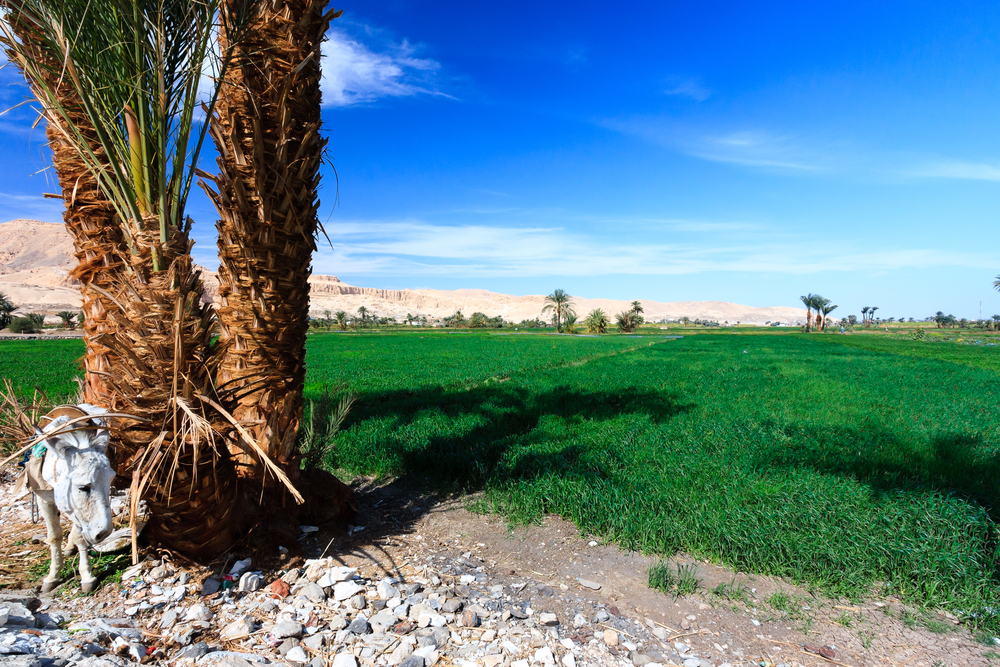
cultivated field near LuxorEgypt plans to lease 25,000 hectares of agricultural land to Arab investors. Agriculture minister Ayman Abu Hadid made the announcement in Tunis recently. Egypt is hoping that sustainable farmers will apply. 

The meeting was hosted by the Arab Authority for Agriculture Investment and Development (AAAID); it’s part of a plan to attract foreign investment in sustainably developing the country’s agriculture sector.

Egypt’s agricultural land base measures around 8.4 million feddans (an Egyptian unit of area equal to 1.038 acres) and, as of 2010, the water-starved nation imported 40% of its food.

For the past decade, Arabian Gulf nations have been exploring ways to secure tracts of agricultural land in water-rich countries in Africa and Asia.

Absent sufficient freshwater to grow crops to feed their increasing populations, nearly half a billion acres of land – eight times the area of Great Britain – were sold or leased in transnational deals – and the Middle East is among the busiest land-grabbers.

A 2012 report by the Land Matrix project, a coalition of research centers and civil societies, indicates:

  • Saudi Arabia purchased about 5.5 million acres, the largest being 675,000 acres in the Philippines by Eastern Renewable Fuels Corporation for agriculture.
  • Israel acquired about 5.9 million acres, 4.9 million of them in the Democratic Republic of Congo by an unknown investor for agriculture.

Now Egypt is jumping aboard, according to Mada Masr news, leasing land in nearby Sudan.

Attempts to buy or lease farmland have raised controversy in host countries, leading to accusations of neo-colonialism, demonstrations, and violence. At a minimum, the practice raises questions about fair pricing, implications to local labor and resultant environmental impacts.

Buying into established agricultural firms in food exporting countries such as Serbia, Nigeria and even China sidesteps most obstacles.

The AAAID is comprised of 20 Arab and African member states seeking food security for their populations.

Saudi Arabia is the largest shareholder, contributing over 22% of organizational capital, followed by Kuwait with 19.5%, and the United Emirates, Sudan and Iraq each with a 15% share.  Egypt contributes just 3%.

Hadid did not disclose where the land location or what crops would be grown, but he told Reuters Egypt that he hopes to give the land to a company partnered with AAAID.

Image of cultivated field near Luxor from Shutterstock

Read More

2 COMMENTS

TRENDING

Who Owns the Farm Robot? A State of Jefferson Startup Takes on Carbon Robotics

In California's self-proclaimed State of Jefferson, a small agricultural technology company is challenging the dominant laser-weeding business model. Laudando & Associates believes farmers should own and repair their AI-powered weeding tools rather than pay ongoing subscription fees. The approach has put the company on a collision course with industry leader Carbon Robotics, sparking a patent dispute that has pushed the Jefferson startup toward overseas markets while raising broader questions about ownership, right-to-repair, and the future of farm automation.

5 Reasons Why You Should Save Seeds (and plant them)

Saving seeds from tomatoes, peppers, herbs and flowers helps preserve biodiversity, strengthen food security, and keep heirloom varieties alive. Even a small balcony garden can make a difference.

Regenerative Wool or Greenwashing? Zentera Responds to Critics

Zentera responds to questions about ZQ wool, animal welfare, regenerative farming, ethical fashion and the fallout from PETA's New Zealand investigation.

Tanner Winterhof on the Custom Harvesters Quietly Holding American Agriculture Together

In late January, in a Des Moines hotel ballroom that smelled faintly of diesel and convention coffee, Tanner Winterhof spent three days hosting the members and attendees of the  U.S. Custom Harvesters Inc. annual convention on his podcast as Farm4Profit’s official media partner for the show.

Jujube, the sidr tree of medicine and magic

A magic holy sidr bath to deflect the evil eye? It needs 7 powdered sidr leaves stirred into a bucket of warm water. The hadith of the Prophet Muhammad allows to repeat healing prayers and verses from the Koran to increase the water’s potency. 5 grams, or 1 tablespoon of sidr powder equals 7 leaves.

Yerukim Forms a New Green Economy Where the Money is Really Green

The Yerukim members who pick up the recyclables get to keep the monetary reward, the public earns "green" bills that can be used in shops, and business owners get to be associated with environmentalism.

Choosing Riyadh over Dubai? What Investors Should Know

Saudi Arabia is deploying capital at unmatched scale to catalyze tourism and advanced industry while rewiring its power-and-water backbone. The investable frontier is widening—especially in renewables, grid storage, water efficiency/desal retrofits, and hospitality operating platforms. Prudent investors will insist on phased delivery, enforceable KPIs (energy, water, biodiversity), and RHQ/zone compliance—while pricing political-economy and reputational risks alongside growth upside.

Sell your cooking oil for biodiesel money

Want to make money on old french fry oil? Sell it.

Qatar Alternative Energy Summit Pairs Investors And Innovators

Alternative energy investors and innovators can meet n' greet in Doha, Qatar March 16 and 17.

Here’s How To Implement The Four Pillars Of Employee Engagement

If you throw a party for your work team and they are vegans, don't make it a barbecue. Know the sustainability values of your team to boost moral and retain good people.

Locals From Rishon Fight IKEA

Big Box stores are a pretty new concept in Israel, and thank God that not every Israeli city wants them in their backyard. A word from someone who has see the beautiful farmland around her hometown Newmarket, Ontario stripped and converted into vulgar strip malls of big box shops: they have no place in a healthy and sustainable town or city.

The Jewish National Fund Meets An Inconvenient Truth

According to the JNF, it has transformed thousands of acres of barren land into green forests in Israel. They state that each person emits about 23 tons of carbon per year, estimating that each tree planted can absorb one ton of carbon in its lifetime. That's a whole lot of trees you'd need to be planting. Could so many fit in Israel?

How to quiet noise from construction in your office

Streets need to be resurfaced in New York but the humming and grinding noise is unsettling. Noise is environmental pollution. 

Popular Categories