Earth. Energy. Everything next.

Teenagers Use Abandoned Bus Lane for Safe Urban Cycling in Jordan

urban, cycling, public transportation, architecture, Amman, Jordan

The bad news is that Jordan’s Bus Rapid Transit system (BRT) was suspended last year amid concerns about the associated cost and feasibility. Although the multimillion dollar project would have considerably reduced traffic and smog in capital Amman, details of the system conceived by the Greater Amman Municipality in 2009 are still being ironed out. So a couple of teenage boys who say that it’s impossible to find a safe place to ride their bikes in the city have turned one of the new but abandoned bus lanes into a bike lane instead.

Omar Ahmed and Mohammad Ali from Dahyat Al Rashed turned a would-be bus lane on Queen Rania Street into a bike lane. Like many cities in the Middle East and North Africa, Amman is not well equipped for cyclists and heavy vehicular traffic makes venturing out on two wheels a veritable suicide mission.

The BRT plan was ambitious. Each bus would have carried 120 passengers and would have run every three minutes during peak hours on select routes, but it was shelved just months before it would have been inaugurated.

Although budget and feasibility are the “official” justifications for halting the project, Arwa reported earlier this year that politics was more likely the cause.

In December 2011, Prime Minister Awn Khasawneh referred the case to the justice ministry to investigate, Arwa wrote, while the project Director Ayman Smadi openly sited political factors as motivations behind the suspension.

Speaking to the Jordan Times, he explained that “there was huge pressure from Parliament to halt work on the project” and alleged that there were no valid technical reasons for doing so. He also added that the BRT project was being used as a “scapegoat” by those who wanted to attack Greater Amman Municipality’s management and certain deputies.

There’s no telling if or when the BRT program will be reinstated, but it has unintentionally drawn attention to the dire lack of proper urban space and bike lanes, which combined could drastically improve the city’s air quality and aesthetic.

The teenagers, meanwhile, are in no rush to see the BRT project succeed, they told Jordan Times, as it means they can finally ride freely.

:: Jordan Times

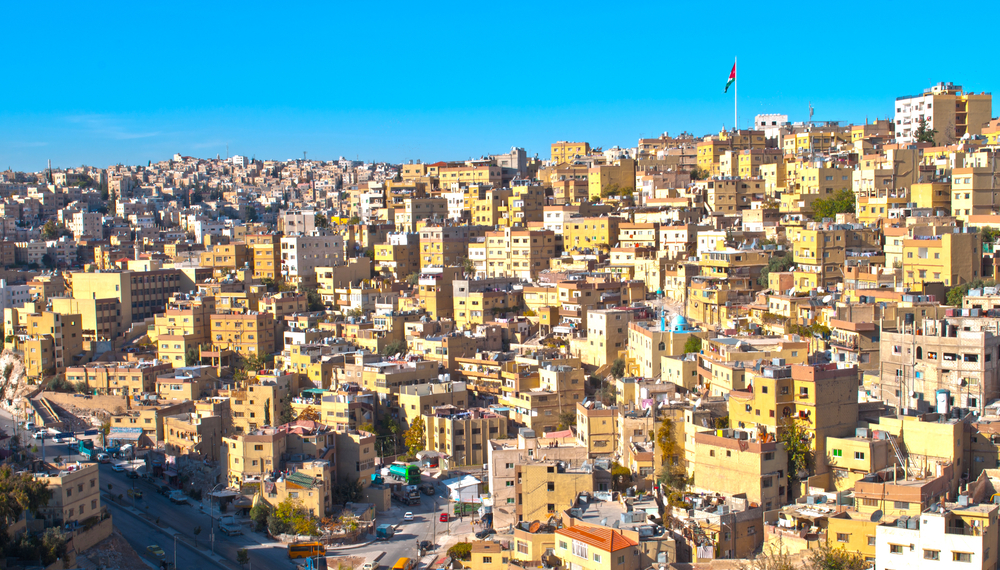
Image credit, Amman with Flag, Shutterstock

More on Jordan’s Public Transportation System:

Jordan’s Public Transportation Plans Blocked by Political Barriers
Jordan’s Ambitious Bus Plans Get Shelved

Bike Tourism Grows in the Middle East

Tafline Laylin
Tafline Laylinhttp://www.greenprophet.com
As a tour leader who led “eco-friendly” camping trips throughout North America, Tafline soon realized that she was instead leaving behind a trail of gas fumes, plastic bottles and Pringles. In fact, wherever she traveled – whether it was Viet Nam or South Africa or England – it became clear how inefficiently the mandate to re-think our consumer culture is reaching the general public. Born in Iran, raised in South Africa and the United States, she currently splits her time between Africa and the Middle East. Tafline can be reached at tafline (at) greenprophet (dot) com.

Read More

3 COMMENTS
  1. well…photos would be nice on this article…2nd if you think the car exhaust is bad here…I was just in Kathmandu Nepal…now that is where you need to not be in the traffic….forget a face mask…

TRENDING

The pulsing planet and the earthquakes that shape our world

One of the most persistent questions in seismology concerns whether scientists will eventually be able to predict major earthquakes before they happen.

Amman’s traffic crisis is about more than cars. It’s about how we think

I believe Jordan needs a cultural transformation alongside its infrastructure investments. We must begin by redefining social prestige. Why should ownership of an expensive car be considered a greater achievement than making an environmentally responsible transportation choice? Why should travelling by bus carry a social stigma?

Why water-starved Amman keeps flooding and how underground rain tanks could help

Jordan's capital faces a troubling paradox: chronic water shortages and destructive winter floods. Hydrogeological expert Dr. Osama MN Gazal explains how underground rainwater tanks and green infrastructure could help Amman capture precious rainfall, reduce flooding and build a more water-secure future.

Can Amman become a walkable city? C40 is turning hot asphalt into green public spaces

Amman has never been an easy city to explore on foot. Now, C40 Cities and Community Jameel are reimagining Jordan's capital with cooler streets, shaded playgrounds and greener neighbourhoods. Could this sprawling city finally become more walkable?

Exploring Bangkok by electric bike with teenagers

With two teenagers in tow and four nights to spare, we decided to give Thailand’s capital the attention it deserved. My son had one request: he wanted to rent electric bikes. A friend of his had explored Japan this way, and he was convinced Bangkok would be just as exciting.

Why Bronwyn Finnegan Chose the Nonprofit Sector Over Politics or Corporate Life

Bronwyn Finnegan could have pursued a career in politics or corporate leadership. Instead, she chose the nonprofit sector, where she focuses on financial sustainability, governance and helping mission-driven organizations build the capacity to survive and grow.

Scientists make lead-free perovskite solar cells that can weather the elements

Scientists have developed a “raincoat” for lead-free tin perovskite solar cells, helping them withstand air, moisture and heat while maintaining high efficiency.

The Essential Guide To Sustainability in Project Management

Sustainability is an approach where businesses and individuals balance the environmental, social, and economic aspects of a project such that current and future stakeholders are not overburdened with the impacts of the project in future.

Yerukim Forms a New Green Economy Where the Money is Really Green

The Yerukim members who pick up the recyclables get to keep the monetary reward, the public earns "green" bills that can be used in shops, and business owners get to be associated with environmentalism.

Choosing Riyadh over Dubai? What Investors Should Know

Saudi Arabia is deploying capital at unmatched scale to catalyze tourism and advanced industry while rewiring its power-and-water backbone. The investable frontier is widening—especially in renewables, grid storage, water efficiency/desal retrofits, and hospitality operating platforms. Prudent investors will insist on phased delivery, enforceable KPIs (energy, water, biodiversity), and RHQ/zone compliance—while pricing political-economy and reputational risks alongside growth upside.

Sell your cooking oil for biodiesel money

Want to make money on old french fry oil? Sell it.

Qatar Alternative Energy Summit Pairs Investors And Innovators

Alternative energy investors and innovators can meet n' greet in Doha, Qatar March 16 and 17.

Here’s How To Implement The Four Pillars Of Employee Engagement

If you throw a party for your work team and they are vegans, don't make it a barbecue. Know the sustainability values of your team to boost moral and retain good people.

Popular Categories