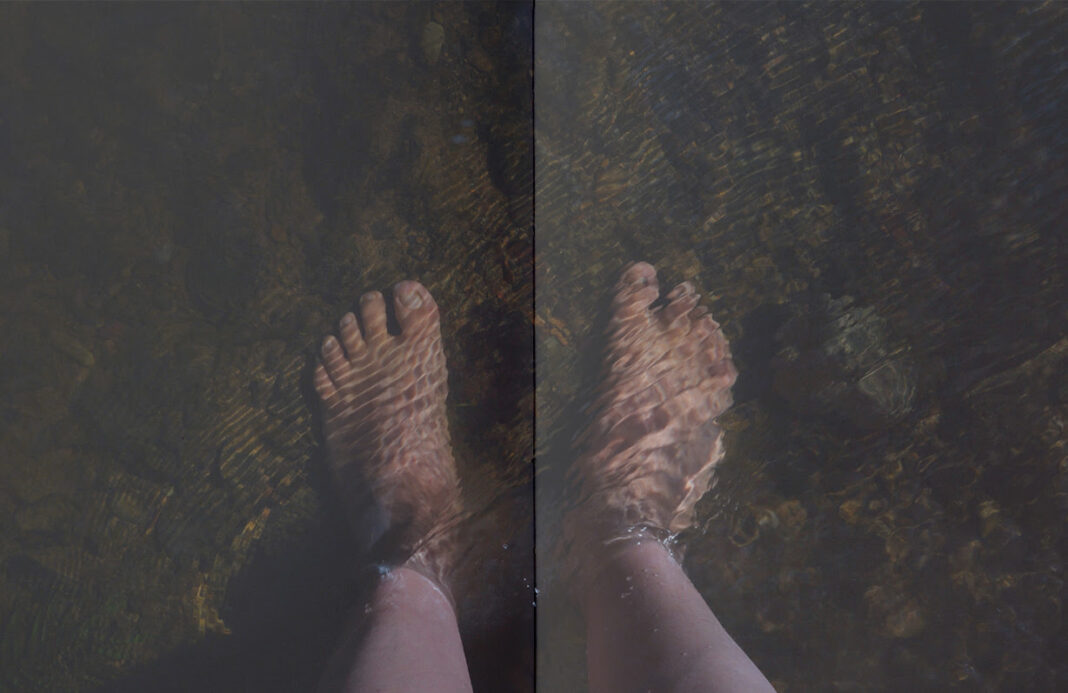
Drinking Mercury: How Art Makes Invisible Pollution Visible

Art can sometimes explain an environmental problem better than a thousand scientific reports. That is the idea behind Drinking Mercury, a new exhibition opening in La Paz, Bolivia, where artists are confronting mercury pollution caused by illegal and artisanal gold mining around the reservoirs that supply drinking water to more than a million people.

The exhibition, curated by Naira Corzon Cortez and presented through apexart, runs from October 17 through November 13, 2026 at Casa Passiflora in La Paz. It brings together work by Viviana Mamani Cori, Nayra Corzon, Wara Vargas Lara and Mariel Terán across photography, sound, video and installation.

The underlying story is not abstract. Gold mining has expanded around the Hampaturi, Milluni and Incachaca reservoirs, while mercury used in gold extraction is entering the watershed. Mining has also reached the slopes of Illimani, the sacred Andean mountain overlooking La Paz.

Water moves and mercury moves. Pollution does not respect the neat boundaries we draw between a mine, a river, a kitchen tap and a human body. And this is where art can become a particularly powerful form of environmental activism.

One of the earliest environmental-art stories I wrote, long before Green Prophet became what it is today, was about New Mexico photographer Laurie Tümer. I wrote about her Glowing Evidence series for Grist and later TreeHugger.

Laurie Tumer
Laurie Tumer

Tümer had suffered a serious pesticide poisoning after her home was sprayed. She later became interested in the research of environmental scientist Richard Fenske, who used fluorescent tracer dyes and ultraviolet light to demonstrate how pesticides could migrate onto agricultural workers’ bodies even when they wore protective equipment.

Tümer borrowed the technique artistically. She put fluorescent tracers on shoes, surfaces and objects and photographed their movement under UV light. Suddenly an invisible environmental threat became visible.

The photographs were beautiful, almost celestial. But once you understood what the glowing patterns represented, they became disturbing. That is what environmental art can do exceptionally well. Science can tell us that contamination exists at a certain concentration. Art can help us understand what it means for a substance to move from soil to water, from water to hands, from hands into homes and eventually into bodies.

Drinking Mercury works in a similar territory.

Wara Vargas Lara’s All Rivers Flow into the Sea documents mining and gold extraction in the Bolivian Amazon and around Milluni, emphasizing a simple ecological reality: water systems are connected. Viviana Mamani Cori’s video Permissible Limits questions how contamination is represented publicly. Nayra Corzon transforms environmental laws and books into damaged landscapes overtaken by moss and biological material, while Mariel Terán’s Earth Hands uses Andean instruments, sound and earth to examine what remains alive in landscapes being excavated.

The exhibition does not simply illustrate pollution. It turns an invisible environmental threat into something people can experience.

And perhaps that is one of art’s most useful environmental functions: not frightening people for the sake of fear, but giving shape to something that otherwise remains unseen. Once contamination can be seen, heard or imagined moving through a landscape, it becomes much harder to pretend it stops somewhere upstream.


Karin Kloosterman
Karin Kloostermanhttp://www.greenprophet.com
Karin Kloosterman is an award-winning journalist, innovation strategist, and founder of Green Prophet, one of the Middle East’s pioneering sustainability platforms. She has ranked in the Top 10 of Verizon innovation competitions, participated in NASA-linked challenges, and spoken worldwide on climate, food security, and future resilience. With an IoT technology patent, features in Canada’s National Post, and leadership inside teams building next-generation agricultural and planetary systems — including Mars-farming concepts — Karin operates at the intersection of storytelling, science, and systems change. She doesn’t report on the future – she helps design it. Reach out directly to [email protected]

Read More

TRENDING

Plastic Beverage Bottles and Caps Most Prevalent Pollutants Worldwide

Plastic bottles remain one of the most stubborn forms of ocean pollution, according to new results from Ocean Conservancy’s 2025 International Coastal Cleanup, the massive volunteer effort that removes and records trash from beaches and waterways around the world.

Mysterious metal space balls wash up on Australian shore

Mysterious metallic spheres dubbed "space balls" washed ashore on Forrest Beach in Queensland, Australia. The objects were identified by the Australian Space Agency as pressure vessels from a space launch vehicle that re-entered Earth's atmosphere, and crews successfully removed the safe debris.

Recommended Precious Metals Companies: A Due Diligence Checklist for Retirees

The CFTC, FINRA, and NASAA have jointly warned retirees about precious metals fraud targeting retirement accounts. This checklist provides a structured framework for evaluating any company before transferring savings — and illustrates what credible providers look like across 7 measurable criteria.

What Makes Artificial Turf Like AstroTurf Safe? University Research and Independent Testing Reveal Key Factors

A comprehensive analysis published by AstroTurf experts on turf field safety identifies several critical factors that separate premium synthetic surfaces from standard installations.

Endangered sperm whale washes ashore in southern Israel

A large sperm whale has washed ashore on Zikim Beach in southern Israel, marking only the eighth documented case of its kind along the country’s Mediterranean coast since monitoring began.

Scientists make lead-free perovskite solar cells that can weather the elements

Scientists have developed a “raincoat” for lead-free tin perovskite solar cells, helping them withstand air, moisture and heat while maintaining high efficiency.

The Essential Guide To Sustainability in Project Management

Sustainability is an approach where businesses and individuals balance the environmental, social, and economic aspects of a project such that current and future stakeholders are not overburdened with the impacts of the project in future.

Yerukim Forms a New Green Economy Where the Money is Really Green

The Yerukim members who pick up the recyclables get to keep the monetary reward, the public earns "green" bills that can be used in shops, and business owners get to be associated with environmentalism.

Choosing Riyadh over Dubai? What Investors Should Know

Saudi Arabia is deploying capital at unmatched scale to catalyze tourism and advanced industry while rewiring its power-and-water backbone. The investable frontier is widening—especially in renewables, grid storage, water efficiency/desal retrofits, and hospitality operating platforms. Prudent investors will insist on phased delivery, enforceable KPIs (energy, water, biodiversity), and RHQ/zone compliance—while pricing political-economy and reputational risks alongside growth upside.

Sell your cooking oil for biodiesel money

Want to make money on old french fry oil? Sell it.

Qatar Alternative Energy Summit Pairs Investors And Innovators

Alternative energy investors and innovators can meet n' greet in Doha, Qatar March 16 and 17.

Here’s How To Implement The Four Pillars Of Employee Engagement

If you throw a party for your work team and they are vegans, don't make it a barbecue. Know the sustainability values of your team to boost moral and retain good people.

Locals From Rishon Fight IKEA

Big Box stores are a pretty new concept in Israel, and thank God that not every Israeli city wants them in their backyard. A word from someone who has see the beautiful farmland around her hometown Newmarket, Ontario stripped and converted into vulgar strip malls of big box shops: they have no place in a healthy and sustainable town or city.

Popular Categories