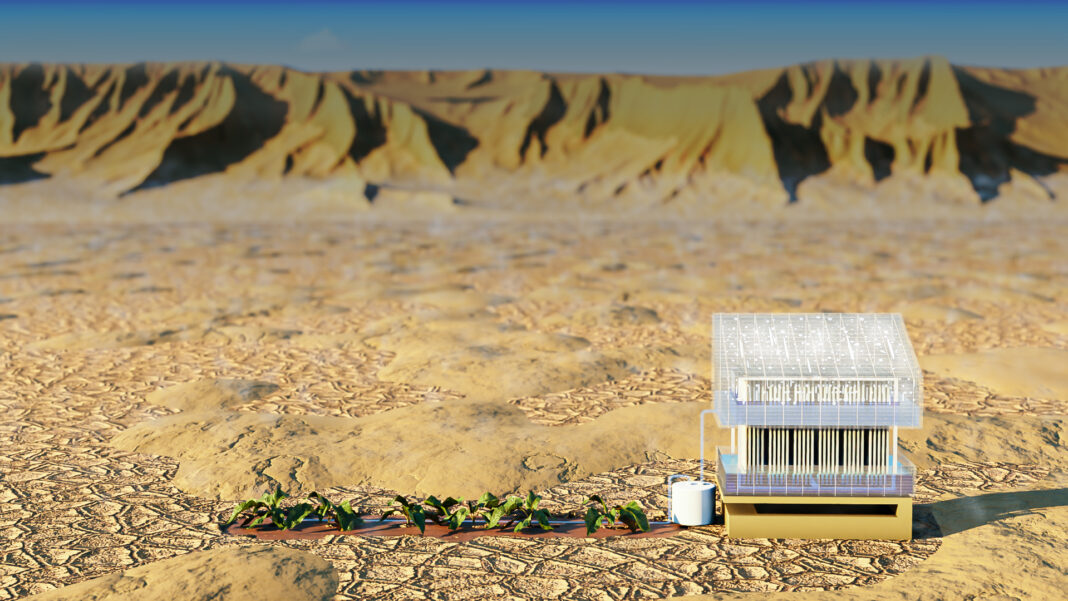
Atmospheric Water Generators won’t work until we create clean energy to power them

AWGs, Water From Air Sounds Like Magic. The Energy Bill Is the Catch

There are roughly 13,000 cubic kilometres of water floating through Earth’s atmosphere at any given time. We can’t see most of it, but we feel it every humid summer morning. For decades, engineers have been trying to turn that invisible reservoir into drinking water. And for more than 2 decades we’ve been writing about the promise. When you first hear about Atmospheric Water Generators (AWGs) and the ability to pull water from thin air, the idea sounds like magic.
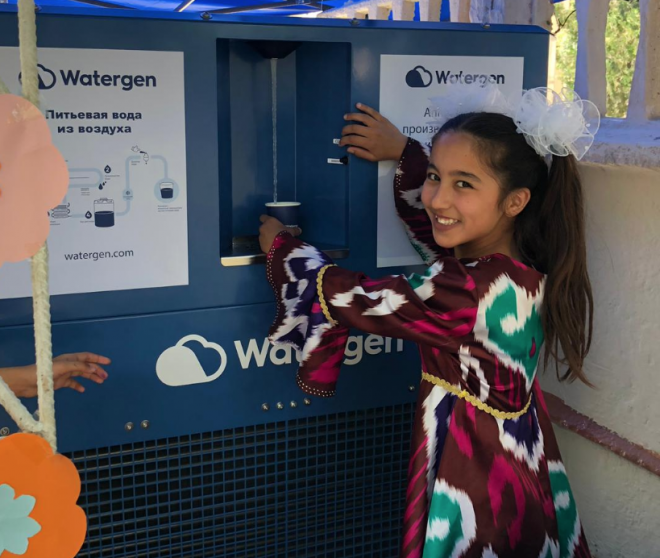
watergen water from think air
Watergen generates water from air in Bukhara

We’ve covered companies in this space before, like Watergen, but unless the company is also providing a sustainable source of power, the tech isn’t worth its weight in salt. Unless of course you are putting them in emergency or military situations where there is no other choice for accessible drinking water.

For years AWG companies have been seducing us: forget digging deeper wells, building desalination plants or trucking bottled water into remote villages. Just put a machine outside the village or hotel and pull moisture from the atmosphere and drink it.

Companies in this space include Watergen, GENAQ, SOURCE Global and a long list of smaller atmospheric water generator companies who have pursued versions of this idea. Most essentially use refrigeration technology to cool air below its dew point, and collect the residue, much like air conditioners do in your home. Here are 5 ways to reuse your air con water.
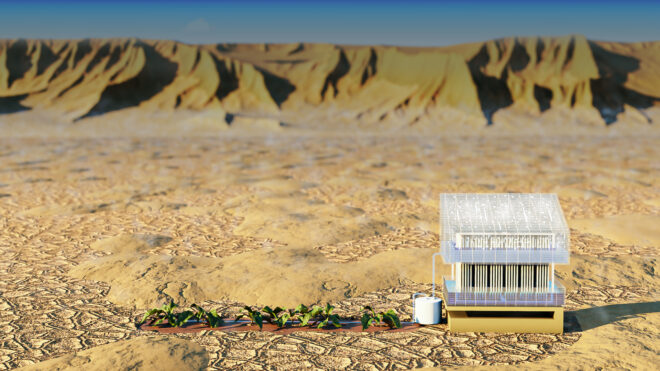
A solar-powered water harvester rendering developed by KAUST researchers can extract 2 to 3 liters of water per day during the summer months. Courtesy.

Others AWGs use desiccants or advanced materials that capture water molecules and release them later. SOURCE Global for instance takes another approach with solar-powered hydropanels that use hygroscopic material to capture atmospheric moisture.

The science works but the harder question is whether the energy equation works.

We aren’t actually making water from nothing
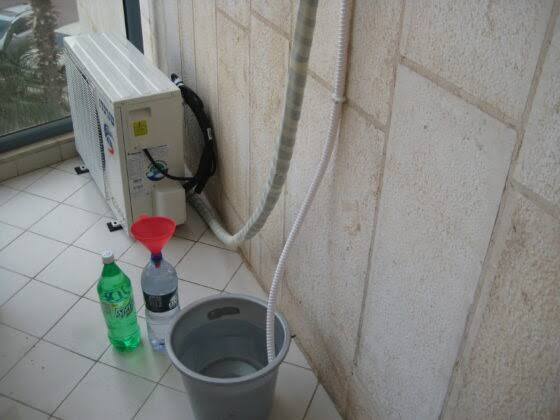
An image showing how to collect AC water, ac water uses, air conditioner water reuse, condensate water, how to use AC water, AC condensate water, air conditioner water for plants, HVAC water recycling, alternative water sources, atmospheric water harvesting, sustainable water solutions, reuse air conditioner water, distilled water from AC, drought solutions, water conservation ideas, condensate recovery systems, eco friendly water reuse, urban water recycling, AC water for gardening, graywater alternatives, climate adaptation water
Collect AC water directly from the unit.

Anyone who has watched water drip from an air conditioner has already seen atmospheric water generation. Warm air contains water vapor. When you cool that air sufficiently and the vapor condenses into liquid water. But cooling huge quantities of air takes energy.

One experimental study of an atmospheric water generator found energy consumption ranging from about 0.84 kWh per liter under favorable conditions to roughly 2.1 kWh per liter under less favorable conditions. Another study found a range between 0.75 and 4.71 kWh per liter, with warm, humid conditions performing best. You can read more about atmospheric water generator performance in this ScienceDirect study.

That is why putting an atmospheric water generator in Miami and putting one in the Sahara are fundamentally different propositions. The places desperately short of water are often exactly the places where extracting it from dry air becomes thermodynamically difficult and where energy is hard to obtain regularily.

A recent review in Nature Reviews Clean Technology identifies energy consumption as one of atmospheric water harvesting’s central obstacles, particularly in arid regions. But we need to solve the power issue. Fusion could help but that’s a long way off probably.

Water from air needs clean energy

heat pumps make home heating more efficient
Heat pumps release water when they are on cool mode

Imagine solving water scarcity by installing millions of atmospheric water generators powered by coal- or gas-heavy electricity grids. We would be using energy that contributes to climate change to manufacture drinking water for communities increasingly suffering from drought and climate change.

Solar energy changes the equation because atmospheric water systems are particularly interesting when they can run directly from sunlight, renewable electricity or waste heat. A recent review of atmospheric water harvesting research from Basra, Iraq found that pairing these systems with solar power could substantially improve their economics and environmental performance. The irony is not lost on us. Basra is home to oil extraction facilities for the world’s biggest oil companies. Yet the people of Basra are exposed to pollution and unstable access to power.

Yet, researchers increasingly see combinations of solar, wind, sorbent materials and intelligent controls as promising routes toward lower-energy water production.

SOURCE Global is already commercializing one interpretation of this model. Its hydropanels use sunlight and air rather than a conventional water connection to produce drinking water, although output still depends on local climate conditions, including sunshine and humidity.
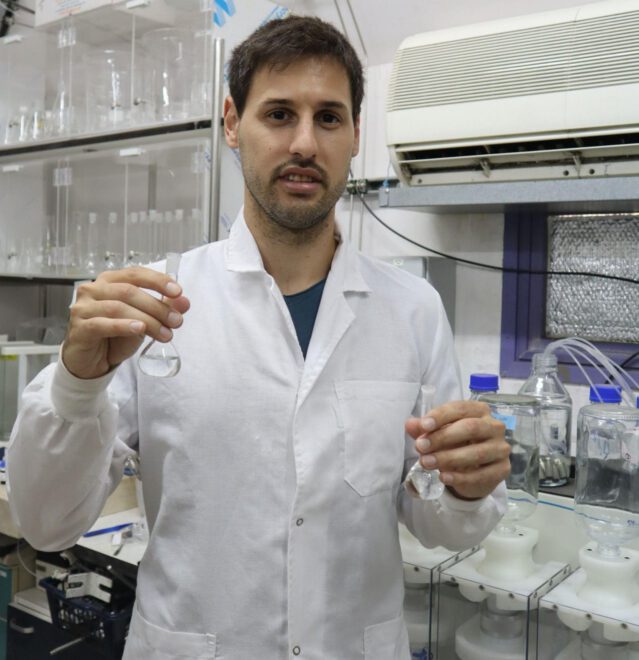
Watergen's Ofer Inbar
Watergen’s lab

Other companies working in atmospheric water generation include Watergen and GENAQ, both of which have developed systems designed to extract drinking water directly from ambient air and that may ultimately be where water from air makes the most sense.

Not necessarily replacing municipal water systems or producing millions of liters for agriculture, but creating decentralized drinking water where conventional infrastructure is expensive, contaminated, unreliable or simply nonexistent. This could very well work in places like Basra where the locals cannot drink the water because it is too polluted and contributing to explosive rates of cancer, according to one woman I met from Basra recently.

Think AWGs in desert schools, remote communities, disaster zones, islands, military installations and homes beyond municipal water networks. But powered by abundant clean energy, and combined with better materials that can capture moisture without brute-force refrigeration, it could become an important piece of the water puzzle. And these systems should be up and running in Gaza already. With the proximity to Europe and the intense global outpouring of support Gaza should be a new frontier of humanitarian help, not a disaster zone.

The atmosphere contains an extraordinary amount of water. It’s time we use it.

Karin Kloosterman
Karin Kloostermanhttp://www.greenprophet.com
Karin Kloosterman is an award-winning journalist, innovation strategist, and founder of Green Prophet, one of the Middle East’s pioneering sustainability platforms. She has ranked in the Top 10 of Verizon innovation competitions, participated in NASA-linked challenges, and spoken worldwide on climate, food security, and future resilience. With an IoT technology patent, features in Canada’s National Post, and leadership inside teams building next-generation agricultural and planetary systems — including Mars-farming concepts — Karin operates at the intersection of storytelling, science, and systems change. She doesn’t report on the future – she helps design it. Reach out directly to [email protected]

Read More

TRENDING

A billion dollar bet on Pacific Fusion’s New Mexico campus

Pacific Fusion is building a $1 billion fusion research facility in New Mexico, betting that enormous electrical pulses can help push fusion energy beyond the laboratory and toward practical clean power.

How to Read Your PG&E Bill After Installing a Heat Pump — and What to Expect the First Year

Electricity bill went up after your heat pump installation? Before you call the contractor, read this. A wrong rate plan, unadjusted thermostat schedule, and a missed baseline allowance are usually the culprit — not the system.

What are AWG air-water generators, and why they aren’t a golden-bullet solution (yet)

Atmospheric water generators (AWGs) sound like magic: machines that can pull drinking water out of air. The idea is mentioned in the Bible, where the elders would pray for water collected as dew on plants and the catch on turning this into a machine is in the physics. To turn invisible vapor into liquid, you must remove heat, especially the latent heat of condensation.

Xcimer is the Denver-based startup that could put Saudi Arabia out of business

An American company can collapse OPEC if they can prove their approach to unlimited energy works.

China is one step closer to making artificial sun

Nuclear fusion is often described as the holy grail of clean energy: a process that could one day provide abundant power without carbon emissions or long-lived radioactive waste. It has so much promise, but it's difficult. This article on fusion explains why. But turning fusion into a practical energy source depends on solving a set of extremely difficult physics problems. One of the most important is how to keep plasma — a super-hot, electrically charged gas — dense, stable, and confined long enough to produce useful energy.

The Essential Guide To Sustainability in Project Management

Sustainability is an approach where businesses and individuals balance the environmental, social, and economic aspects of a project such that current and future stakeholders are not overburdened with the impacts of the project in future.

Yerukim Forms a New Green Economy Where the Money is Really Green

The Yerukim members who pick up the recyclables get to keep the monetary reward, the public earns "green" bills that can be used in shops, and business owners get to be associated with environmentalism.

Choosing Riyadh over Dubai? What Investors Should Know

Saudi Arabia is deploying capital at unmatched scale to catalyze tourism and advanced industry while rewiring its power-and-water backbone. The investable frontier is widening—especially in renewables, grid storage, water efficiency/desal retrofits, and hospitality operating platforms. Prudent investors will insist on phased delivery, enforceable KPIs (energy, water, biodiversity), and RHQ/zone compliance—while pricing political-economy and reputational risks alongside growth upside.

Sell your cooking oil for biodiesel money

Want to make money on old french fry oil? Sell it.

Qatar Alternative Energy Summit Pairs Investors And Innovators

Alternative energy investors and innovators can meet n' greet in Doha, Qatar March 16 and 17.

Here’s How To Implement The Four Pillars Of Employee Engagement

If you throw a party for your work team and they are vegans, don't make it a barbecue. Know the sustainability values of your team to boost moral and retain good people.

Locals From Rishon Fight IKEA

Big Box stores are a pretty new concept in Israel, and thank God that not every Israeli city wants them in their backyard. A word from someone who has see the beautiful farmland around her hometown Newmarket, Ontario stripped and converted into vulgar strip malls of big box shops: they have no place in a healthy and sustainable town or city.

The Jewish National Fund Meets An Inconvenient Truth

According to the JNF, it has transformed thousands of acres of barren land into green forests in Israel. They state that each person emits about 23 tons of carbon per year, estimating that each tree planted can absorb one ton of carbon in its lifetime. That's a whole lot of trees you'd need to be planting. Could so many fit in Israel?

Popular Categories