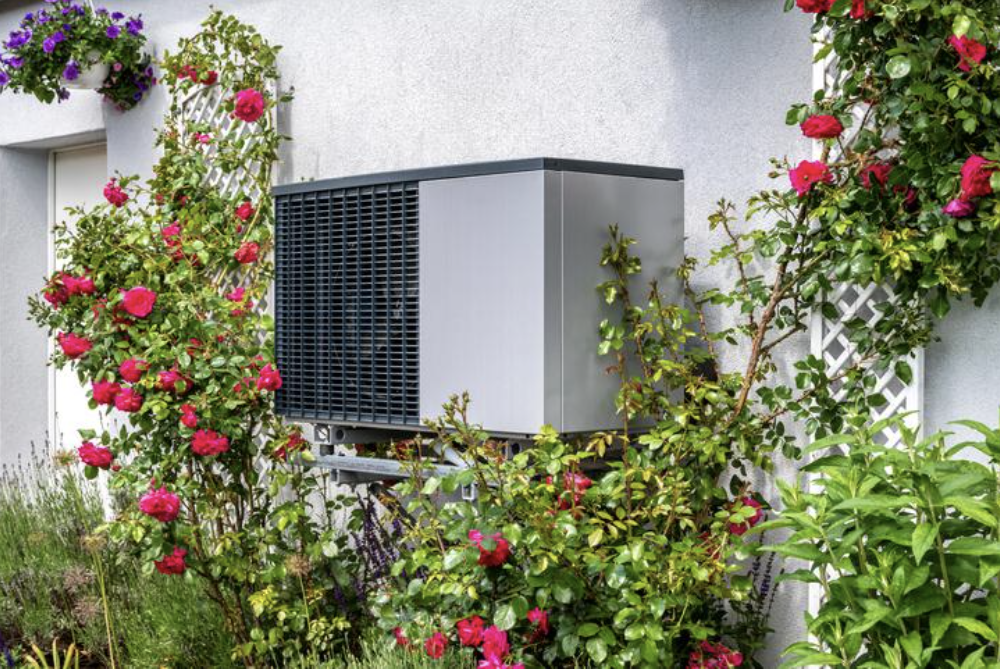

It’s one of the most common conversations that happens a few months after a heat pump installation: the homeowner opens their first winter electricity bill, sees a number that’s higher than last year, and wonders if something went wrong with the system.
Usually, nothing went wrong with the system. What happened is a combination of three things: the rate plan wasn’t adjusted for higher electricity usage, the thermostat wasn’t configured to avoid peak hours, and the comparison is being made against a year when gas handled most of the heating load.
This article explains what’s actually on your PG&E bill after a heat pump installation, why the first year often looks worse than it will be long-term, and the specific adjustments that move the economics in your favor.
Why the First Bill Is Often Misleading
When you replace a gas furnace with a heat pump, you’ve made a major shift in how your home uses energy. Before: heating loads ran on gas, electricity ran lighting, appliances, and whatever cooling you had. After: heating and cooling both run on electricity. Your electricity consumption goes up meaningfully. Your gas consumption drops — or, if you’ve eliminated all gas appliances, your gas bill disappears entirely.
The first-year comparison is usually apples to oranges. You’re looking at an electricity bill that’s now carrying the full heating load that gas used to carry, and comparing it to a prior year where electricity only covered part of the picture. The honest comparison is total energy spend — electricity plus gas together — not electricity alone.
Quick check: Add your current monthly electricity bill to your current monthly gas bill. Compare that total to what you paid for electricity plus gas in the same month last year. If the combined number is flat or lower, the system is performing correctly.
The Rate Plan Problem Most Homeowners Miss
PG&E has a default residential rate plan — currently E-TOU-C — that most customers land on unless they actively choose something different. It’s a time-of-use plan designed for households with moderate electricity consumption that can shift some usage away from peak hours.
The issue: a heat pump significantly increases your electricity consumption. E-TOU-C was built for lower-usage customers. When you become a higher-usage customer, you may be on the wrong plan — and the wrong plan can cost you several hundred dollars per year more than the right one.
Here’s how the main PG&E residential plans compare for heat pump households:
| Rate plan | Peak window | Best for |
| E-TOU-C (default) | 4–9 PM daily | Moderate usage; can shift some load away from evenings |
| E-TOU-D | 5–8 PM weekdays only | Households with more weekend usage; shorter peak window |
| EV2-A | 4–9 PM daily | Homes with EV + heat pump; can charge EV overnight at lowest rates |
| E-ELEC | 4–9 PM daily | NEM 3.0 solar customers; lower off-peak rates, optimized for battery storage |
The right plan depends on your usage pattern, whether you have solar, and whether you have an EV. PG&E’s Rate Analysis tool at pge.com compares each plan against your actual last-12-months usage and tells you which one would have cost least. It uses your real data — not hypotheticals. Run it before the second heating season.
The all-electric baseline allowance
PG&E also offers an all-electric baseline for space heating — a higher baseline quantity for customers who install a permanent heat pump heating system. More of your usage falls into the lowest rate tier. This requires a phone call to PG&E (1-800-743-5000) to request. Most homeowners don’t know it exists and never ask for it.
Peak Hours Are Where Heat Pump Costs Concentrate
On any TOU plan, the electricity you use between 4 and 9 PM costs significantly more than electricity used outside that window. On E-TOU-C in 2026, the difference between peak and off-peak rates is substantial — running your heat pump during peak hours in summer can cost 50% more per kWh than running it at noon or after 9 PM.
A heat pump that’s heating or cooling your home aggressively during the 4–9 PM window is doing so at the highest possible rate. The fix is a thermostat strategy called pre-conditioning — getting the house to your target temperature before peak hours start, then letting the thermal mass of the home coast through the expensive window.
Pre-cooling in summer
Set your thermostat to reach your target temperature by 3:30–4 PM. Run the system hard during the afternoon when rates are lower. Then raise the setpoint slightly during peak hours (4–9 PM) and let the house drift — most well-insulated Bay Area homes lose only 1–2 degrees per hour passively. The system runs less during the expensive window.
Pre-heating in winter
Same logic applies to heating. Warm the house to your target temperature before 4 PM. Set the thermostat back slightly during the 4–9 PM peak window. A house that started warm holds temperature for several hours without significant system run time.
A smart thermostat handles this automatically. Nest, Ecobee, and equivalent models can be programmed with TOU-aware schedules that shift the heavy lifting to off-peak hours without you managing it manually. The payback on a smart thermostat in a TOU-heavy environment is typically under two years.
The March 2026 PG&E Rate Restructure
In March 2026, PG&E restructured its residential billing to add a fixed Income-Graduated Fixed Charge (IGFC) of approximately $24/month for most non-low-income customers. This charge appears on every bill regardless of how much electricity you use — conservation or solar production don’t reduce it.
In exchange, per-kWh rates were reduced. For heat pump households that use more electricity than average, the net effect of the restructure is generally neutral to slightly favorable — the lower per-kWh rates on higher usage tend to offset the new fixed charge. For very low-usage households, the fixed charge represents a larger proportional increase.
The practical implication: if your bill jumped in March 2026 and you’re trying to isolate whether it’s the heat pump or a rate change, check whether the IGFC appeared as a new line item. That’s $24/month that has nothing to do with your system’s performance.
What ‘Normal’ Looks Like After the First Year
The first year with a heat pump has a learning curve that most contractors don’t explain:
- Rate plan optimization usually happens after the first winter bill — most homeowners don’t think about it until they see the number
- Thermostat scheduling takes a few weeks to dial in — the pre-conditioning strategy works better once you understand your home’s thermal behavior
- Gas bill elimination (if applicable) takes a full billing cycle to register — the savings on the gas side don’t always feel real until the account closes
By the second heating season, a household that has switched to the right rate plan, set up pre-conditioning schedules, and requested the all-electric baseline allowance typically sees a materially different picture than year one. The system hasn’t changed. The optimization around it has.

A Checklist for the First 90 Days
Step 1: Get your electricity bill and add back your gas bill (or note that gas is now zero). Compare the combined total to the same month last year — not electricity alone.
Step 2: Log into pge.com and run Rate Analysis. It models E-TOU-C, E-TOU-D, EV2-A, and other plans against your actual usage. Switch if another plan is cheaper. You can switch once every 12 months at no cost.
Step 3: Call PG&E at 1-800-743-5000 and request the all-electric baseline for space heating. It increases the amount of electricity billed at the lowest rate tier. Takes one phone call.
Step 4: Program your thermostat with a pre-conditioning schedule. Target temperature reached by 3:30–4 PM in summer; slight setback from 4–9 PM. In winter, same logic for heating.
Step 5: Check your heat pump’s operating mode settings. Most systems have an efficiency mode and a comfort mode. Efficiency mode prioritizes lower energy use; comfort mode prioritizes reaching setpoint quickly. Running in efficiency mode outside of extreme temperature events is almost always the right default.
The Long View
Heat pump economics improve with optimization. The system that seemed to push your bill up in the first winter is the same system that, with the right rate plan and thermostat strategy, can reduce your total energy spend year over year — particularly as California gas prices continue to be volatile and as the electrical grid becomes increasingly renewable. The first year is when the optimization happens. The savings show up starting in year two.