

When I was growing up, my father brushed his teeth with baking soda. It was salty and uncomfortable when I tried it but the abrasiveness of the powder made me feel like my teeth got a good scrub.
Years later, curious about natural alternatives myself, I switched to Tom’s, a fluoride-free toothpaste from Maine. Within a year, I had developed a cavity for the first time in years. It could be connected to pregnancy and oral health but I went back to fluoride.
My experiment wasn’t science, but it left me wondering: what exactly is holistic dentistry? And why do so many patients seem interested in it while so few dental professionals appear prepared to discuss it?
A recent study of graduating dental hygiene students in the United States suggests there is a knowledge gap. Researchers found that 42% of respondent students were unfamiliar with holistic dentistry, while 60% did not feel comfortable discussing it with patients. Yet nearly half believed the topic deserved greater attention in dental hygiene education.
The findings suggest that while patients are increasingly seeking information about natural oral care, many future practitioners are not being trained to answer their questions.
More than natural toothpaste
Holistic dentistry isn’t a single treatment or philosophy. Instead, it approaches the mouth as part of a larger system, or like an organ unto itself, recognizing links between oral health, nutrition, inflammation, heart disease, respiratory health, and overall wellbeing.
Some holistic dentists emphasize diet, mineral balance, saliva testing, pH testing, and the oral microbiome. Others focus on reducing exposure to certain dental materials, such as mercury, using biocompatible materials when possible, or incorporating traditional oral hygiene practices alongside modern care.
Many of these concepts are no longer considered fringe. Researchers increasingly recognize the importance of the oral microbiome—the ecosystem of bacteria living in our mouths. An imbalance in this microbial community has been associated not only with cavities and gum disease but also with broader health conditions.
The connection between oral health and heart health is especially well established. Chronic gum disease has been linked to increased inflammation throughout the body and a higher risk of cardiovascular disease. While brushing and flossing may seem mundane compared to trendy wellness therapies, maintaining healthy gums remains one of the most evidence-based ways to support overall health.
Long before toothpaste tubes appeared on pharmacy shelves, people around the world used plants to clean their teeth.

Miswak, derived from the Salvadora persica tree, has been used for thousands of years throughout the Middle East, Africa, and parts of Asia. Neem sticks have served a similar purpose in India.
Researchers have found that miswak contains naturally occurring antimicrobial compounds that may help reduce plaque and gum inflammation when used correctly. Green tea extracts are also attracting scientific interest because of their antioxidant and antimicrobial properties.
The recent survey found that many students were unfamiliar with ingredients such as green tea extracts, lemongrass oil, nano-silver, and coral calcium, products often discussed in holistic oral care circles.
That doesn’t mean these products are superior to conventional treatments. It does suggest that future dental professionals may benefit from understanding why patients are asking about them.
Saliva: the next frontier
One of the most intriguing developments in dentistry may be saliva itself. Researchers are increasingly studying saliva, like they do blood, as a diagnostic tool that can reveal information about gum disease, oral cancers, metabolic disorders, and systemic inflammation. We spit into a vile for 23andMe or Ancestry.com but it can reveal more than our Neolithic ancestors (I am related to a Lord from Edinburgh)!
Unlike blood testing, saliva collection is simple, inexpensive, and non-invasive.
Holistic practitioners have discussed saliva testing for years, often focusing on pH and bacterial balance. Today, advances in microbiome science are bringing some of these conversations into mainstream research especially as people like Bryan Johnson advertise the longevity benefits of biohacking.
Related: do tattoos cause cancer?
Mercury fillings and root canal debates
Perhaps no topic has generated more controversy in holistic dentistry than dental amalgam fillings. I have a pile of them in my mouth. Are they killing me slowly?
Traditional amalgam fillings contain mercury combined with other metals. Conventional dental organizations maintain that amalgam fillings are safe for most patients, while holistic practitioners have long questioned whether chronic mercury exposure warrants precautionary removal or replacement.
The environmental debate has become increasingly important. Mercury from dental offices can enter wastewater streams, and many countries are gradually reducing their reliance on amalgam fillings.
Root canals have generated similar disagreements. Some holistic dentists argue that root canal-treated teeth may harbor bacteria that contribute to systemic illness. Mainstream dentistry generally rejects these claims and considers root canal therapy a safe and effective way to preserve natural teeth. Current scientific evidence does not support removing root canal-treated teeth as a routine health measure.
Still, the controversy highlights a broader challenge: patients often arrive with questions influenced by books, podcasts, social media, and alternative health practitioners. If dental professionals aren’t familiar with these discussions, meaningful conversations become difficult. Hopefully this article can open up some questions and debates.
The plastic aligner problem in our mouths

As Green Prophet has reported extensively, microplastics are showing up nearly everywhere scientists look. That includes products we place directly in our mouths.
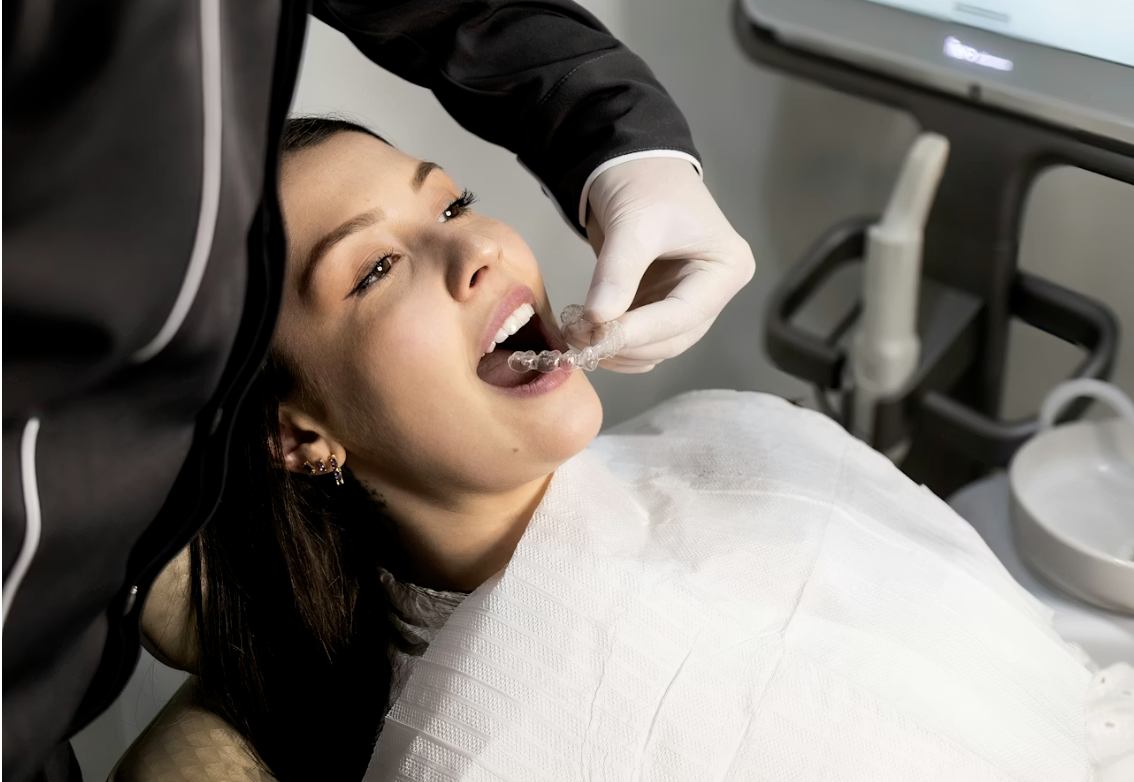
Plastic toothbrushes shed bristles over time. Dental floss often contains synthetic polymers. Clear aligners such as Invisalign are made from thermoplastic materials worn for most hours of the day. Even many chewing gums contain synthetic rubber compounds derived from petroleum.

Researchers are beginning to investigate whether some of these products release microscopic plastic particles through daily use. The health implications remain uncertain, but the questions fit naturally within the holistic dentistry conversation: what materials are we exposing ourselves to every day, and are there better alternatives?
Some consumers are responding by choosing bamboo toothbrushes, biodegradable floss, or traditional tools such as miswak.
The recent survey revealed something interesting: many students learned about holistic dentistry not from their coursework but from social media, online searches, and conversations outside the classroom. The purpose of dental education is not to endorse every alternative therapy. It is to prepare professionals to evaluate evidence, answer patient questions, and distinguish promising ideas from unsupported claims.