24 7 renewable energy: how solar, wind, batteries and AI SaaS replace fossil fuels

AI can boost solar SaaS

Solar and wind were once framed as intermittent, unreliable, and dependent on fossil fuels to fill the gaps. That argument is fading fast.

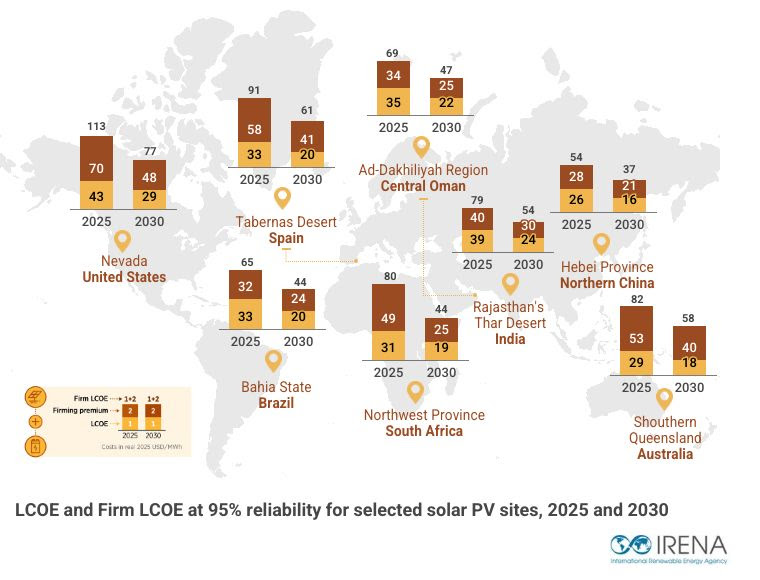
A new report from the International Renewable Energy Agency based in Abu Dhabi makes something clear that many in the industry already suspected. When solar and wind are paired with battery storage, they can deliver reliable, round the clock electricity at costs that compete with, and often beat, fossil fuels.

In the best solar and wind regions, these hybrid systems are already delivering what used to be considered impossible. Continuous power. Stable pricing. Lower costs. The numbers tell the story. Solar paired with storage is now delivering electricity at roughly 54 to 82 dollars per megawatt hour in high quality regions. That is already below or competitive with new coal plants in China and significantly cheaper than new gas plants globally.

Costs have not just dropped. They have collapsed. Since 2010, solar installation costs have fallen by about 87 percent. Wind is down by more than half. Battery storage has dropped by over 90 percent. That last number matters most because storage is what turns intermittent energy into firm power.

This changes everything, especially for artificial intelligence.

AI systems and data centers are among the most energy hungry infrastructures ever built. They do not tolerate downtime. They do not accept fluctuations. They need constant, predictable electricity. Until recently, that meant fossil fuels or nuclear.

Hybrid renewable systems are being designed specifically to meet these demands. Solar generates during the day. Wind often peaks at night. Batteries fill in the gaps, shifting energy into the hours when it is needed most. The result is a system that can run continuously, without burning fuel.

In places like the United Arab Emirates, large scale solar plus battery installations are delivering gigawatt level power at around 70 dollars per megawatt hour. Wind plus storage is also becoming competitive, with costs expected to drop further over the next decade.

Projects that combine solar, wind, and storage can now be built in one to two years once permits are secured. That is faster than most new gas plants. Faster than nuclear by an order of magnitude. Speed matters when demand is rising as quickly as it is now.

Every new model, every data center, every layer of digital infrastructure increases the pressure on energy systems. AI companies are now quietly becoming energy companies, signing long term deals and building their own power strategies. They are not looking for green energy as a branding exercise. They are looking for reliability and price stability.

There is also a geopolitical layer. Fossil fuel markets remain exposed to disruption, whether through conflict, shipping chokepoints, or price volatility. Renewable systems, once built, draw on local resources. Sun and wind are not shipped through straits or pipelines. They do not spike in price because of a crisis.

When solar, wind, and batteries are combined, they do more than reduce emissions. They stabilize economies. They reduce exposure to global shocks. They give countries and companies more control over their energy future.

The next phase is optimization, and this is where AI comes back into the picture.

AI is not just a consumer of energy. It is becoming the system that manages it. Energy companies are increasingly using AI powered energy management platforms, predictive analytics software, and grid optimization SaaS tools to balance supply and demand in real time. These software as a service platforms allow utilities and developers to forecast solar output, predict wind patterns, and decide when to store or release energy from batteries.

AI driven demand response systems are already helping large users, including data centers, adjust consumption dynamically. Smart grid software, cloud based energy platforms, and machine learning models are optimizing when electricity is used, where it is sent, and how it is priced. These tools reduce waste, improve efficiency, and increase the value of every kilowatt generated.

For AI companies themselves, this creates a feedback loop. The same artificial intelligence systems that require massive amounts of energy are now being used to make renewable energy systems more efficient and more reliable. Energy optimization software, battery management systems, and renewable forecasting tools are becoming essential infrastructure.

Solar and wind with storage provide the physical layer. AI provides the intelligence layer. Together, they create an energy system that is not only cleaner, but smarter.

As costs continue to fall, with projections suggesting another 30 percent drop by 2030 and up to 40 percent by 2035, the combination of renewable generation, battery storage, and AI optimization will become the default model rather than the alternative.


Bhok Thompson
Bhok Thompsonhttp://www.greenprophet.com
Bhok Thompson is an “eco-tinkerer” who thrives at the intersection of sustainability, business, and cutting-edge technology. With a background in mechanical engineering and a deep fascination with renewable energy, Bhok has dedicated his career to developing innovative solutions that bridge environmental consciousness with profitability. A frequent contributor to Green Prophet, Bhok writes about futuristic green tech, urban sustainability, and the latest trends in eco-friendly startups. His passion for engineering meets his love for business as he mentors young entrepreneurs looking to create scalable, impact-driven companies. Beyond his work, Bhok is an avid collector of vintage mechanical watches, believing they represent an era of precision and craftsmanship that modern technology often overlooks. Reach out: [email protected]

Read More

TRENDING

Who Owns the Farm Robot? A State of Jefferson Startup Takes on Carbon Robotics

In California's self-proclaimed State of Jefferson, a small agricultural technology company is challenging the dominant laser-weeding business model. Laudando & Associates believes farmers should own and repair their AI-powered weeding tools rather than pay ongoing subscription fees. The approach has put the company on a collision course with industry leader Carbon Robotics, sparking a patent dispute that has pushed the Jefferson startup toward overseas markets while raising broader questions about ownership, right-to-repair, and the future of farm automation.

Weston Higginbotham found dead in a Kyoto forest: is climate anxiety part of the story?

In some ways, Weston has become a symbol of a generation wrestling with environmental and technological anxiety. Friends and family described him as deeply concerned about environmental issues. Reports also noted that he questioned the growing role of artificial intelligence in daily life, even reportedly disagreeing with his mother about her use of AI.

Prologium files for IPO as solid-state battery race heats up beyond Tesla

The challenge has always been scaling production: Laboratory success does not automatically translate into mass manufacturing. Materials that perform well in testing often behave differently when produced in millions of cells. This has been one of the biggest obstacles facing the entire industry.

Robot Monk Gabi Takes Vows in Seoul. What Would the Buddha Have Thought?

  How many of us looked twice when we saw...

Australia’s $25 Billion AI Moment: Infrastructure Is the Easy Part

  Microsoft's record investment in Australia will build data centres....

Yerukim Forms a New Green Economy Where the Money is Really Green

The Yerukim members who pick up the recyclables get to keep the monetary reward, the public earns "green" bills that can be used in shops, and business owners get to be associated with environmentalism.

Choosing Riyadh over Dubai? What Investors Should Know

Saudi Arabia is deploying capital at unmatched scale to catalyze tourism and advanced industry while rewiring its power-and-water backbone. The investable frontier is widening—especially in renewables, grid storage, water efficiency/desal retrofits, and hospitality operating platforms. Prudent investors will insist on phased delivery, enforceable KPIs (energy, water, biodiversity), and RHQ/zone compliance—while pricing political-economy and reputational risks alongside growth upside.

Sell your cooking oil for biodiesel money

Want to make money on old french fry oil? Sell it.

Qatar Alternative Energy Summit Pairs Investors And Innovators

Alternative energy investors and innovators can meet n' greet in Doha, Qatar March 16 and 17.

Here’s How To Implement The Four Pillars Of Employee Engagement

If you throw a party for your work team and they are vegans, don't make it a barbecue. Know the sustainability values of your team to boost moral and retain good people.

Locals From Rishon Fight IKEA

Big Box stores are a pretty new concept in Israel, and thank God that not every Israeli city wants them in their backyard. A word from someone who has see the beautiful farmland around her hometown Newmarket, Ontario stripped and converted into vulgar strip malls of big box shops: they have no place in a healthy and sustainable town or city.

The Jewish National Fund Meets An Inconvenient Truth

According to the JNF, it has transformed thousands of acres of barren land into green forests in Israel. They state that each person emits about 23 tons of carbon per year, estimating that each tree planted can absorb one ton of carbon in its lifetime. That's a whole lot of trees you'd need to be planting. Could so many fit in Israel?

How to quiet noise from construction in your office

Streets need to be resurfaced in New York but the humming and grinding noise is unsettling. Noise is environmental pollution. 

Popular Categories