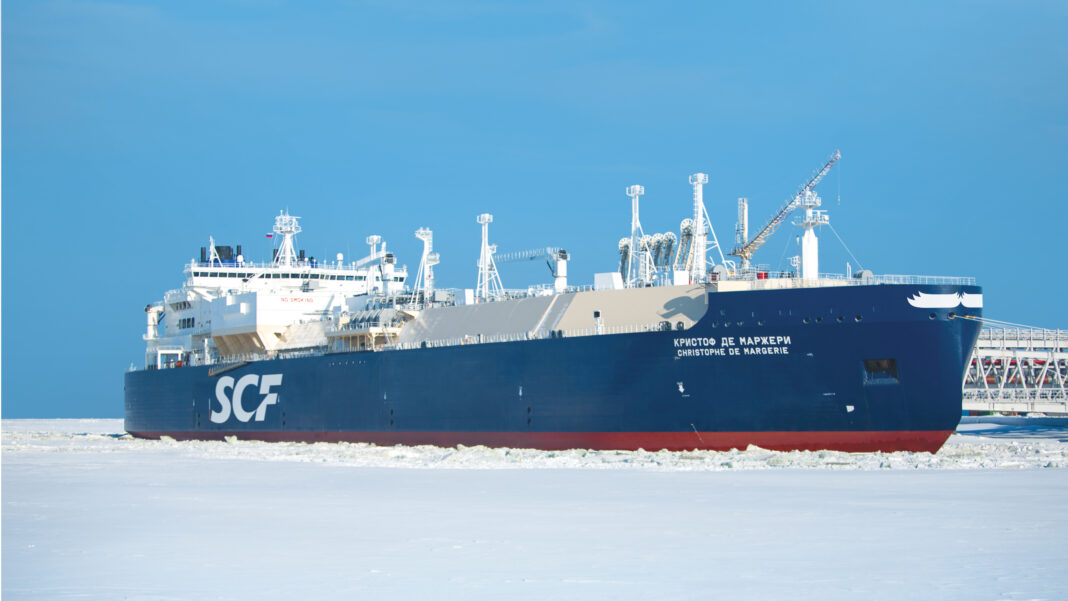
Here is how Europe is still buying Russian gas

Europe has spent years trying to reduce its dependence on Russian energy, both to cut fossil fuel emissions and to limit the flow of European money into Russia following its invasion of Ukraine. Yet billions of euros are still moving in the opposite direction. New shipping data shows just how large that trade remains — and how European companies continue to play a crucial role in keeping Russia’s Arctic gas industry connected to international markets.
oil barrels in Russia
Oil from Europe is being bought by Europeans

Greek-linked shipping vessels transported an estimated €2.35 billion worth of Russian Arctic liquefied natural gas to European ports during the first seven months of 2026, according to new analysis from Urgewald, a Germany-based environmental and human rights organization that investigates the financial institutions and companies supporting fossil fuel and other environmentally damaging industries.

The organization analyzed cargo-level data from commodities intelligence company Kpler to track shipments from Russia’s massive Yamal LNG project.

Why does this matter? Russia’s ability to sell oil and gas remains an important source of export revenue, while the EU is simultaneously trying to use sanctions and energy policy to reduce its economic relationship with Moscow. The new figures expose a striking contradiction: EU ports received more than 92 percent of all LNG exported from Yamal during the first seven months of 2026, with Urgewald estimating that European countries paid €6.64 billion for those shipments. EU-bound Yamal volumes were not falling — they increased 13.9 percent compared with the same period in 2025.

At the center of that supply chain is Greek shipowner Dynagas. Vessels attributed to the company transported 57 cargoes, or 4.14 million tonnes of LNG, from Yamal between January and July — approximately 35 percent of everything exported by the Russian Arctic project during the period, according to Urgewald and data they sent to Green Prophet.

  • In July alone, Dynagas-linked vessels delivered six cargoes and 413,924 tonnes to EU ports, with an indicative gross value of €306 million.
  • Across all destinations in July, Dynagas-linked vessels carried eight of Yamal’s 22 cargoes, totalling 557,302 tonnes.
  • EU countries paid an estimated €6.64 billion for 10.89 million tonnes of Yamal LNG between January and July, including around €681 million in July.
  • Dynagas volumes rose by 5.0 per cent from the same period in 2025, while total Yamal LNG volumes were broadly flat.

Of those shipments, 53 cargoes carrying 3.86 million tonnes were delivered to EU ports, with an estimated gross value of €2.35 billion.

The timing is particularly significant because Greece recently delayed agreement on the EU’s 21st sanctions package while seeking an exemption protecting qualifying European companies transporting Russian LNG under contracts signed before Russia’s full-scale invasion of Ukraine.

The eventual sanctions package included such an exemption, raising questions about how Europe can simultaneously tighten restrictions on Russian energy while maintaining parts of the infrastructure that allow the trade to continue.


Karin Kloosterman
Karin Kloostermanhttp://www.greenprophet.com
Karin Kloosterman is an award-winning journalist, innovation strategist, and founder of Green Prophet, one of the Middle East’s pioneering sustainability platforms. She has ranked in the Top 10 of Verizon innovation competitions, participated in NASA-linked challenges, and spoken worldwide on climate, food security, and future resilience. With an IoT technology patent, features in Canada’s National Post, and leadership inside teams building next-generation agricultural and planetary systems — including Mars-farming concepts — Karin operates at the intersection of storytelling, science, and systems change. She doesn’t report on the future – she helps design it. Reach out directly to [email protected]

Read More

TRENDING

Russia’s Arctic superdeep oil drill revives debunked ‘infinite oil’ theory

Russia is reviving the controversial abiotic oil theory with plans to drill superdeep holes in the Arctic. While small amounts of abiotic methane exist deep within the Earth, most geologists reject the idea that commercial oil reserves originate from non-biological processes, raising questions about the environmental cost and scientific value of the project.

What Renewable Energy Means for Long-Term Environmental Planning

In the context of American energy policy (setting the stage for the world as oil prices are in USD), the relevance of renewable energy planning is increasingly evident. Federal agencies are preparing final biofuel blending mandates under the Renewable Fuel Standard, with decisions expected early in 2026 after delays that have left investors and producers in limbo.

EU Ports Still Power Russia’s Arctic Gas Exports Despite Phase-Out Pledge

The findings suggest that rather than declining, Europe’s reliance on Yamal LNG intensified in 2025. Yamal cargoes accounted for 14.3% of the EU’s total LNG imports, equivalent to roughly one in every seven LNG ships arriving at European terminals.The findings suggest that rather than declining, Europe’s reliance on Yamal LNG intensified in 2025. Yamal cargoes accounted for 14.3% of the EU’s total LNG imports, equivalent to roughly one in every seven LNG ships arriving at European terminals.

Egypt building nuclear power

Egypt is building a nuclear energy plant, expected to go online in 2026 when countries like Germany have shut down all its domestic nuclear power. The El Dabaa Nuclear Power Plant is the first nuclear power plant planned for Egypt and will be located at El Dabaa, Matrouh Governorate, Egypt, about 320 kilometers northwest of Cairo. 

Qatar builds its own oversight mechanism to monitor itself on climate — what could go wrong?

Qatar, the world’s richest LNG exporter, is building its own climate “oversight” system — one that reports to itself. Through its government-run Global Accreditation Bureau and national MRV framework, Doha now claims to monitor, verify, and accredit its own greenhouse-gas emissions. On paper it looks like progress; in reality, it’s self-certified sustainability. With no free press or independent audit, Qatar’s climate watchdog is just another extension of state control. The result is a polished illusion of transparency masking continued gas expansion. As one analyst put it, “Qatar’s climate governance isn’t about measurement — it’s about marketing.”

The Essential Guide To Sustainability in Project Management

Sustainability is an approach where businesses and individuals balance the environmental, social, and economic aspects of a project such that current and future stakeholders are not overburdened with the impacts of the project in future.

Yerukim Forms a New Green Economy Where the Money is Really Green

The Yerukim members who pick up the recyclables get to keep the monetary reward, the public earns "green" bills that can be used in shops, and business owners get to be associated with environmentalism.

Choosing Riyadh over Dubai? What Investors Should Know

Saudi Arabia is deploying capital at unmatched scale to catalyze tourism and advanced industry while rewiring its power-and-water backbone. The investable frontier is widening—especially in renewables, grid storage, water efficiency/desal retrofits, and hospitality operating platforms. Prudent investors will insist on phased delivery, enforceable KPIs (energy, water, biodiversity), and RHQ/zone compliance—while pricing political-economy and reputational risks alongside growth upside.

Sell your cooking oil for biodiesel money

Want to make money on old french fry oil? Sell it.

Qatar Alternative Energy Summit Pairs Investors And Innovators

Alternative energy investors and innovators can meet n' greet in Doha, Qatar March 16 and 17.

Here’s How To Implement The Four Pillars Of Employee Engagement

If you throw a party for your work team and they are vegans, don't make it a barbecue. Know the sustainability values of your team to boost moral and retain good people.

Locals From Rishon Fight IKEA

Big Box stores are a pretty new concept in Israel, and thank God that not every Israeli city wants them in their backyard. A word from someone who has see the beautiful farmland around her hometown Newmarket, Ontario stripped and converted into vulgar strip malls of big box shops: they have no place in a healthy and sustainable town or city.

The Jewish National Fund Meets An Inconvenient Truth

According to the JNF, it has transformed thousands of acres of barren land into green forests in Israel. They state that each person emits about 23 tons of carbon per year, estimating that each tree planted can absorb one ton of carbon in its lifetime. That's a whole lot of trees you'd need to be planting. Could so many fit in Israel?

Popular Categories