
Repression of Bahai’s in Iran “a crime against humanity”

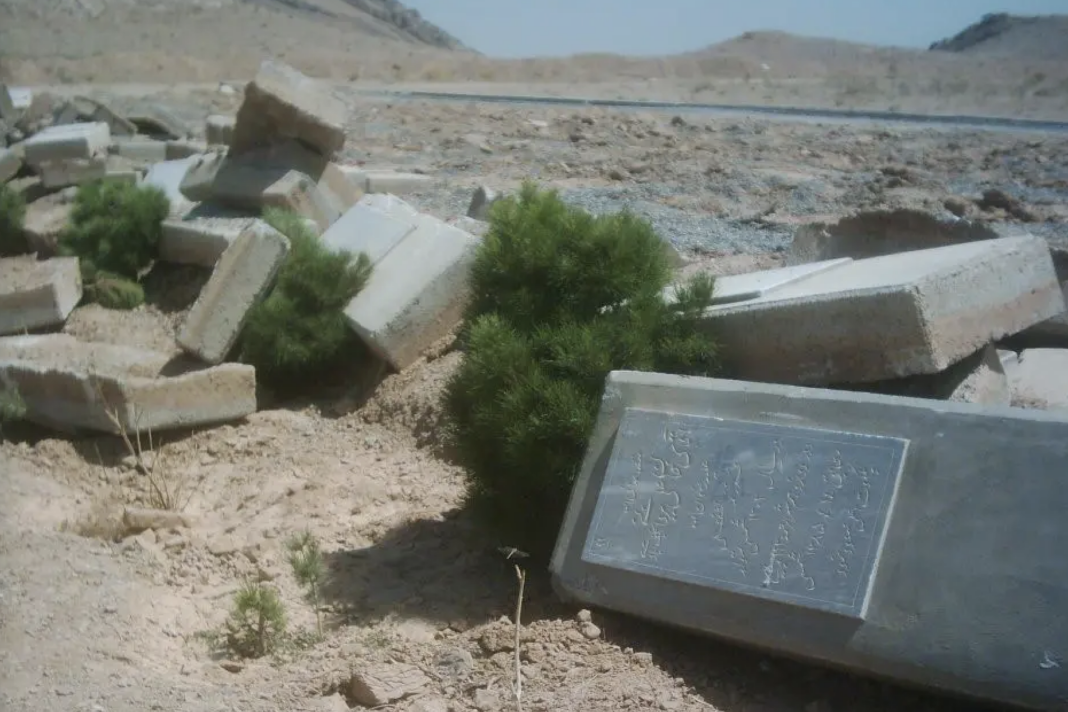
Bahai Tomb in Iran
A desecrated Bahai tob in Iran. Via HRW.

Iranian authorities’ decades-long systematic repression of Baha’is amounts to the crime against humanity of persecution, Human Rights Watch said in a report released today.

The 49-page report, “‘The Boot on My Neck’: Iranian Authorities’ Crime of Persecution Against Baha’is in Iran,” documents Iranian authorities’ systematic violation of the fundamental rights of members of the Baha’i community through discriminatory laws and policies that target them.

The Bahai people are among the most peaceful in the world. Its founder, an Iranian, combined all the world religions into a new practice united Judaism, Islam, Christianity and more into one faith. The world center is in Israel. The Baháʼí World Centre is the name given to the spiritual and administrative centre of the Baháʼí Faith in the city of Acre, Israel.

Read Also: How Bahai in Iran are inherently green

Human Rights Watch found that Baha’is face a spectrum of abuses. Government agencies arrest and imprison Baha’is arbitrarily, confiscate their property, restrict their education and employment opportunities, and even deny them dignified burial. We met a Bahai in Toronto last summer working as an Uber driver, who confirmed these allegations. Bahai’s in Egypt also face prosecution.

“Iranian authorities deprive Baha’is of their fundamental rights in every aspect of their lives, not due to their actions, but simply for belonging to a faith group,” said Michael Page, deputy Middle East director at Human Rights Watch. “It is critically important to increase international pressure on Iran to end this crime against humanity.”

Bahai Temple in Chile
Bahai temple in Chile

The report, released from Beirut, draws on extensive documentation by Human Rights Watch and Iranian human rights groups regarding violations against Baha’is in Iran. Researchers reviewed government policies, court documents, and communications with Baha’is. Information was accessed through the Archive of the Persecution of Baha’is in Iran and documents from the Human Rights Activists News Agency. Human Rights Watch also conducted interviews with 14 Baha’is remotely in Persian, both within Iran and abroad place between May 2022 and March 2023.

Baha’is are the largest unrecognized religious minority in Iran. They have been the target of harsh, state-backed repression since their religion was established in the 19th century. After the 1979 revolution, Iranian authorities executed or forcibly disappeared hundreds of Baha’is, including their community leaders. Thousands more have lost their jobs and pensions or were forced to leave their homes or country.

Read Also: Women in Iran killed for not wearing head covering

Since 1979, the Islamic Republic of Iran has codified its repression of Baha’is into law and official government policy, vigorously enforced by security forces and judicial authorities. Judicial authorities interpret vague national security laws to label Baha’is an outlawed religious minority, branding them as a threat to national security. Human Rights Watch says it believes that this sustained systematic repression deliberately deprives Baha’is of their basic rights, constituting the crime against humanity of persecution.

It’s been 40 years since 10 Bahai women were hung for not renouncing their faith in Iran

Baha’is spoke to Human Rights Watch described their persecution as a series of violations that begin with their first encounters with the Iranian state and affect every aspect of their lives, including education, employment, and marriage.

“[When I left Iran to continue my education], I did not intend to emigrate,” said Negar Sabet, 38-year-old daughter of Mahvash Sabet Shahriari, a prominent member of the Baha’i community currently imprisoned in Iran. She said:

“But my experience at the university outside of the country was very different, as if for the first time a burden was lifted off my shoulders and the boot on my neck had disappeared … There [abroad] I experienced a strange freedom, and for the first time I was equal with other people, and no one was pulling themselves away from me.”


Karin Kloosterman
Karin Kloostermanhttp://www.greenprophet.com
Karin Kloosterman is an award-winning journalist, innovation strategist, and founder of Green Prophet, one of the Middle East’s pioneering sustainability platforms. She has ranked in the Top 10 of Verizon innovation competitions, participated in NASA-linked challenges, and spoken worldwide on climate, food security, and future resilience. With an IoT technology patent, features in Canada’s National Post, and leadership inside teams building next-generation agricultural and planetary systems — including Mars-farming concepts — Karin operates at the intersection of storytelling, science, and systems change. She doesn’t report on the future – she helps design it. Reach out directly to [email protected]

Read More

TRENDING

Dan Zaslavsky’s energy tower dream is rising again in Iran and China

The Energy Tower idea never made the leap from drawings and engineering studies to full-scale construction. But nearly two decades after most people stopped talking about it, the concept is quietly evolving in two unexpected places: China and Iran. The concept let dreamers dream and doers do - figuring out more pleasing designs and engineering.

A visit to Amirim, Israel’s first all-vegetarian village in the Galilee

Just 15 kilometers from Tzfat there is a moshav that was founded in the late 50s that was ideologically influenced by organic, vegetarian and vegan principles. My hostess at Ohn-Bar, the tzimmer where I stayed, explained that the people of Amirim were among the pioneers of Israel’s strong vegetarian movement.

Israeli Hydrogen Startup H2Pro Are Trying to Solve Clean Energy’s Hardest Problem

The company has attracted backing from major investors including Breakthrough Energy Ventures, the climate fund founded by Bill Gates, along with industrial partners such as Sumitomo, ArcelorMittal, and Temasek, a multi-billion dollar company that owns Singapore airlines. H2Pro has raised more than $100 million USD and is moving from pilot projects toward commercial-scale deployments.

10 Amazing Facts About the Sidr Tree

Most people in the West have never heard of the Sidr tree. That's strange when you think about it. This tough, thorny desert tree has fed people, bees, birds, and camels for thousands of years. It appears in Islamic tradition. Its honey sells for astonishing prices.

Farmer Focus Sold as Humane and Halal. PETA Says the Reality Is Far Less Ethical

According to documents obtained by PETA, and sent to Green Prophet, Farmer Focus accumulated 40 violations from the Harrisonburg-Rockingham Regional Sewer Authority between January and March 2026 for overly acidic wastewater and excessive pollutant levels.

Locals From Rishon Fight IKEA

Big Box stores are a pretty new concept in Israel, and thank God that not every Israeli city wants them in their backyard. A word from someone who has see the beautiful farmland around her hometown Newmarket, Ontario stripped and converted into vulgar strip malls of big box shops: they have no place in a healthy and sustainable town or city.

The Jewish National Fund Meets An Inconvenient Truth

According to the JNF, it has transformed thousands of acres of barren land into green forests in Israel. They state that each person emits about 23 tons of carbon per year, estimating that each tree planted can absorb one ton of carbon in its lifetime. That's a whole lot of trees you'd need to be planting. Could so many fit in Israel?

How to quiet noise from construction in your office

Streets need to be resurfaced in New York but the humming and grinding noise is unsettling. Noise is environmental pollution. 

EarthX and a blueprint for sustainable investing

Trammell S. Crow, a Dallas-based businessman and father of four, is focusing his efforts on impact investing, and media that focuses on saving the planet through EarthX.

Mining Afghanistan’s Mineral Discoveries Similar to Avatar

Now that American forces in Afghanistan are commemorating the longest period of any war that America has been involved in, including the 1965-73 Vietnam War, the recent discoveries of large and extremely valuable mineral and metal deposits may finally bring to light a reason to continue the presence of US fighting forces in this war torn and backward country.

From Pilot Plant to Global Stage: How Aduro Clean Technologies’ 2026 Expansion Signals a Turning Point for Chemical Recycling Investors Like Yazan Al Homsi

The company's Next Generation Process (NGP) Pilot Plant in London, Ontario, has officially moved into initial operating campaigns, generating the kind of structured, repeatable data that separates laboratory promise from commercial viability.

Nobul’s Regan McGee on Shareholder Value: “Complacency Is the Silent Killer” 

Why the governance framework designed to protect shareholders so...

Should You Invest in the Private Market?

startustartup Unlike public stock exchanges, which offer daily trading, strict...

Popular Categories