
Low- and zero-carbon freight transportation – is it even possible?

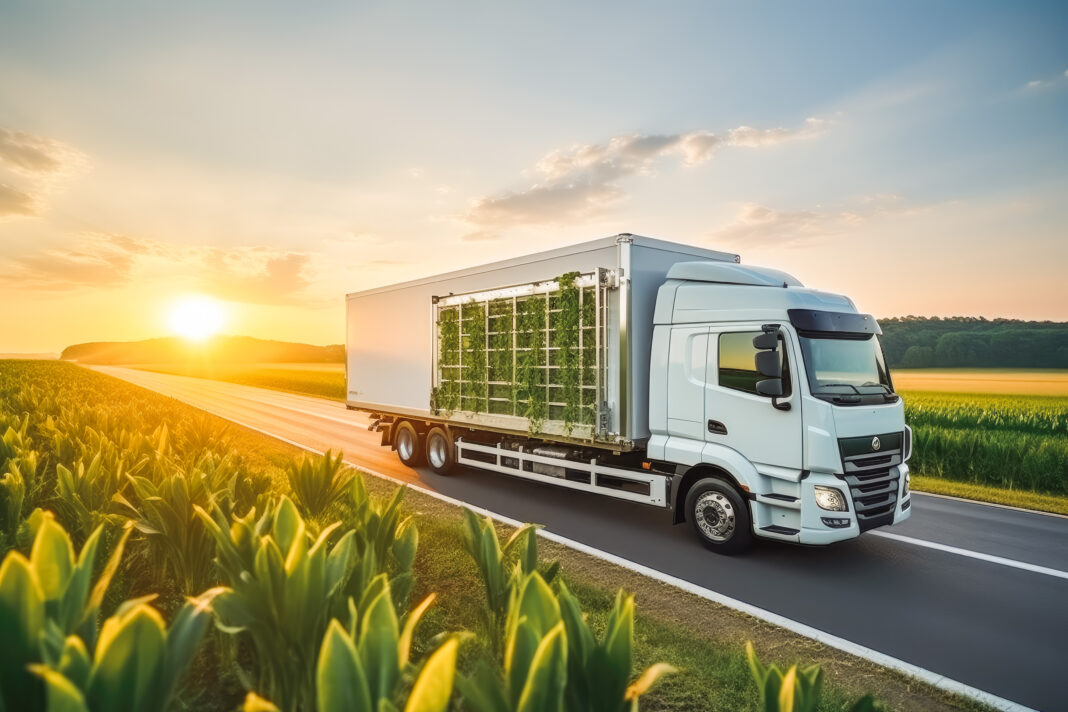
Transport of goods in ecological truck sustainable. Green environmentally friendly transport and shipping.

In the context of reducing the carbon footprint of passenger and public transportation, electric cars, and even electric buses are increasingly being used. On the territory of the European Union, replacing internal combustion vehicles with them in the future is not just a pious wish but a ready-made plan, the implementation of which has already begun and should be completed by 2035. After all, from then on, no new cars and vans will be allowed to be registered in any country that is part of this agreement. These used ones can be used, sold, and bought until the end of their useful life.

While in the case of passenger cars, customers are becoming more and more convinced of electric motors, the electromobility of the truck segment still raises many questions. In 2022, this type of vehicle accounted for just 0.6% of all vehicles used for road transportation*. Although more manufacturers are offering to increase efficiency and range, replacing the internal combustion vehicle fleet with them is still a plan for the distant future.

It must be admitted, however, that the preliminary statistics look impressive. According to a study by The International Council on Clean Transportation, hydrogen fuel cells in trucks can reduce greenhouse gas emissions by 15-33%. In addition, if so-called green hydrogen – produced using renewable energy – is used to power them, emissions drop by up to 89%**.

Investors looking for zero- and low-carbon solutions are now leaning towards the rail transportation segment, which is showing considerable success in this regard. Trains are today regarded as one of the most efficient ways to transport a large load over a significant distance with minimal CO2 emissions. In some European countries, it is already possible to encounter almost 100 percent zero-emission railroads.

What solutions will reduce the transportation industry’s carbon footprint?

Road train, Australia. A novel form of freight

One of the most essential ways to decarbonize the transportation industry is undoubtedly to use green modes of transportation as much as possible. We are primarily talking about rail transportation, which offers the highest energy efficiency and lowest greenhouse gas emissions. However, there is no doubt that the decarbonization of road transportation is an ongoing process, and electric trucks have the potential to dominate this market over time.

However, it is worth noting other solutions that could determine the reduction of the carbon footprint of freight transportation. These include such issues as:

  • route optimization – thanks to modern TMS systems, logistics companies can plan routes in such a way that covering them has the least possible impact on the environment, regardless of the mode of transport chosen;
  • cargo consolidation – assembling several smaller loads heading in the same direction into one large one translates into efficient use of transportation space. This can reduce the number of cars, trains, or planes in use, resulting in lower CO2 emissions;
  • efficient transport management – modern technological solutions can be used to plan the transport route and monitor it from loading to unloading. This will make it possible, among other things, to control fuel consumption, as well as driver habits, which can affect a higher carbon footprint;
  • preventing damage to goods in transit – by protecting the cargo you are transporting from spoilage or damage, you reduce the risk of having to transport it again;
  • efficient vehicle fleet – by performing regular maintenance on the means of transportation that make up your fleet, you reduce the risk of unforeseen breakdowns and accidents. While in the case of truck transport, this is a way to reduce wasted fuel and wasted time, in the context of shipping, this equates to reducing the risk of causing an environmental disaster.

Sustainable logistics is not just about transportation itself

Amazon prime air drone
Amazon’s first drone, Prime Air

While transportation is by far the part of the logistics process that has the most significant impact on the environment, it is not the only one. The construction and organization of warehouses and distribution centers also significantly impact the industry’s carbon footprint.

Concerning the buildings, using renewable energy and water sources, among other things, is essential. We are talking, for example, about the use of photovoltaic installations and heat pumps, rainwater harvesting, and even the use of gray water and carbon dioxide to cool buildings.

And remember eco-friendly materials for packing goods for transport and storage. Meanwhile, goods management at the destination will be improved by so-called beacons, which are miniature electrical devices that inform, among other things, about the location of a particular cargo. This will make it possible to plan unloading optimally, as well as to organize storage space.

Selecting the right partners who share similar values will also help reduce the company’s carbon footprint. It is an excellent idea to outsource the planning of transportation processes to a company with relevant experience in this field and a wide range of available options. Road, rail, sea, or air transport organized in cooperation with the transport and logistics company AsstrA will work perfectly in this role.

Introducing solutions to reduce the carbon footprint of a logistics company will undoubtedly take time to succeed. To ensure that all processes work flawlessly and do not cause losses in the interests of investors, it is worth taking the help of professionals in this field. It is not worth rushing in the context of changes aimed at decarbonizing freight transport. It is better to do it gradually but effectively – instead of betting on greenwashing, which does not contribute to reducing the problem.

Bhok Thompson
Bhok Thompsonhttp://www.greenprophet.com
Bhok Thompson is an “eco-tinkerer” who thrives at the intersection of sustainability, business, and cutting-edge technology. With a background in mechanical engineering and a deep fascination with renewable energy, Bhok has dedicated his career to developing innovative solutions that bridge environmental consciousness with profitability. A frequent contributor to Green Prophet, Bhok writes about futuristic green tech, urban sustainability, and the latest trends in eco-friendly startups. His passion for engineering meets his love for business as he mentors young entrepreneurs looking to create scalable, impact-driven companies. Beyond his work, Bhok is an avid collector of vintage mechanical watches, believing they represent an era of precision and craftsmanship that modern technology often overlooks. Reach out: [email protected]

Read More

TRENDING

Understanding Food Production: Karl Studer on the Urban-Rural Knowledge Gap

Karl Studer occupies an unusual position in American business. As President of Quanta Services, he oversees electrical infrastructure operations across the United States, Canada, and Australia, managing thousands of employees and multibillion-dollar projects.

Wave wind energy for Nvidia’s next AI energy boom?

As AI factories consume unprecedented amounts of electricity, NVIDIA is looking beyond chips and data centers to the ocean. The company recently spotlighted Israel's Eco Wave Power and its wave energy projects in Jaffa and Los Angeles, highlighting how AI, digital twins and renewable energy can work together to meet future power demands. The collaboration reflects a growing realization that the future of artificial intelligence may depend as much on clean energy infrastructure as it does on computing power.

Dan Zaslavsky’s energy tower dream is rising again in Iran and China

The Energy Tower idea never made the leap from drawings and engineering studies to full-scale construction. But nearly two decades after most people stopped talking about it, the concept is quietly evolving in two unexpected places: China and Iran. The concept let dreamers dream and doers do - figuring out more pleasing designs and engineering.

Weston Higginbotham found dead in a Kyoto forest: is climate anxiety part of the story?

In some ways, Weston has become a symbol of a generation wrestling with environmental and technological anxiety. Friends and family described him as deeply concerned about environmental issues. Reports also noted that he questioned the growing role of artificial intelligence in daily life, even reportedly disagreeing with his mother about her use of AI.

Billie Eilish’s Mom Takes the Stage at Hollywood Climate Summit — But Does Hollywood Still Care About Climate Change?

Hollywood once promised to help save the planet. Leonardo DiCaprio warned of climate catastrophe from awards stages. Celebrities flew to climate conferences. Studios pledged greener productions. Streaming platforms rushed to commission environmental documentaries. But in 2026, with the aftermath of wildfires, heatwaves and floods becoming routine, a question lingers: Does Hollywood still care about climate change?

Yerukim Forms a New Green Economy Where the Money is Really Green

The Yerukim members who pick up the recyclables get to keep the monetary reward, the public earns "green" bills that can be used in shops, and business owners get to be associated with environmentalism.

Choosing Riyadh over Dubai? What Investors Should Know

Saudi Arabia is deploying capital at unmatched scale to catalyze tourism and advanced industry while rewiring its power-and-water backbone. The investable frontier is widening—especially in renewables, grid storage, water efficiency/desal retrofits, and hospitality operating platforms. Prudent investors will insist on phased delivery, enforceable KPIs (energy, water, biodiversity), and RHQ/zone compliance—while pricing political-economy and reputational risks alongside growth upside.

Sell your cooking oil for biodiesel money

Want to make money on old french fry oil? Sell it.

Qatar Alternative Energy Summit Pairs Investors And Innovators

Alternative energy investors and innovators can meet n' greet in Doha, Qatar March 16 and 17.

Here’s How To Implement The Four Pillars Of Employee Engagement

If you throw a party for your work team and they are vegans, don't make it a barbecue. Know the sustainability values of your team to boost moral and retain good people.

Locals From Rishon Fight IKEA

Big Box stores are a pretty new concept in Israel, and thank God that not every Israeli city wants them in their backyard. A word from someone who has see the beautiful farmland around her hometown Newmarket, Ontario stripped and converted into vulgar strip malls of big box shops: they have no place in a healthy and sustainable town or city.

The Jewish National Fund Meets An Inconvenient Truth

According to the JNF, it has transformed thousands of acres of barren land into green forests in Israel. They state that each person emits about 23 tons of carbon per year, estimating that each tree planted can absorb one ton of carbon in its lifetime. That's a whole lot of trees you'd need to be planting. Could so many fit in Israel?

How to quiet noise from construction in your office

Streets need to be resurfaced in New York but the humming and grinding noise is unsettling. Noise is environmental pollution. 

Popular Categories