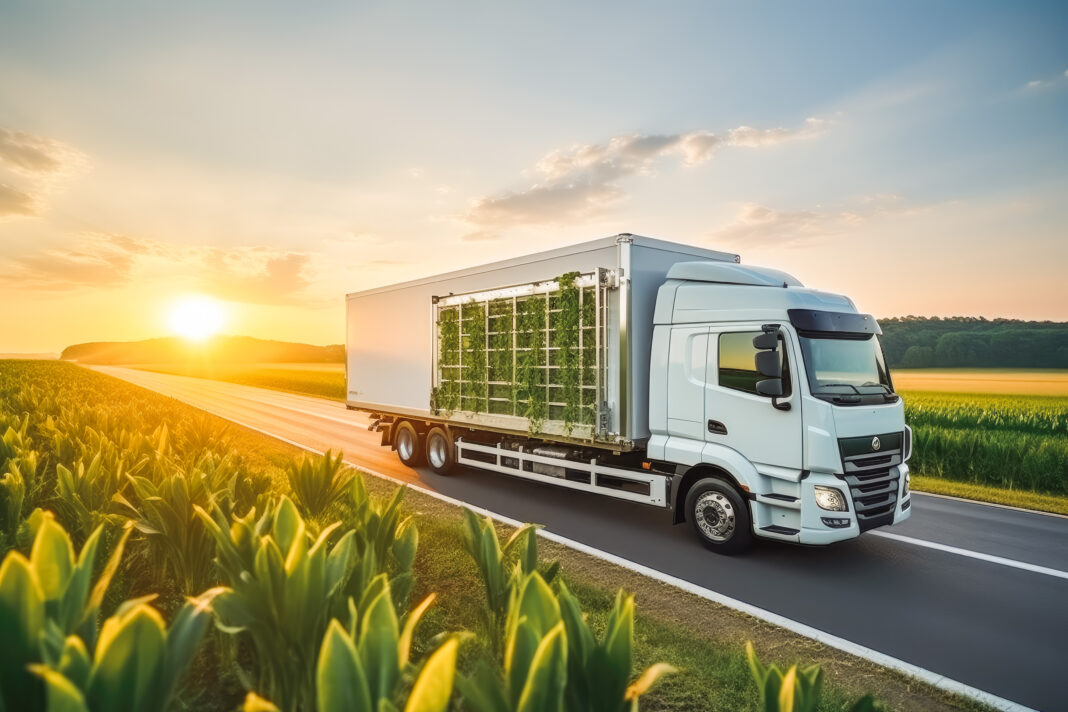
RedSea, a climate controlled hydroponics greenhouse business that started in Saudi Arabia, has announced that its business is expanding. They have hired Bruno De Oliveira as VP East Africa and Egypt to help grow the business. He’s worked in Kenya, Egypt, Portugal, and the UAE.
RedSea uses science to design sustainable agriculture technologies for very hot climates. Hydroponics is a form of greenhouse agriculture that uses water and a nutrient medium to grow vegetables such as leafy greens in a controlled way. Israeli and Dutch companies tend to lead the space. See Infarm in Germany founded by an Israeli team. There is plenty of space and capital globally for new systems to be developed.
RedSea has proven it can do low-water needs agriculture in its 6-hectare facility near Riyadh, Saudi Arabia at its research and development facility in KAUST, the King Abdullah University of Science and Technology.

RedSea has seen an infusion of capital – almost $20MM USD this year at least. They are striving for hot climate markets where hydroponics technologies may have the greatest impact in saving water and energy as well as improving profitability for growers. It’s harder to prove the concept in cold climates with less sun as heating greenhouses requires a significant amount of resources. Hydroponics may be ideal for growing food in deserts. Saltwater and solar greenhouses have been a dream for Middle East and African nations. RedSa is working on perfecting the concept that has been in development for decades.
In 2008 Green Prophet reported on early pilot saltwater greenhouses in Qatar and the UAE. RedSea is advancing the concept.
In recent months, RedSea worked with iyris SecondSky roofs have been installed on 30HA of a major government owned site in Egypt and an MOA has been signed with Magrabi Agriculture to supply genetically-favorable seeds and root stocks to the Egyptian market.
De Oliveira, the new hire, will be cased in Cairo. He has worked more than 30 years in commercial farming and business development.
Ryan Lefers, CEO of RedSea, said: “Our rapid growth in Egypt warrants positioning a key member of the RedSea team to focus exclusively on the East Africa and Egypt region. The ability to leverage such an experienced executive as Bruno, with a large professional network across that region, close to the market, will accelerate the growth of RedSea in territories that have suffered badly from an increasingly hot climate, and where our hot climate AgriClimate technology systems will bring higher profitability to farmers in a truly sustainable way.”
RedSea was founded in 2018 by Mark Tester and Ryan Lefers. It uses salt water and solar energy to grow local produce more sustainably to reduce carbon emission and food and water scarcity. First funding was led by a group of Saudi and UAE investors including the Aramco entrepreneurship arm Wa’ed (Aramco is the oil company owned by the Saudi family), the non-profit foundation Future Investment Initiative Institute, KAUST and Global Ventures, a UAE venture capital group. The funding is one of the first agritech investments for many of the participants.
Aramco, the Saudi oil giant, last year posted a net profit higher than the profits of Apple, Exxon, and Microsoft combined.

De Oliveira, says “I am excited to be able to give greater focus to a region in which I have been working for man years. In a way, it’s a coming back home for me. I know from years of hands-on experience of farming in this region the challenges that the growers face day to day. I joined RedSea because I recognized the unique competitive advantage of the technologies we bring to growers operating in this region. The potential and market opportunity to work with them to mitigate the impact of climate change is huge and I look forward to this new challenge.”
RedSea has developed and commercialized pioneering sustainable agriculture climate technologies for hot climates. Under the brands iyris, Kairos, and Volcano Plant Genetics.

Egyptian cotton farmer. Photo Credit: Magued Makram/UNIDO Egypt. Location: Kafr ElSheikh, Egypt 2019Some environmental advocates believe offering better conditions for small-hold farmers in Egypt that focus on regenerative farming and healing the soil, may give our planet a better chance for survival than energy-intensive greenhouses. Woody Harrelson thinks so too. An article in The Ecologist explains why hydroponics, divorced from the soil with unnatural mineral and oil industry nutrient inputs could never be organic:
“Given its apparent eco-credentials, there have been strong calls for hydroponics to be accepted under organic standards. But the Soil Association thinks this would take organic in the wrong direction, and is calling for the international organic movement to prohibit hydroponics in organic agriculture.
“Organic production is about the interconnectivity of vital living ecosystems – it is a regenerative form of agriculture that both takes from and gives back to the soil. In fact, starting with the soil is at the heart of organic.” This resource points out the need of micronutrients found in the soil that need to be supplemented in hydroponics.”
The solutions are probably somewhere in the middle.