
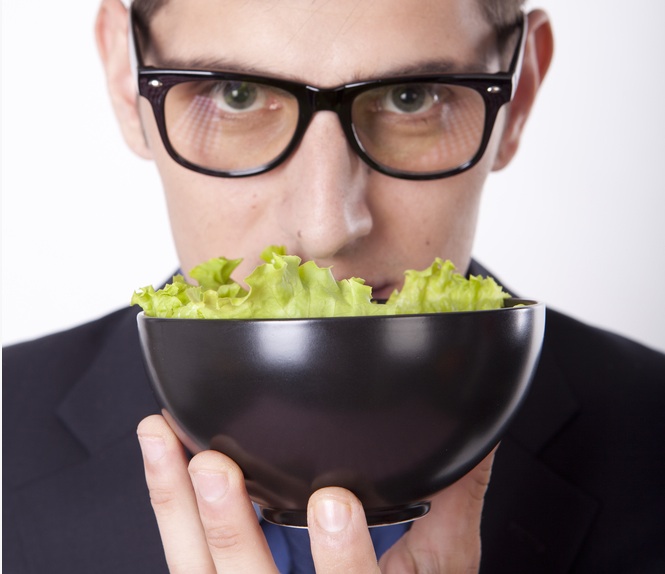

 With 6 of the top 10 most obese countries located in the Middle East, maybe it is time to look at reducing our meat intake argues Joseph writing from Egypt
There are always arguments for and against going vegan, and they are many, but for many in today’s world, going vegan is all about the ethical decision not to harm animals, at any level, from eating them to wearing their skins. Those of us out there who have taken meat off our plate have done so for a variety of reasons, reducing factory farming only one of the myriad factors in our choice. Also on the list of reasons why people turn away from flesh consumption is the environment and health concerns.
No matter how one looks at animal production, the rule for even the small farms is that animals are machines, born and bred for our consumption. To “live” and die for our gastrointestinal desires.
This, for the vast majority of herbivores, is the number one cause behind our vegetarianism. Look at the numbers of people who have turned vegetarian in recent years and the statistics are optimistic. In Germany, nearly 10 percent of the population is plant-eaters, in the UK it’s around 7 percent and the numbers are growing in almost all industrialized nations.
Factory farming is a great concern for millions of us, but it is also the so-called “sustainable farms” talked up by “experts” that we are also campaigning against. The factory farm industry is horrific and well documented by animal rights groups worldwide.
In the Middle East, it is too-often assumed that factory farming doesn’t exist, at least in the excess it does in the West, but this is far from the reality. With the abundance of fast-food, factory farming has taken hold in Egypt and across the region, where companies have massive facilities located throughout countries. It is away from the gaze of many observers, and thus is not receiving the attention it should, but it exists and is costing us, both health wise and environmentally.
One need not be an expert to refuse to eat from these institutions. However, the smaller farms should not be seen as an altruistic alternative to the factory farm. On numerous small farms, including here in the region, animals are still branded, debeaked, castrated and ultimately slaughtered without the opportunity to live a full and social life – animals are social beings much like us “higher” beings.
To say that vegetarianism is not having a direct impact on meat production whether factory farm or small farm is wrong. Ending meat eating helps show and push an agenda where we will not accept the killing of beings who want and deserve a pain-free existence where they are able to form communities, be merry and interact with one another without fear of meeting a cleaver.
Maybe we vegetarians are not making as much of dent in meat-eating as we would hope, but we are making a difference. Wal-mart, America’s largest retailer, has in the past few years, has begun selling a number of vegan alternatives. If this isn’t proof that we are making a difference with our pocket book then what else is needed to convince ardent meat-eaters?
The health factors are well-documented. Vegans live longer, have less disease, lower cholesterol, and as the world’s largest animal rights organization the People for the Ethical Treatment of Animals (PETA) has said, have better sex. All the above seem to be worthy in themselves of going vegetarian.
The China Study – conducted over 20 years by Oxford University, Cornell University and The Chinese Academy of Preventive Medicine – has shown that meat consumption has put Americans on, literally, a deadly path. The study details the connection between nutrition, heart disease, diabetes and cancer.
With 6 of the top 10 most obese countries located in the Middle East, maybe it is time to look at reducing our meat intake. For many this cannot be an immediate move, but over time, it could help continue the green push that has erupted in the region to help reduce obesity levels and greenhouse gases caused by animal production.
“People who ate the most animal based foods got the most chronic diseases … people who ate the most plant-based foods were the healthiest and tended to avoid chronic diseases. These results could not be ignored,” said Dr. T. Colin Campbell, an author of the study and a respected nutritionist.
Environmentally, going vegan and not participating in animal production is the number one thing we, as individuals can, immediately and on our own, help reduce the effects of climate change. Seems to be vegetarians are doing a lot. It is more than a political statement, it is an economic one in the same way abolitionists against slavery were two hundred years ago.
We believe, as animal rights supporters, that it is morally wrong to exploit animals in any manner.
Reducing the idea of vegetarianism to whether or not it is having a direct impact on meat production and meat consumption misses the point entirely. We are not avoiding animal products because we want to see less meat eating – although this is a major factor in the long run – instead it is about not participating in the wholesale slaughter of intelligent animals who feel pain and suffering as acutely as humans do.
Professor Jeffrey Masson tells of how elephants can feel grief for the death of a fellow elephant as deeply as a human does for another human.
At the end of the day, one cannot persist on small farming without also participating in factory farming and causing the unnecessary suffering of animals at our expense. Do people like Woginrich refuse to eat meat when they go out if they do not know where it comes from? Doubtful. The only way one can, without worry, know that they have not participated in the killing of animals is to go vegan.




simply put, one must chew on the sheer fact that one is here (created by the Almighty on earth) for a purpose and he/she owes to Him and themselves to be healthy at any cost. going vegan by choice will always prove rewarding in the long run. first step is to be open-minded and then take a full plunge…mock meats can come in real handy to make the switch easier. finally it comes down to giving only the very best live-foods for your body to make it run healthy and being principled without getting tempted by abundance of meat around. everyone who laughs, mocks at you in a party or dinner will eventually start respecting you and your choices. so go ahead and chuck off the meat from your platter and keep smiling
Vegetariansim can save the Middle East and the World, if also everyone agrees to safely recycle 100% of all human-generated waste materials, and peacefully reduce the human population with family planning education. If not, vegetarians could be the last individuals to go extinct.