
Biodiversity Under Threat At Yemeni ‘Alien-Island’

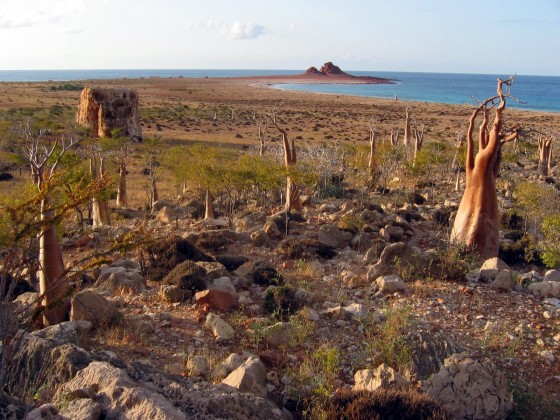
In the alien and isolated landscape of the Socotra Island, just off the coast of Yemen, biodiversity is in a struggle for survival
socotra-yemen-biodiversity

Declared an UNESCO world heritage site in July 2008, the Socotra Archipelago which is located in the northwest Indian Ocean is home to some of the rarest species in the world.

According to UNESCO data, 37% of Socotra’s 825 plant species, 90% of its reptile species and 95% of its land snail species do not occur anywhere else in the world.

Recent reports however, have raised concerns that climate change is adversely affecting Socotra’s indigenous flora and fauna which could disappear altogether if conservation isn’t made a top priority in the country.

Locals state that a reduction in mist and cloud cover over the last couple of years means that iconic plants such as the dragon’s blood tree are already on the decline.

The tiny chain of islands, near the Gulf of Aden, has been described as the most alien landscape in the world due to it’s truly unmatched species of flora and fauna. In fact, there literally isn’t anywhere like Socotra and if the endemic species it hosts aren’t protected they will be lost forever.

Does Yemen Have The Political Will to Deal With Conservation?

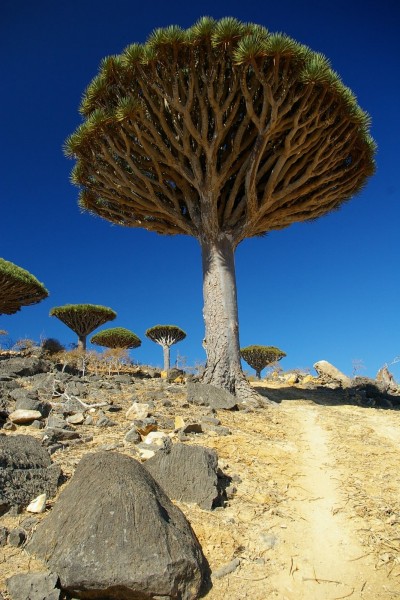
Socotra is particularly important for its diversity of plants and has 307 species which are endemic. The iconic dragon’s blood tree, which looks like an umbrella that’s about to turn inside out, is named after the red sap that oozes out of the tree’s bark when it’s cut and has made the island famous.

Al Jazeera recently reported that a team of Italian scientific experts are currently assessing the impact of climate change on the island’s biodiversity. However, concerns have been raised about Yemen’s willingness and/or ability to put conservation at the top of its agenda considering the political turmoil it finds itself in. Green Prophet has already reported on the government’s unwillingness to mitigate water shortages despite reports thatYemen’s capital, Sanaa,  is predicted to be the first capital in the world to run out of economically viable water supplies by 2017.

As 2010- the UN declared year of biodiversity- comes to an end I can’t help but wonder what the future holds for the truly unique species of the Island of Socotra.
:: Al Jazeera

:: Image via Pablo Costa/Sotti

For more Green news from Yemen see:

Yemen’s Water Crisis Could Worsen Security

Eco Tourism in the Middle East: Yemen

Mud Structures in the Muslim World: Spectacular And Sustainable

Arwa Aburawa
Arwa Aburawahttp://www.greenprophet.com
Arwa is a Muslim freelance writer who is interested in everything climate change related and how Islam can inspire more people to care for their planet and take active steps to save it while we can. She is endlessly suspicious of all politicians and their ceaseless meetings, especially as they make normal people believe that they are not part of the solution when they are the ONLY solution. Her Indian auntie is her model eco-warrier, and when Arwa is not busy helping out in the neighborhood alleyway garden, swap shopping or attempting fusion vegetarian dishes- with mixed success, she’d like to add- she can be found sipping on foraged nettle tea.

Read More

3 COMMENTS
  1. The threatened flora of both Socotra and Madagascar are what first got me thinking about how landscape practitioners in the urban Mideast could be creating refuges for these unique plants by specifying their use as a new horticultural “signature” which would make the most of their eco-fitness and their dramatic forms.

    Why just replicate globalized landscaping palettes and patterns when a regional identity could be underscored while helping to save the flora? See more on the idea: http://bit.ly/dLzrWm

LEAVE A REPLY

Please enter your comment!
Please enter your name here

TRENDING

5 projects to help kickstart your company’s sustainability journey 

True progress happens when environmental ambition meets action. Decarbonizing efficiently is possible for any business in any sector, but actually getting started can sometimes feel daunting.   The trick? It’s to start small and build momentum. Here are five potential projects to help you get started.  

Hormuz 2026 Conflict Poses an Energy and Food Security Dilemma in a Warming World

As tensions rise in one of the world’s most critical maritime chokepoints, the ripple effects go far beyond oil—touching food systems, climate pressures, and regional stability

Climate change traced in sea turtle shells

It's sea turtles which may in the end save islands in the Seychelles. They may also better help us understand climate change. Like rings on a tree, scientists have found a way to read sea turtle shells and how they are impacted by climate change tells a story. 

We’ve lived through the past 11 of the hottest years on record

Have we forgotten about global warming when the world...

Nearly the half the world’s migratory species are declining, in new UN report for COP15

With larger, land-bound animals human encroachment and Middle East warns make it more troubling for the survival of migratory animals on land, air and at sea. A new United Nations report released this week warns that the situation is getting worse, not better.

How to quiet noise from construction in your office

Streets need to be resurfaced in New York but the humming and grinding noise is unsettling. Noise is environmental pollution. 

EarthX and a blueprint for sustainable investing

Trammell S. Crow, a Dallas-based businessman and father of four, is focusing his efforts on impact investing, and media that focuses on saving the planet through EarthX.

Mining Afghanistan’s Mineral Discoveries Similar to Avatar

Now that American forces in Afghanistan are commemorating the longest period of any war that America has been involved in, including the 1965-73 Vietnam War, the recent discoveries of large and extremely valuable mineral and metal deposits may finally bring to light a reason to continue the presence of US fighting forces in this war torn and backward country.

From Pilot Plant to Global Stage: How Aduro Clean Technologies’ 2026 Expansion Signals a Turning Point for Chemical Recycling Investors Like Yazan Al Homsi

The company's Next Generation Process (NGP) Pilot Plant in London, Ontario, has officially moved into initial operating campaigns, generating the kind of structured, repeatable data that separates laboratory promise from commercial viability.

Nobul’s Regan McGee on Shareholder Value: “Complacency Is the Silent Killer” 

Why the governance framework designed to protect shareholders so...

Should You Invest in the Private Market?

startustartup Unlike public stock exchanges, which offer daily trading, strict...

How to build a 100-year-company

Kongō Gumi is a Japanese construction company, purportedly founded in 578 A.D., making it the world's oldest documented company. What can we learn about building sustainable businesses from them?

How AI Helps SaaS Companies Reduce Repetitive Customer Support Work

SaaS products are designed for large numbers of users with different levels of experience, and also in renewable energy.

Popular Categories