

A solution to colony collapse disorder? Miriam meets the Black Bear apiary in Israel where they are breeding bees back to their ancestral size.
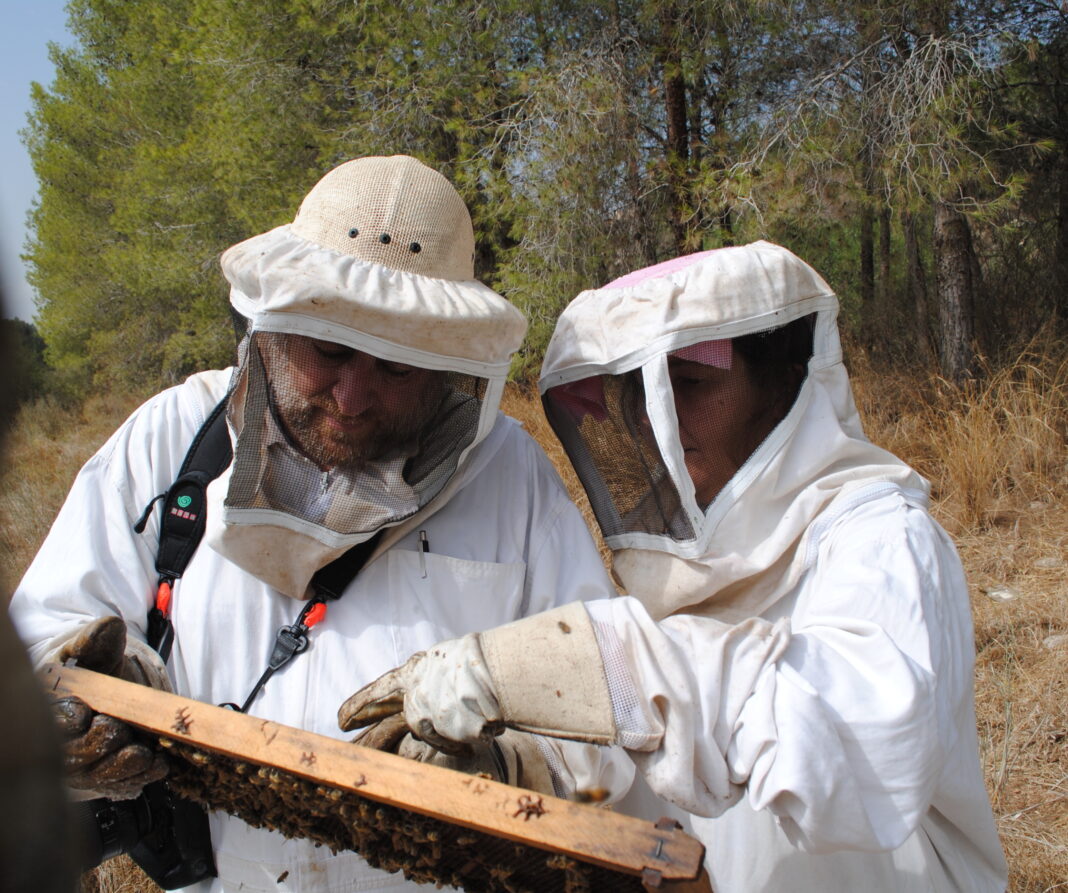
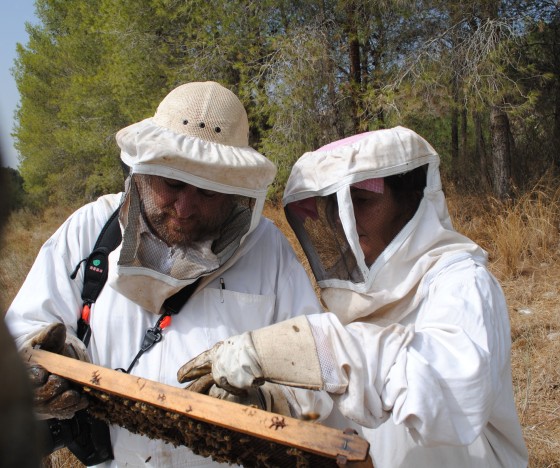
Stephen and Alison Epstein, from Canada and the US, walked up and down, inspecting the tiny apiary. They slid frames laden with honey, wax, pollen, and bees – plenty of bees – out of the white boxes. (Read more about the difficulties of beekeeping in Israel here.)
They were monitoring the creation of new queen bees, without which there would be no eggs and no new workers to make honey and take care of the hive.
Today’s bees produce lots of honey per hive, but they’re susceptible to the varroa mite that has caused colony collapse disorder in many parts of the world. Green Prophet posted about colony collapse disorder here. Instead of treating the bees with chemicals and antibiotics, the Epsteins are turning the clock back 100 years to when smaller, sturdier bees resisted diseases and survived.
Explaining the regressive-breeding process, Alison said, “About 100 years ago, people began breeding larger bees, the idea being that larger bees could collect more honey. With the spread of the Varroa mite, a number of people around the world have started to coax queens to make smaller bees – the smaller-cell bee pupae are not as desirable to the varroa as large ones.”
The couple employ many simple strategies to preserve the health of their hives. To keep destructive wasps out, Alison places a rack over the entrance to the hives. Bees can wriggle out of the spaces between the wires, but wasps are too bulky to get in.
Simple? Almost childishly simple. And organic – and effective. To kill the wasps, conventional beekeepers put out chopped meat saturated with flea spray.
Today, even beeswax may contain traces of chemicals, says Stephen: “Beekeepers have to deal with all kinds of diseases, and with wax moths. (If wax moths get into the hive, their larva will destroy the honeycombs.) The conventional way to treat varroa mites is to hang strips bearing chemicals inside the hives for up to six weeks, although we’ve seen hives with chemical strips left in for many months.”
I asked if Black Bee honey is organic: “In order to be labeled organic, honey must be certified. We are moving in that direction and are talking with the Israeli licensing body.”
Is Black Bear honey natural? “Yes,” says Steven. “We use a variety of techniques to avoid chemicals. There are two sources of chemicals that can get into the honey. One comes from pollen and nectar from vegetation that’s been sprayed. The other is what the beekeeper puts into the hive. Our bees live in an unsprayed forest, and we don’t use prophylactic antibiotics. We also use a certified-organic treatment for moth-proof storage of our honey boxes over the winter.”
Grumpy bees smells like bananas
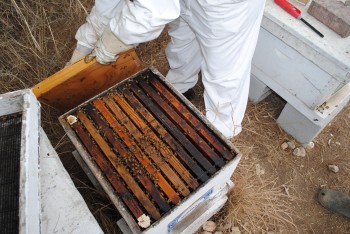
I learned that when bees get irritated they exude a pheromone with a faint, banana-like smell to warn you that they’re going to attack. Inside the net of my white veil and protected like an astronaut in a white suit, I looked around and sniffed. The only smells were of sun-warmed eucalyptus, pines, and flowering fennel bushes.
(Read more about eucalyptus trees and honey in Israel here.)
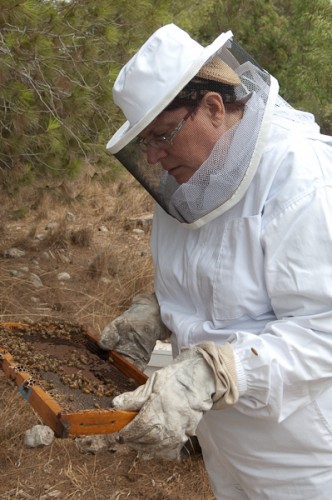
Working with bees couldn’t be that dangerous, I thought. The white suit and veil made me feel safe even standing in a cloud of bees. See me pictured below. Alison handed me a smoker – a little home-made apparatus equipped with a bellows to blow smoke on the bees, making them docile.
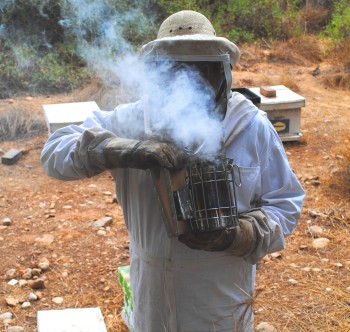
“Squeeze it,” she said. I squeezed. Fragrant smoke puffed out of the coffee pot-like spout. All the bees that had been looking for some way to get under my protective clothing and sting the bejeebers out of me flew away, looking sleepy.
Cautiously, I picked a frame out of the hive. Good heavens. I was holding an armful of bees.
Feeling more confident, I stood next to Alison as she opened a hive that hadn’t been inspected in several weeks. The bees weren’t used to the human presence any more, she warned. They might get aggressive. I’m OK with that, I thought smugly.
Alison lifted the top off, and suddenly the air was alive with angry bees. They swarmed right to me, buzzing loudly and seeking any way to sting me. My arms and legs were covered with crawling bees, and so was my veil.
The noise was unmistakably hostile and sure made me nervous, especially as the bees were trying to get at my face. I tried to bat them away, but they only came back again, angrier than before. Did I smell bananas? No. I’m sure the bees smelled fear on me, though.
“Take a walk in the woods and let the branches brush you,” advised Stephen. “That distracts the bees.”
Not even close to Pooh
I scrambled up a rocky path to some pines with low-hanging branches, a cloud of bees around my head. Lo and behold – it worked. As I walked back and forth like Christopher Robin wondering if it would rain, the bees gave up thinking I was Winnie the Pooh and flew back to their hive.
Humbled, I asked the Eptsteins if I could set up a little bee farm of my own, as an apartment dweller.
“It would work on a rooftop, but we wouldn’t recommend raising bees on a balcony – unless you’re a Dr. Doolittle and don’t mind bees visiting you all day.
“An individual may own up to five hives without a commercial license, but would need a hobbyist license from the Honey Council. The regulations in Israel prohibit setting up a hive within 150 meters of a residence,” they say.
Well, it’s a sweet dream. Read more about rooftop beekeeping in our post here.
Later, I tasted the product of those bees. The honey is sweetness distilled from the forest, with a light, herbal flavor. It must be from the eucalyptus, fennel and pines that the bees associate with.
A delicious morning.
Update 2022: The Epsteins had to close Black Bear Apiary as they had someone in their family allergic to bees.
More about bees and honey:
Bee Stings Are Sweet in Israel
Organic Honey or Mass-Produced?
Can Urban Beekeepers Prevent Colony Collapse?
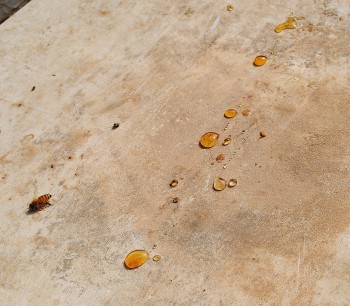
Photo of Stephen and Alison Epstein, of Stephen holding a bee smoker, and a single bee with drops of honey by Miriam Kresh. Photo of Miriam holding a frame a of queen bees hatching by Stephen Epstein.



Hi, that smoker doesn’t look homemade to me, in fact it looks exactly like the one I have, they cost about £30. Unless of course you mean a different smoker that was on site??
We have a really small bee in Oman
‘Apis florea’
they however are difficult to keep and swarm at the slightest thing
http://blog.omanholiday.co.uk/blog/Photos/_archives/2009/3/26/4134582.html
It was an amazing experience. I couldn’t get the little creatures out of my mind the whole day afterward – guess I got a bee in my bonnet.
That was so much fun!