
I have personally coached my daughter on how to survive budget airlines like a small travel ninja. “Wear your heaviest shoes,” I tell her at home before we pack the carryons. “Put two books in your sleeves. Layer four sweaters. Don’t let them see the laptop under the poncho.”
To outsiders we probably look insane. To frequent travelers flying low-cost airlines, we look prepared. Fifteen years ago when Laurie wrote this article about 4 wearable luggage ideas, we thought she was insane. Now, I am updating her masterclass on concealing the goods we take with us on the weekend.
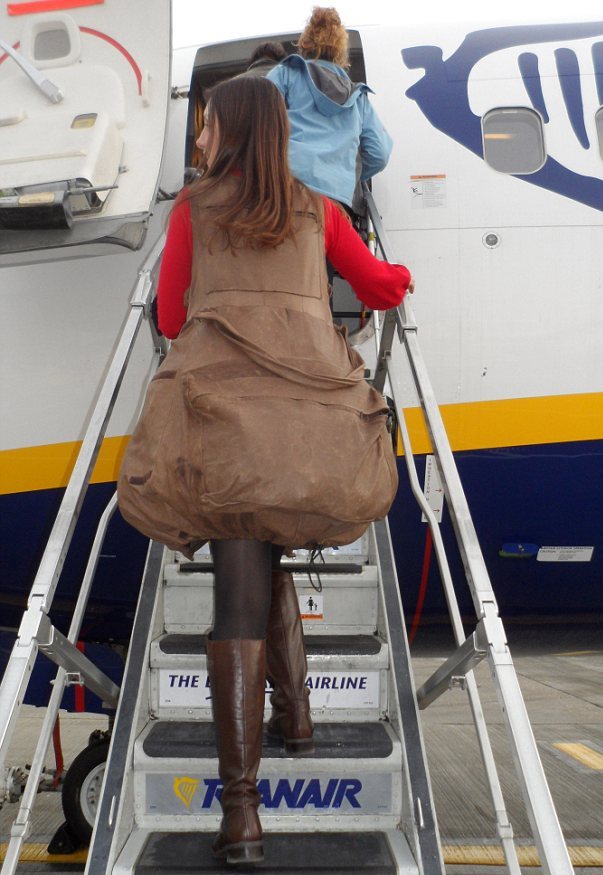
As airlines continue shrinking baggage allowances and charging passengers for almost everything, wearable luggage is quietly becoming one of the strangest and smartest trends in travel. From jackets that hold entire wardrobes to robotic luggage that follows you around airports like a loyal pet, designers are rethinking how humans carry their stuff.
Some wearable luggage looks ridiculous. Some looks brilliant. And some of it may genuinely change the way frequent travelers move through crowded cities and airports.
1. The Jaktogo wearable luggage jacket
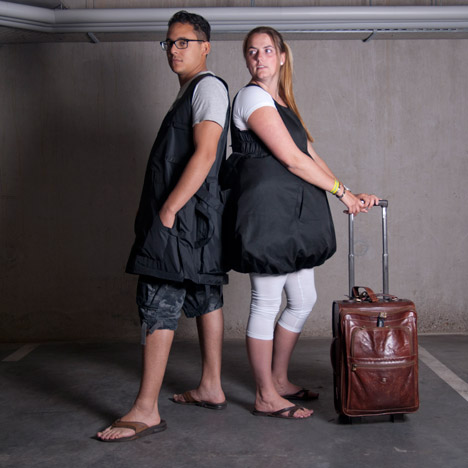
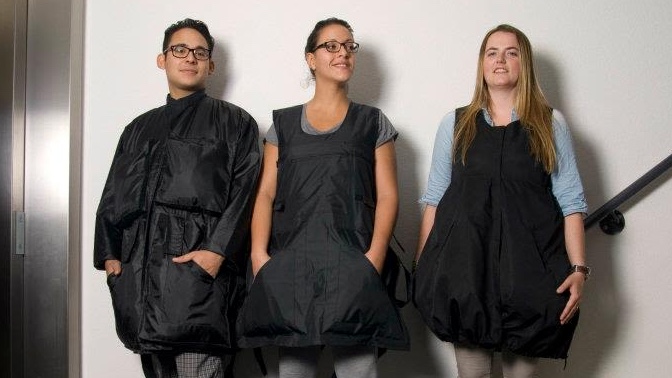
The Jaktogo may be the closest thing to wearable luggage that actually works. While we covered it a while back, it looks like it never really went into sales. A business opportunity!
Designed in Australia, the oversized jacket contains multiple hidden compartments that can carry laptops, clothing, shoes, chargers, toiletries, and travel accessories. The company claims travelers can carry up to 15 kilograms of belongings while wearing it.
That means avoiding some airline baggage fees entirely. Unlike bulky travel vests from the past, the Jaktogo tries to look like a stylish oversized coat rather than tactical camping gear. The appeal is obvious for travelers flying carriers like Ryanair, Wizz Air, or Spirit, where baggage fees can cost more than the ticket itself.
2. The Baubax travel jacket
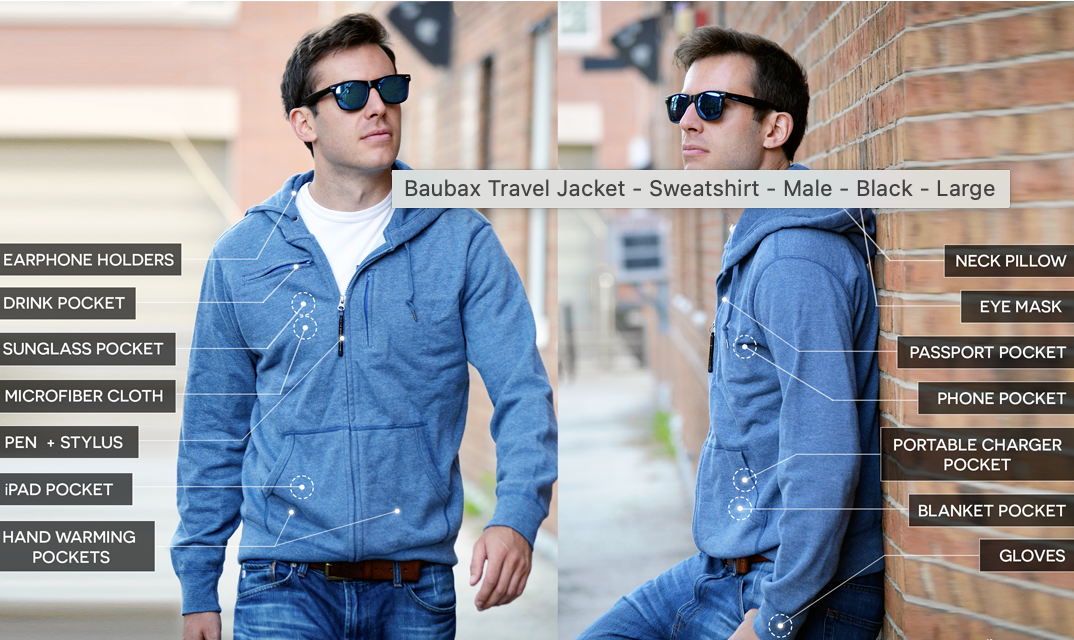
Baubax became famous through Kickstarter after marketing itself as “the Swiss Army knife of jackets.”
Its jackets include built-in neck pillows, eye masks, gloves, drink pockets, phone pockets, passport sleeves, and even inflatable footrests in some versions. While not technically a full luggage replacement, Baubax helped normalize the idea that clothing itself could become part of your storage system. Critics joked the jackets looked overly engineered, but many travelers appreciated reducing the number of bags they dragged through airports.
3. SCOTTeVEST and the rise of wearable pockets
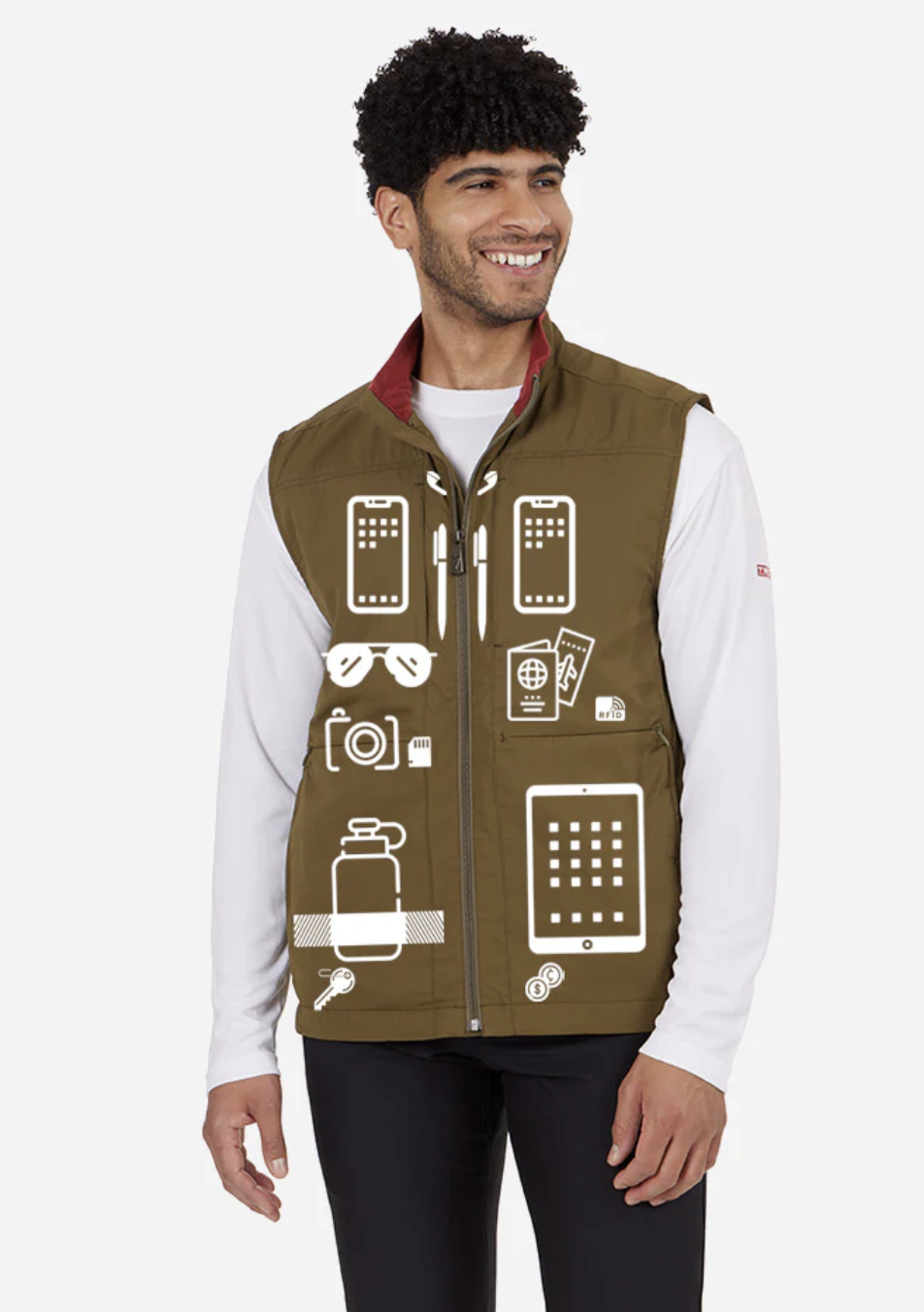
SCOTTeVEST has spent years making jackets specifically designed for travelers and tech users.
Some versions contain more than 20 pockets and compartments, allowing wearers to distribute electronics, passports, tablets, chargers, cables, and cameras across their clothing.
The idea sounds strange until you remember how much modern travelers carry today.
A decade ago people traveled with a paperback book and maybe a camera. Today people travel with laptops, phones, headphones, batteries, adapters, Kindles, chargers, and enough cables to wire a small apartment.
Wearable luggage partly exists because humans have become mobile charging stations.
4. Airwheel rideable smart luggage
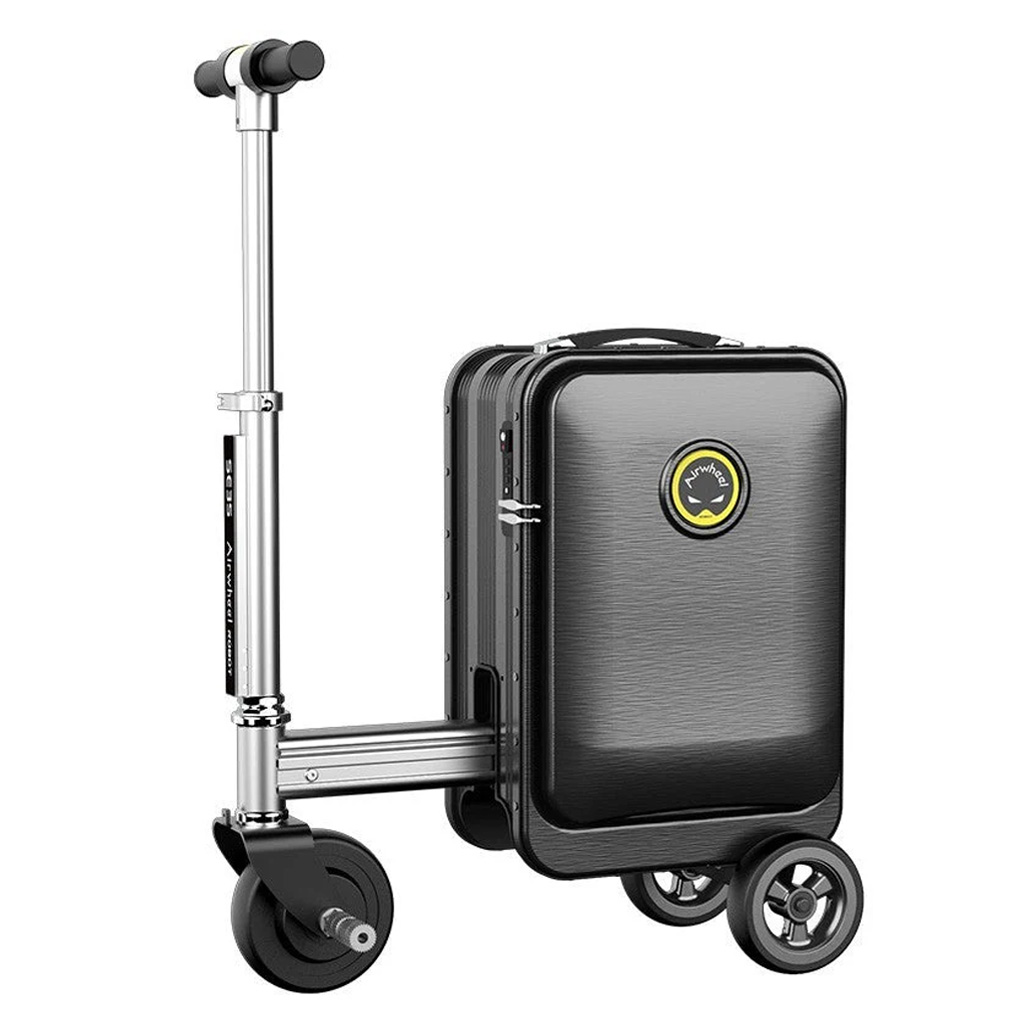
Kids love these! Not all wearable luggage is clothing. China’s Airwheel transformed luggage into something closer to a mobility device. Its rideable suitcases allow travelers to sit directly on the luggage and drive through airports using electric motors.
It looks slightly absurd, like a businessman riding a robotic turtle through Dubai International Airport.
But for giant airports in places like Dubai, Atlanta, Heathrow, or Istanbul, the idea makes surprising sense. Some airports have restricted rideable luggage because of safety concerns, but the product reflects a wider shift: luggage is becoming mobile technology rather than passive storage.
5. ForwardX robotic follow luggage
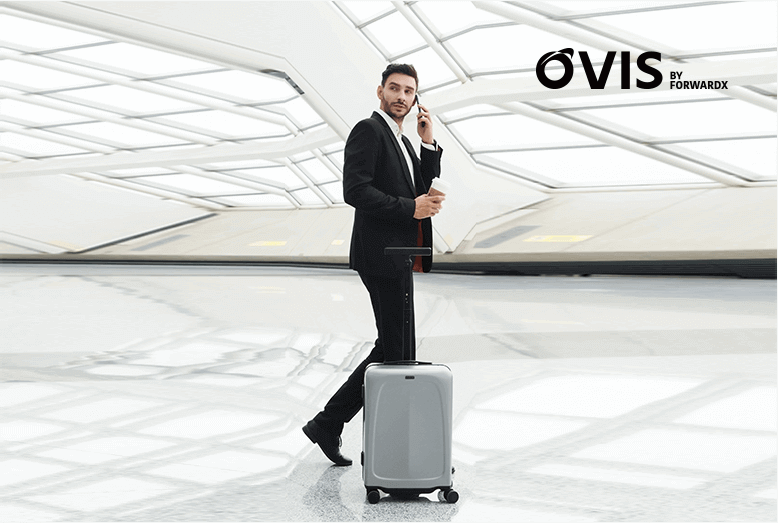
The dream of luggage that follows you like a pet robot is no longer science fiction. Companies like ForwardX now make AI-powered suitcases that use cameras and sensors to automatically track their owners through airports and train stations. The luggage can avoid obstacles, recognize its owner, and roll autonomously behind them. The concept feels strangely emotional. Humans have spent centuries dragging heavy objects behind them. Suddenly luggage behaves more like a robotic companion.
Why wearable luggage matters
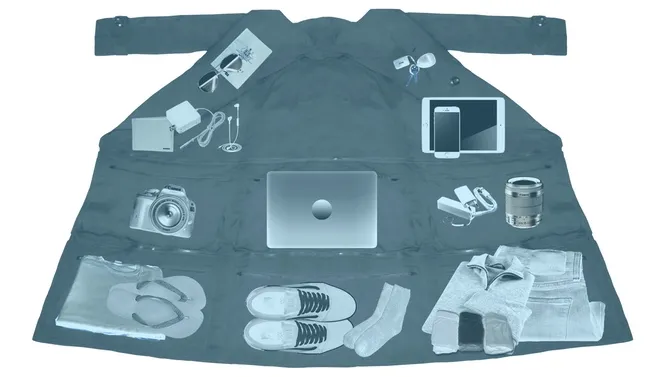
Wearable luggage is not just about convenience. It reflects deeper changes in modern life. People move constantly between airports, temporary apartments, coworking spaces, and short-term rentals. Digital nomads and remote workers increasingly value mobility over ownership.
At the same time, airlines continue shrinking free baggage allowances while charging extra for nearly everything. That pressure has created a new kind of traveler: people trying to optimize every kilogram they carry. Plus, nobody enjoys dragging luggage over cobblestones, carrying suitcases up train station stairs, or paying $95 to check a bag for a two-day trip.
The suitcase itself may not disappear. But in the future, people may wear more of their luggage than they carry.