

Koh Phangan, an island in Thailand, is sold as a healer’s paradise. Any day of the week you will find Tantra, yoga, breathwork, rope yoga or ecstatic dance under palm trees at Zen Beach in between the full moon parties and half moon parties. You can spend every day of the week trying to fix yourself. If you are single or in a couple, that works, but not so much with teens.
We came to the island paradise with teens. We did what you do when you first arrive: Muay Thai kickboxing, zip lines, swimming pools, ATVs, swimming until sunset, cooking classes. It worked for a week or so, then it didn’t.
Because teens don’t just want stimulation, they want real things, so we went looking and found the island you don’t see on Instagram.
The island you don’t see
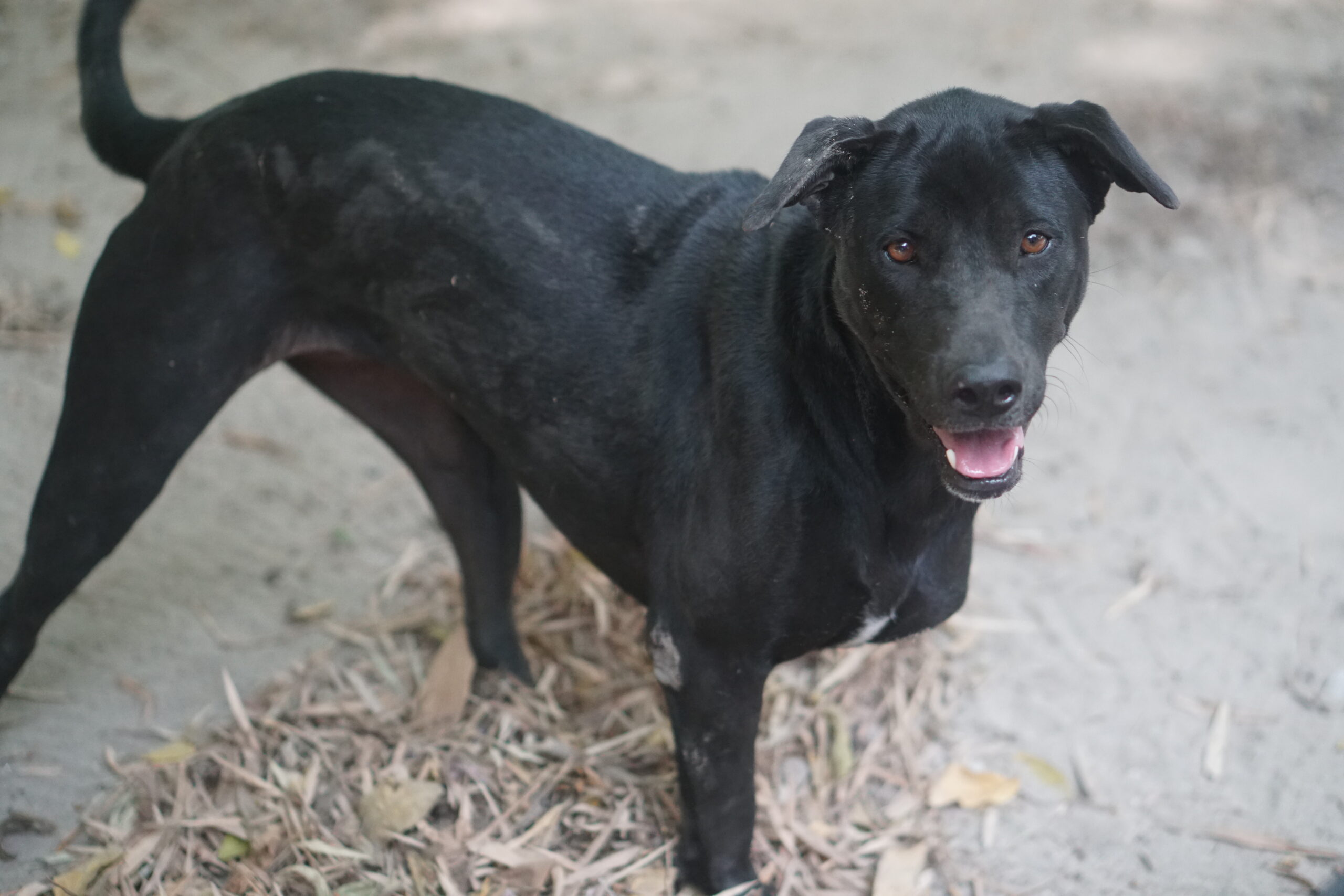
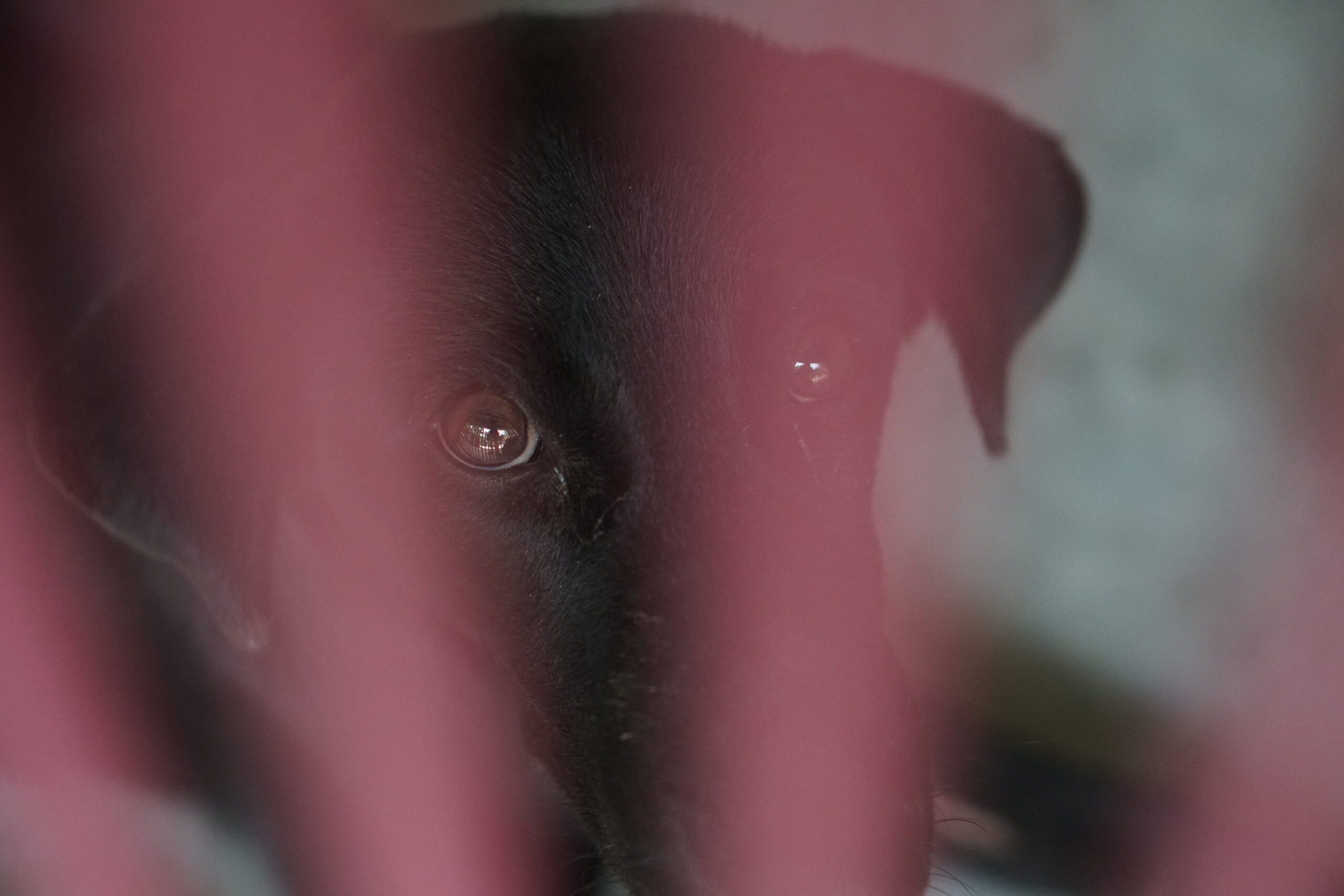
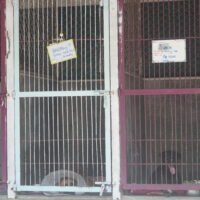
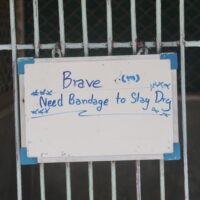
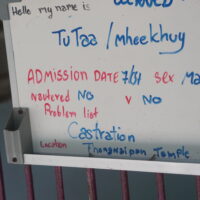
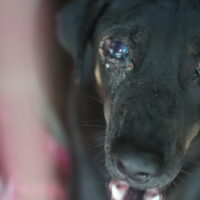
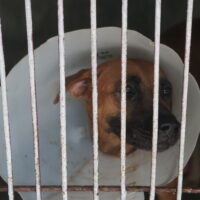
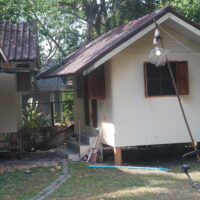
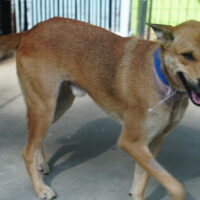
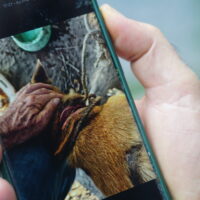
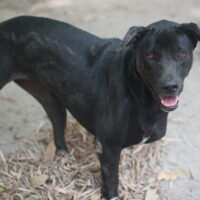
A few turns off the main road and you find another Koh Phangan, one that is not curated. It’s PACS, a center and hospital to heal and rehabilitate stray dogs and cats. There are broken dogs and cats, run over by cars or motorcycles, some neglected by their owners, raw skin exposed on their necks for being chained to a short leash for months.
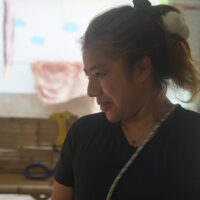
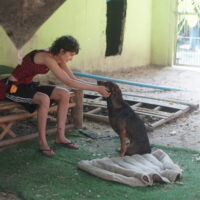
Janina, from Germany, saw the street dogs on the island 4 years ago and has been coming back to PACS once a week to help out for a day each time.
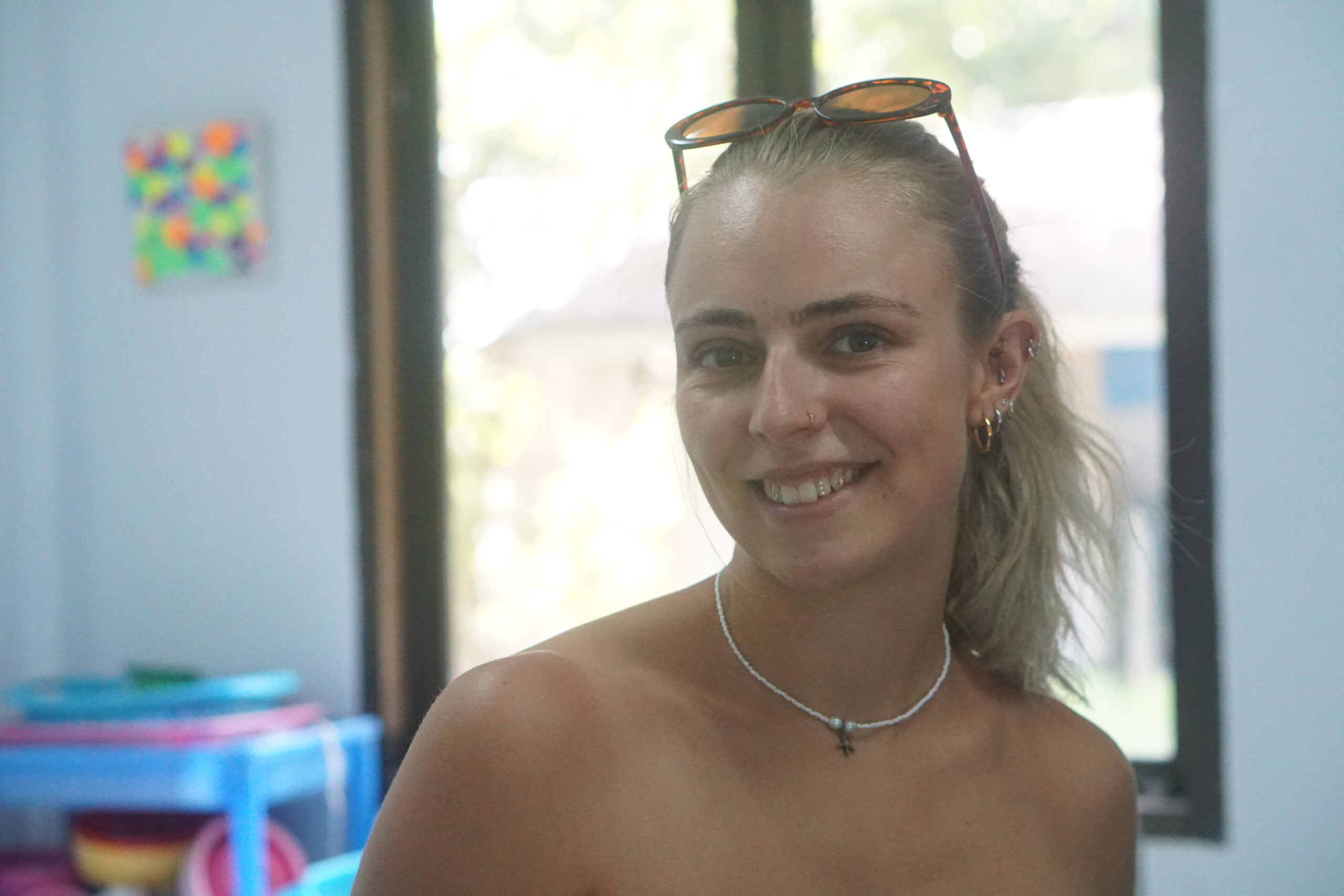
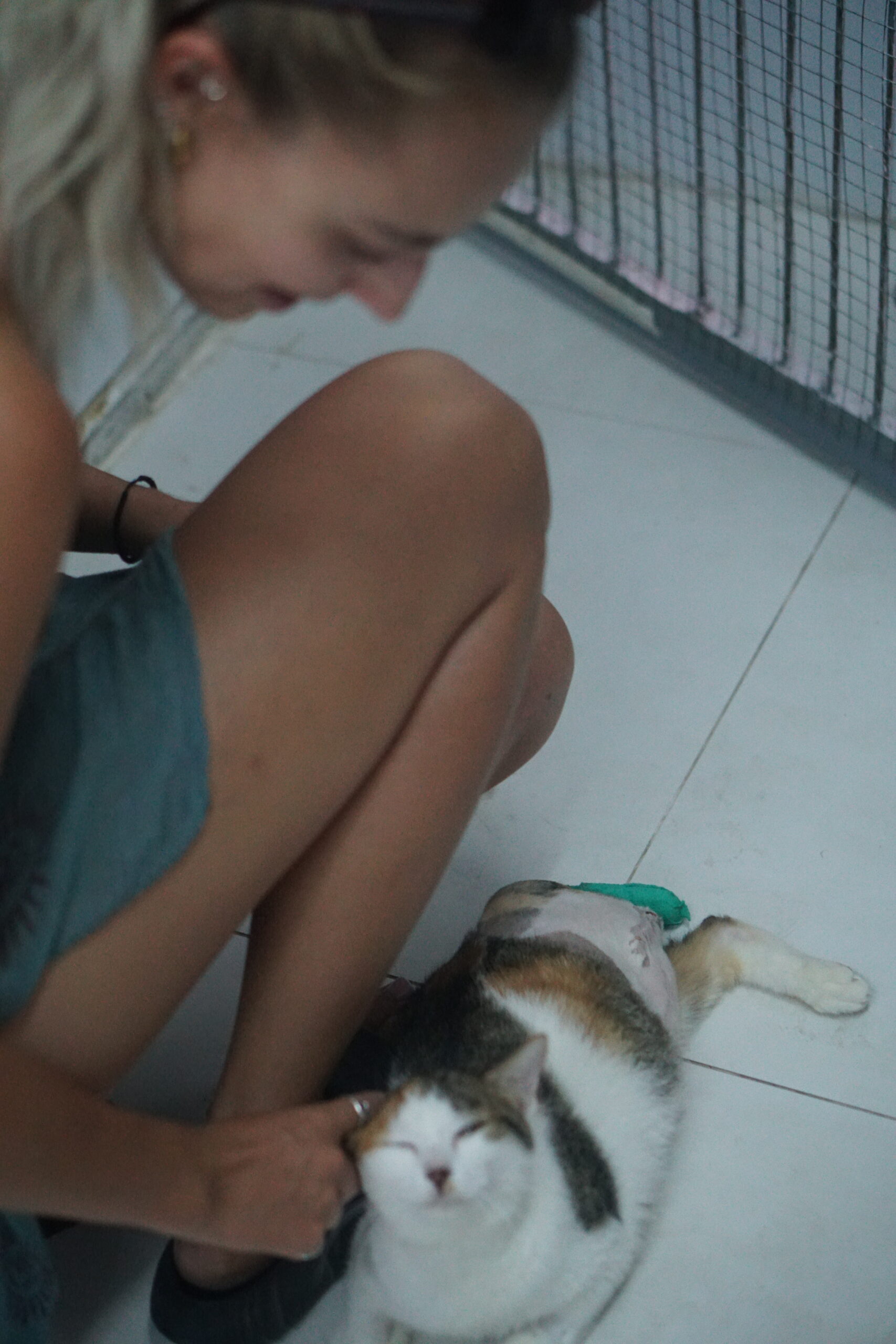
“I saw them on the streets all the time,” she tells me. “I was angry.”
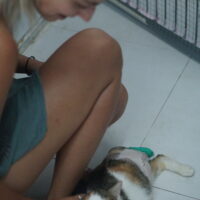
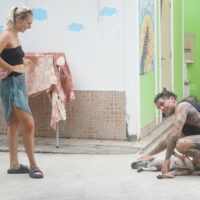
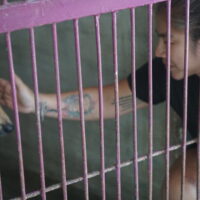
Now she comes, not to heal herself, but to clean cages, feed animals, wash dogs with skin infections, give company to the cats. The work is repetitive, smelly, physical, and mostly invisible.
PACS — Phangan Animal Care for Strays has been quietly running a catch, spay/neuter, and release program, working to reduce suffering at the source since 2001. It’s not glamorous but population control, wound care, infection management, and prevention.
The rescue effort here started about 25 years ago, near a local school, when injured dogs kept showing up with nowhere to go. Fifteen years ago it became a proper Thai-run foundation. Today it operates as a hospital, relying on donations, Facebook, Instagram, and a fragile pipeline of adoptions.
At PACS, the idea is simple: the well-being of animals reflects the well-being of the community.
The 7-Eleven dogs
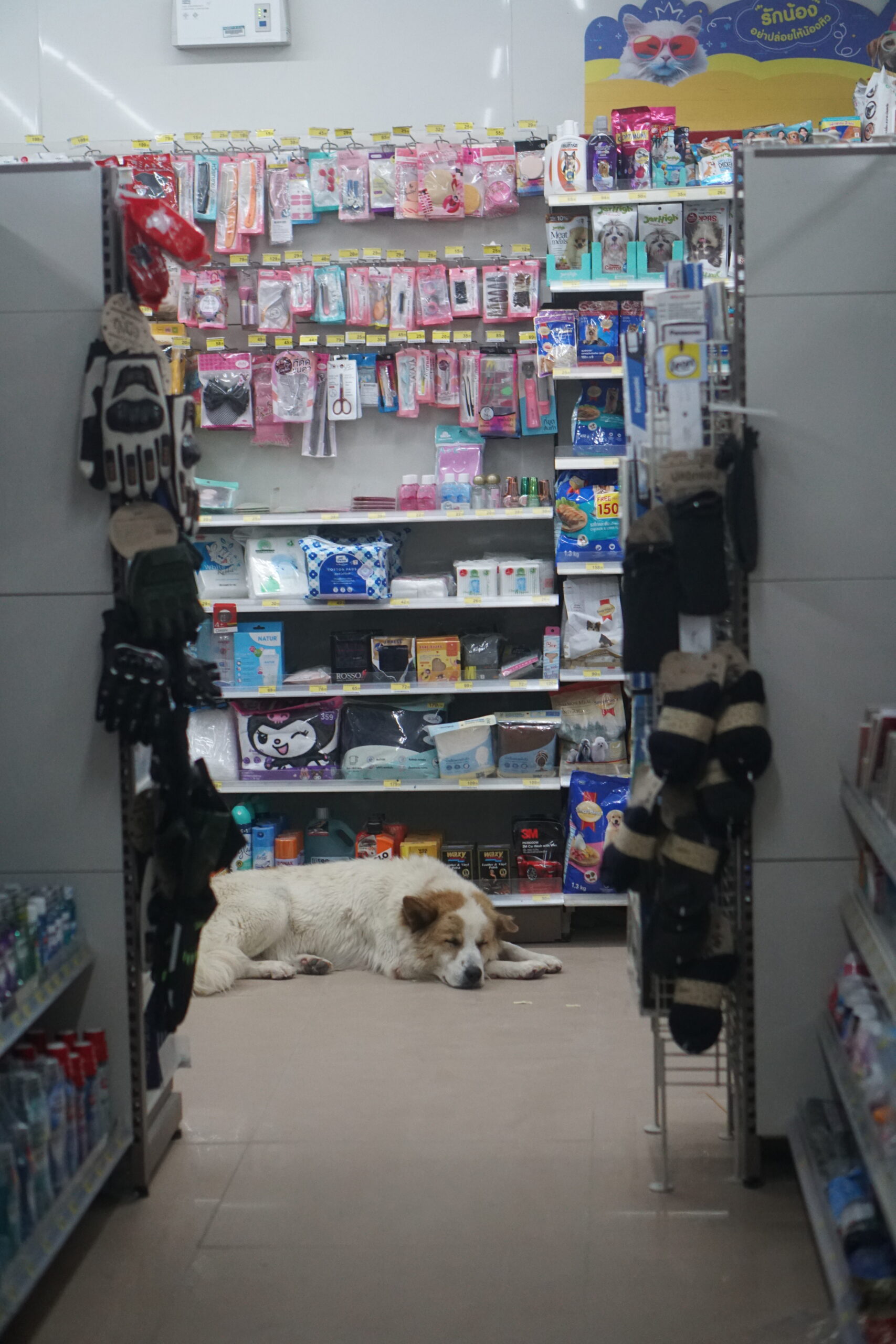
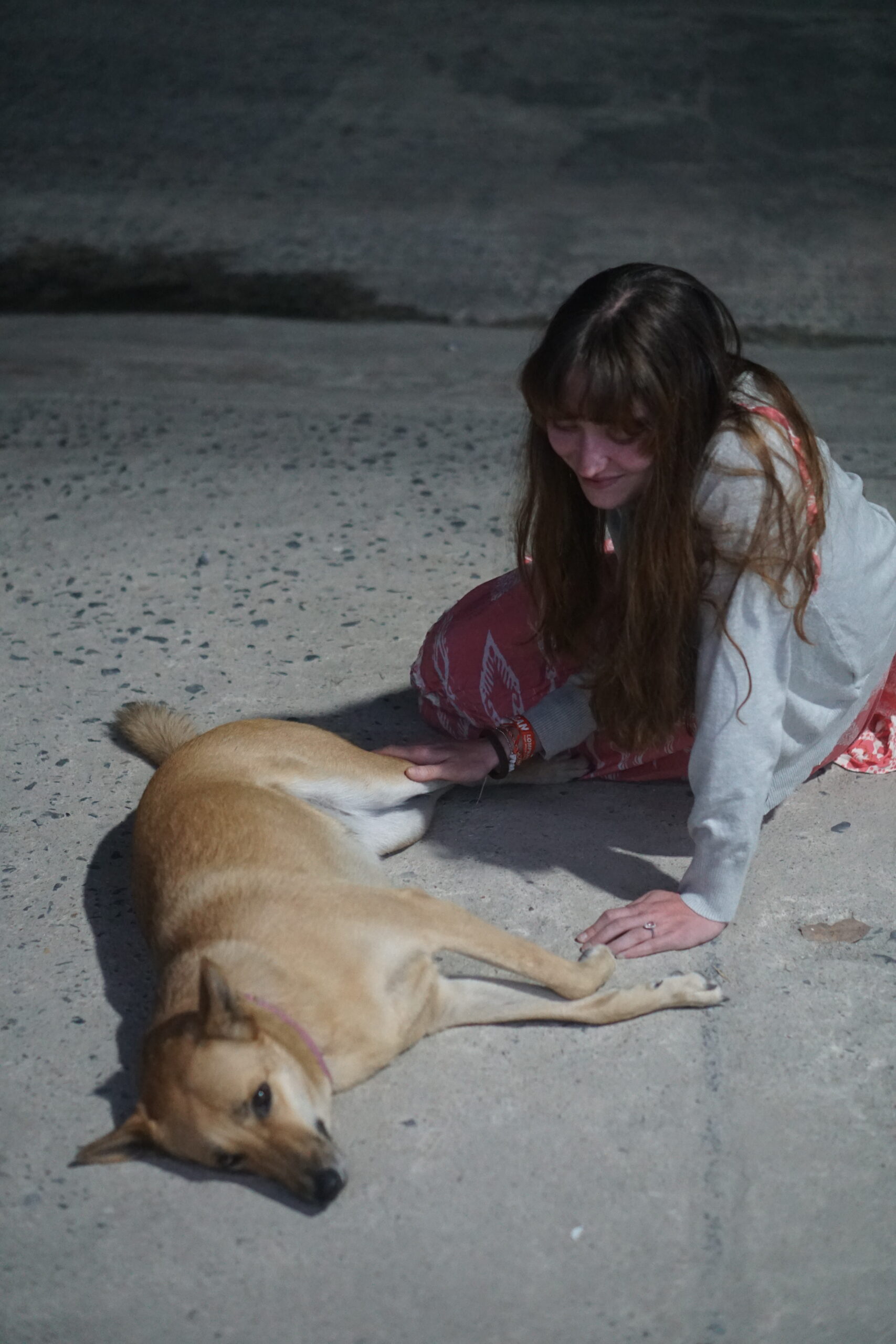
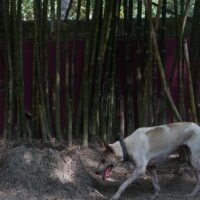
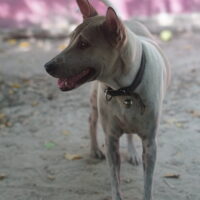
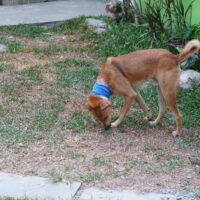
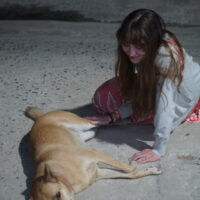
On this island of Koh Phangan, dogs have territories and they are micro-economies of survival. There are the “7-Eleven dogs” and you see them everywhere. One usually, hanging outside convenience stores, living off scraps and tourists who think a sausage is kindness. I saw one in the town of Thong Sala, drunk on food, lying outside the entrance, belly full with a ring of sausages around him that he couldn’t bother to eat.
“Every day sausage is not good,” one volunteer tells us. “The food they are given is not healthy to eat every day. Not even for us.”
Some 7-11 shops tolerate them. In Had Yao, dogs for some reason are allowed to wander inside like locals. In other places, fights break out because outsiders disrupt a fragile territorial balance that only the dogs understand. Those that support the Strays center hope that the pets they take care of will be adopted. In normal situations they treat the animals and when possible release them back to the location where they were first found.
This is the reality PACS works inside, not removing dogs from the ecosystem entirely, but stabilizing it, one animal at a time. While the 7/11 dogs might be lucky to get regular food, the luckiest ones who get their forever home.
We came to walk the dogs
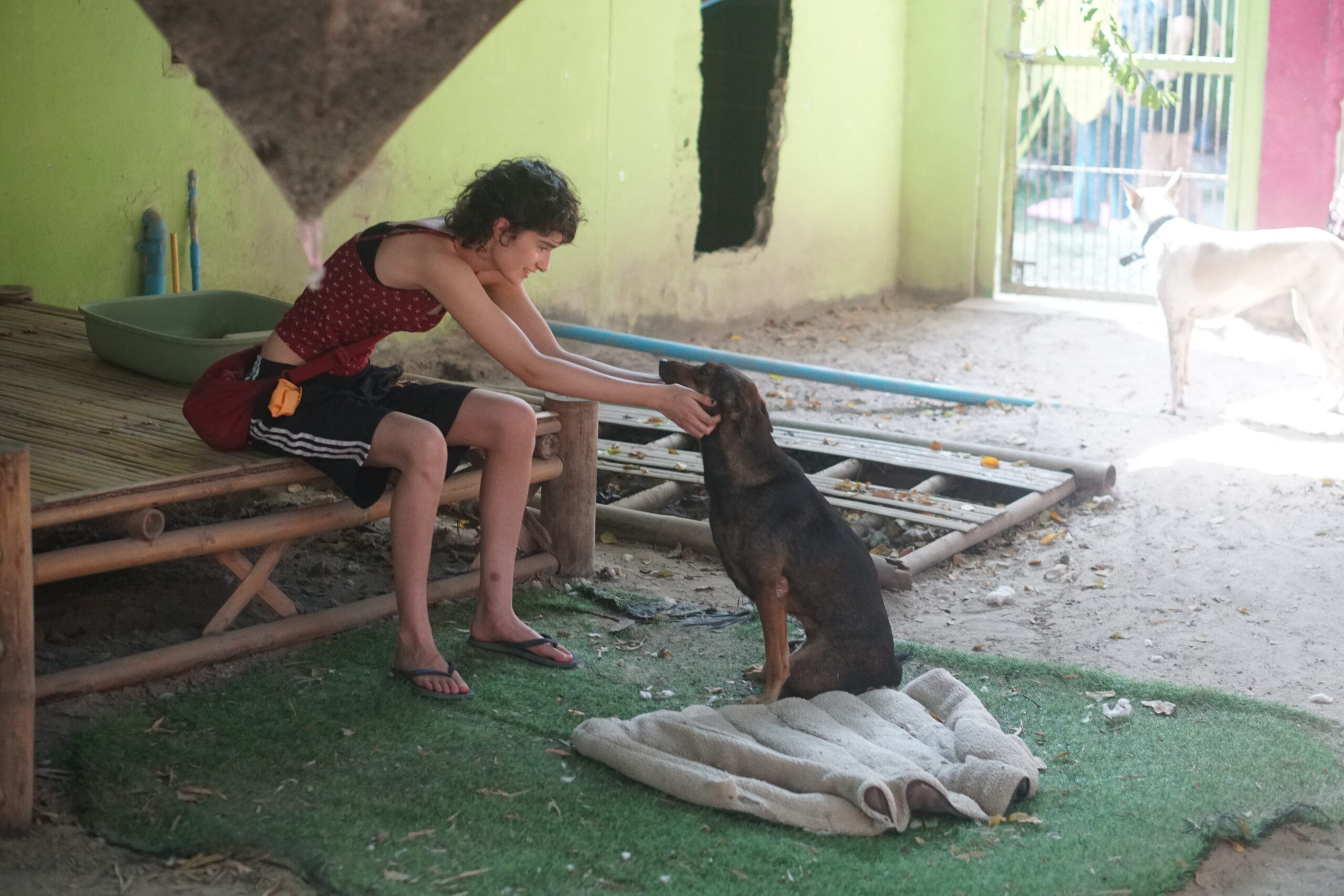
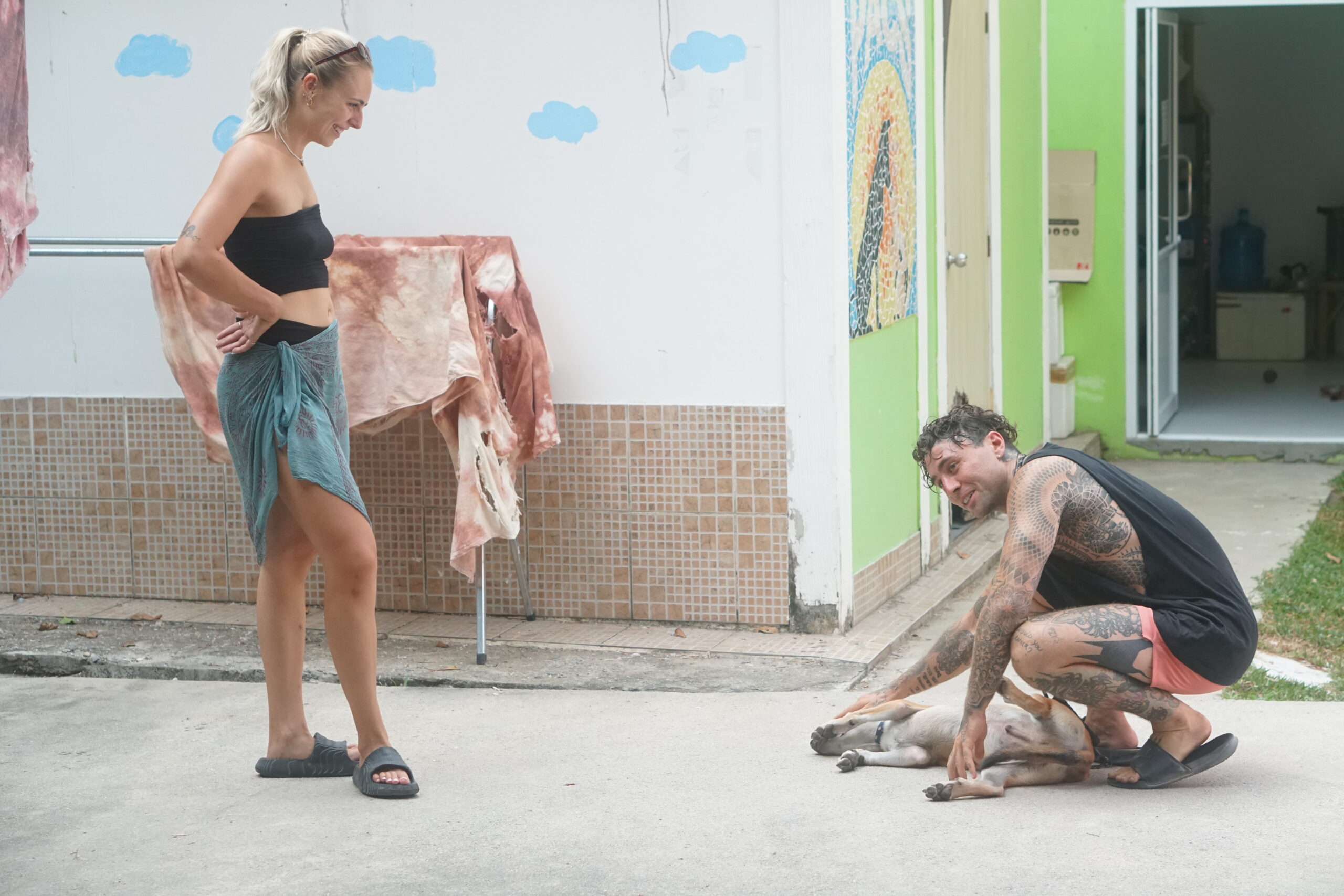
We came to walk the dogs but enough volunteers showed up that day.
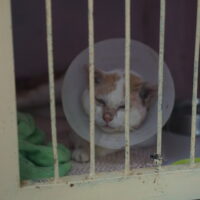
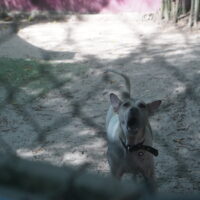
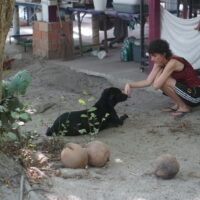
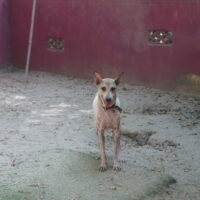
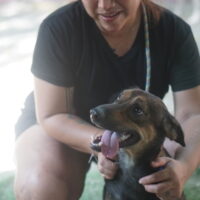
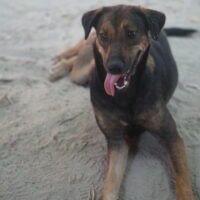
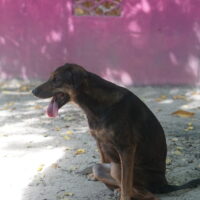
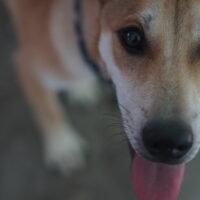
So we stayed and pet cats that leaned into our hands looking for love. We met dogs that barked out of fear but then got close to us over time. One had three legs. Another, Pupita, carries a toy in his mouth when she’s nervous. She is looking for her forever home.
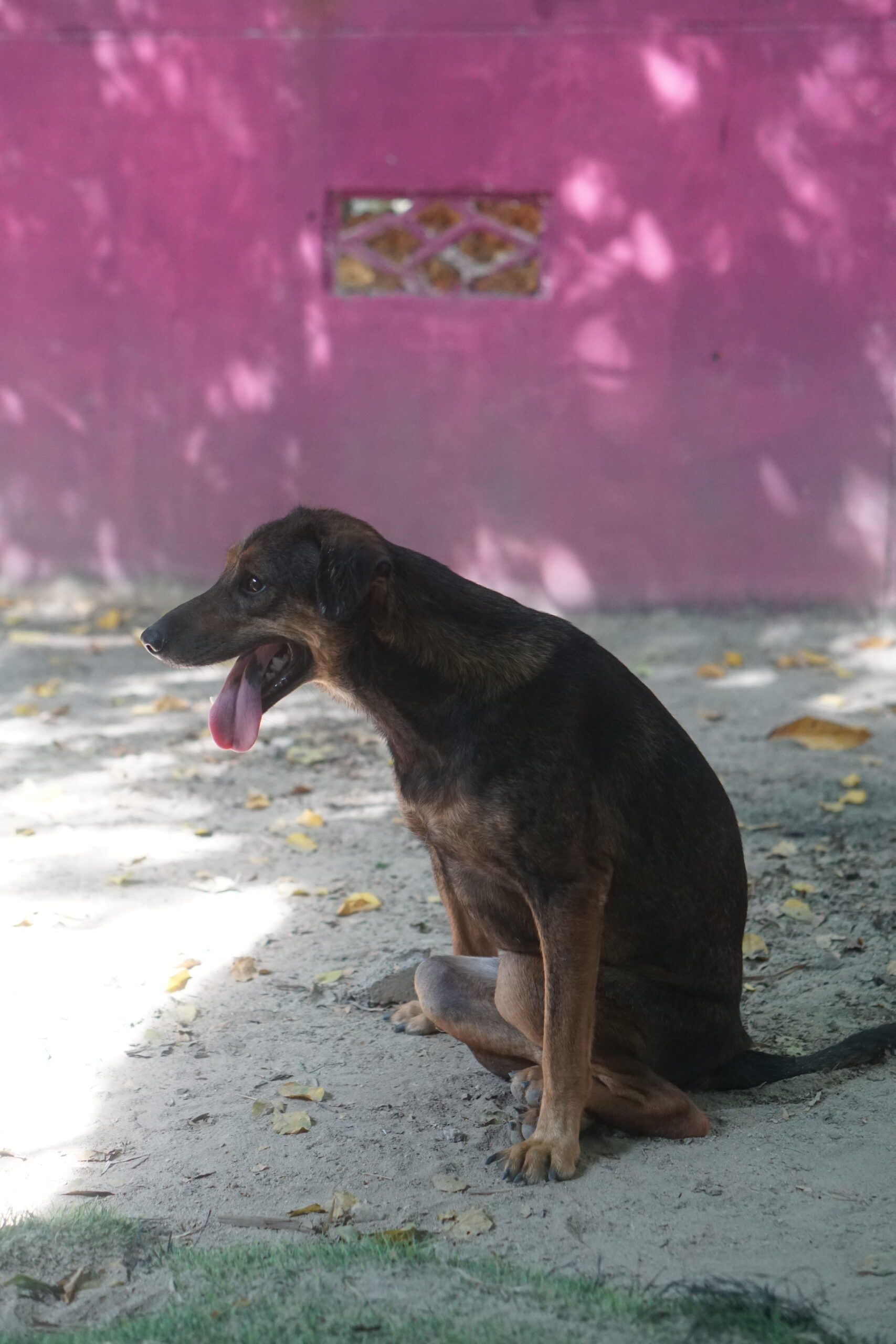
Peanut had a spinal chord injury and now works as an emotional support dog for the other dogs. He drags his two back legs around behind him but his situation doesn’t seem to stop his smiles or passion for life. Peanut is looking for his forever home and he’d make a great emotional support pet, says Kim, the assistant on duty.
You don’t explain this to teenagers. You let them see it and touch it.
The people who stay
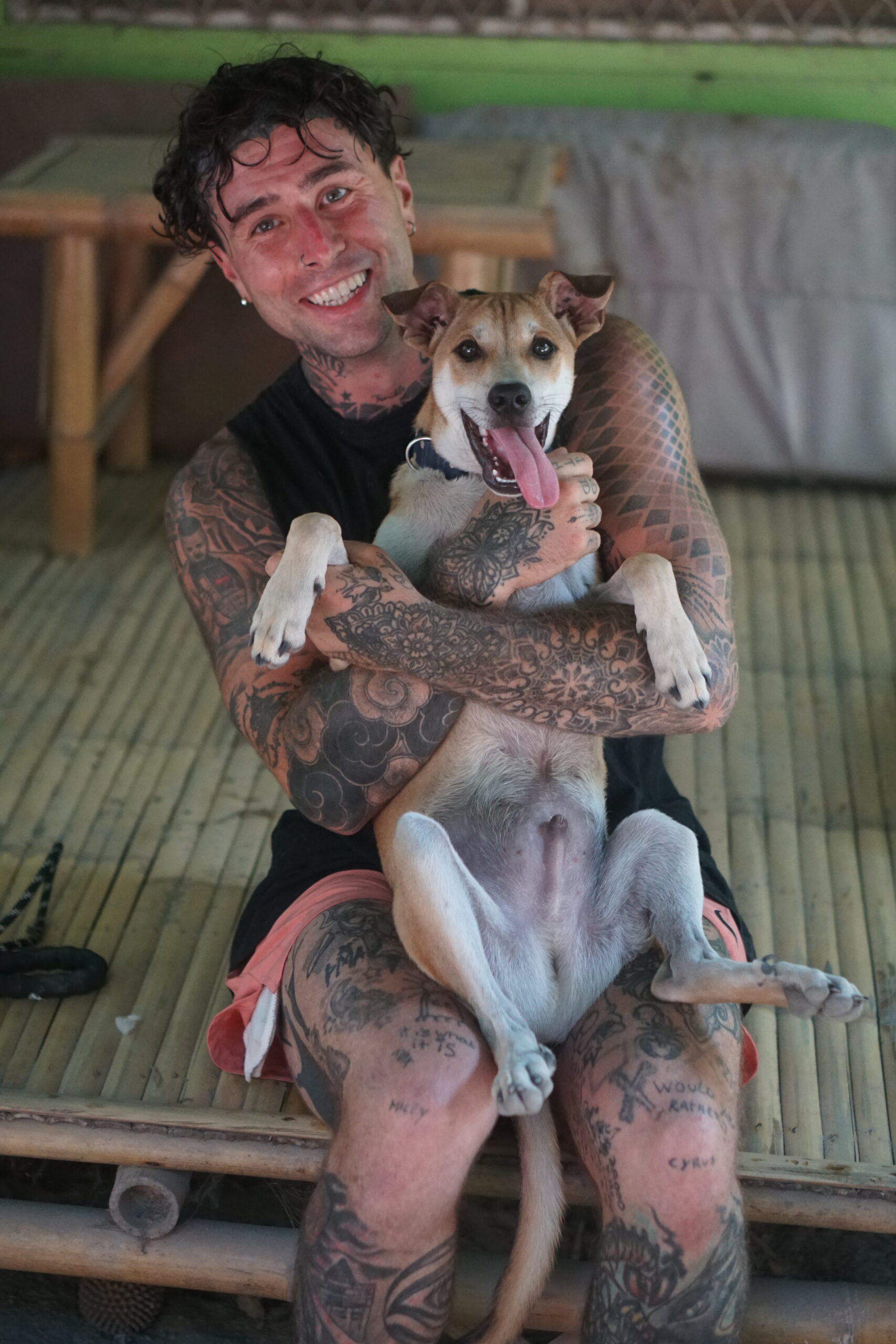
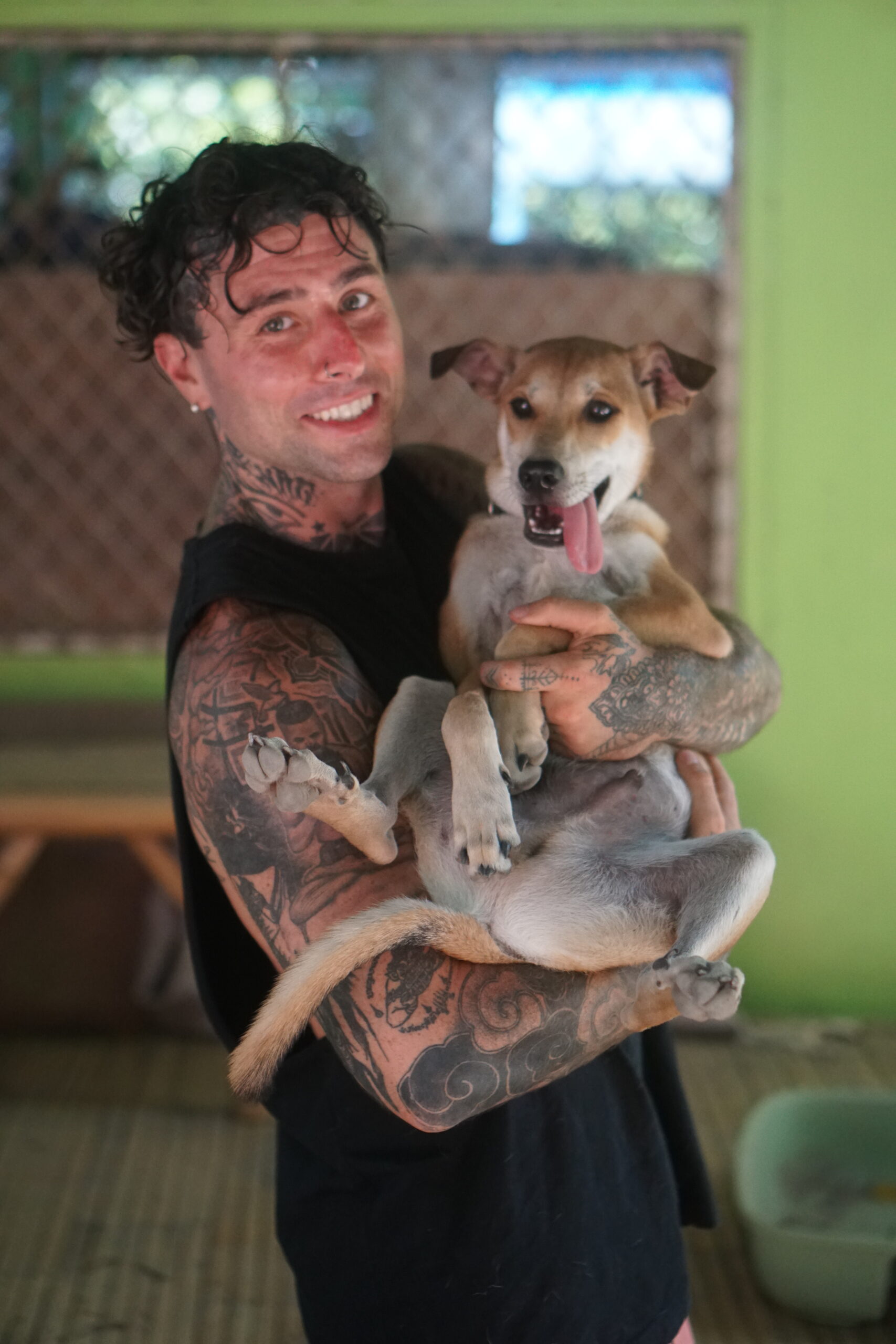
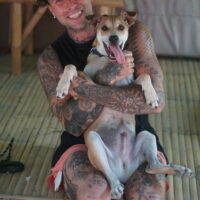
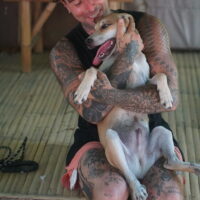
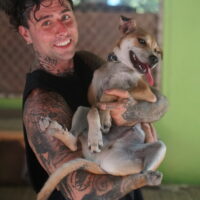
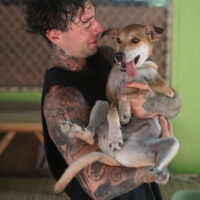
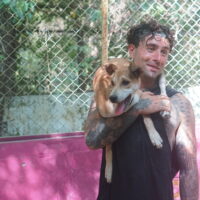
Salem came from London and works at a retreat on the island. He adopted a dog a few years ago called Mellow, once called Bones. Now he’s adopting another, Syrup. Salem and Syrup were excited about going home together.
“I saw him when he was tiny,” he says. “He came with a bunch of other puppies and one by one they were adopted but he stayed. From the beginning, I liked him.”
That day Syrup, now about 5 months old, was going home. They were going for Syrup’s last walk as a shelter dog. Salem often connects two worlds that don’t usually meet: wellness tourism and animal rescue. He brings his island friends to come to the shelter to walk the dogs.
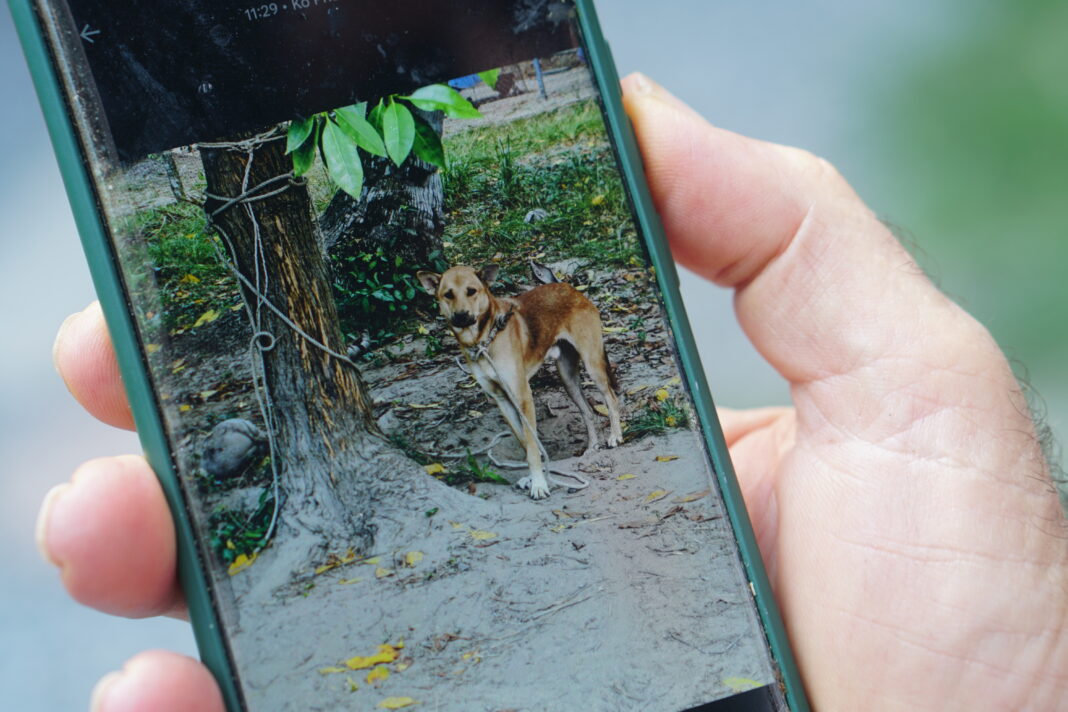
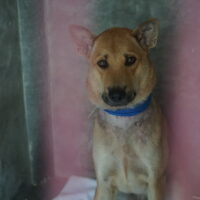
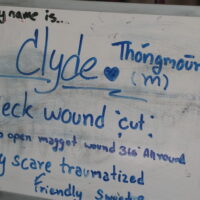
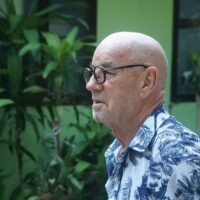
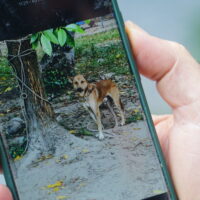
Then there’s a German man Lungs Hai (name means uncle, and probably a Thai name he adopted) who found a dog chained to a tree (named Tongmung, now Clyde), fed him for three months, and watched his neck become raw and infected from his leash and collar.
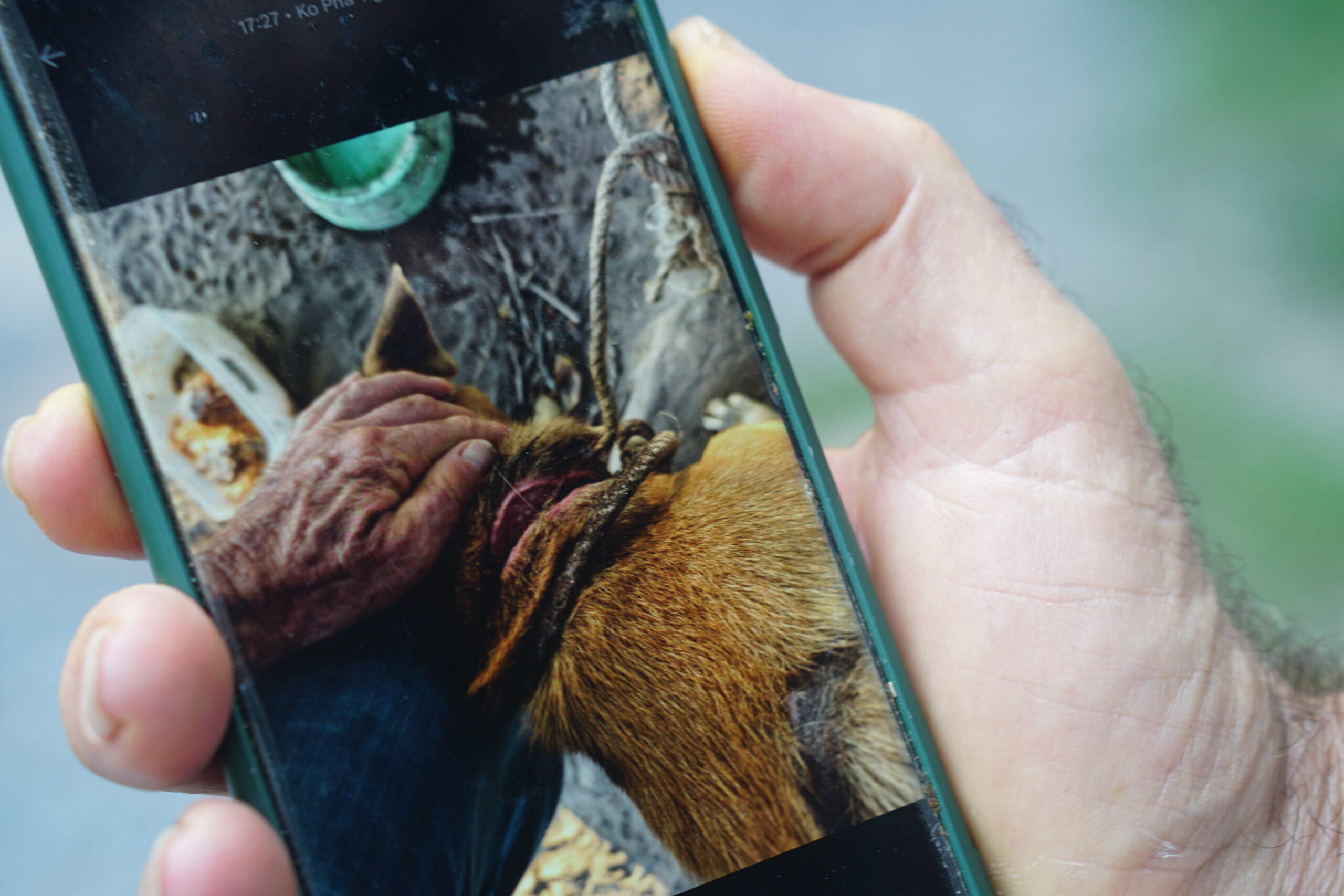
At that point the shelter stepped in, according to Thai law, and could take the dog. That was a few months ago and Lungs Hai comes every day for a check in and some cuddles. Clyde’s neck is healing and he is looking for his forever home.
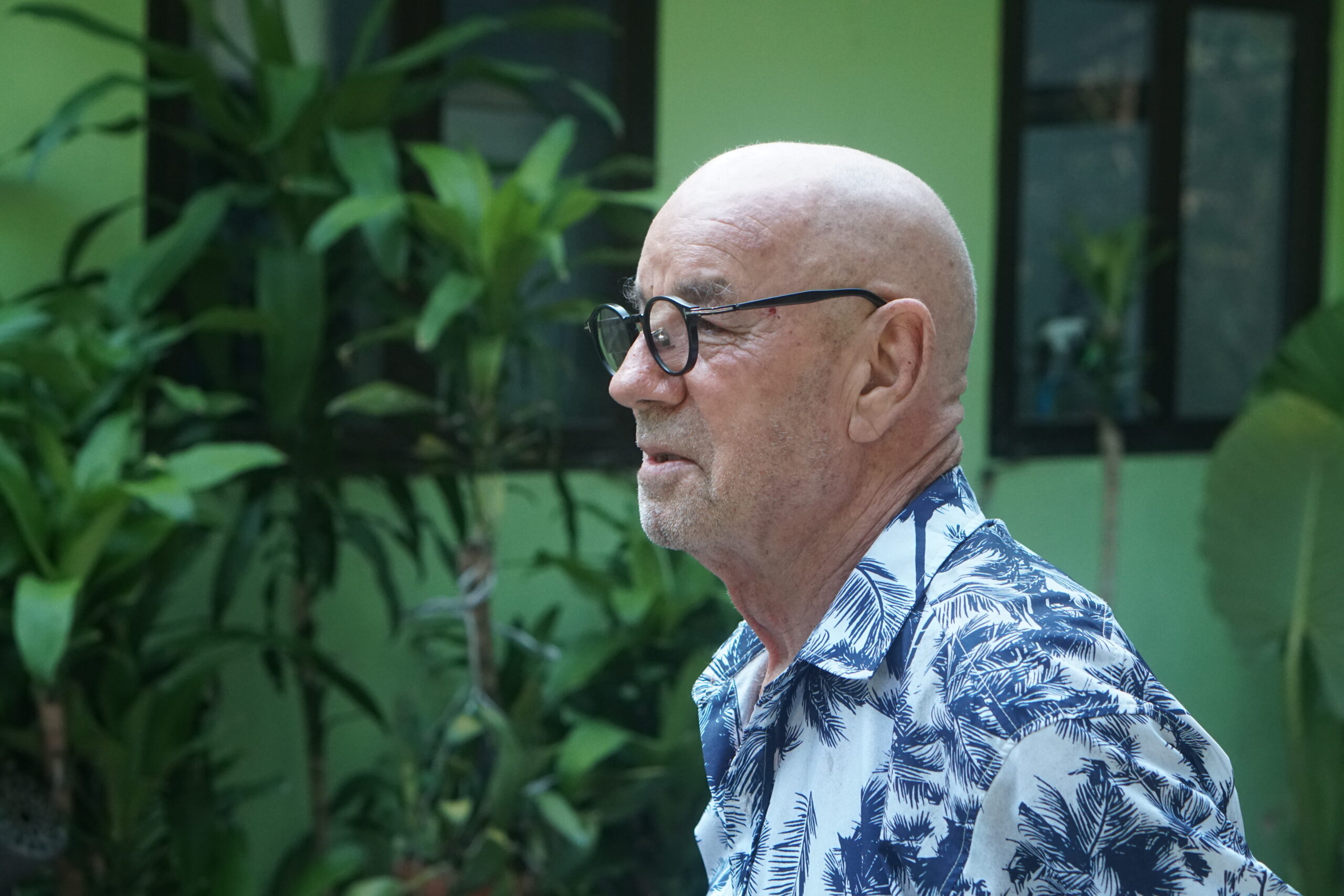
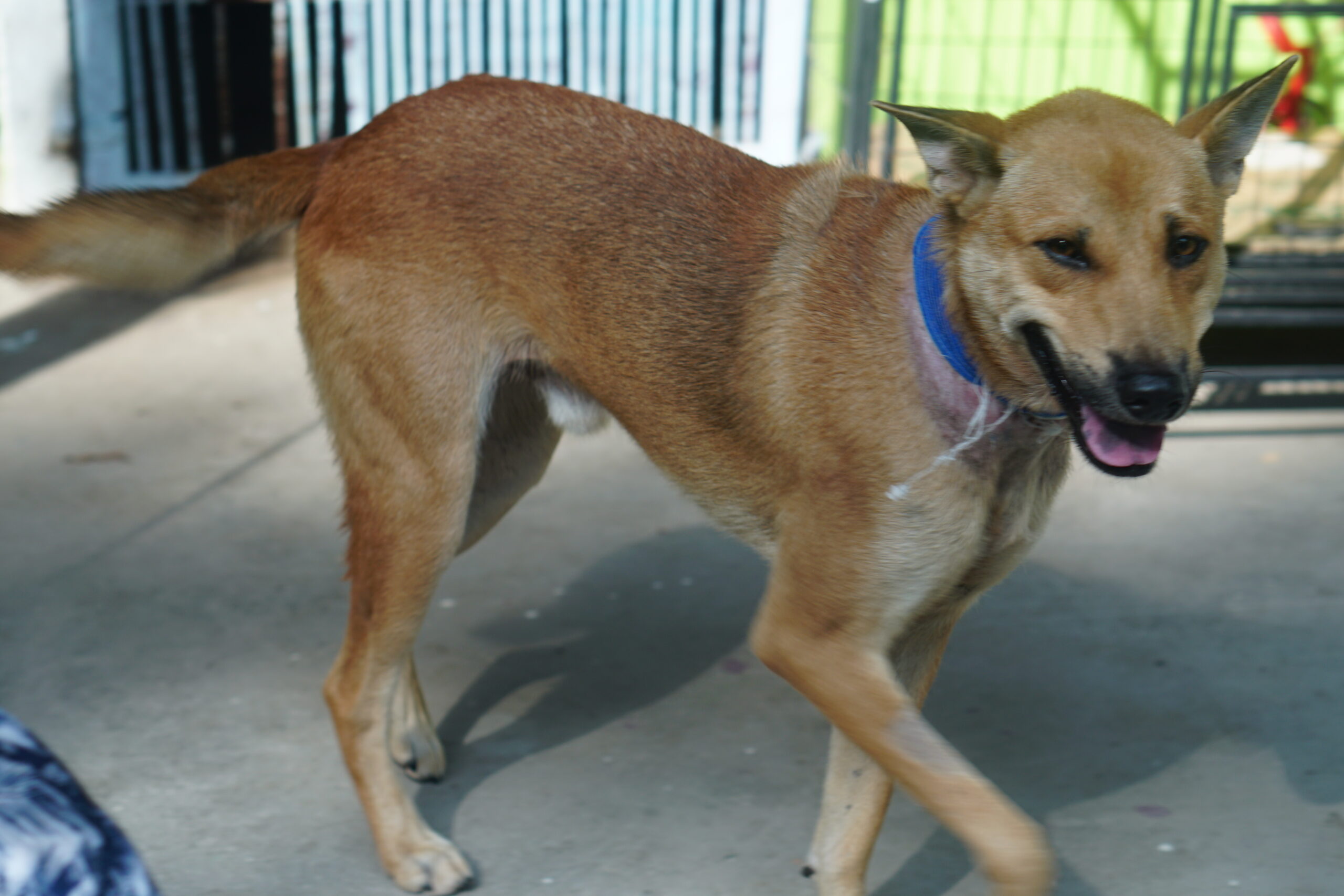
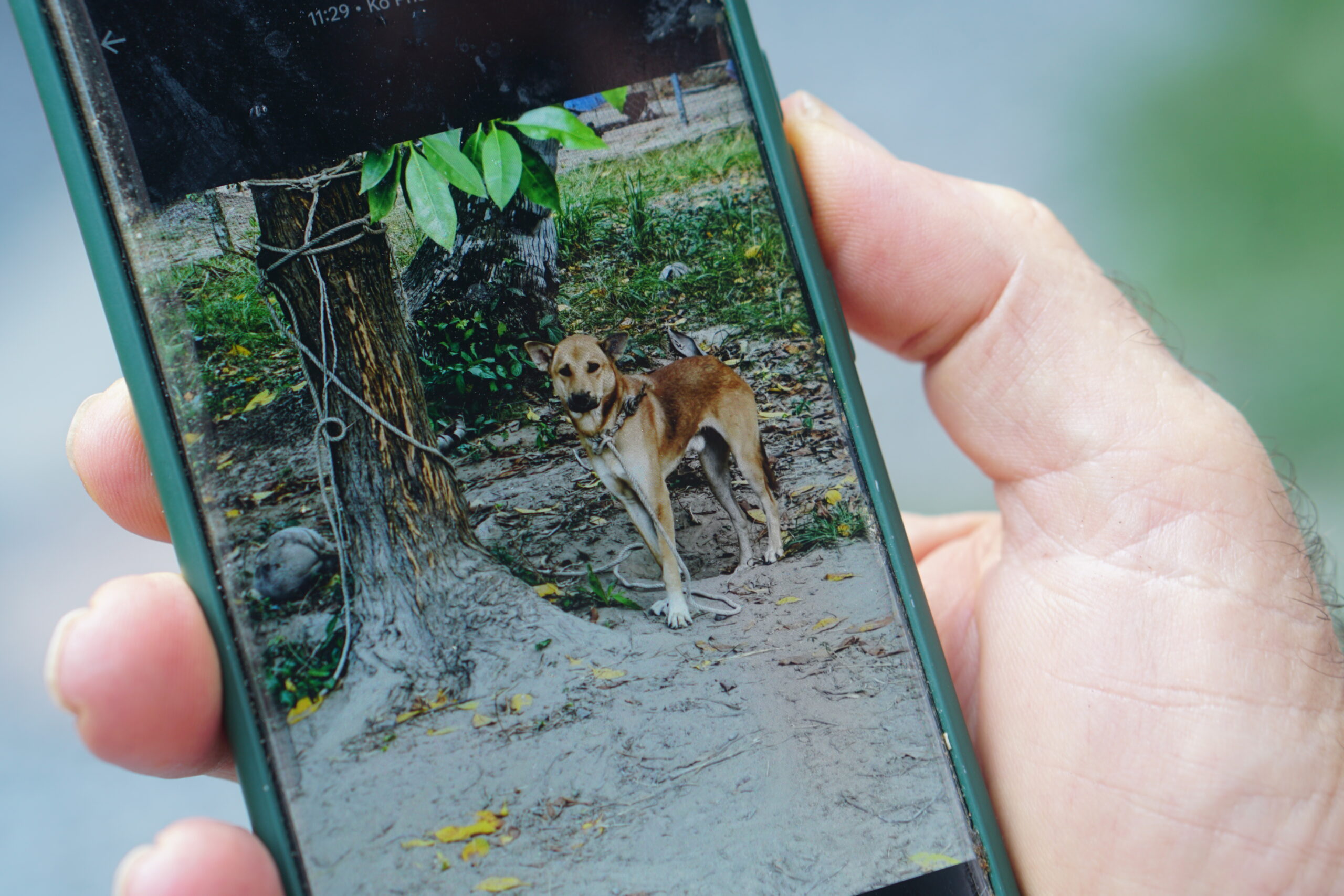
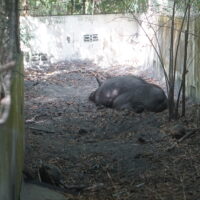
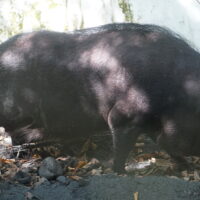
This is not a place for clean endings and not all stories belong in a brochure. A nurse named Kim who shows us around and welcomes us, tells me about the resident pig (my daughter would water down with a hose) that killed nine dogs and broke a volunteer’s leg.
The myth of healing
Koh Phangan will sell you healing in a coconut wearing Lululemon yoga pants. But healing isn’t always soft or pretty. Washing a dog with a skin disease, feeding a cat that might not survive the week.
We didn’t save anything that day but the center showed our teenagers what compassion looks like. The people working and showing up at PACS did that.
If you travel with kids, especially teens, try to build in something uncurated. Last summer we found volunteer opportunities for them in a forest in Canada. If you are traveling look for a place that’s working in the community to better it: because somewhere between the zip line and the beach, between the dance floor and the detox smoothie, there is a quieter education happening to help those who can’t speak at PACS.
How PACS started
PACS (Phangan Animal Care for Strays) was founded in 2001 by a veterinarian named Shevaun. She arrived on Koh Phangan while traveling and was struck by the condition of the animals: they were injured, untreated, and with no veterinary services on the island at the time. Stray population control was often done through culling (killing, as they do in Hebron), and locals had to travel by ferry to Koh Samui just to treat their pets.
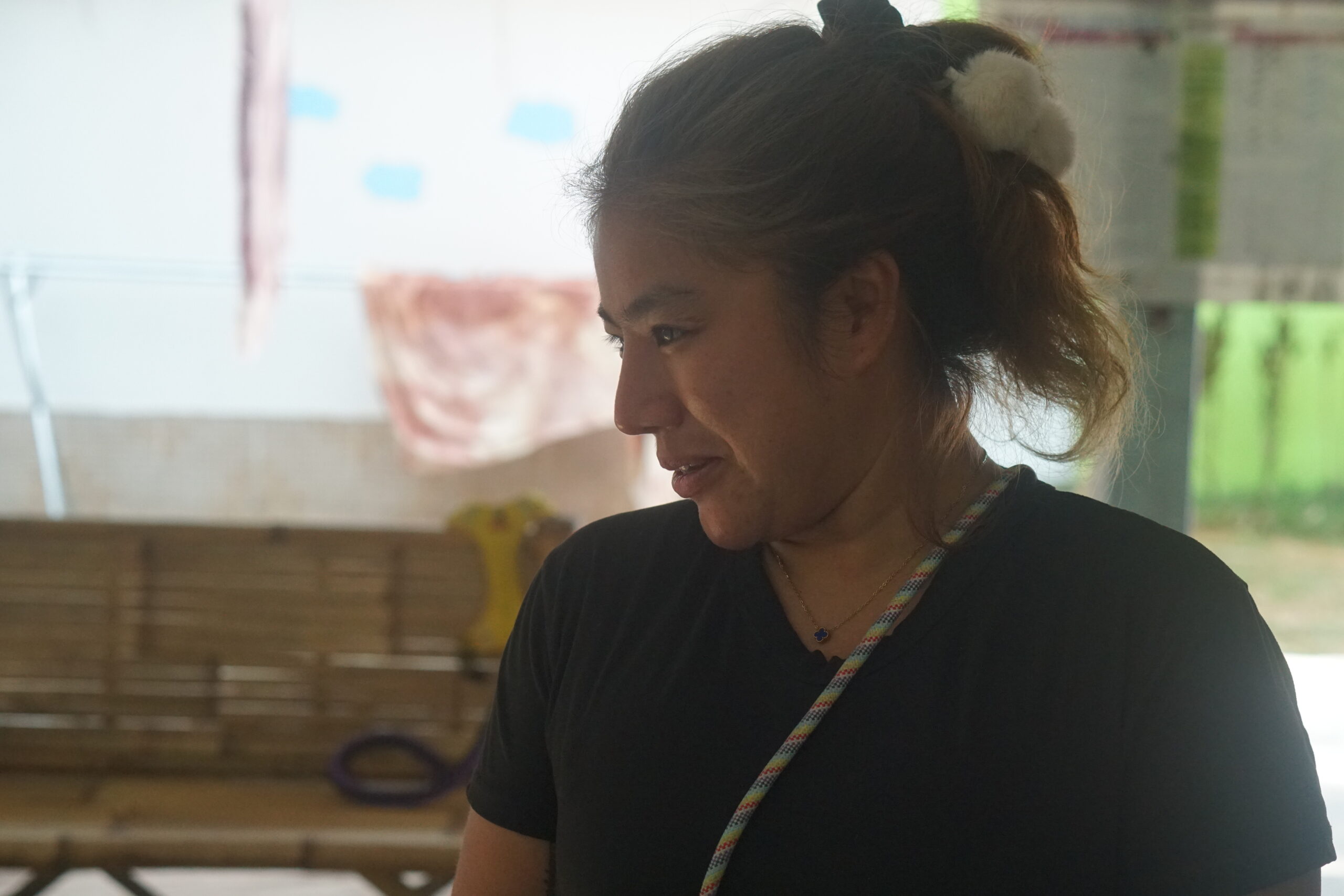
So she started small, asking vets back home to send supplies, treating animals for small donations, and using those funds to help strays. From that, PACS grew into what you see today: a hospital, a sterilization program, and a quiet force of nurses, vets and volunteers, trying to stabilize the island’s stray population.
How you can help
PACS runs on small acts that add up.
- Donate through their website – this keeps the clinic running, pays for surgeries, medicines, and daily food.
- Follow and share on Facebook and Instagram – awareness leads to adoptions and support from outside the island.
- Adopt, or help find a home – even sharing a dog or cat’s story can connect them to a forever family. There are people on the island, PACS says, that can help you with pet relocation and adoption to foreign countries much like the cats of Istanbul. Fall in love with a Thai dog or cat? It’s possible to take them home with you.
Not everyone can take a dog home from Koh Phangan. But everyone can do something.
::PACS








, a grassroots animal hospital tackling overpopulation, disease, and neglect on the island. Through firsthand experience with teens, it reveals how meaningful travel, volunteerism, and compassion offer a deeper kind of healing—far from the Instagram version of paradise.)