
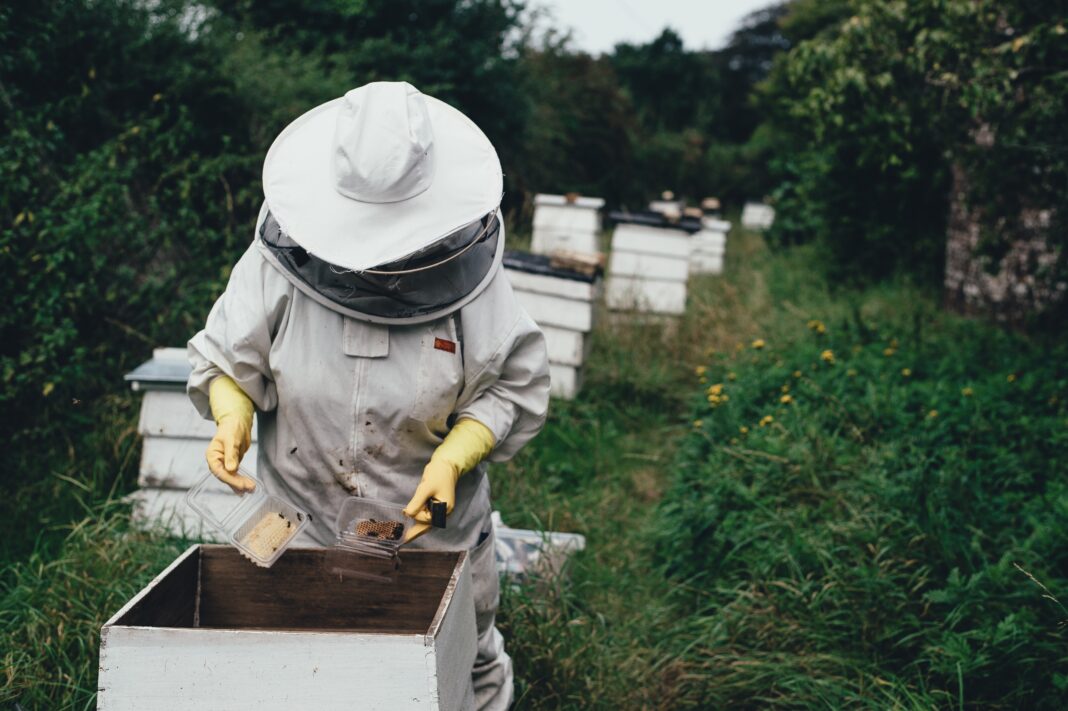

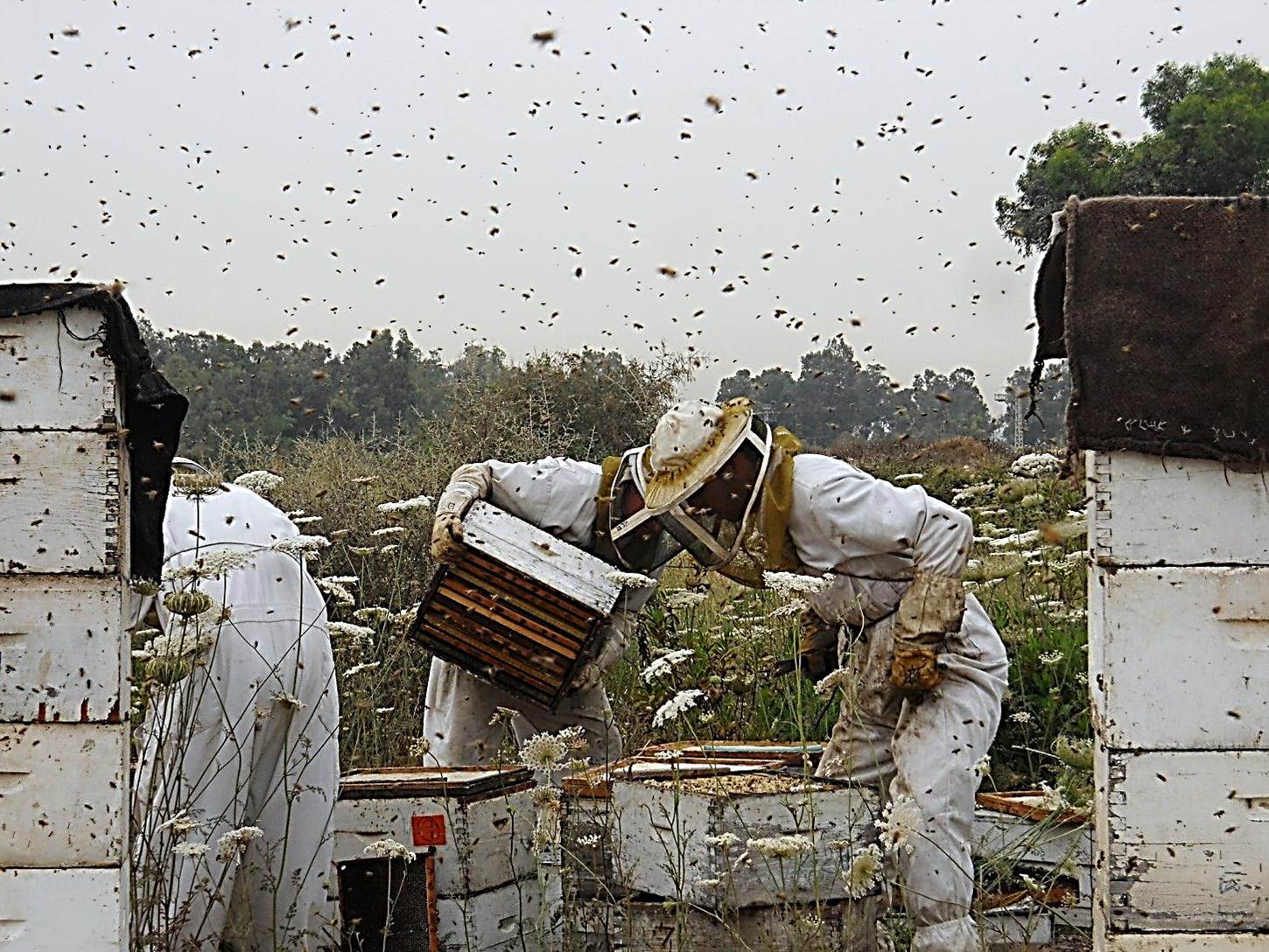
On a sunny Saturday afternoon in mid-February, a small group of New Yorkers—beekeepers, environmentalists, and a handful of honey aficionados—huddled together in an empty SoHo office building for a local honey-tasting session.
If this had been Portland or San Francisco, it wouldn’t have been a notable event—just a harmless gathering of honey connoisseurs. But in New York, where they may be hydroponics, bees are classified under section 161.01 of the health code as “wild animals,” and are just as illegal to own in the city as lions, cougars, alligators, or polar bears. So a local honey-tasting event is, in many ways, an act of political defiance.
True, there aren’t squad cars going around inspecting buildings for beehives on any given day, but the law can be invoked by a frightened neighbor who calls “311” to report a neighbor keeping buzzing colonies on the roof.
Even so, the threat of a $2,000 fine certainly hasn’t deterred New York’s underground enclave of beekeepers.
At the SOHO tasting, some 30 people were huddled around a large table, holding tongue depressors to dip into an assortment of honey containers. While some of the honey had come from Europe and New Zealand, the true stars of the tasting were local keepers from the West Village, the Bronx, and Brooklyn.
Some of the big, established local beekeepers were at the center of the room, sharing years of wisdom—how to get hold of a swarm of one’s own, how to keep bees on rooftops—and relishing their minor celebrity. Local beekeeping, after all, has become a bold new frontier in the overlapping worlds of environmentalism and food activism.
In the United States, nearly one-third of the country’s crops depend on bees for pollination, yet nearly one-quarter of the country’s honeybees have vanished in recent years, due to Colony Collapse Disorder (CCD) and other factors that are still unclear. The dearth of bees has quickly become alarming—according to a recent piece in the magazine Edible Manhattan, one urban farmer recently had to hand-pollinate his crops due to a lack of bees.
Saskia Cornes, an author who has written about New York City’s beekeepers, tells me that beekeeping has gained traction in recent years because of “a nice confluence of sorts between Colony Collapse Disorder and a renaissance of local foods.”
For one, New York City’s bees are mostly free of disease, which makes them invaluable in countering the outbreak of CCD. What’s more, beekeeping has become a popular way for New Yorkers to support local agriculture even if they don’t have much green space for a garden.
“Beekeeping suits New York because we don’t have yards,” Cornes explains. Recently, a variety of urban-beekeeping courses have sprouted up, like those offered by the The New York City Beekeepers Association. A beekeeping “meetup” group was launched in 2006 and according to the Gotham City Honey Coop, has been growing rapidly since.
The honey itself, meanwhile, is becoming wildly popular. Many beekeepers, honey advocates, and holistic healers believe eating local honey is the best remedy for allergies, since it provides a low-level (and delicious) exposure to local pollens. And there’s the fun of identifying local flavors: Honeybees usually travel two or three miles each day pollinating rooftop gardens and plants before returning home to make honey with the flavors of the flora they’ve visisted. A few honey tasters at the SoHo tasting swore they could detect the Bronx in the South Bronx honey, and one claimed to have tasted a hint of Tenth Street in a Manhattan variety.
All of this enthusiasm has spurred organizations such as Just Food, as well as other bee activists from various organizations, to work with city council member David Yassky to introduce legislation that would license residents as beekeepers, so that they could nurture and grow the local bee population, as well as assist nearby farms in dire need of pollinators. Back at the SoHo honey tasting, anticipation hung in the air as attendees discussed the future legalization of beekeeping.
Esther M., one of the SoHo honey-tasters, said the whole thing was like being “part of a secret society.” She insisted that she felt a strong connection to bees, and saw their vitality and health as the future to a healthy New York.
On the other hand, she added, she couldn’t help but think that the South Bronx variety “tasted like pollution—like buildings, concrete and dirt.” She preferred the honey from Fort Greene.




[…] Urban Beekeeping and Colony Collapse Disorder […]
[…] architecture, art installations. The studio named after the innovator will be relocated to SoHo this month, spreading out in a 13,000-square-foot top-floor space intuitively named […]
[…] Arwa Aburawa | May 28th, 2012 | Comment | Email this tweetmeme_url = 'http://www.greenprophet.com/2012/05/london-mosques-beekeeping/'; tweetmeme_source = 'GreenProphet'; tweetmeme_service = 'awe.sm'; service_api = '0c4b6af1aba54fb228c924aab3353dbbcb348cceabf15d2a0ce7b3f7efdbeaa3'; Share Two mosques in London have taken up beekeeping – and there are plans to encourage more to join the quest to save dwindling bee populations […]
wild animals?!
ok, well are there any sources for these wild animals here? i’ve been wanting to keep bees on my roof as that is the only animal i can think of which will not disturb our neighbors much. i’m in khobar, saudi arabia. if anyone can help i’d really appreciate it.
[…] more about the bees: Renegade Urban Beekeeping Bee Stings Are Sweet in Israel Organic Honey or […]
[…] on bees and honey: Could Urban Beekeeping Renegades Buffer Bees From Colony Collapse Disorder? Honey Is Bittersweet In The Middle East The Healing Powers of […]
[…] Urban Beekeeping and Colony Collapse Disorder AKPC_IDS += "28151,"; swfobject.embedSWF("http://www.youtube.com/v/p245IE6_qf8&rel=0&fs=1&showsearch=0&showinfo=0", "vvq-28151-youtube-1", "560", "453", "10", vvqexpressinstall, vvqflashvars, vvqparams, vvqattributes); […]
Could Urban Beekeeping Renegades Buffer Bees From Colony Collapse Disorder?
– http://tinyurl.com/c25gd9
More about NYC urban bees http://tinyurl.com/c25gd9 #beekeep #urban_ag
Bee Resistant! http://tinyurl.com/cwrug4 (via @greenprophet)
Could Urban Beekeeping Renegades Buffer Bees From Colony Collapse Disorder? http://tinyurl.com/cwrug4
Could Urban Beekeeping Renegades Buffer Bees From Colony Collapse Disorder? http://ow.ly/2tox